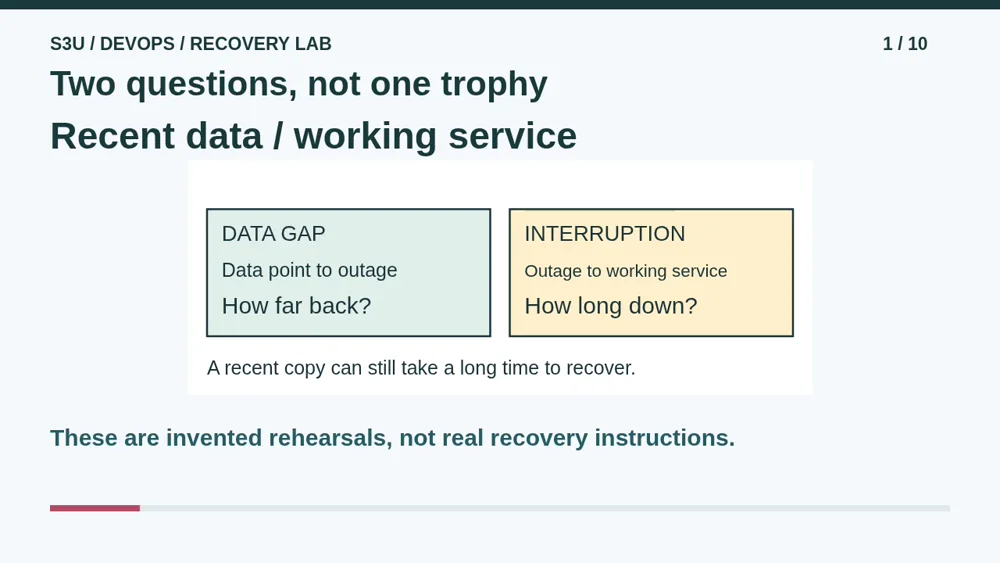
Two recovery goals
Science / Grade 9 / 7:33. Calculate data gaps and complete service interruptions, compare their separate limits and explain what a rehearsal can prove.
Listen to lessonListen and learn
Listen to an example, pause to predict, then try the idea yourself.
Science / Grade 9 / 7:33. Calculate data gaps and complete service interruptions, compare their separate limits and explain what a rehearsal can prove.
Listen to lesson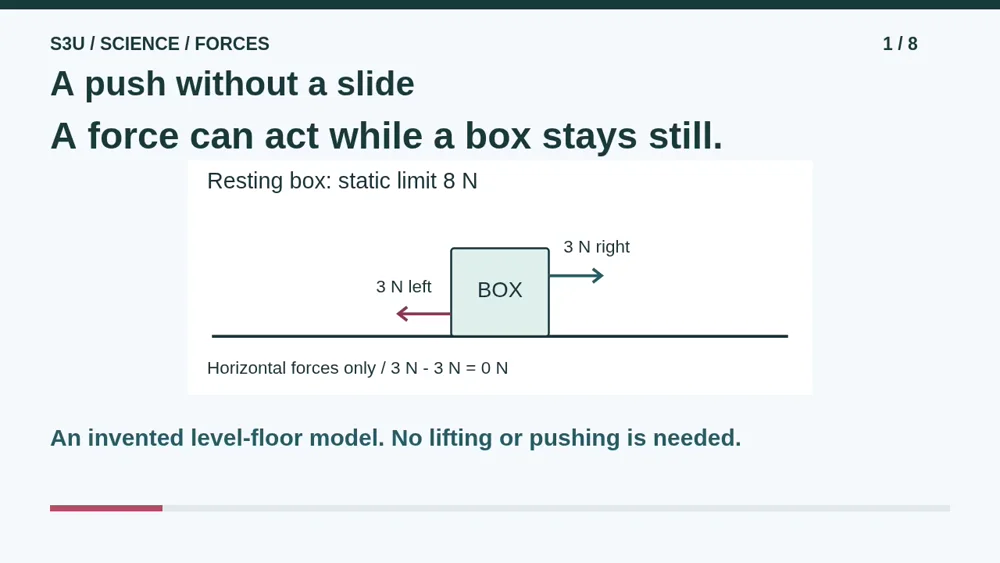
Science / Grade 7 / 4:30. Distinguish actual static friction from its limit, then compare sliding, steady motion and stopping using labeled force models.
Listen to lesson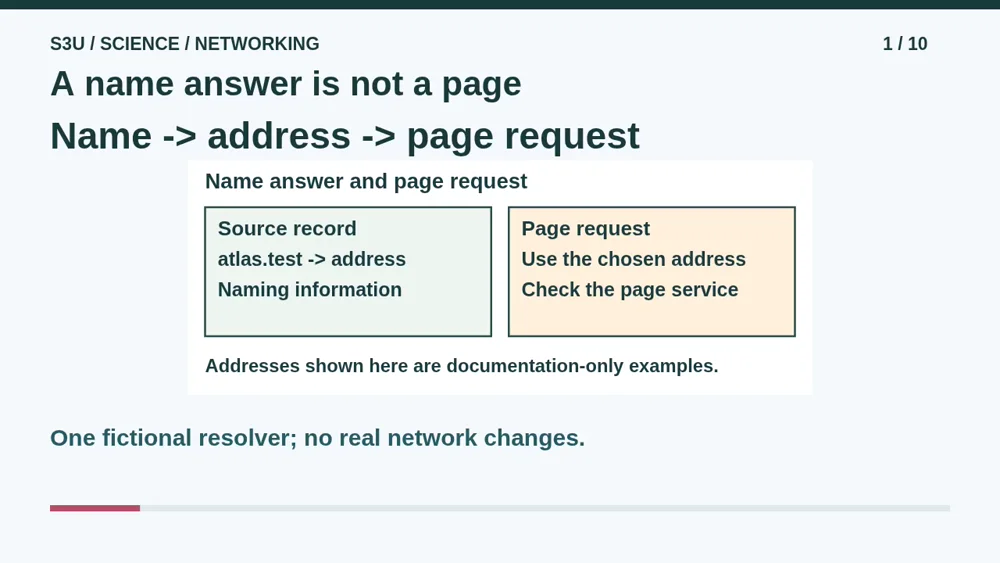
Science / Grade 8 / 6:39. Compare a DNS source record with a cached answer, calculate expiry and keep page-service availability separate.
Listen to lesson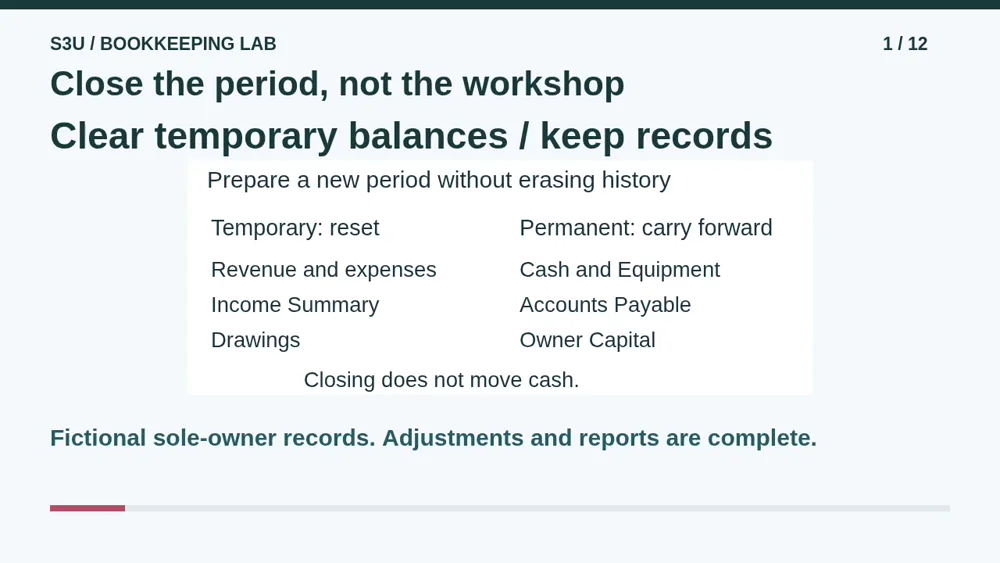
Math / Grade 9 / 8:34. Work through four closing steps, transfer a profit or loss correctly and check what carries forward without moving cash twice.
Listen to lesson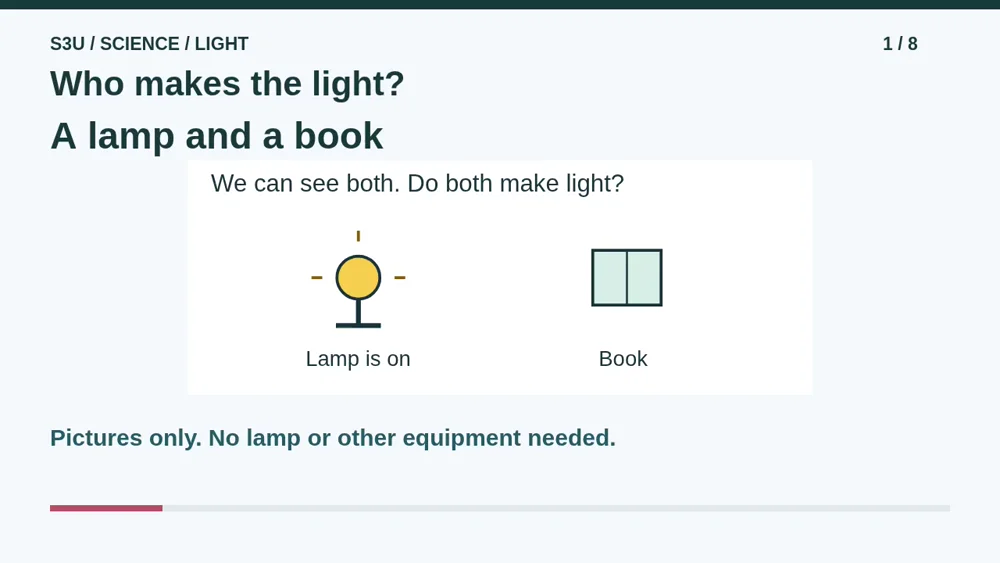
Science / Grade 1 / 3:11. Follow light from a glowing source to an ordinary object and then into the eye. Distinguish making light from reflecting it.
Listen to lesson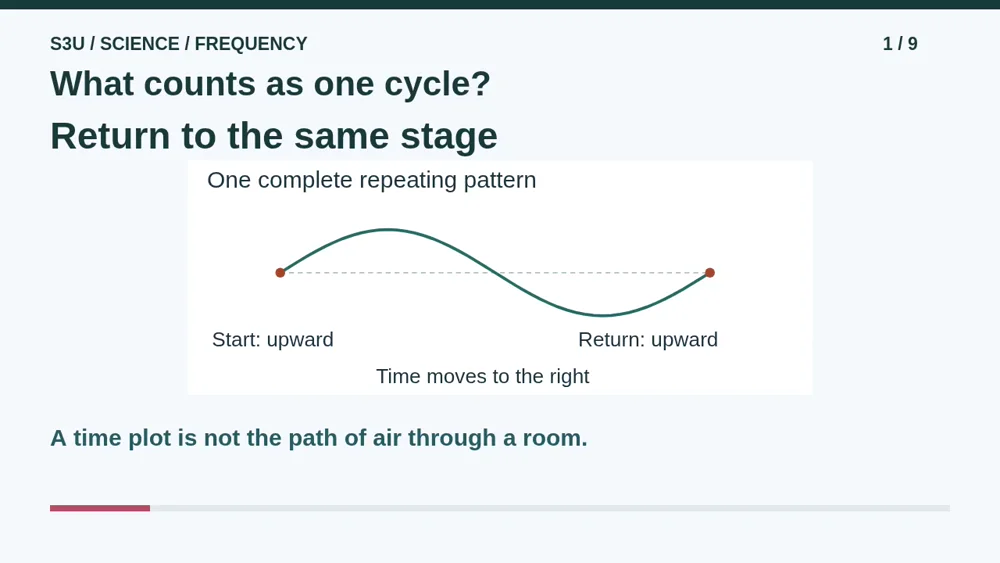
Science / Grade 6 / 5:10. Count complete cycles, divide by elapsed time and separate frequency, amplitude and pitch from loudness using invented records.
Listen to lesson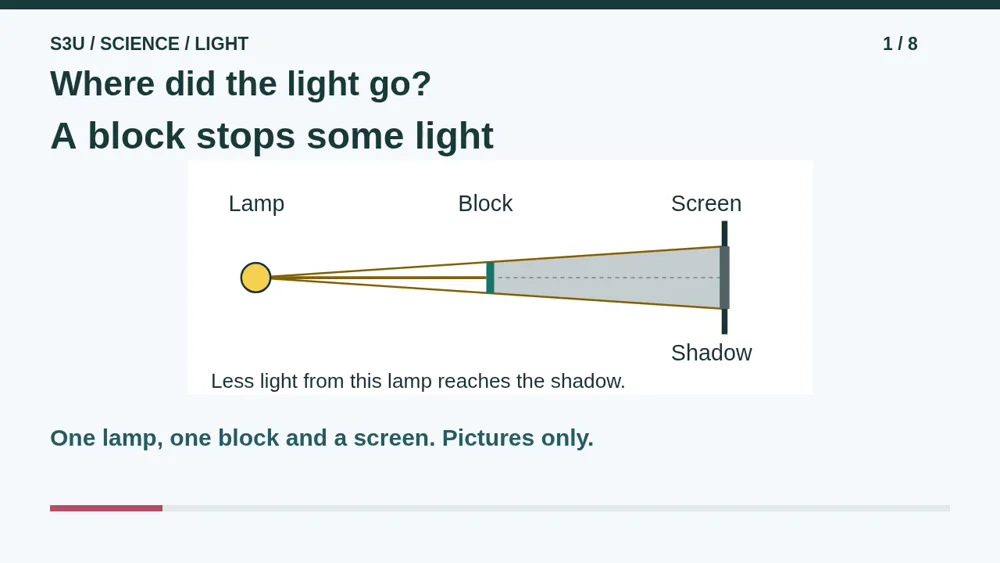
Science / Grade 1 / 2:55. Find the lamp, trace the blocked light and choose the side where a shadow can fall.
Listen to lesson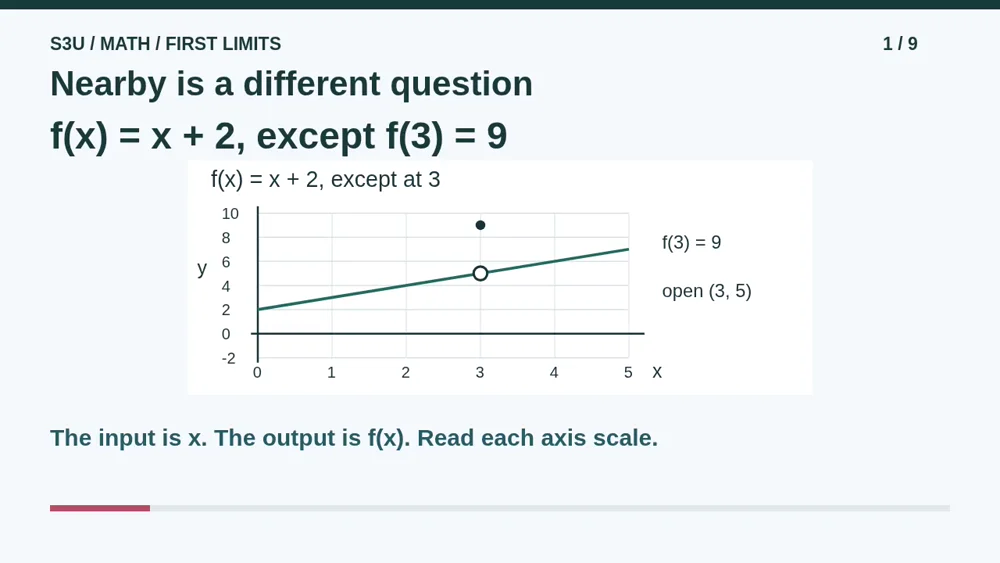
Math / Grade 12 / 5:01. Use nearby rules and labeled graphs to separate a two-sided limit from a point value, test a jump and explain continuity.
Listen to lesson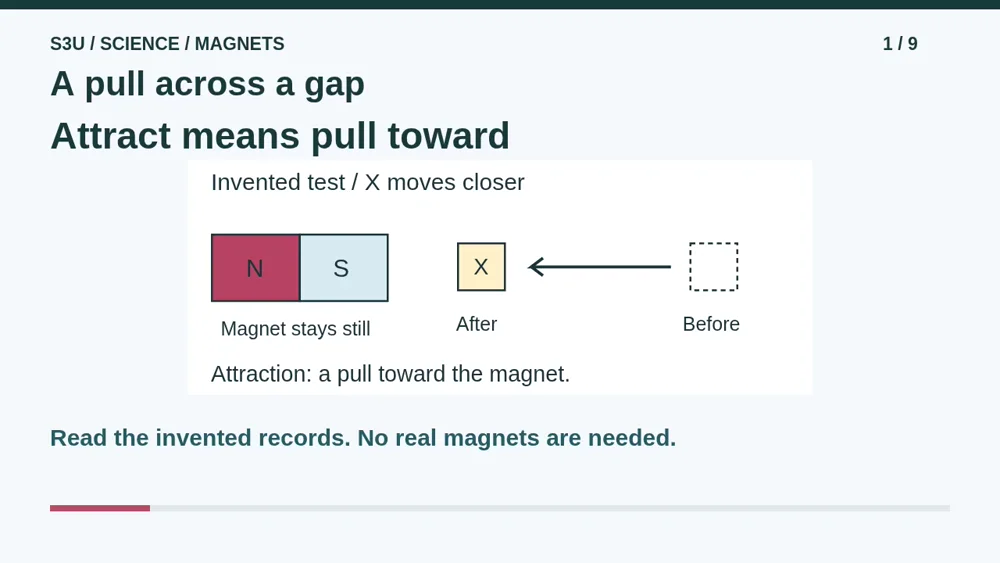
Science / Grade 3 / 4:21. Separate guesses from observations, compare tested objects fairly and explain why a shiny surface does not predict every magnet result.
Listen to lesson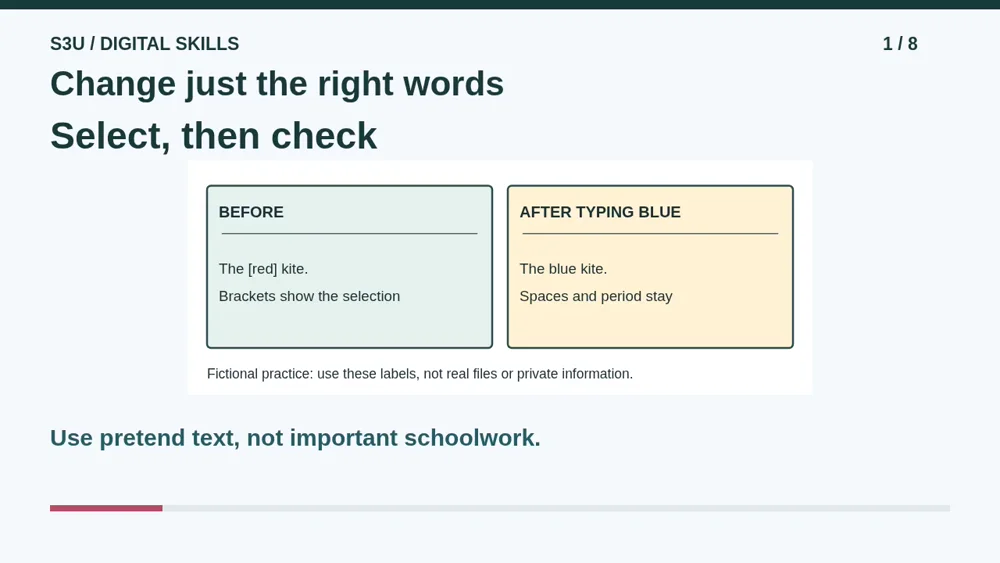
Science / Grade 3 / 3:09. Choose an exact text selection and compare copying, cutting and repeated pasting in a paper editor.
Listen to lesson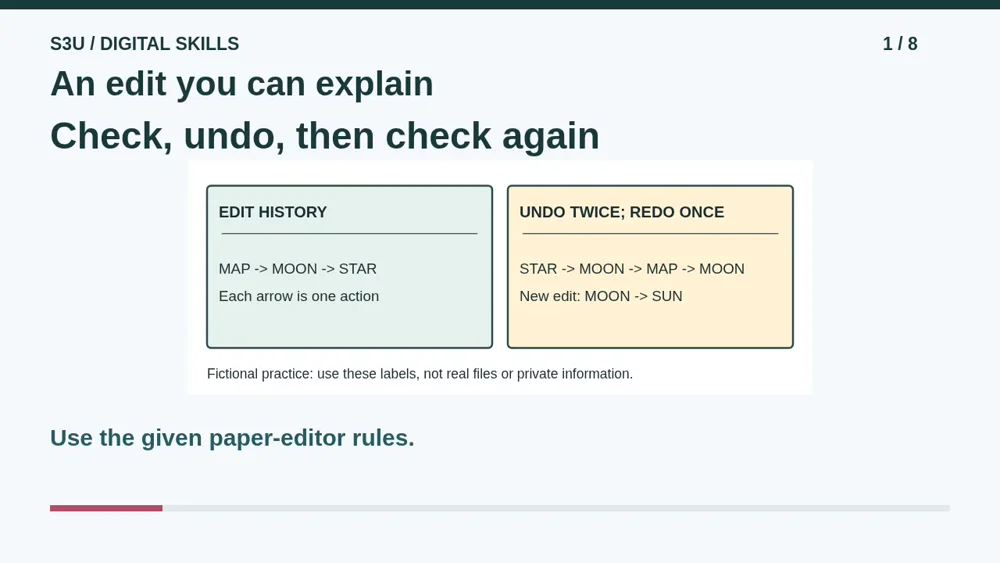
Science / Grade 4 / 3:17. Trace an editing history, distinguish undo from backup and check focus before a shortcut.
Listen to lesson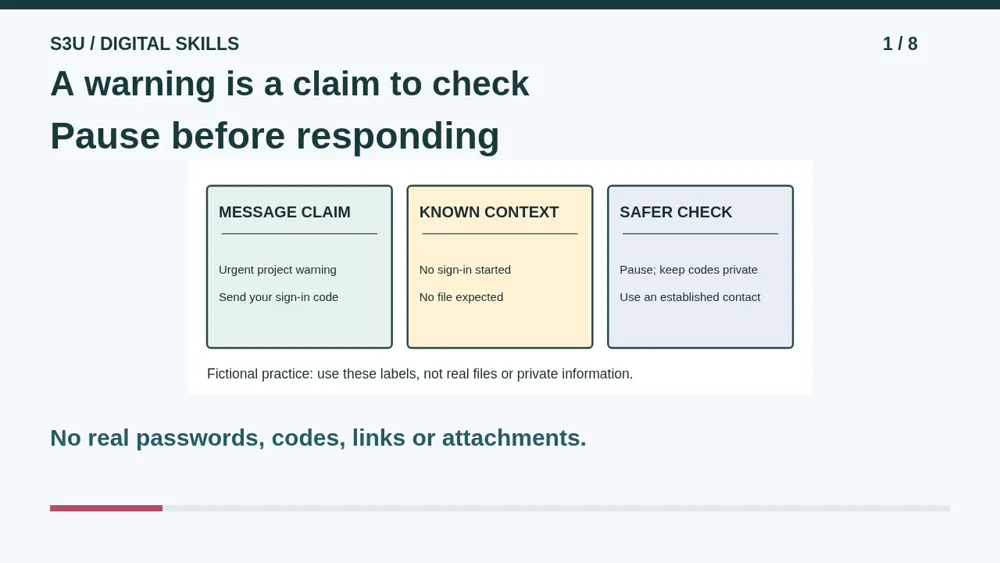
Science / Grade 6 / 3:16. Practice responding to unexpected messages and distinguish unique passwords, extra sign-in checks and recovery.
Listen to lesson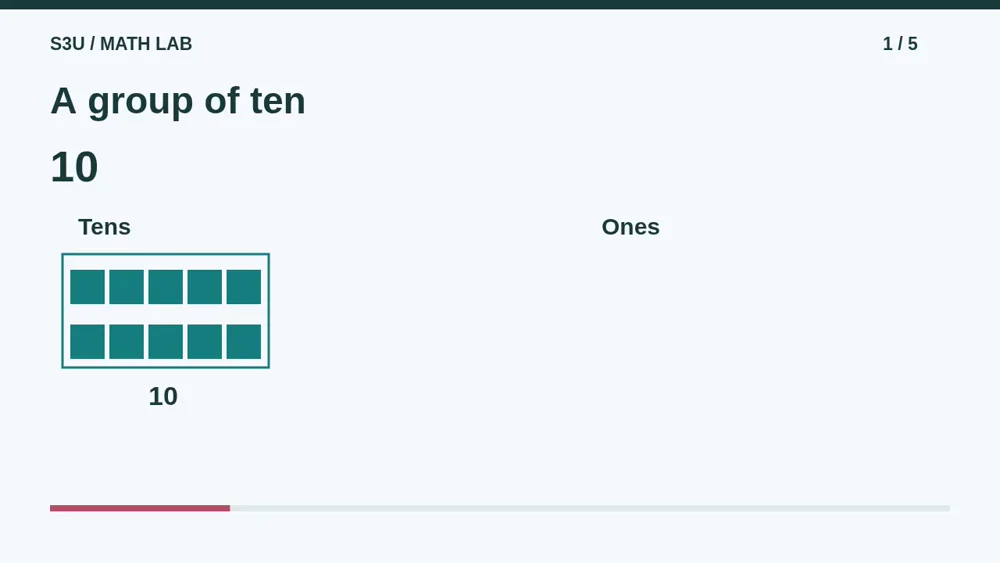
Math / Grades 1-2 / 0:49. Build numbers with groups of ten and single blocks.
Listen to lesson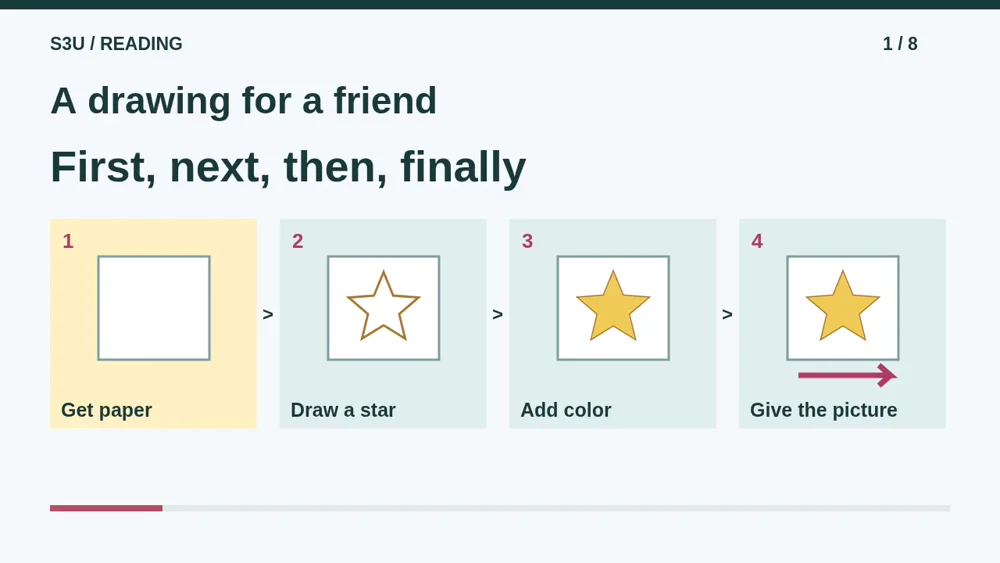
Reading / Grades 1-2 / 2:23. Follow time words and story details to put events in order and recover a missing step.
Listen to lesson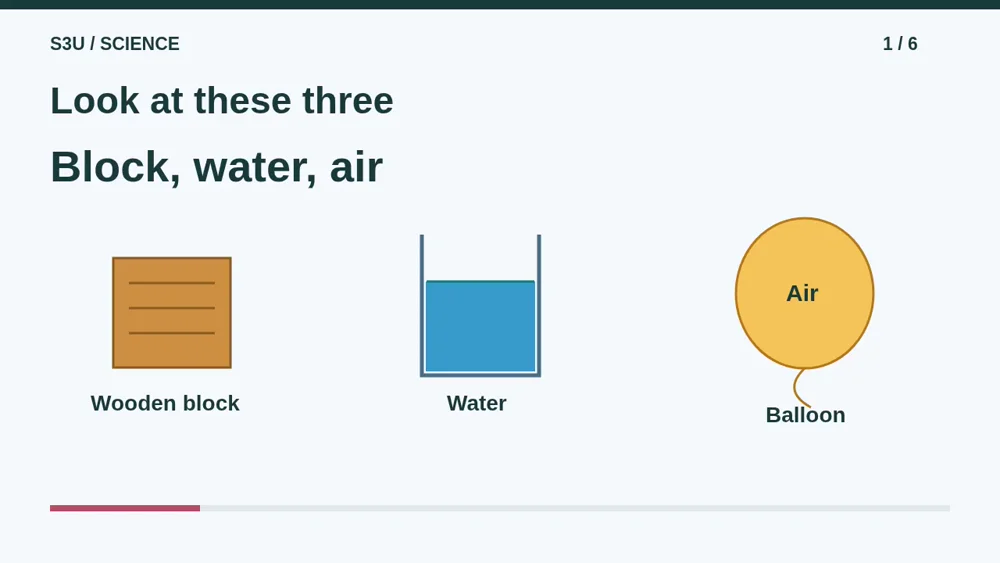
Science / Grades 1-2 / 0:58. Look at a wooden block, water, and air to learn how they are different.
Listen to lesson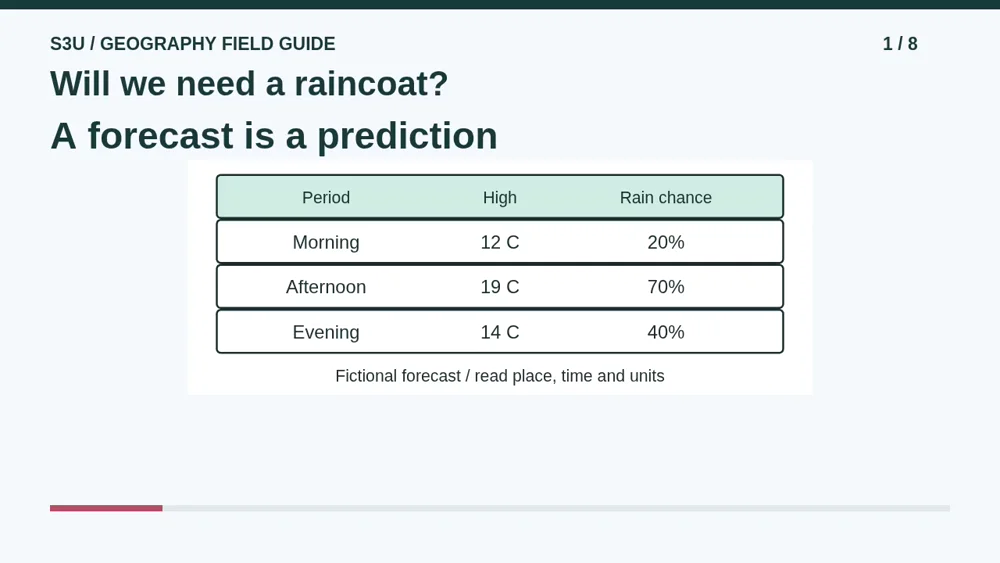
Geography / Grades 3-5 / 2:41. Use place, time, temperature, wind, and rain chances to make a plan.
Listen to lesson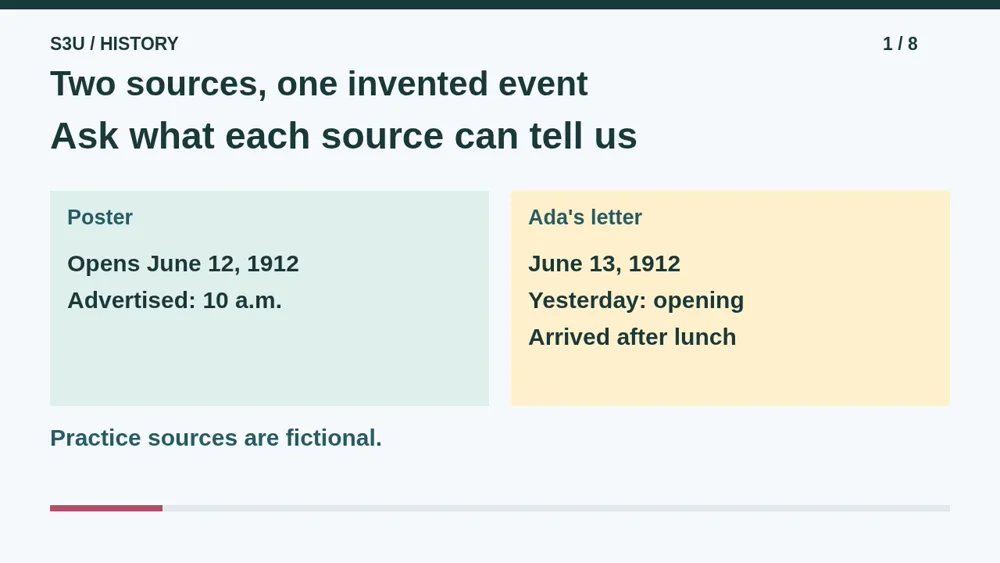
History / Grade 4 / 2:51. Compare a fictional poster and letter while separating advertised plans, personal reactions and shared evidence.
Listen to lesson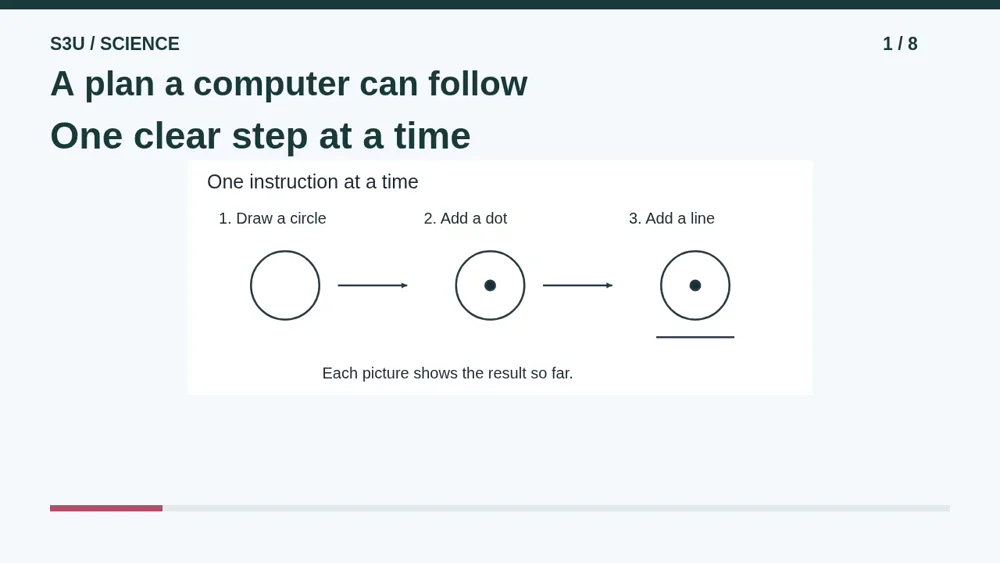
Science / Grades 1-2 / 2:29. Read a tiny drawing program, predict the result, and fix a missing instruction.
Listen to lesson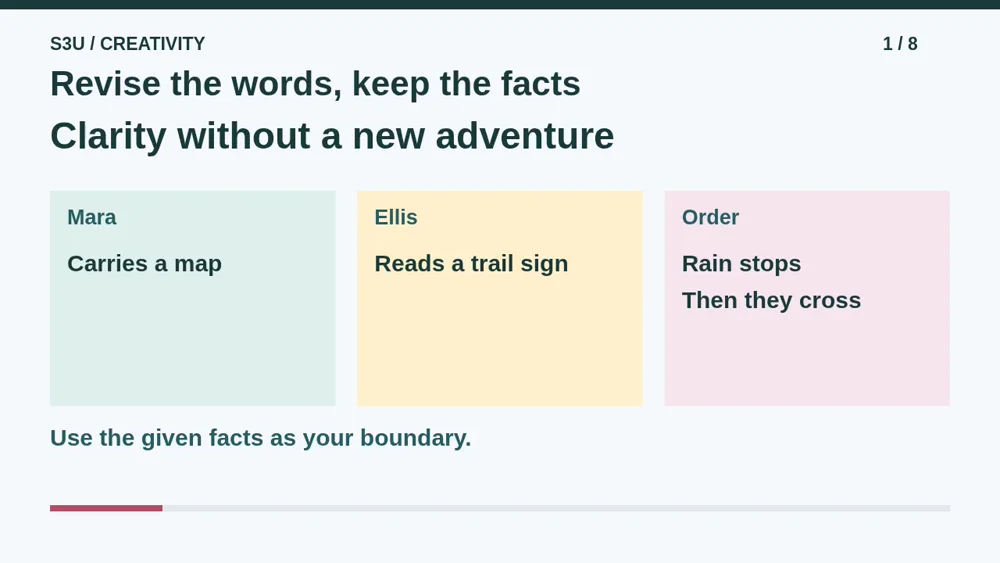
Creativity / Grade 6 / 2:53. Clarify pronouns, remove needless repetition and preserve the order and meaning of a passage.
Listen to lesson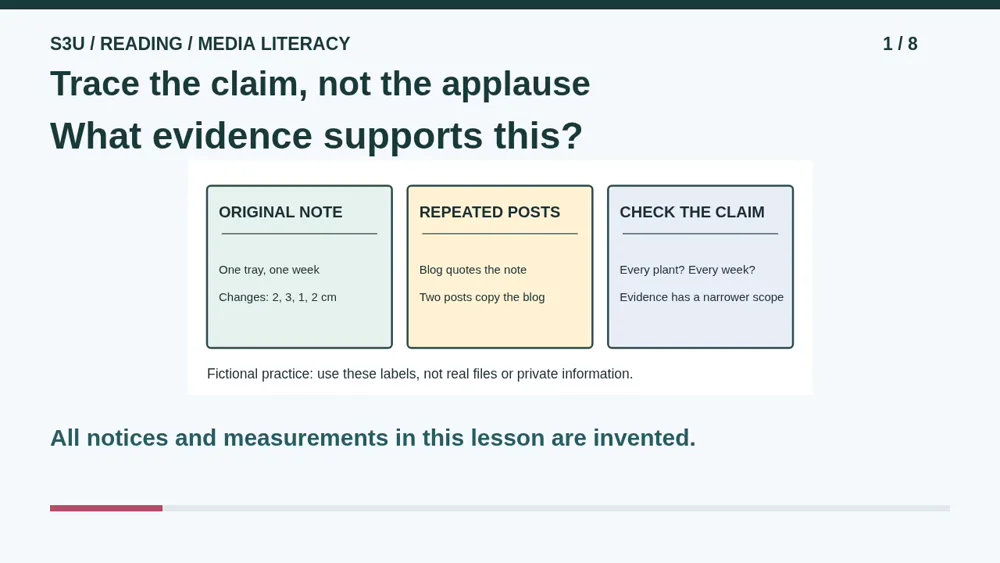
Reading / Grade 7 / 3:20. Trace repeated claims to one record and compare dated notices with authentic corrections.
Listen to lesson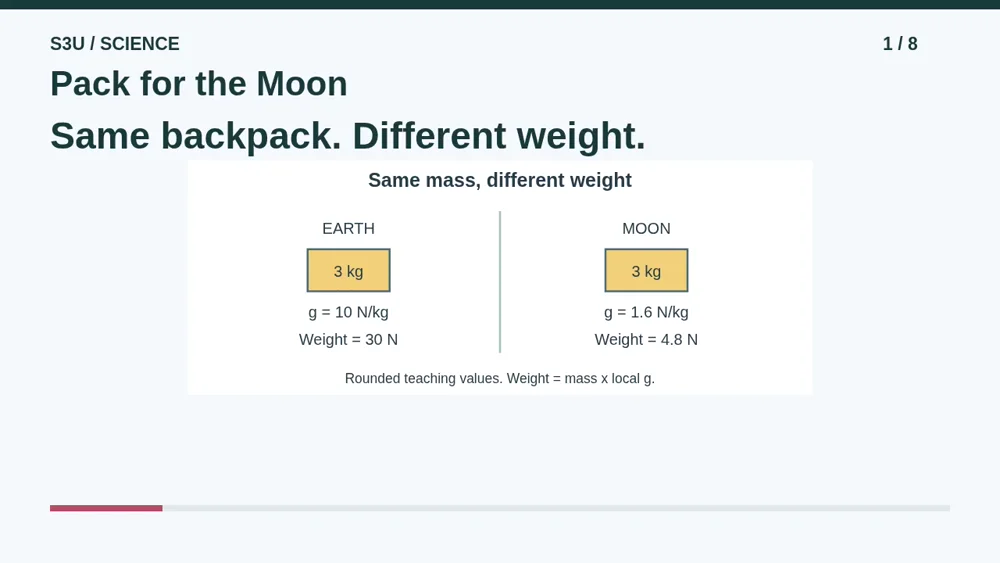
Science / Grades 6-8 / 2:46. Calculate gravitational force and find out why an unchanged backpack weighs less on the Moon.
Listen to lesson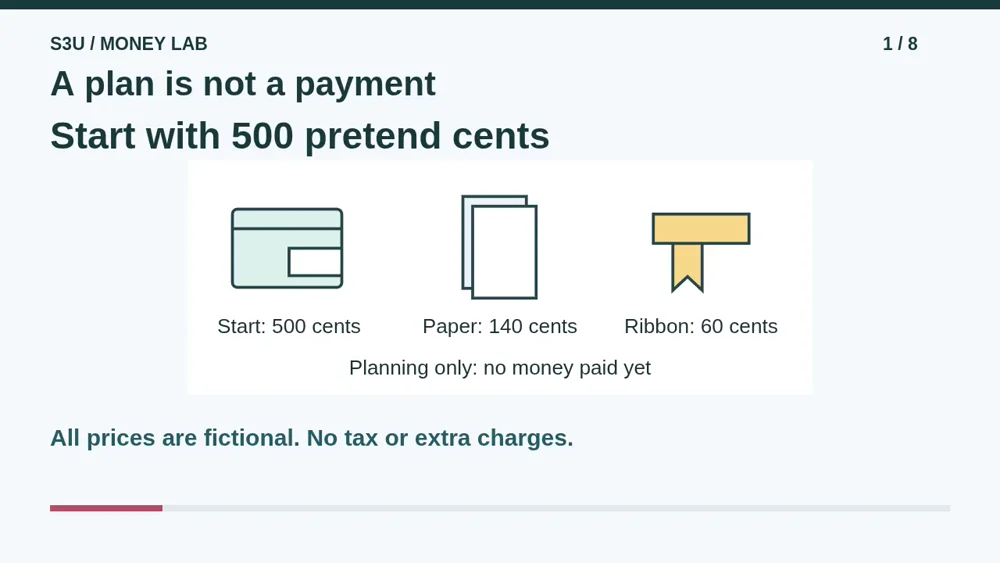
Math / Grade 3 / 2:48. Separate a pretend spending plan from actual payments, and count money set aside without counting it twice.
Listen to lesson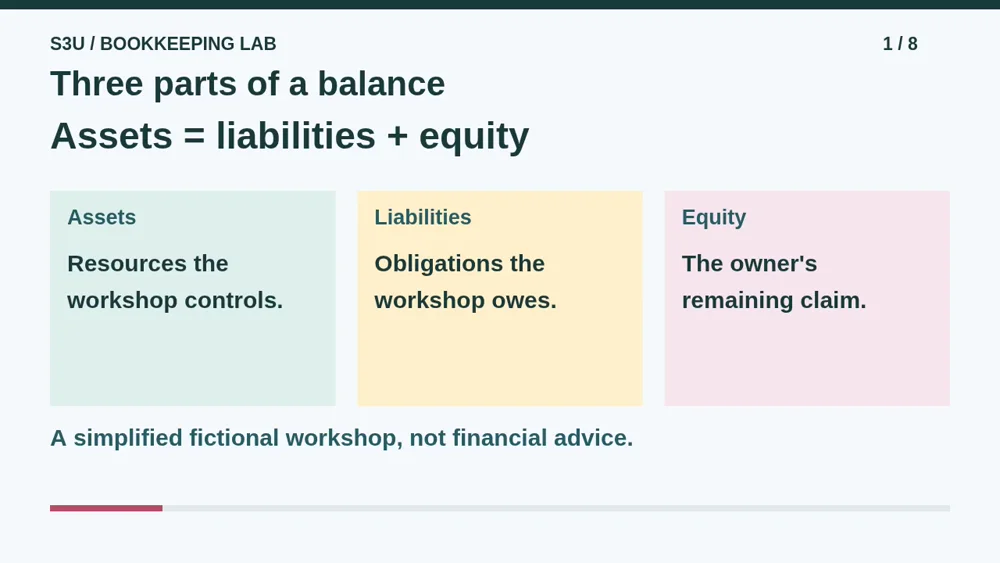
Math / Grade 6 / 3:15. Track a contribution, borrowing and equipment purchase through assets, liabilities and equity in a simplified model.
Listen to lesson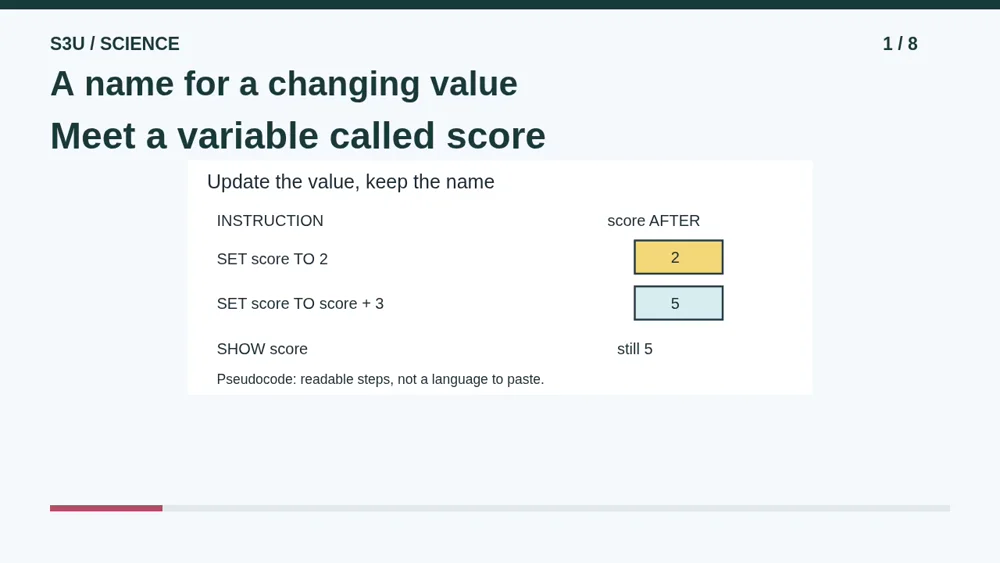
Science / Grades 3-5 / 2:30. Trace assignments and keep the current value of a named variable separate from displayed output.
Listen to lesson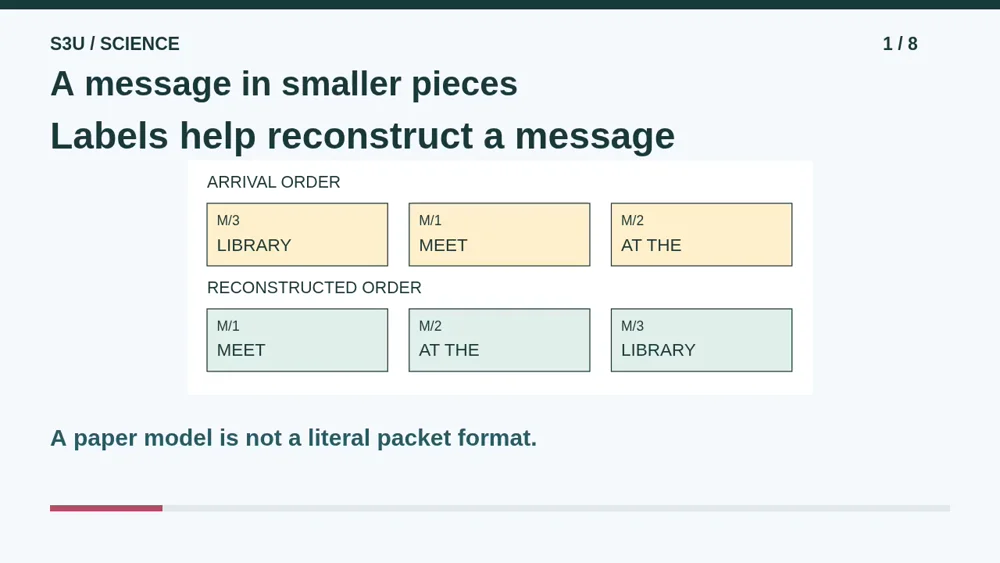
Science / Grade 5 / 2:53. Reconstruct a labeled paper message, distinguish duplicates from missing pieces and state the model limits.
Listen to lesson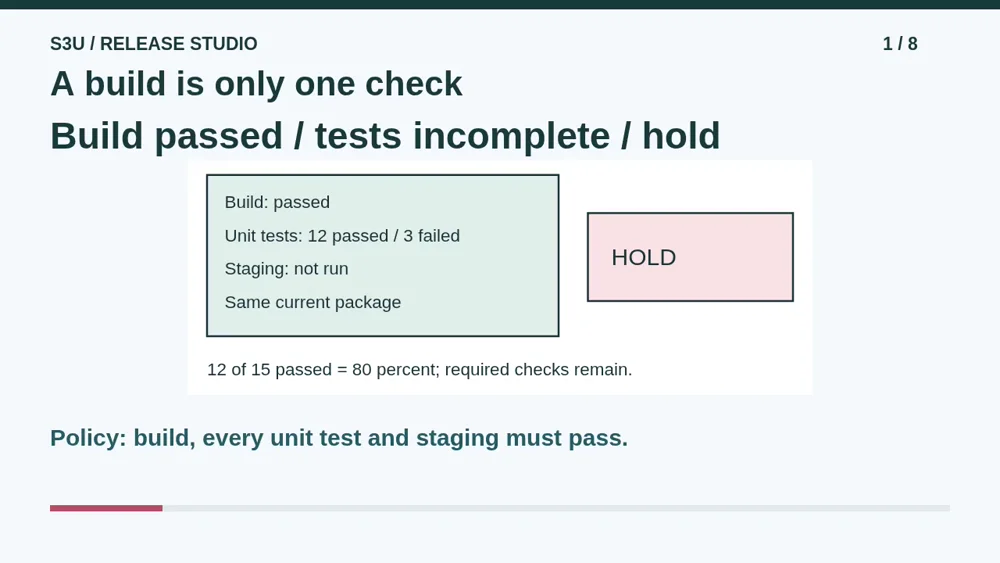
Science / Grade 9 / 3:52. Calculate test results, apply an all-pass policy and distinguish code rollback from restoring records.
Listen to lesson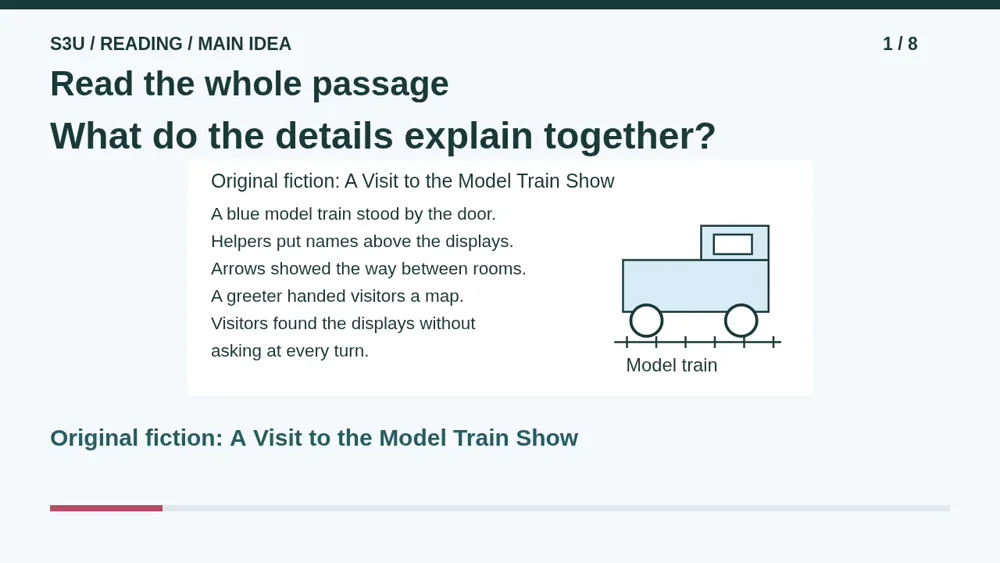
Reading / Grade 3 / 4:05. Connect supporting details, distinguish a topic from a main idea and reject answers that are too narrow or invented.
Listen to lesson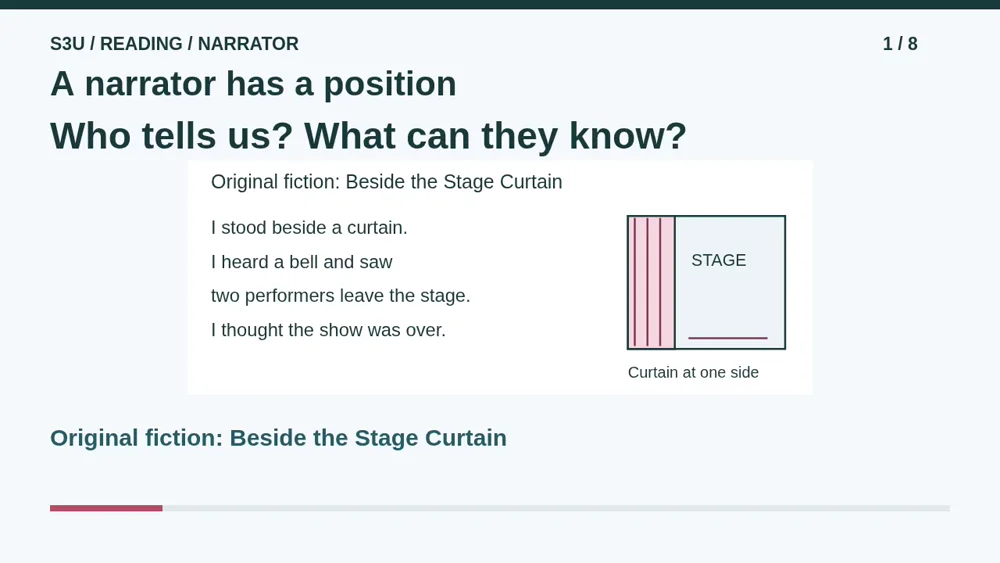
Reading / Grade 6 / 4:13. Separate a first-person narrator's observations from interpretations, revise with new evidence and explain what remains unknown.
Listen to lesson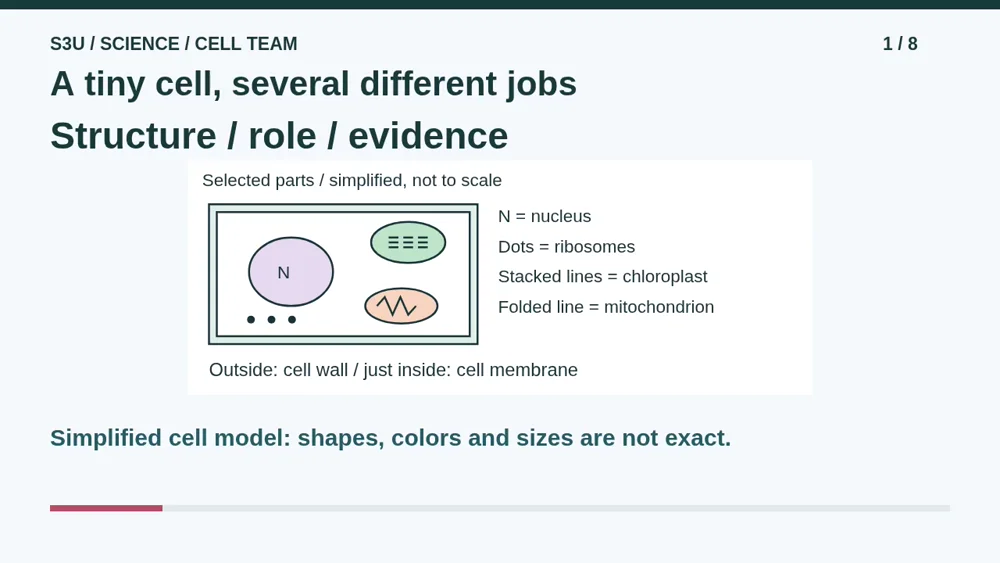
Science / Grade 6 / 4:06. Match five cell structures to their roles and correct a mixed-up model using function, not color.
Listen to lesson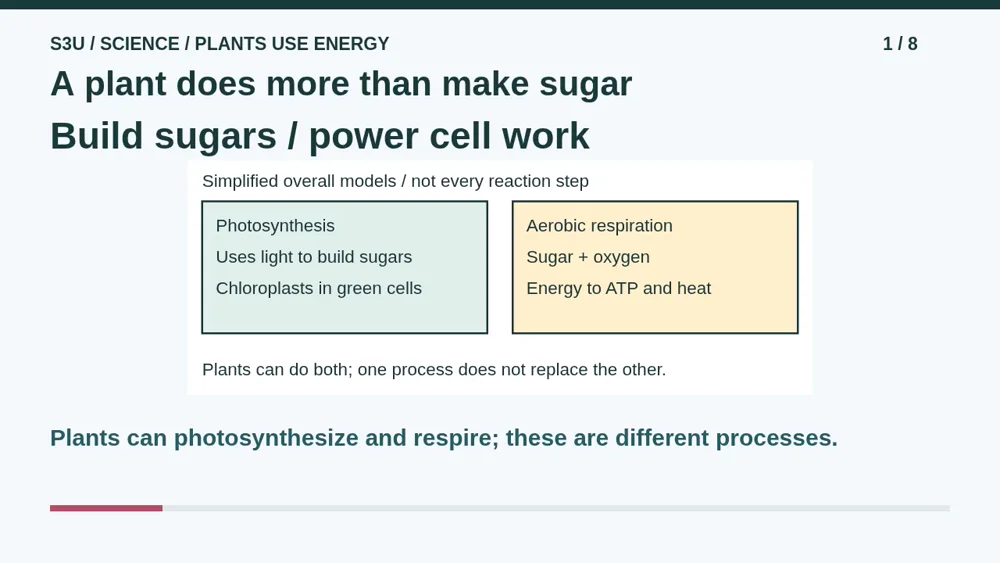
Science / Grade 7 / 4:22. Compare photosynthesis and aerobic respiration through their inputs, outputs and energy transfers.
Listen to lesson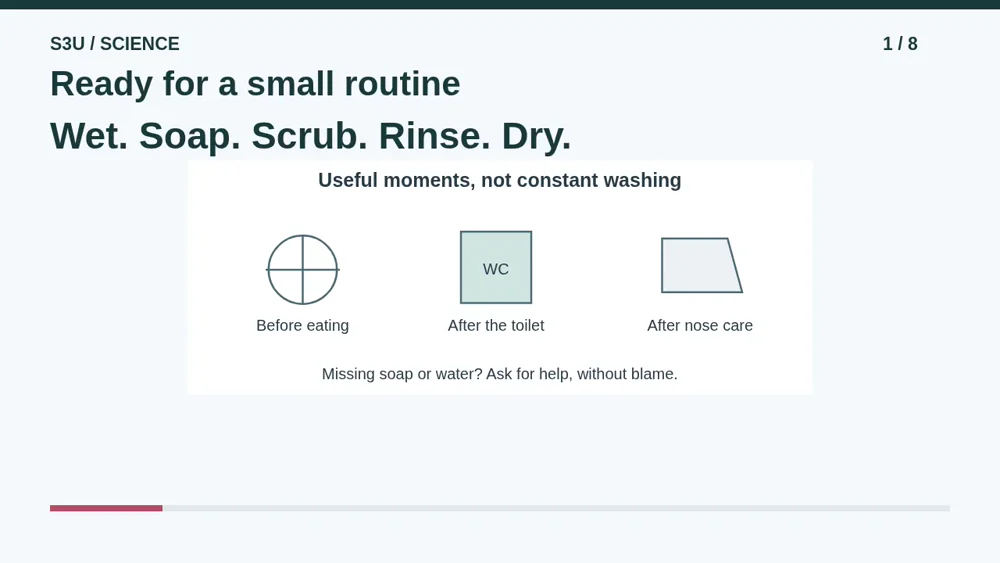
Science / Grades 1-2 / 2:37. Practice five handwashing steps, remember the scrub time, and know when to ask for help.
Listen to lesson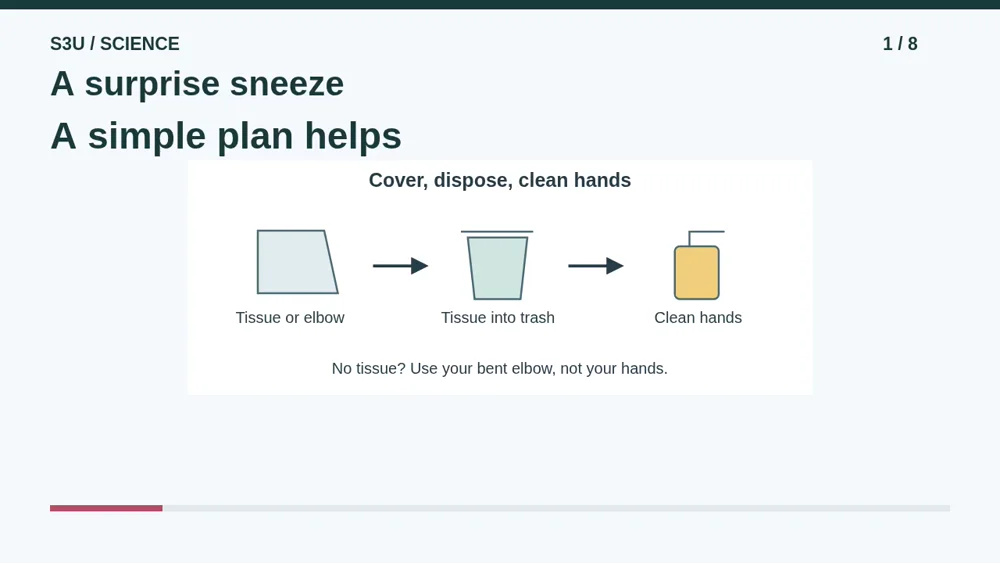
Science / Grades 3-5 / 2:45. Choose a tissue or bent elbow, dispose of tissues, clean hands, and respond kindly when someone is unwell.
Listen to lesson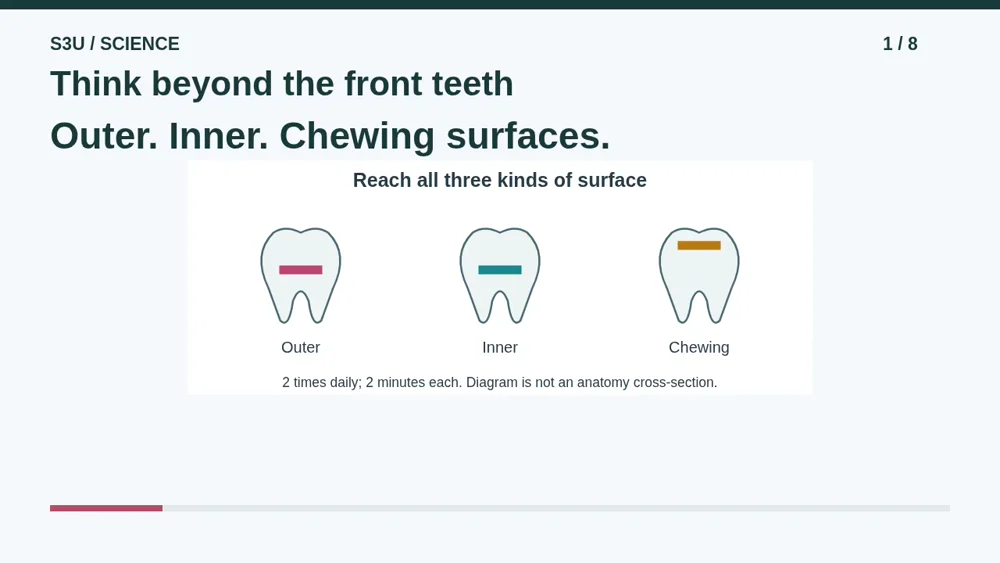
Science / Grades 3-5 / 2:44. Plan gentle brushing, reach different tooth surfaces, and learn why between-tooth care matters.
Listen to lesson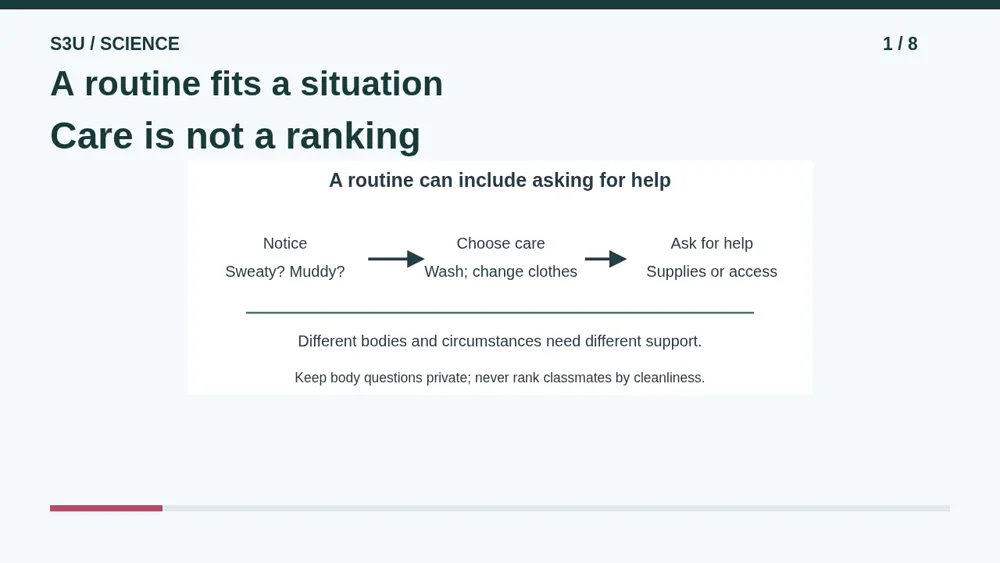
Science / Grades 5-8 / 3:01. Distinguish personal care from surface cleaning, follow product labels, and make routines accessible.
Listen to lesson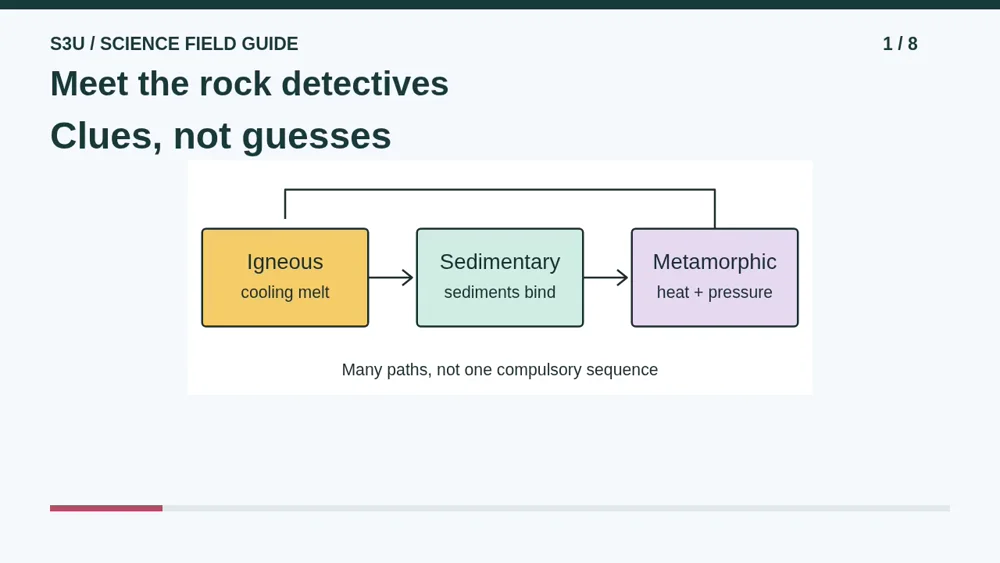
Science / Grades 3-5 / 2:36. Follow the clues that show how rocks form and change.
Listen to lesson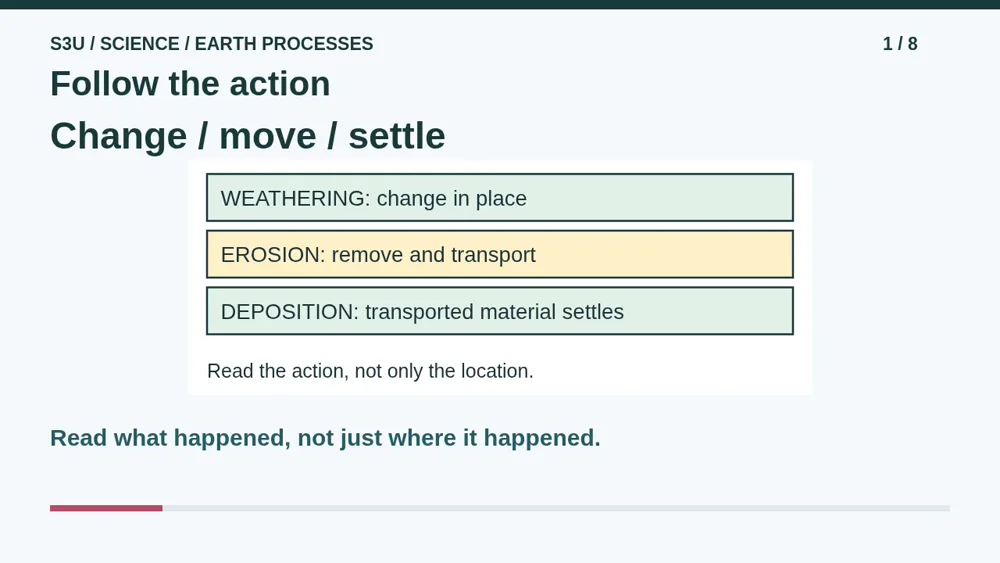
Science / Grade 5 / 4:42. Separate weathering, erosion and deposition using the action in each record, without inventing a missing journey.
Listen to lesson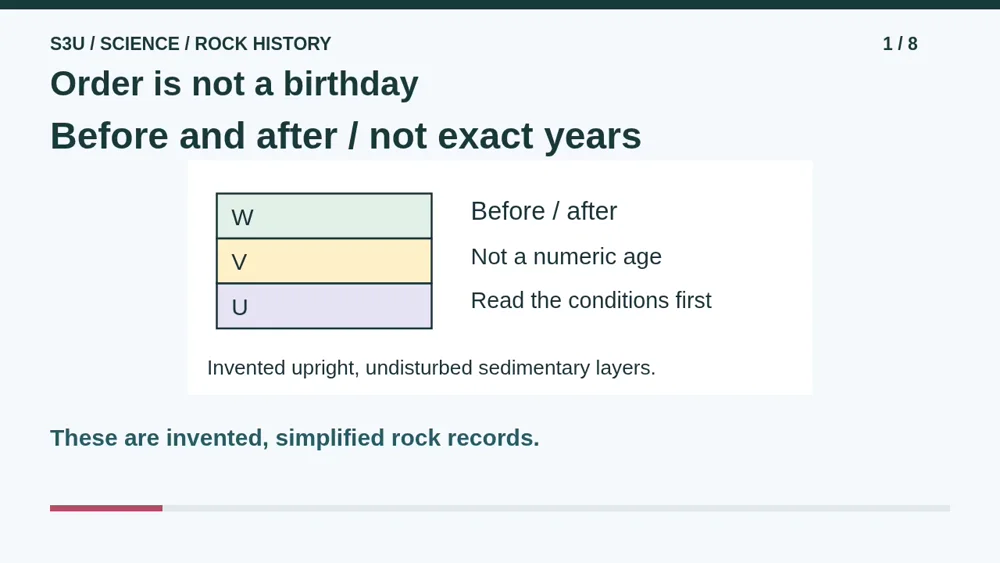
Science / Grade 8 / 4:46. Build relative event order from upright layers, intrusions and an erosion surface, while leaving unsupported numeric ages unknown.
Listen to lesson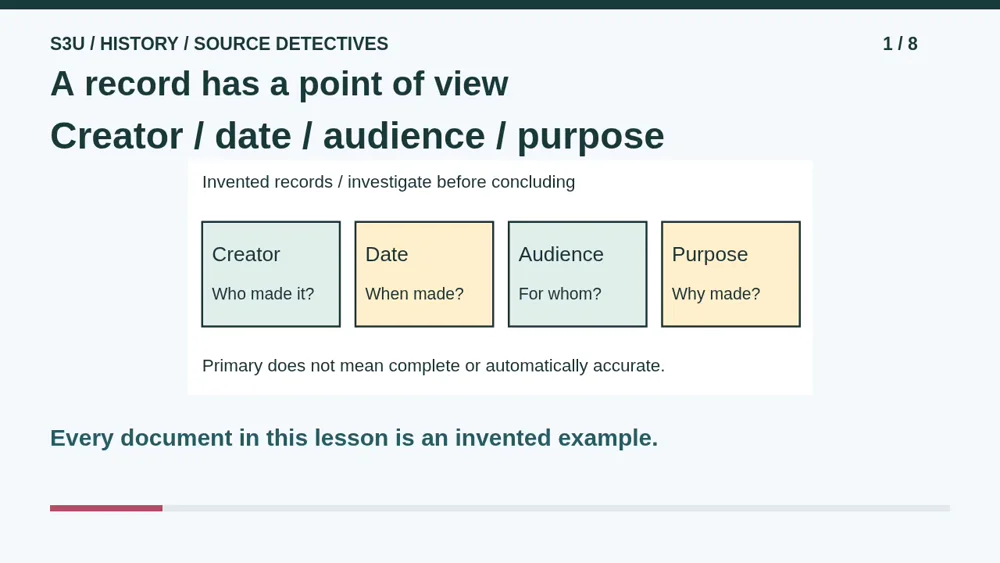
History / Grade 6 / 3:57. Investigate creator, date, audience and purpose without treating one account as every person's experience.
Listen to lesson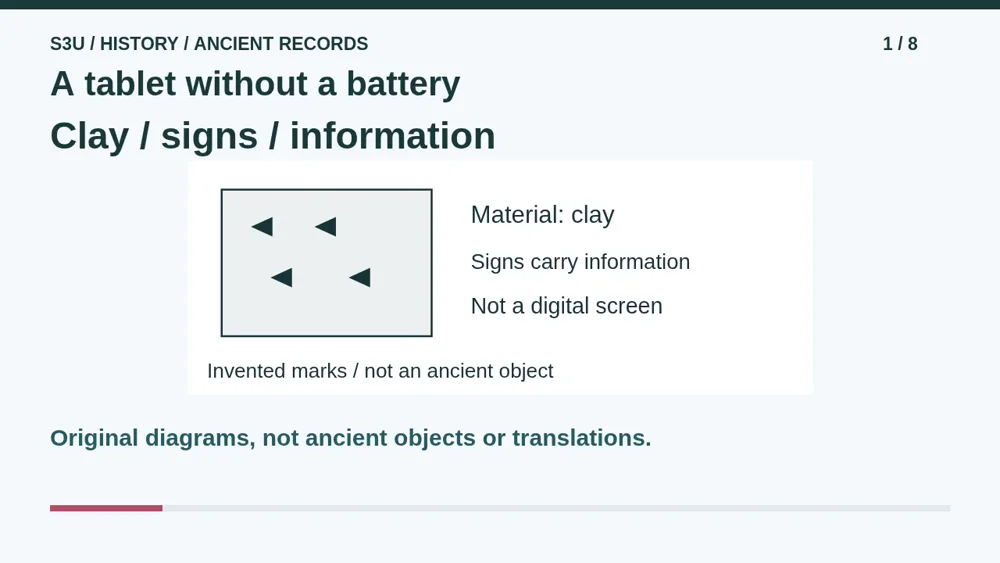
History / Grade 5 / 4:20. Connect Mesopotamian record keeping with clay, cuneiform and languages, then test the limits of two invented accounts.
Listen to lesson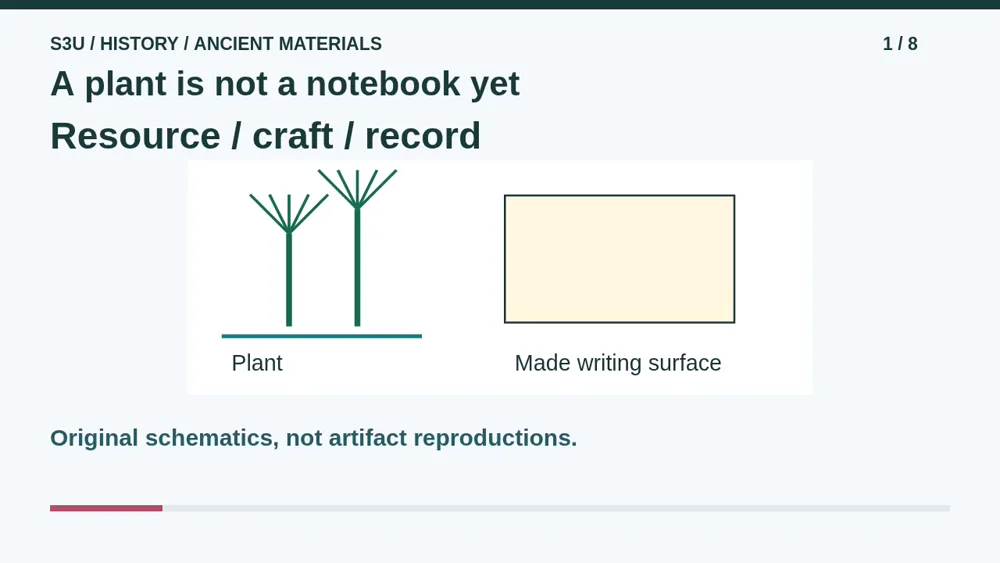
History / Grade 6 / 4:08. Follow papyrus from a wetland resource to crossing-layer sheets and written records, without treating one object as a whole society.
Listen to lesson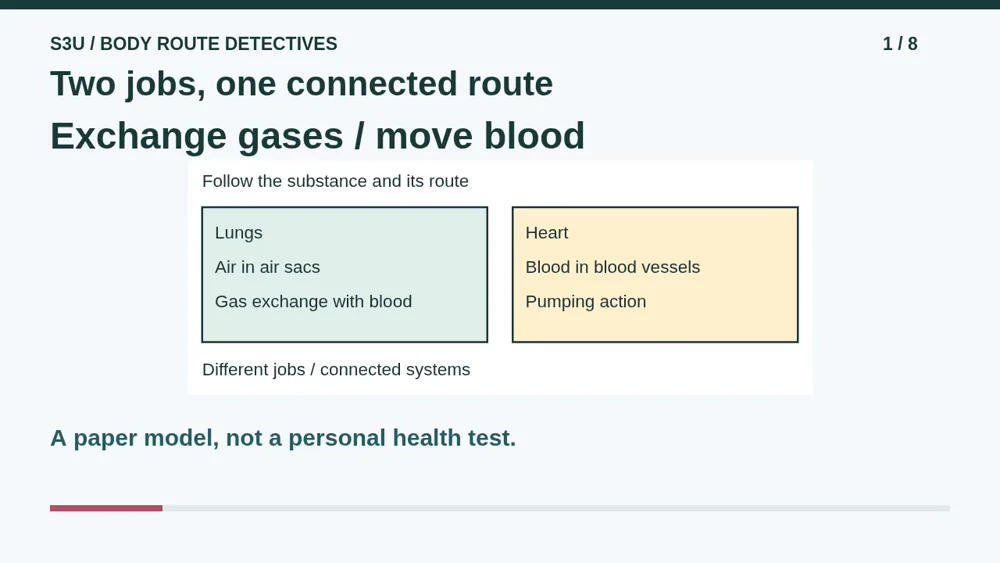
Science / Grade 5 / 5:21. Trace lung gas exchange and the blood route, distinguish connected organ jobs, and repair a simple body-system model.
Listen to lesson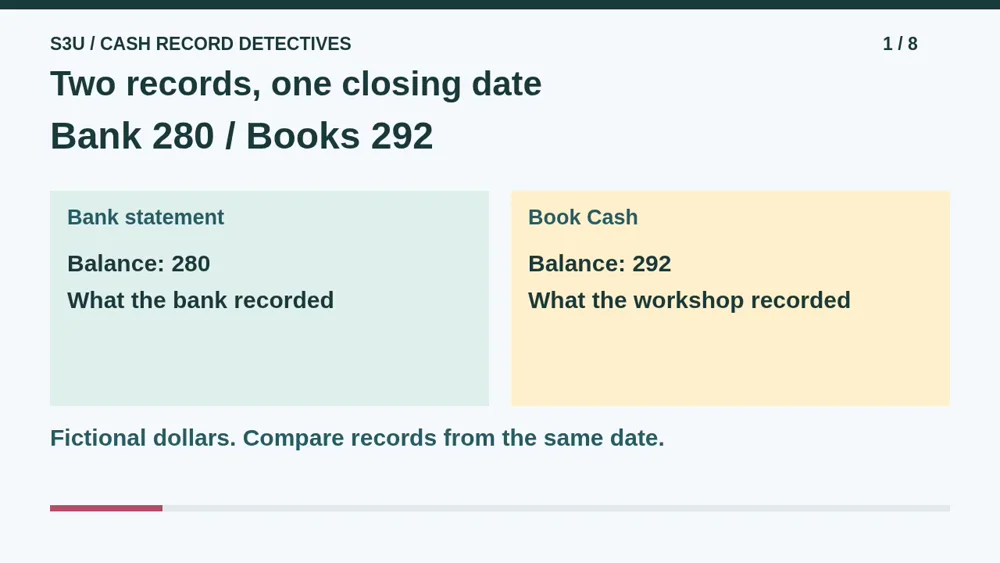
Math / Grade 8 / 4:52. Compare same-date bank and book balances, explain timing differences, and record missing interest and fees without counting an item twice.
Listen to lesson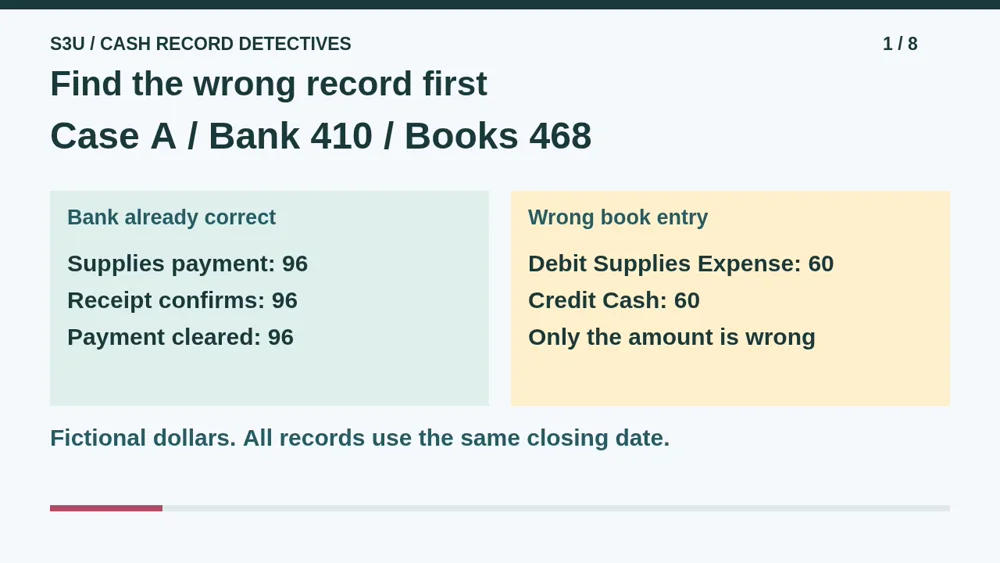
Math / Grade 9 / 6:16. Use receipts to repair expense payments entered too small or too large, and keep confirmed bank errors separate from book corrections.
Listen to lesson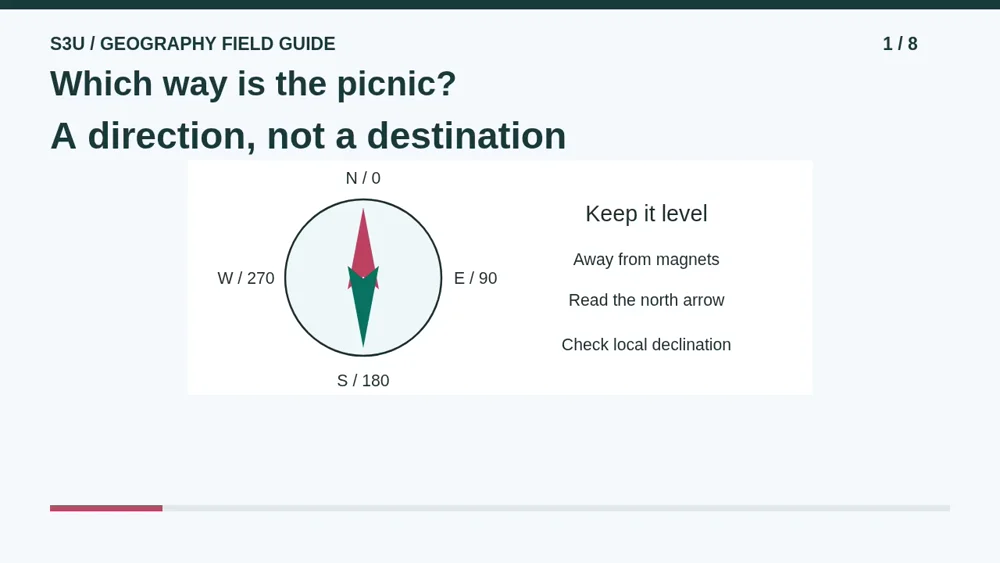
Geography / Grades 3-5 / 2:32. Read a compass, follow a bearing, and understand two kinds of north.
Listen to lesson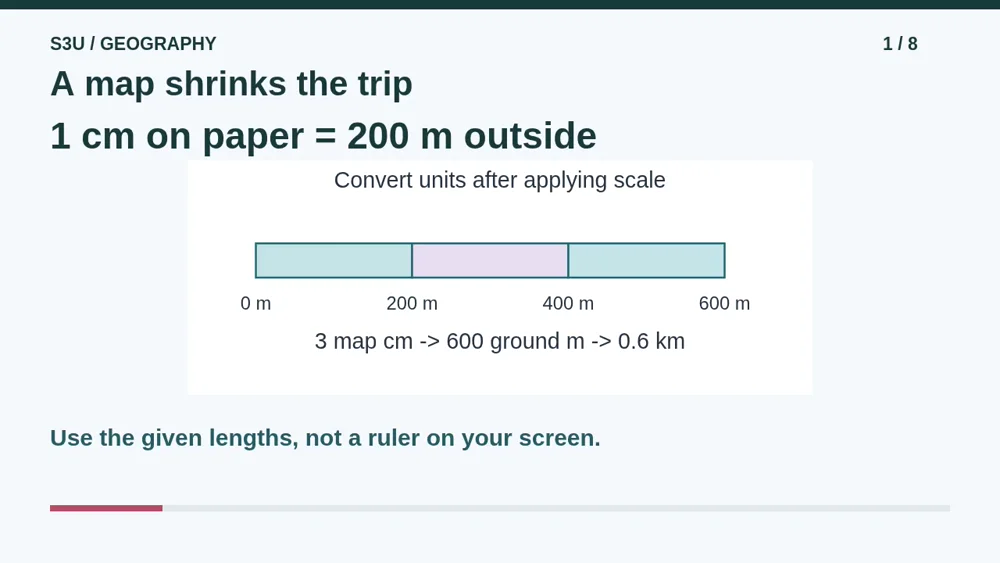
Geography / Grade 4 / 2:43. Convert map centimeters to real meters, combine route segments and compare a direct route.
Listen to lesson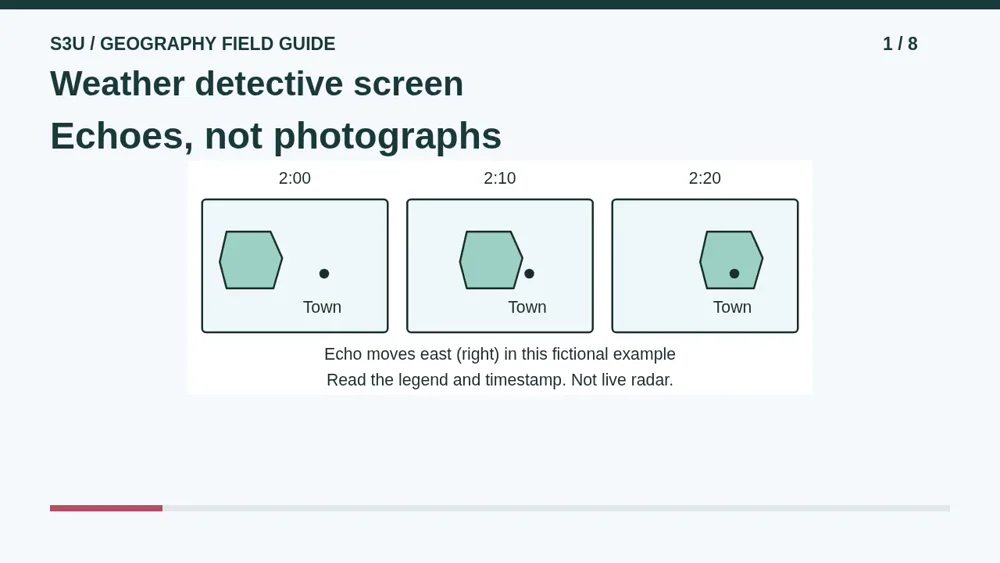
Geography / Grades 3-5 / 2:39. Use radar legends and time sequences without treating colors as promises.
Listen to lesson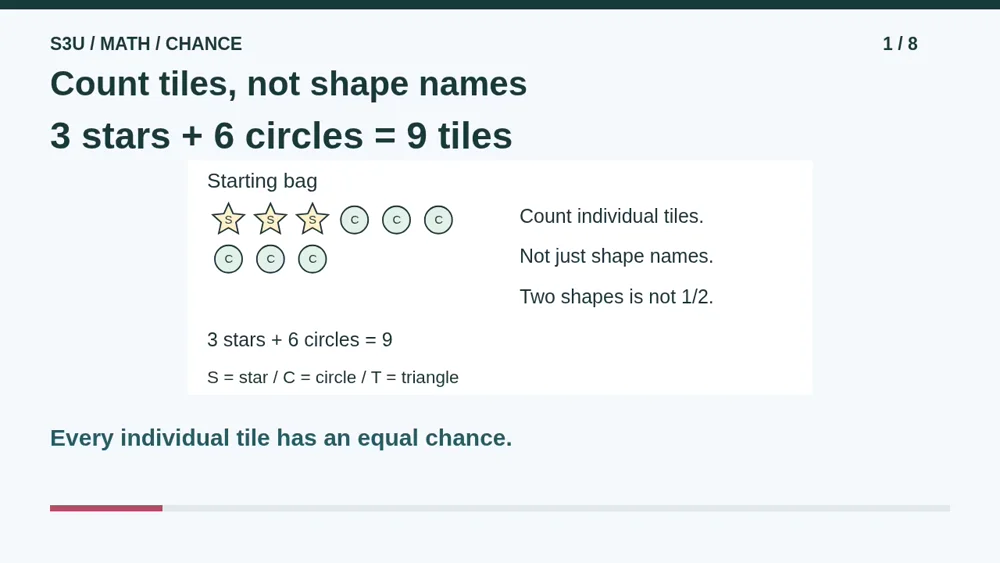
Math / Grade 7 / 3:38. Count equally likely individual tiles, compare matching groups, and distinguish probability from a promised short-run result.
Listen to lesson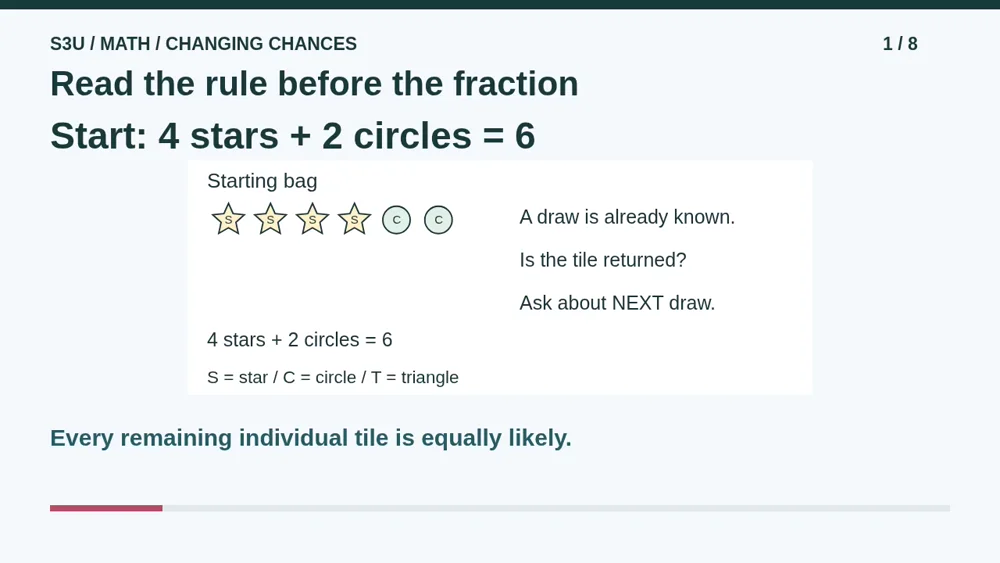
Math / Grade 7 / 3:38. Track remaining tiles after a stated draw, compare replacement rules, and distinguish an impossible result from an empty bag.
Listen to lesson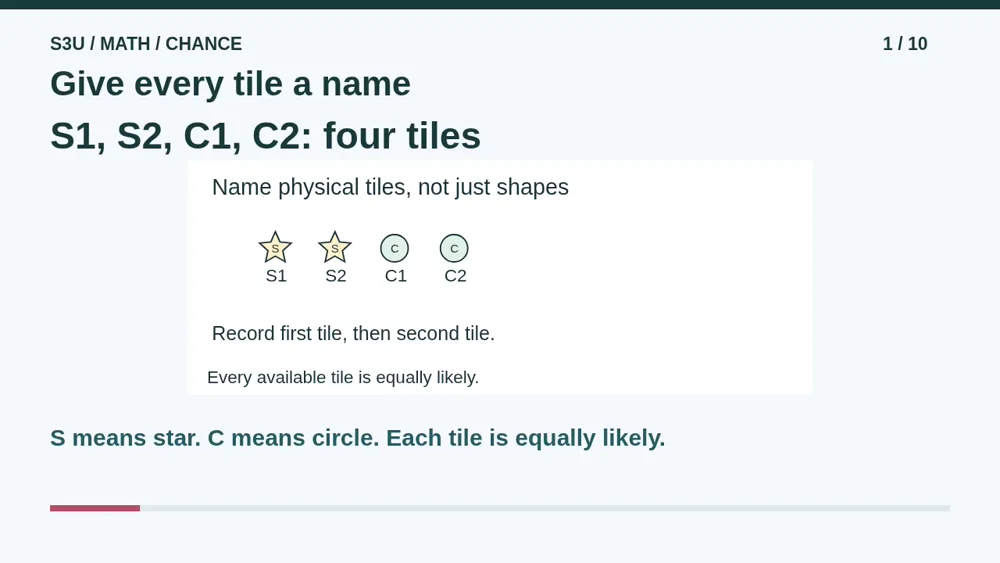
Math / Grade 7 / 5:44. Name individual tiles, count ordered paths with and without returns, and distinguish a known first draw from a whole-pair probability.
Listen to lessonSay your prediction aloud or jot it on paper before hearing the answer. Then continue to the matching worksheet.