Geography / Grades 3-5
Compass skills
Learning goal: Read a compass, follow a bearing, and understand two kinds of north.
Before you start: Imagine the spoken directions and a clockwise quarter turn while staying in place. No compass or outdoor trip is needed for this example. Practice with a real compass only in a safe, familiar place with an adult.
Read or print this lesson What to practice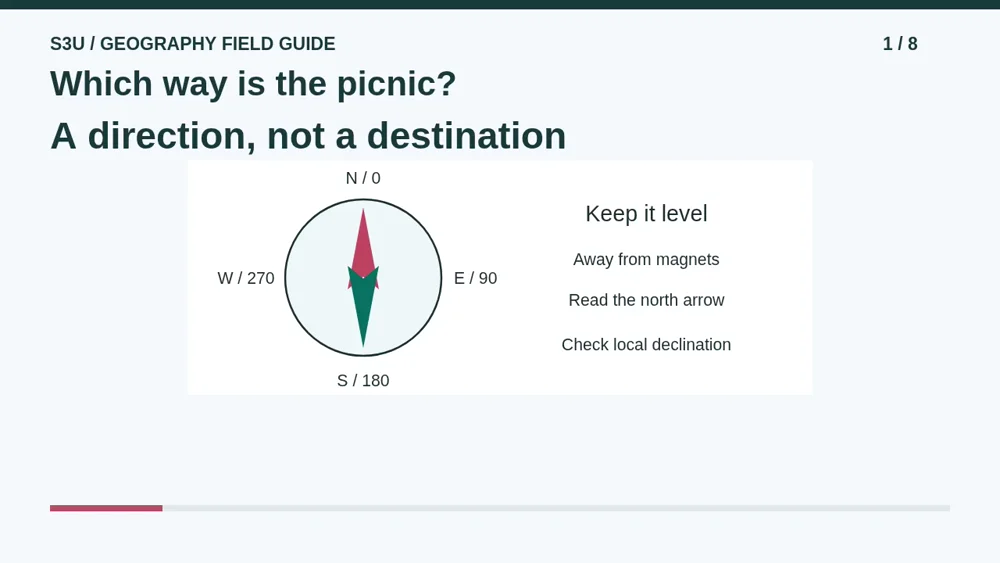
Audio and video share one lesson record. Keep this page open while listening.
Download audio Downloads do not save lesson progress.
The audio could not load. The transcript is still available below.
Next: your worksheet
Meet the compass
Checking sign-in...
Read the transcript
Saved reading place
Audio transcript and practice. Reading or printing does not count as playback time or an assessed grade.
1. Which way is the picnic?
Audio: 0:00
A compass can help you find a direction. It cannot tell you who ate the picnic. Today we will read a compass rose, try a bearing, and learn why magnetic north and true north are not always the same.
2. Four familiar directions
Audio: 0:16
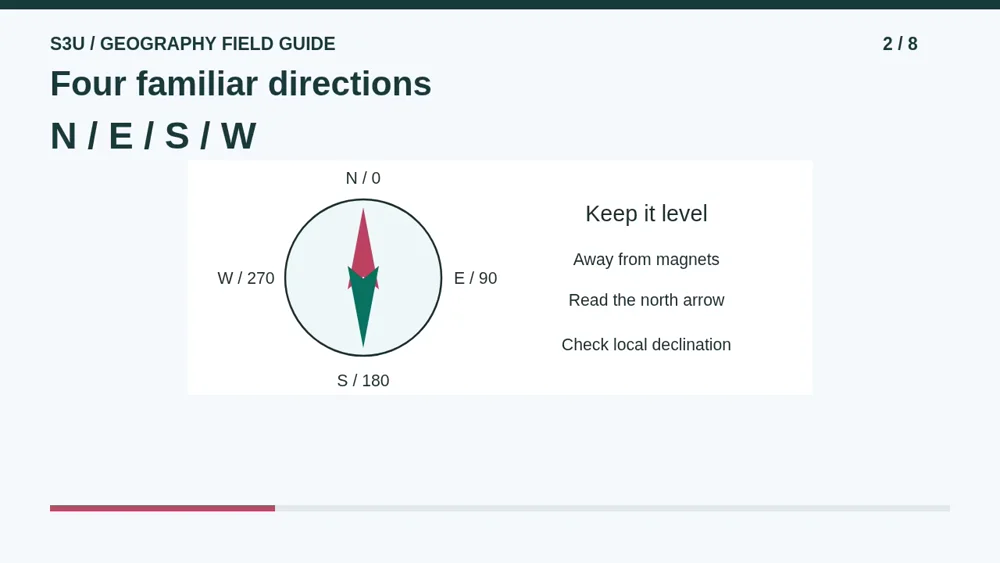
Read the compass rose. North is zero degrees. Turn clockwise to east at ninety, south at one hundred eighty, and west at two hundred seventy. A full turn brings you back to north. Opposite directions are half a turn apart.
3. Let the needle settle
Audio: 0:35
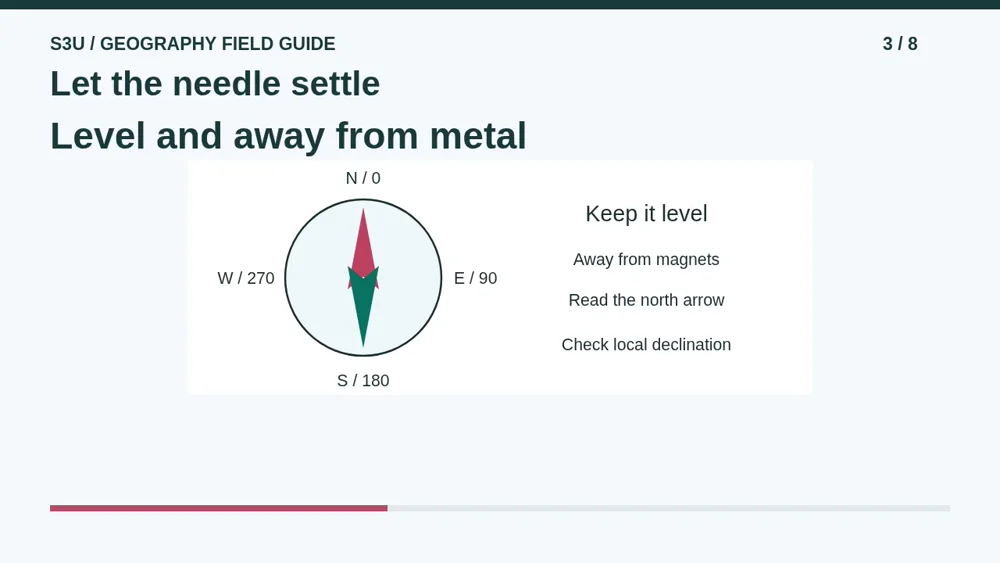
Hold a basic magnetic compass level. Keep it away from magnets, phones, and large metal objects. Let the needle settle before reading. The north seeking end follows the local magnetic field. Waving it wildly does not make north arrive faster.
4. Pause and turn
Audio: 0:56
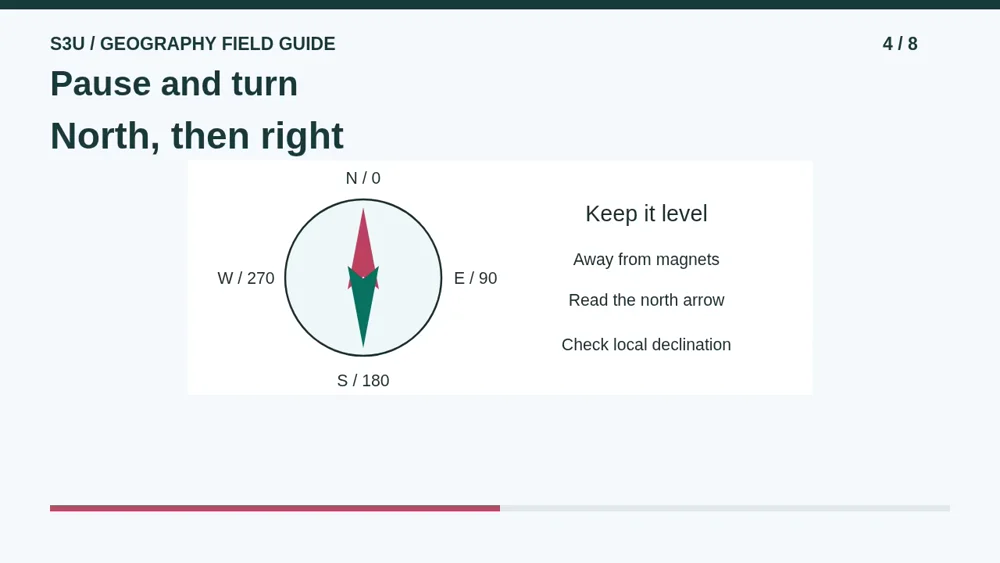
Imagine you are facing north. Turn a quarter turn clockwise. Pause and name the direction. You can point with your finger on the diagram. We are practicing directions, not asking you to walk anywhere unsafe.
5. Check the answer
Audio: 1:14
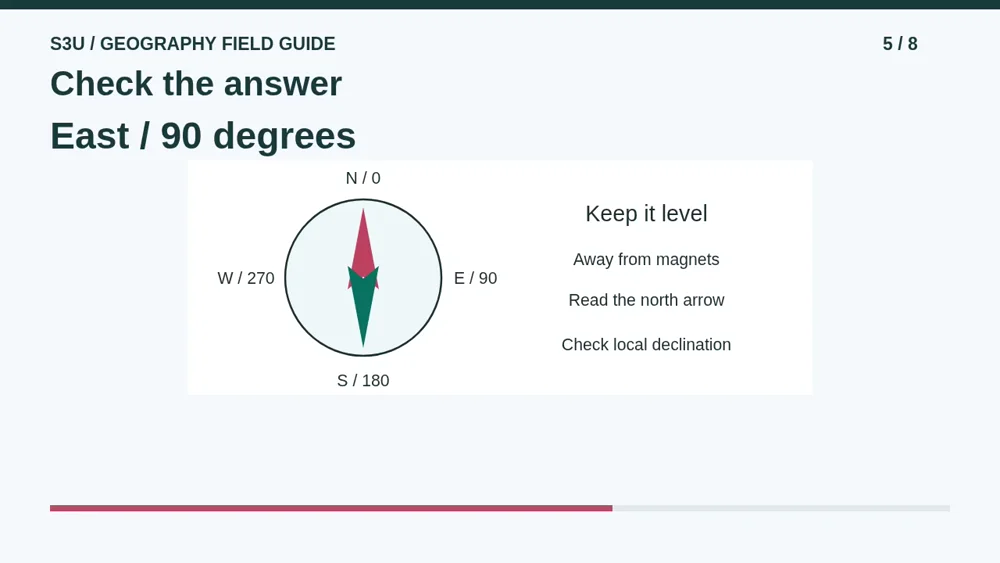
A quarter turn clockwise from north brings you to east, ninety degrees. Another quarter turn brings you south. Bearings describe direction, not distance. A bearing alone cannot tell you how far away your destination is.
6. Two kinds of north
Audio: 1:32
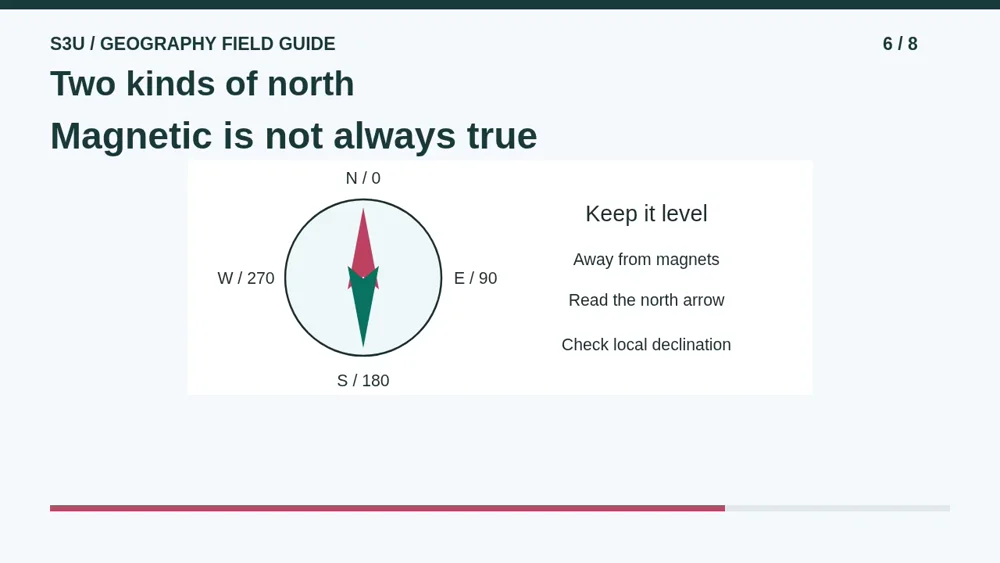
Fun fact. A compass and map can disagree without either being broken. The difference between magnetic north and true north is called declination. It depends on where you are and can change over time. Check current local information for real navigation.
7. Read the map too
Audio: 1:53
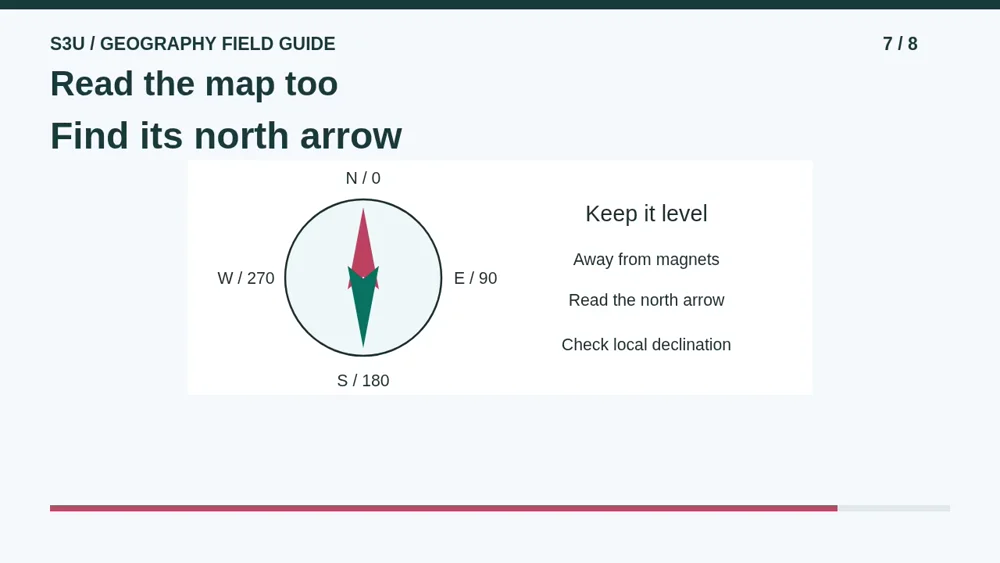
Do not assume the top of every map is north. Find its north arrow. Practice orienting a map with adult help and a suitable compass. Follow the instructions for that compass, including any declination adjustment. Keep familiar landmarks in view.
8. A safe first mission
Audio: 2:13
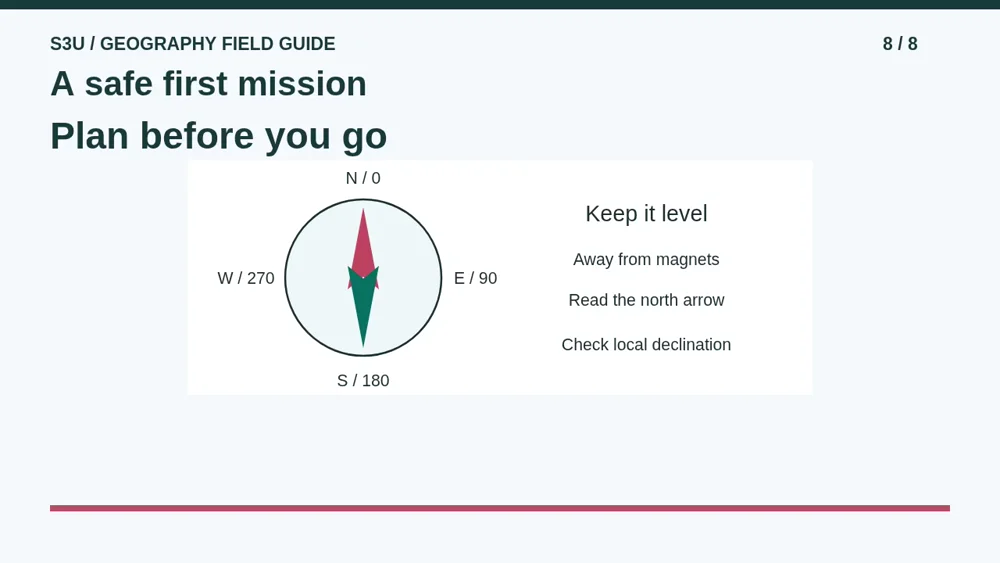
Practice in a familiar safe place with an adult. Stay away from roads and hazards. Check your direction while stopped, then look where you are going. Your worksheet has bearings to solve before your compass gets promoted to picnic detective.
Show your understanding
You can point, explain aloud, draw or write.
- Read a clockwise bearing from north and match it to a direction.
- Distinguish magnetic north from true north and explain why nearby magnetic material can matter.
Try it yourself
Pause at the question and explain your answer before continuing.
Complete the matching worksheet, then explain one new idea in your own words.
Next: your worksheet
Meet the compasshttps://s3u.com/gd310
Lesson: https://s3u.com/listen/compass-skills