History / Grade 4
History detectives: compare two accounts
Learning goal: Compare a fictional poster and letter while separating advertised plans, personal reactions and shared evidence.
Before you start: Identify a document's author and distinguish a plan from a reported event.
Read or print this lesson What to practice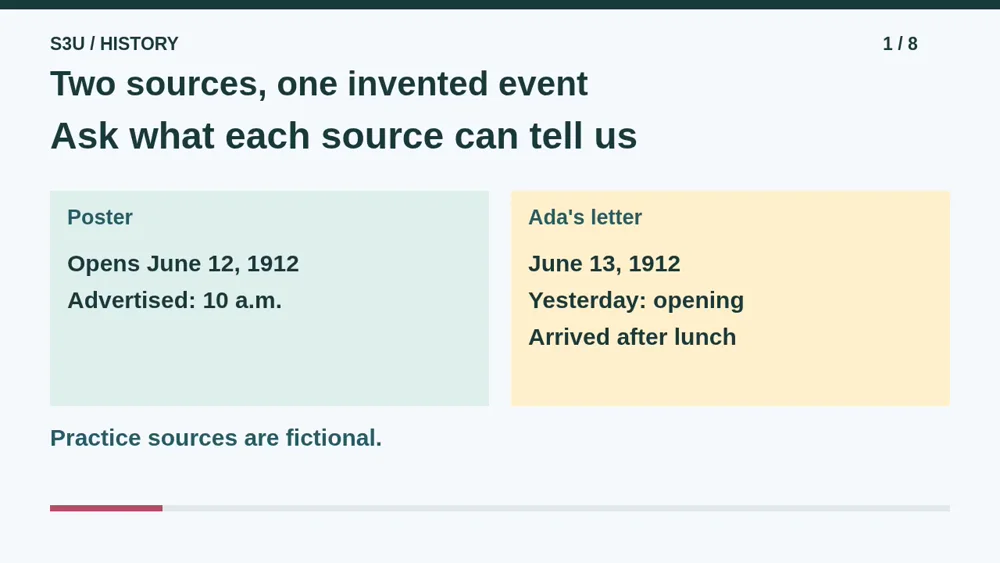
Audio and video share one lesson record. Keep this page open while listening.
Download audio Downloads do not save lesson progress.
The audio could not load. The transcript is still available below.
Next: your worksheet
Compare Two Accounts of One Event
Checking sign-in...
Read the transcript
Saved reading place
Audio transcript and practice. Reading or printing does not count as playback time or an assessed grade.
1. Two sources, one invented event
Audio: 0:00
We are investigating a pretend town exhibition. These sources were written for this lesson, not discovered in an archive. A poster announces an opening date. A visitor's letter describes her own visit. Both may help, but they do not answer every question in the same way.
2. Read a source's purpose
Audio: 0:22
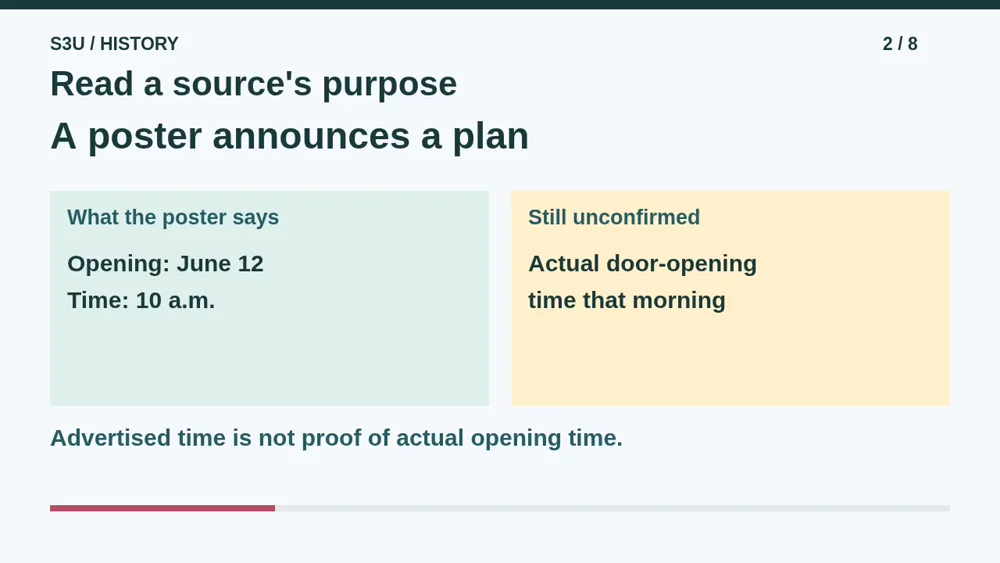
The poster says the exhibition opens June twelfth at ten in the morning. That directly supports what was advertised. It does not prove the doors opened at exactly ten. A plan and what actually happened can differ. Even a beautiful poster cannot make a late door unlock itself.
3. Read a personal account carefully
Audio: 0:44
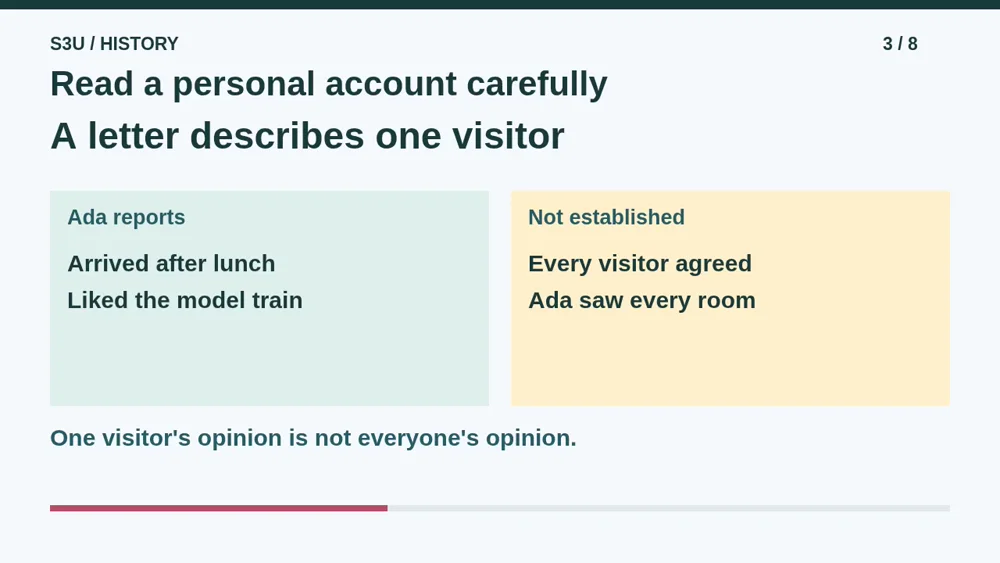
Ada writes on June thirteenth that yesterday was opening day. She arrived after lunch and liked the model train best. This tells us about Ada's visit and reaction. It does not show that every visitor liked the train or that Ada saw every room.
4. Find the shared detail
Audio: 1:04
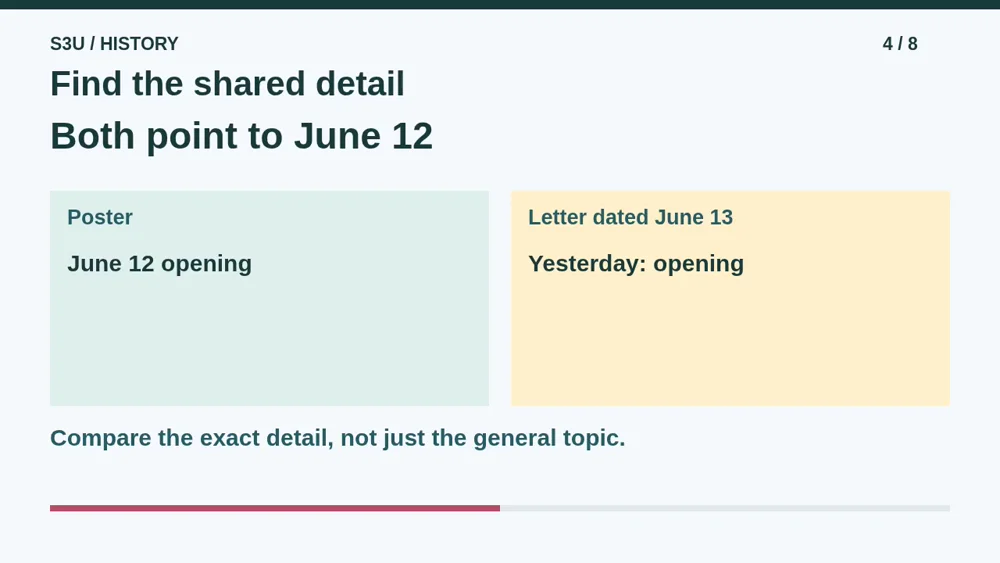
The poster names June twelfth. Ada's letter is dated June thirteenth and calls yesterday opening day. Those clues point to the same date. Agreement supports that detail. We still ask how sources were made; agreement is useful evidence, not a magic guarantee that every statement is true.
5. Pause: whose reaction do we know?
Audio: 1:27
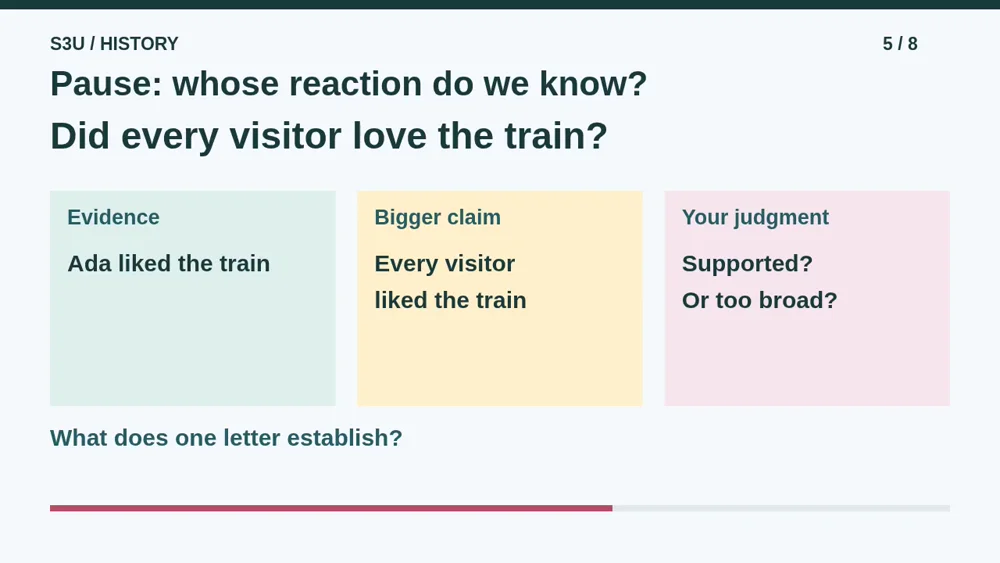
Pause and decide whether Ada's letter proves every visitor enjoyed the model train. Name the evidence we actually have. Then name the extra claim the question adds. This is a useful detective habit: separate a small supported statement from a much bigger unsupported one.
6. Keep the claim within the evidence
Audio: 1:49
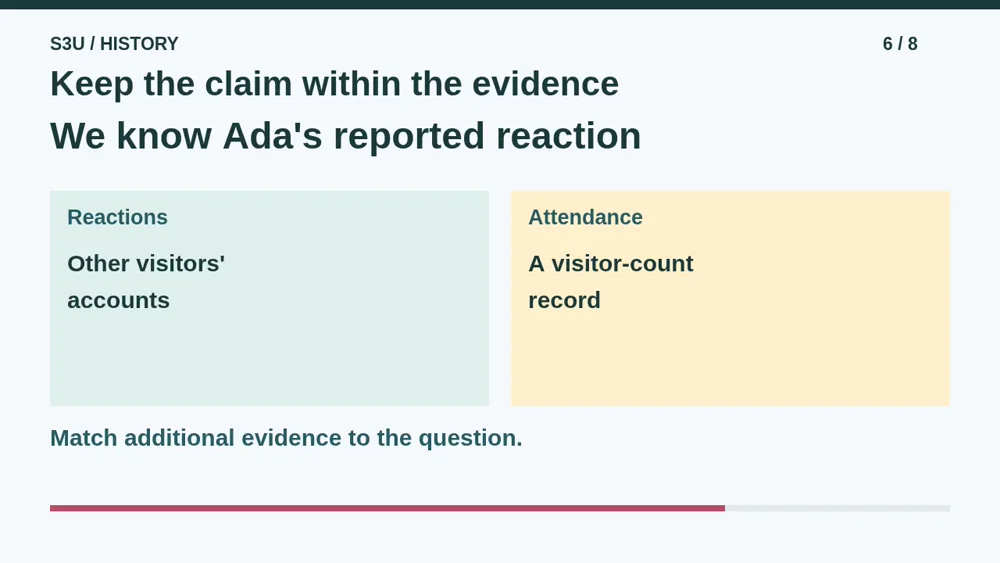
We know Ada wrote that she liked the train. We do not know every other visitor's reaction. To investigate those reactions, we would need more suitable sources, such as other visitors' accounts. To estimate attendance, a visitor-count record would fit better than a list of favorite displays.
7. One letter can answer two questions
Audio: 2:11
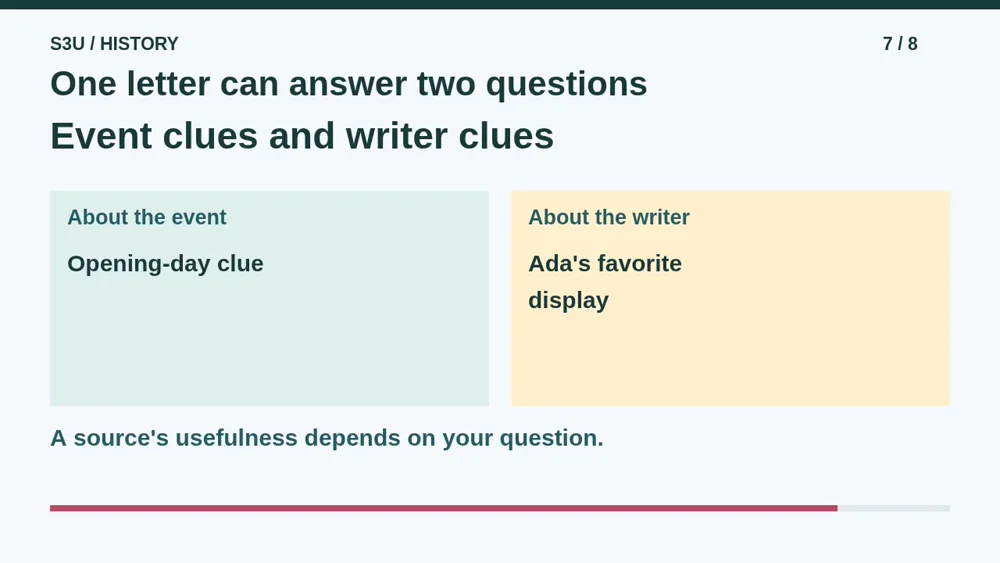
Fun fact: a personal letter can be evidence about both an event and its writer. Ada's letter gives a date clue and also tells us what caught her attention. The same page can help with different questions, as long as we keep its limits clear.
8. Compare before you conclude
Audio: 2:29
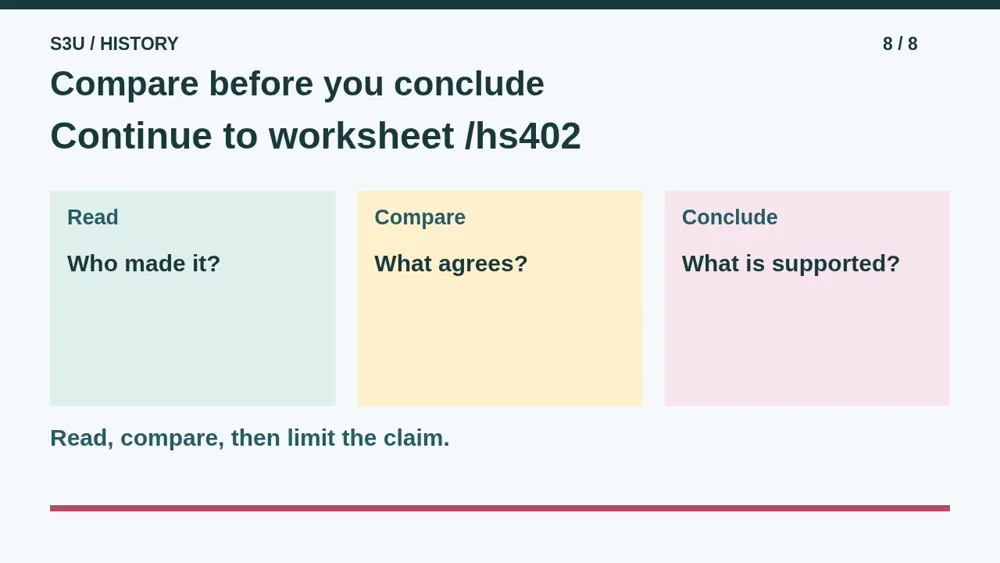
Continue to the worksheet and read both fictional sources. Identify what each says directly, find a detail they share, and notice questions they leave unanswered. Give careful answers even when the evidence is incomplete. Saying we do not know yet can be the most accurate conclusion.
Show your understanding
You can point, explain aloud, draw or write.
- Separate an advertised plan, a writer's reaction and a claim shared by two fictional sources.
- Support a comparison with the source text and state what the sources cannot settle.
Try it yourself
Pause and decide whether Ada's letter proves every visitor enjoyed the model train. Name the evidence we actually have. Then name the extra claim the question adds. This is a useful detective habit: separate a small supported statement from a much bigger unsupported one.
Continue to the matching worksheet. Explain your reasoning before checking your answers.
Next: your worksheet
Compare Two Accounts of One Eventhttps://s3u.com/hs402
Lesson: https://s3u.com/listen/compare-accounts