Science / Grades 5-8
Hygiene choices: care without blame
Learning goal: Distinguish personal care from surface cleaning, follow product labels, and make routines accessible.
Before you start: Read or listen to a product label and distinguish something used on a person from something used on a surface.
Read or print this lesson What to practice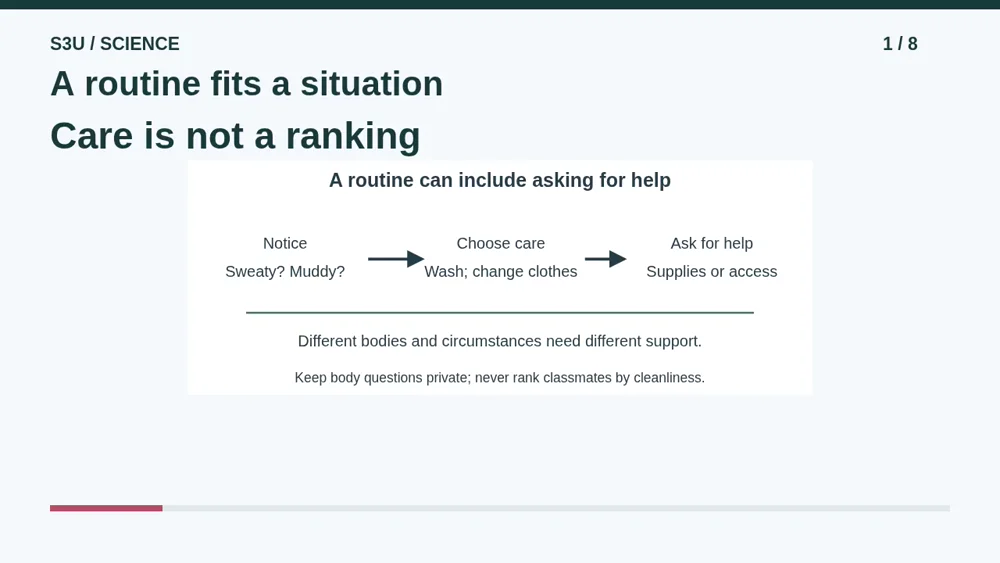
Audio and video share one lesson record. Keep this page open while listening.
Download audio Downloads do not save lesson progress.
The audio could not load. The transcript is still available below.
Next: your worksheet
Hygiene: Clean or Disinfect?
Checking sign-in...
Read the transcript
Saved reading place
Audio transcript and practice. Reading or printing does not count as playback time or an assessed grade.
1. A routine fits a situation
Audio: 0:00
Hygiene includes everyday care for our bodies and shared spaces. Needs change with activity, age, skin, and available support. A muddy afternoon and a quiet reading session are different situations. We can learn useful choices without scoring how clean someone looks or deciding who deserves respect.
2. Start with a useful next step
Audio: 0:24
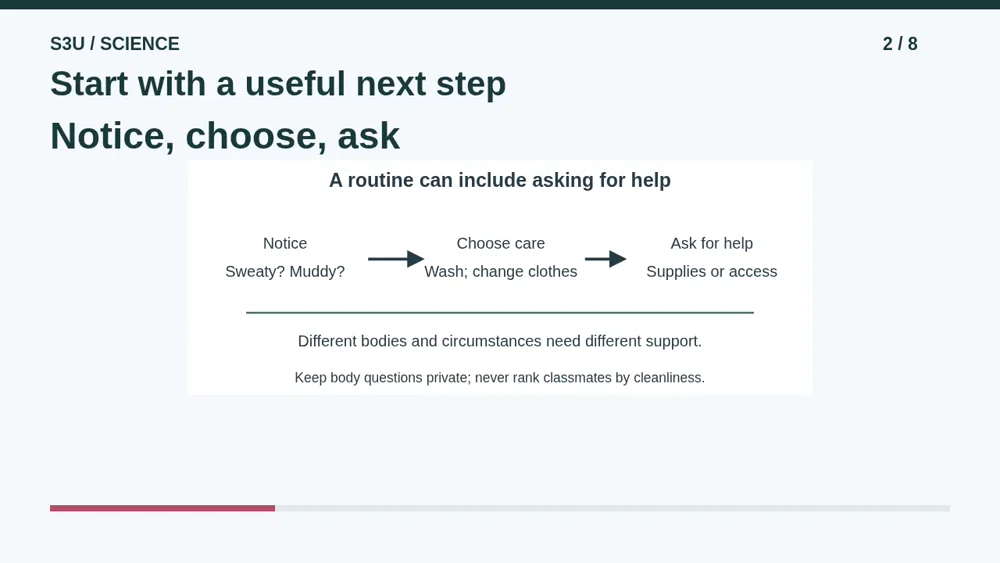
After sweaty activity, washing and changing damp clothing may be useful. Hair and skin routines differ, so follow suitable guidance and ask for help with irritation or pain. Do not borrow a classmate's routine as a universal rule. Their body is not an instruction manual for yours.
3. Make the action possible
Audio: 0:47
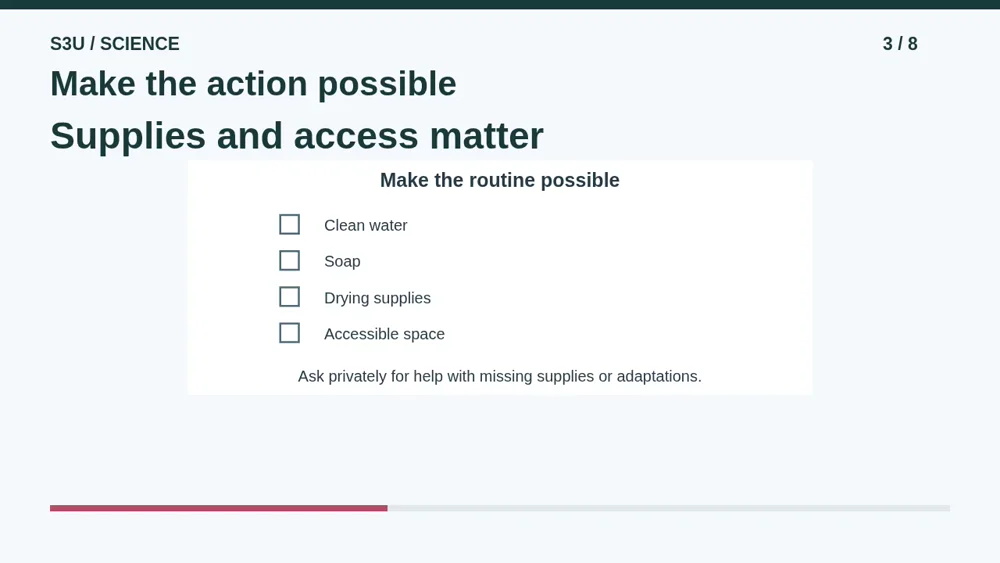
A reminder to wash hands is not enough if the soap dispenser is empty or the sink is unreachable. Think about water, soap, drying supplies, and accessible space. A private request for help is a practical step. Missing resources are a problem to solve, not a person to blame.
4. Two different surface tasks
Audio: 1:09
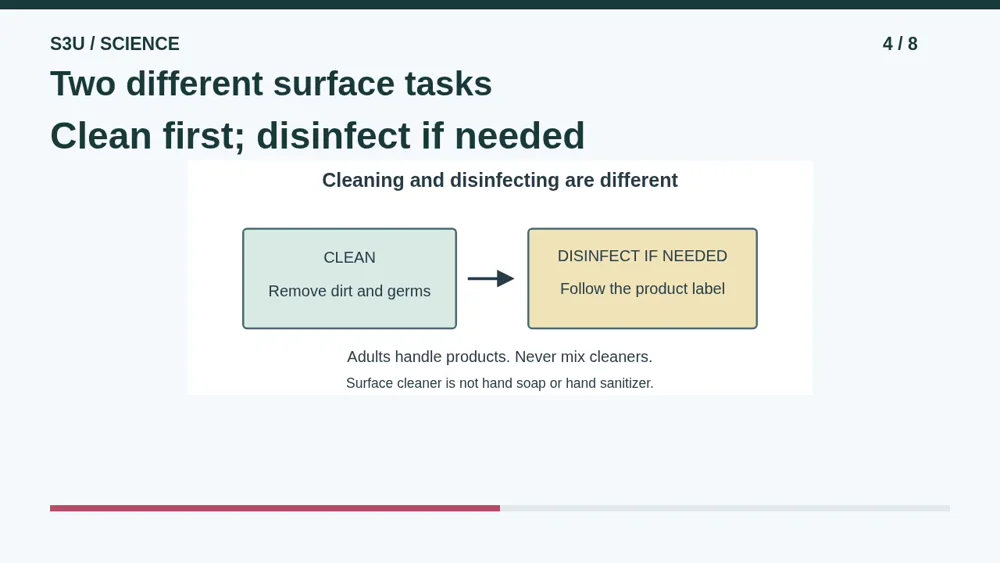
Cleaning removes dirt and germs from surfaces. Disinfecting uses a suitable product to kill germs when that extra step is needed. Routine home cleaning does not mean disinfecting everything all day. A responsible adult follows the real product label and current guidance for the setting.
5. Pause at the product shelf
Audio: 1:32
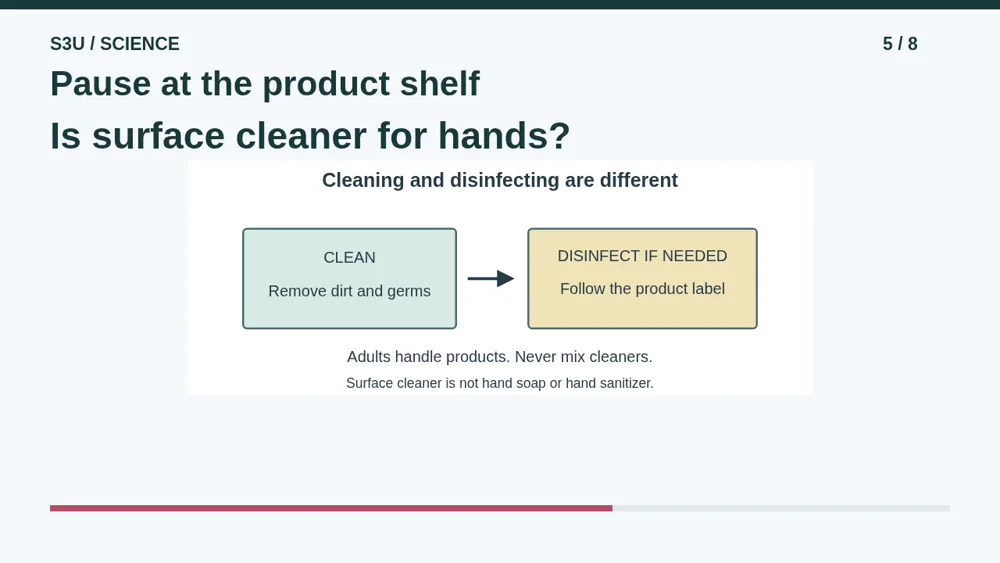
A story character finds a bottle meant for a tabletop and wants to use it on their hands. Pause and explain the problem. A label about surfaces is not a label about skin. Never try this situation as an experiment, and never mix cleaning products.
6. Check the safer choice
Audio: 1:52
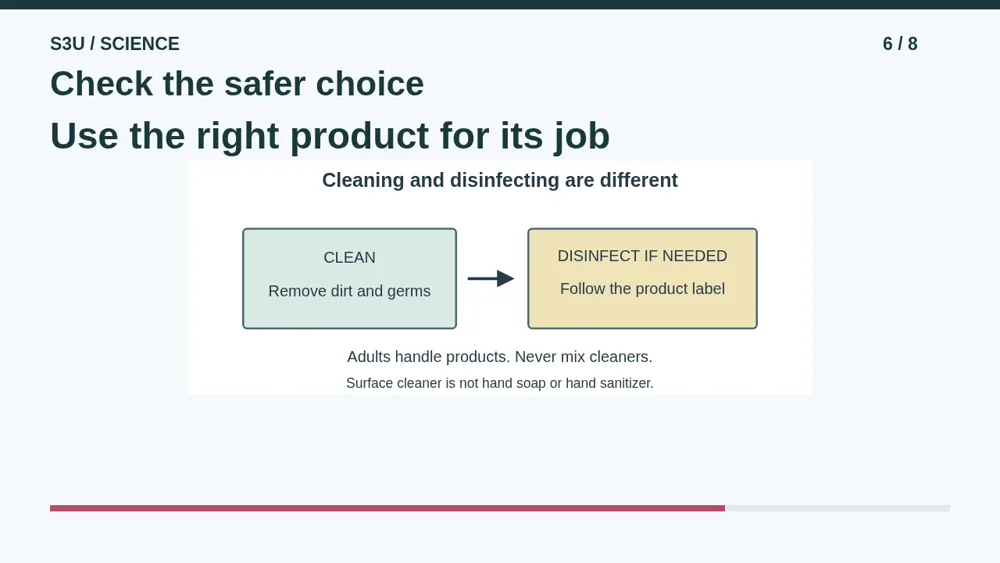
The tabletop product is not hand soap or hand sanitizer. Put the decision with a responsible adult and use products only as directed. Labels may specify a surface, ventilation, protection, and contact time. We read those instructions; we do not invent a stronger mixture.
7. A fact about cleaning
Audio: 2:15
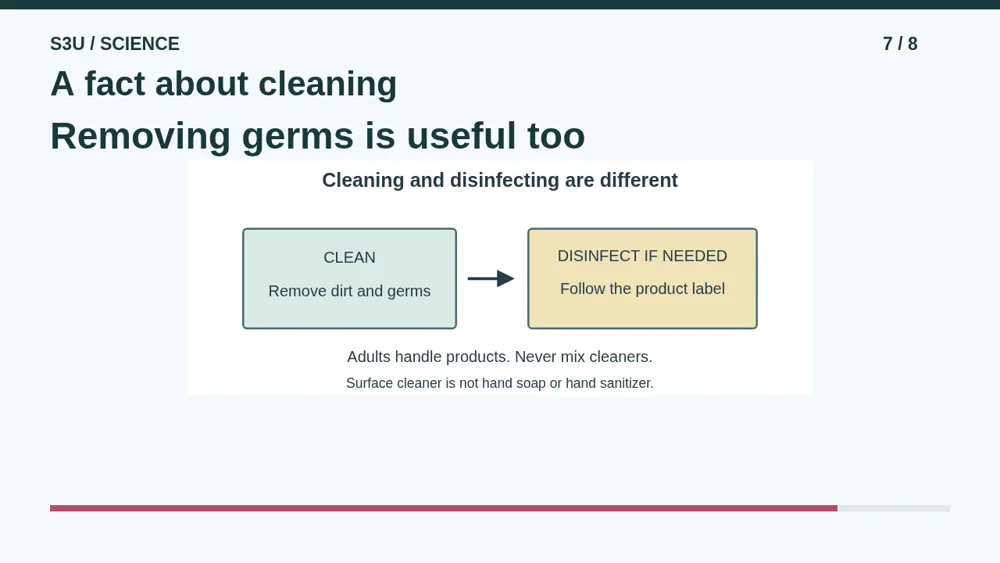
Here is a useful fact: cleaning can remove germs without needing to kill every one of them. More chemical is not automatically more care. The aim is an appropriate routine, not a sterile home or a never-ending cleaning challenge. Some settings need additional professional precautions.
8. Your next step
Audio: 2:37
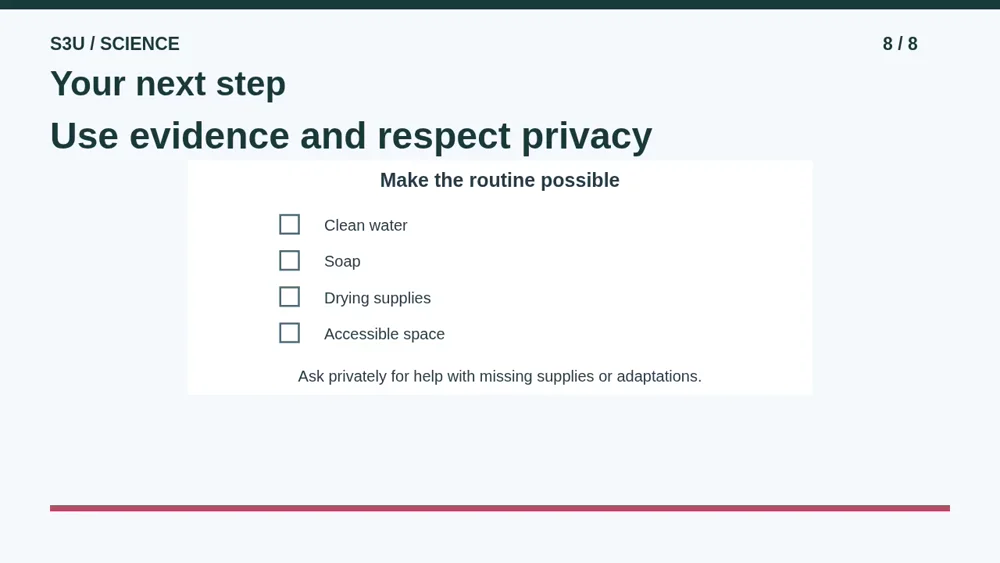
Continue to the worksheet to compare cleaning, disinfecting, and safe product choices. Use the fictional situations rather than collecting details about anyone's body or home. General lessons cannot replace individual health advice. If a routine is painful or difficult, a trusted adult or professional can help.
Show your understanding
You can point, explain aloud, draw or write.
- Choose an appropriate personal-care or surface-cleaning action for the fictional situation.
- Use label instructions and adult help instead of mixing products or assuming a clean appearance proves safety.
Try it yourself
Pause and choose a helpful next step for the fictional character.
Continue to the matching worksheet. Keep personal body and health information private; ask a trusted adult or professional about individual concerns.
Next: your worksheet
Hygiene: Clean or Disinfect?https://s3u.com/sy750
Lesson: https://s3u.com/listen/hygiene-choices