Science / Grades 3-5
Teeth: gentle care, useful routines
Learning goal: Plan gentle brushing, reach different tooth surfaces, and learn why between-tooth care matters.
Before you start: Recognize a toothbrush and the different sides of a tooth in a diagram. Ask an adult or dental professional for help with personal care.
Read or print this lesson What to practice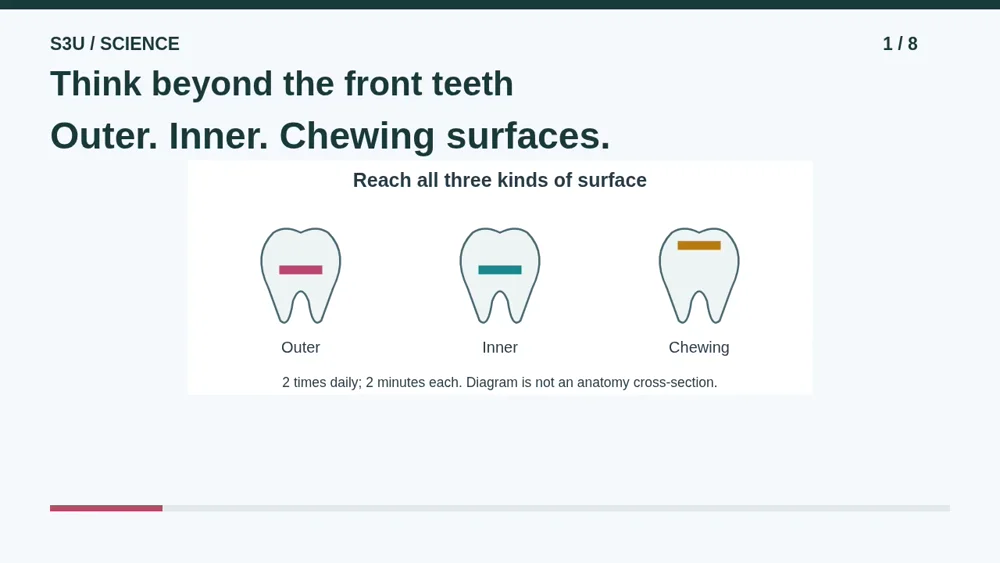
Audio and video share one lesson record. Keep this page open while listening.
Download audio Downloads do not save lesson progress.
The audio could not load. The transcript is still available below.
Next: your worksheet
Hygiene: Care for All Tooth Surfaces
Checking sign-in...
Read the transcript
Saved reading place
Audio transcript and practice. Reading or printing does not count as playback time or an assessed grade.
1. Think beyond the front teeth
Audio: 0:00
The teeth you can see in a smile are only part of the brushing job. Teeth also have inner surfaces and chewing surfaces. Our picture names those areas. It is a simple reminder, not a dental examination or a map of every person's mouth.
2. A steady routine
Audio: 0:20
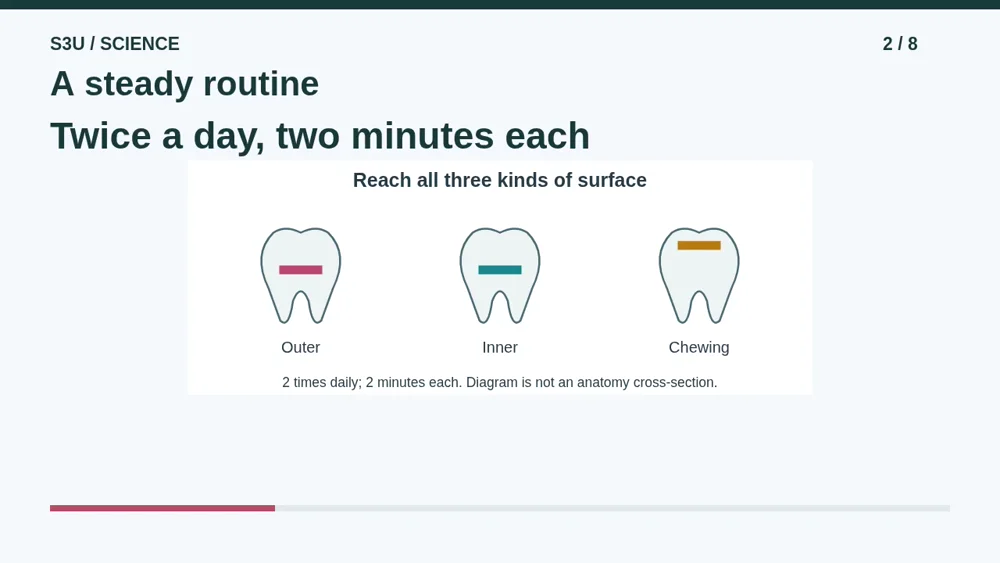
The usual guidance is to brush twice daily for two minutes, using a soft-bristled toothbrush and fluoride toothpaste. Follow your dental professional's instructions for your own needs. An adult can help children with technique and the appropriate toothpaste amount. Toothpaste is not a snack.
3. Gentle is useful
Audio: 0:42
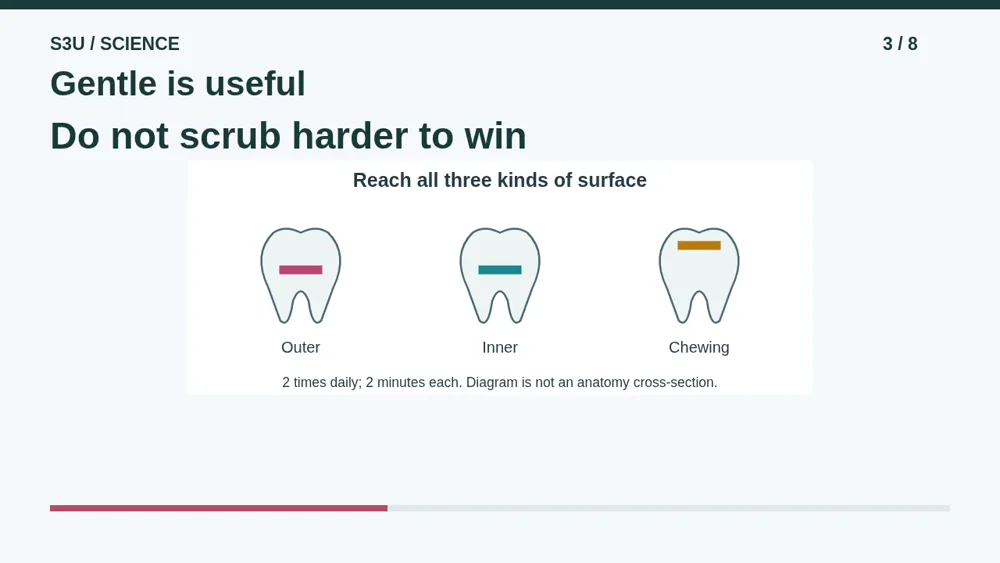
Move the brush gently and take time to reach the different surfaces. Hard scrubbing is not a shortcut. This is not a contest to see whose toothbrush bends the most. A comfortable grip or adapted brush can help someone who finds the motion difficult.
4. Spaces need their own care
Audio: 1:01
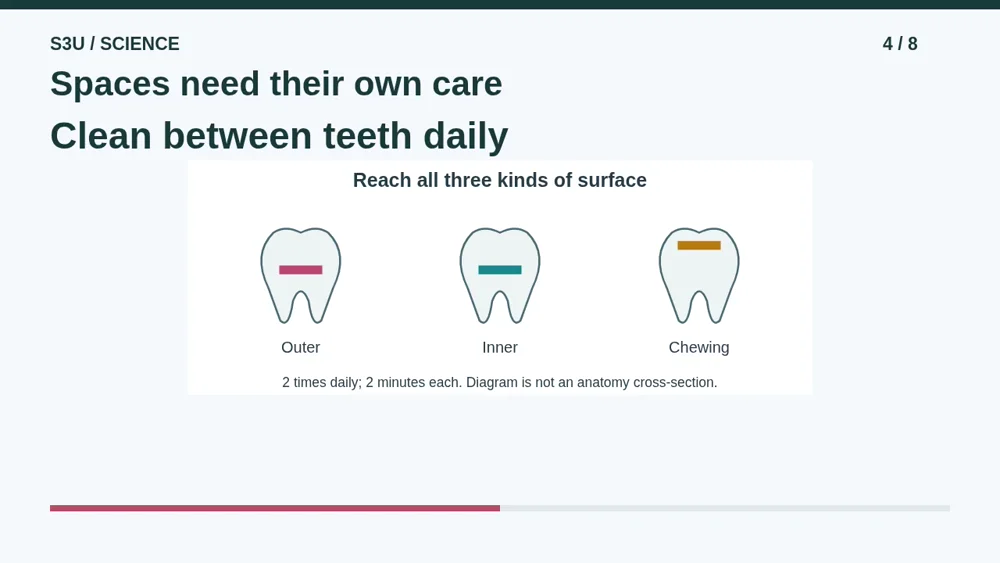
Bristles cannot reach every space between teeth well. Daily between-tooth cleaning is another part of care, with suitable tools and help. Ask a caregiver or dental professional to show a method that works for you. Do not poke between teeth with sharp classroom objects.
5. Pause and improve the plan
Audio: 1:22
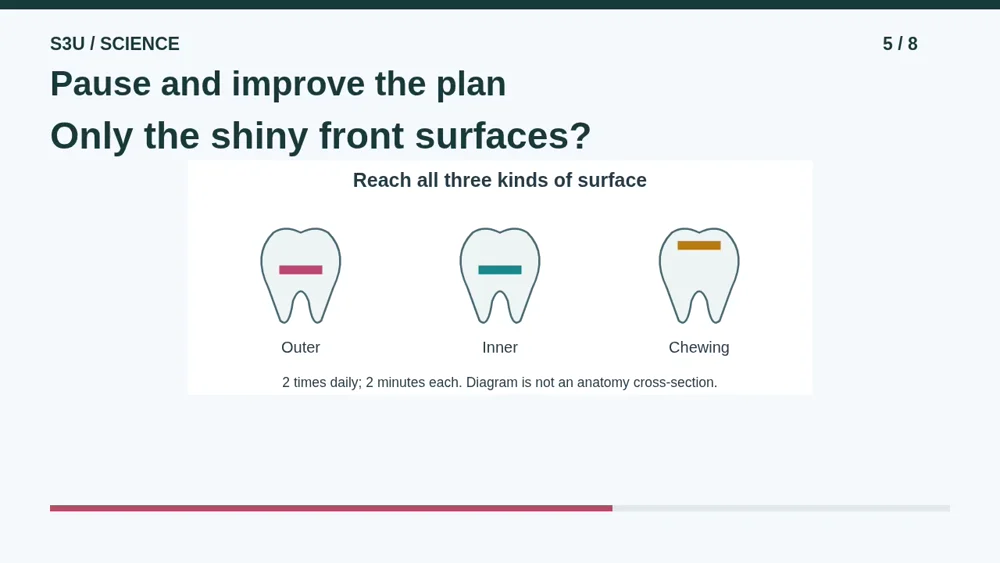
A fictional character brushes only the fronts of the teeth visible in a smile. Pause and name the other surfaces they should include. Then explain why between-tooth cleaning is a separate step. You are improving a practice plan, not diagnosing the character's mouth.
6. Check the plan
Audio: 1:42
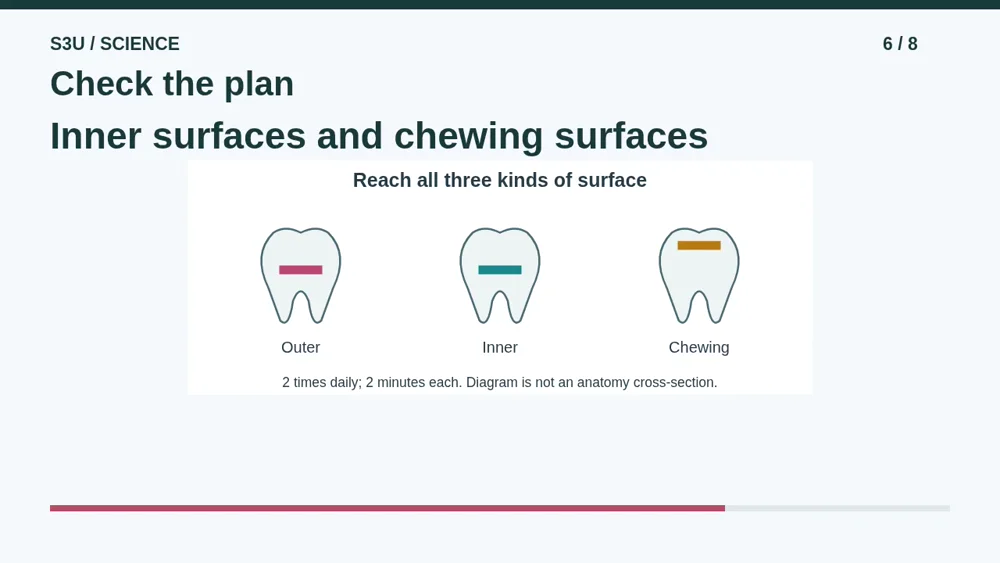
The character should include inner and chewing surfaces as well as the outer surfaces. They also need appropriate between-tooth care. A simple reminder can help them remember the whole routine. Nobody needs to compare tooth color, tooth shape, or smiles with a classmate.
7. A useful tooth fact
Audio: 2:03
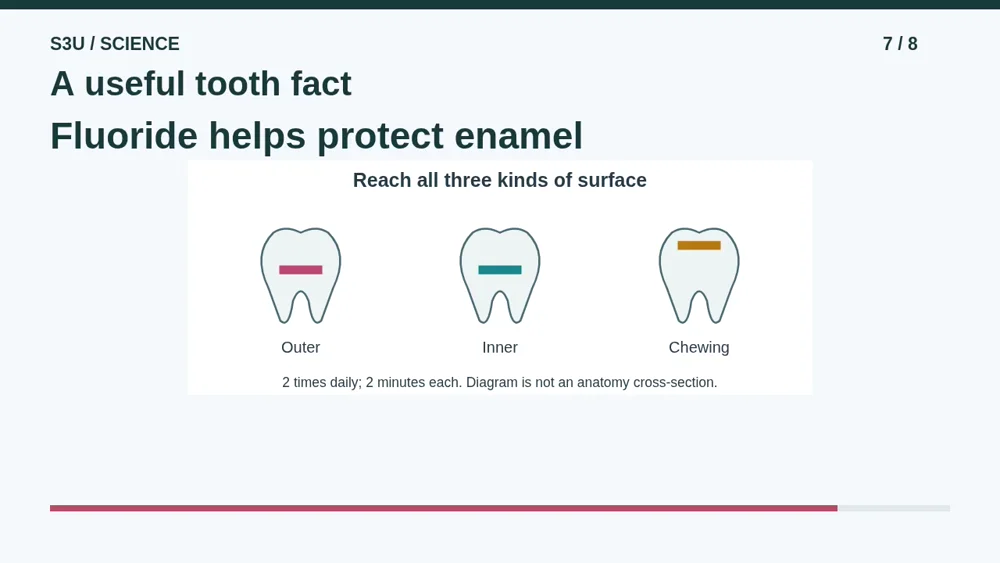
Here is a useful fact: fluoride helps protect tooth enamel against decay. More toothpaste is not automatically better; use the amount recommended for the child and spit it out rather than swallowing it. Ask a caregiver or dental professional when you are unsure about products.
8. Help belongs in the routine
Audio: 2:24
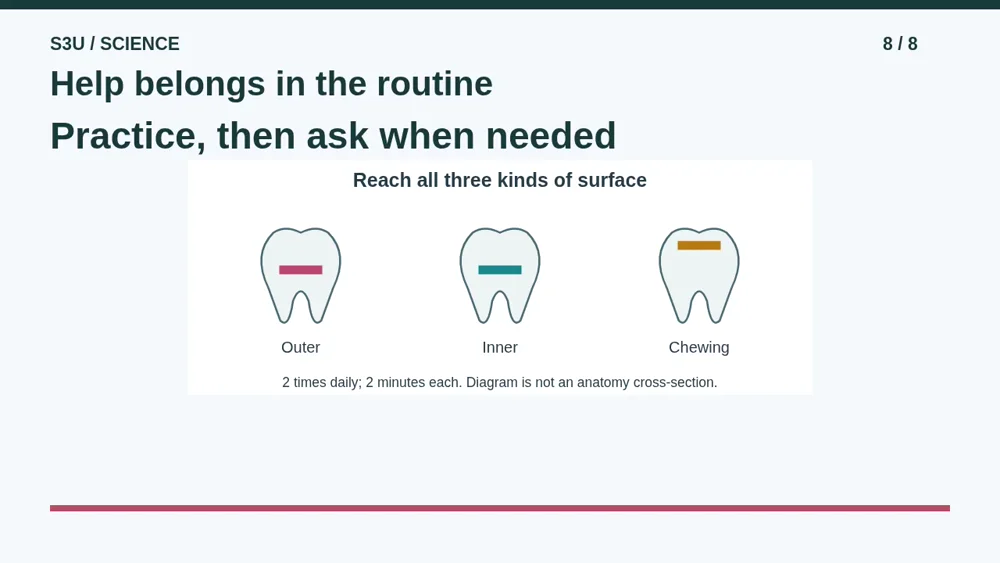
If brushing hurts, a tooth hurts, or you need help getting supplies, tell a trusted adult and seek dental advice. A worksheet cannot examine or treat your teeth. Continue to the practice page and use the fictional examples. Keep personal health questions private.
Show your understanding
You can point, explain aloud, draw or write.
- Describe a gentle two-minute brushing routine twice a day that reaches different tooth surfaces.
- Explain why between-tooth care is a separate part of the routine and when to ask for help.
Try it yourself
Pause and choose a helpful next step for the fictional character.
Continue to the matching worksheet. Keep personal body and health information private; ask a trusted adult or professional about individual concerns.
Next: your worksheet
Hygiene: Care for All Tooth Surfaceshttps://s3u.com/sy450
Lesson: https://s3u.com/listen/teeth-and-routines