Geography / Grades 3-5
Weather radar detectives
Learning goal: Use radar legends and time sequences without treating colors as promises.
Before you start: Follow the spoken west-to-town positions and their three time labels. These are fictional observations, not a local forecast. No radar screen or color matching is needed for the listening question.
Read or print this lesson What to practice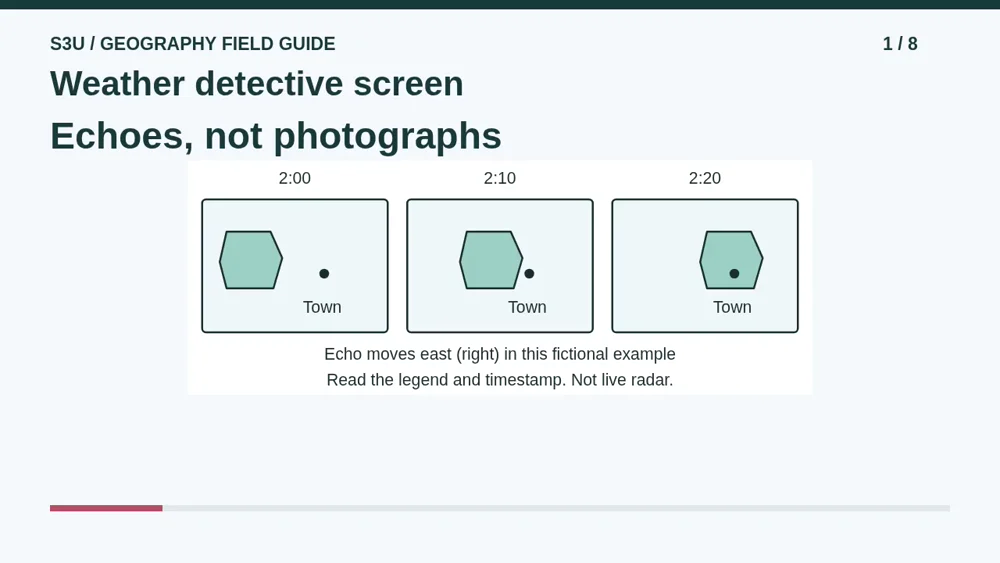
Audio and video share one lesson record. Keep this page open while listening.
Download audio Downloads do not save lesson progress.
The audio could not load. The transcript is still available below.
Next: your worksheet
Follow an echo
Checking sign-in...
Read the transcript
Saved reading place
Audio transcript and practice. Reading or printing does not count as playback time or an assessed grade.
1. Weather detective screen
Audio: 0:00
A weather radar picture can look like colorful paint spilled over a map. But those patches represent measurements. Today we will follow a moving echo, read the labels, and learn why a bright color is not a complete weather forecast.
2. Send and listen
Audio: 0:18
Radar sends pulses of electromagnetic energy. Some energy returns after meeting targets such as raindrops. The radar uses those returns to estimate properties of what it detects. It is not a camera flying through each cloud taking tiny portraits of raindrops.
3. Read the product
Audio: 0:40
Reflectivity helps show precipitation returns. Velocity shows motion toward or away from the radar. The same color can mean different things on different products. Always read the product name, legend, location, and timestamp before explaining a patch.
4. A practice sequence
Audio: 1:00
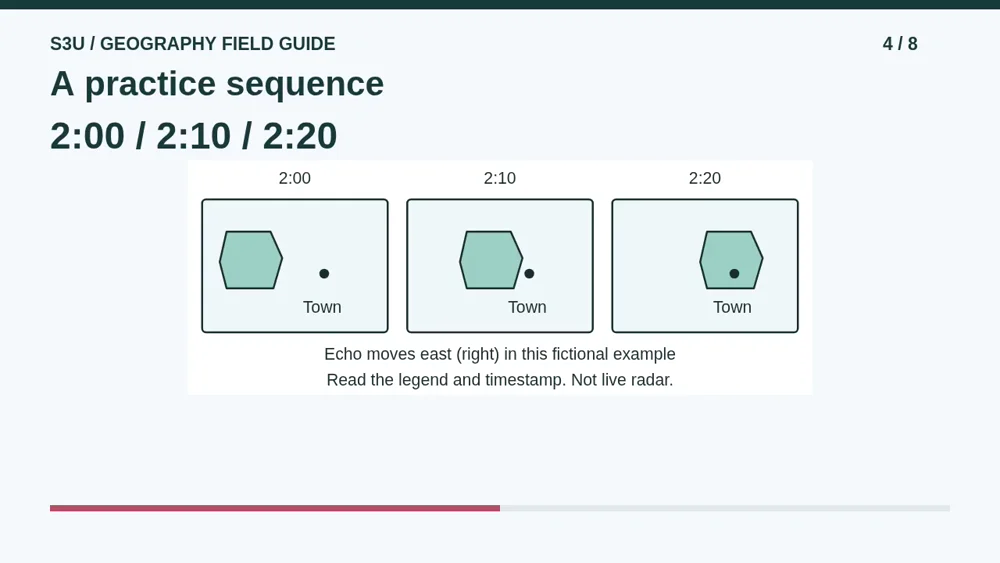
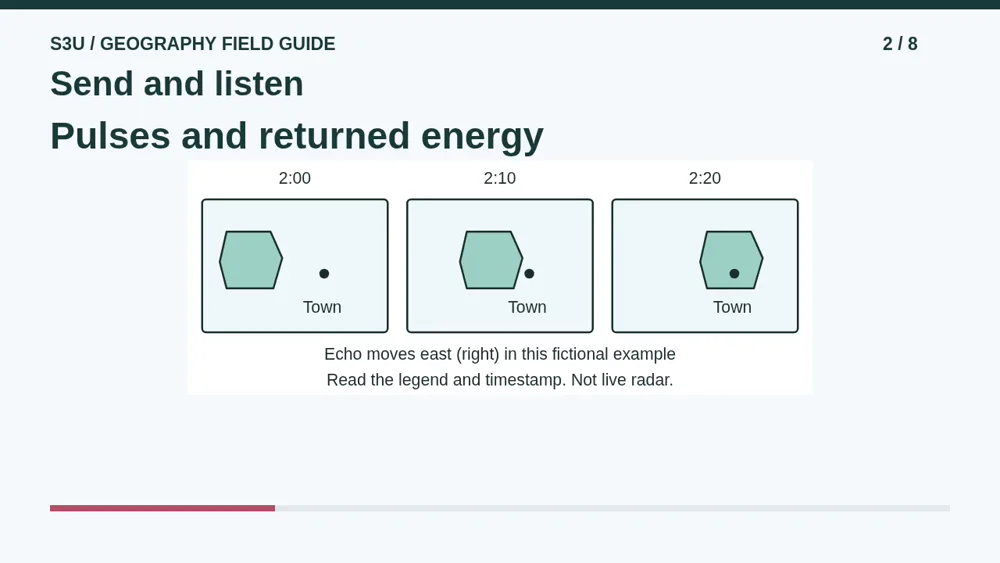
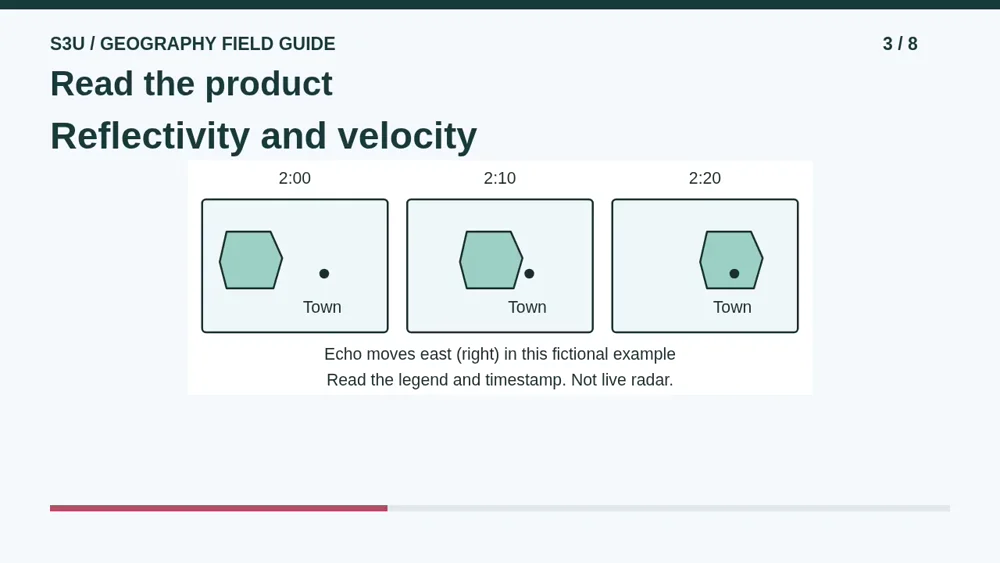
Our three pictures are fictional. A patch begins west of town at two oclock. At two ten it is nearer town. At two twenty it is over town. North is up in this example, so east is to the right.
5. Pause and investigate
Audio: 1:18
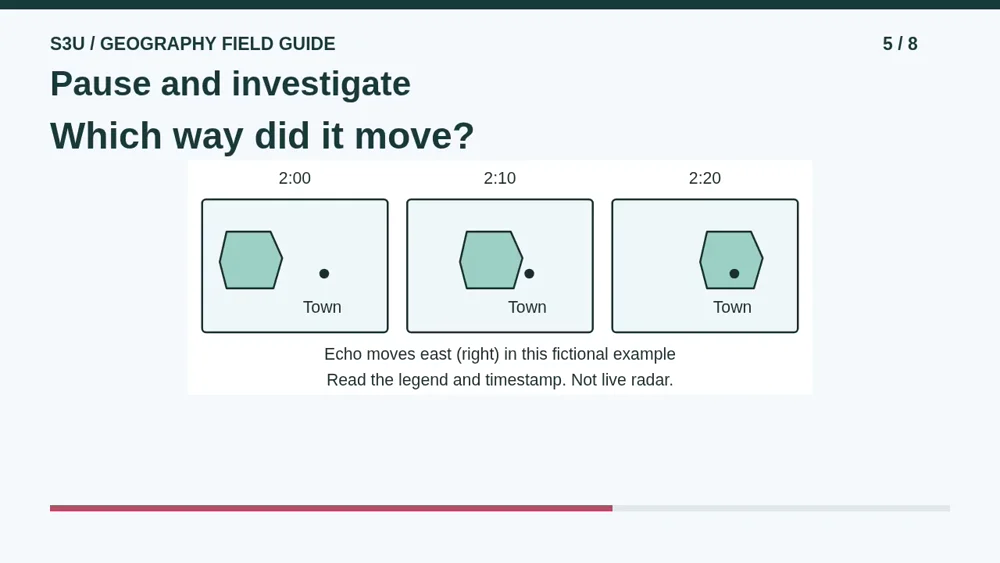
Pause the video. Which direction did the patch travel? Which picture is newest? Explain how the time labels help. One picture alone cannot show the whole movement. A still photograph of a runner does not tell you every step they took.
6. Check the evidence
Audio: 1:38
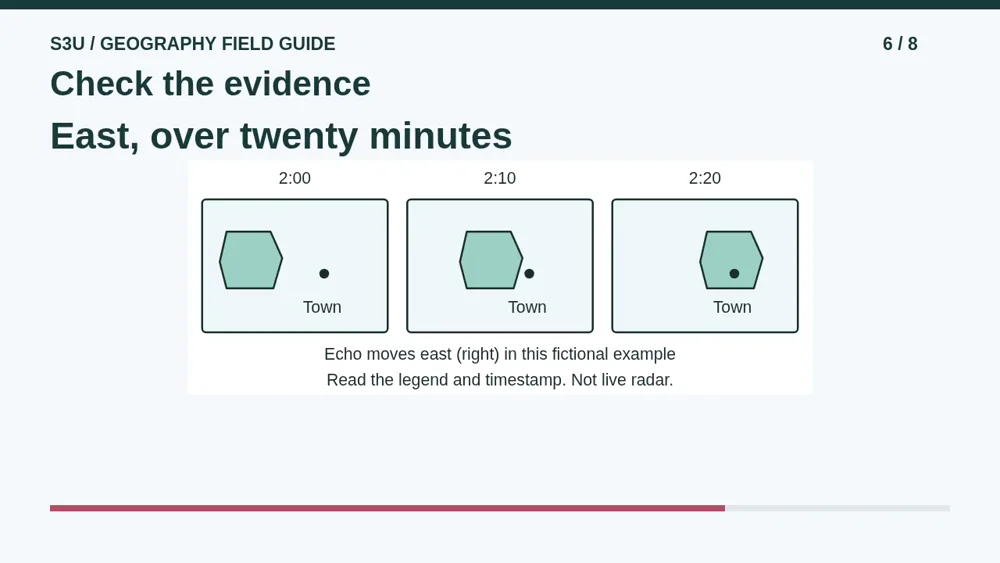
The patch moved east, toward the town, in this example. The two twenty picture is newest. A future patch might grow, shrink, or change direction. Do not extend a short sequence into a promise about exactly what will happen next.
7. A surprising measurement
Audio: 1:56
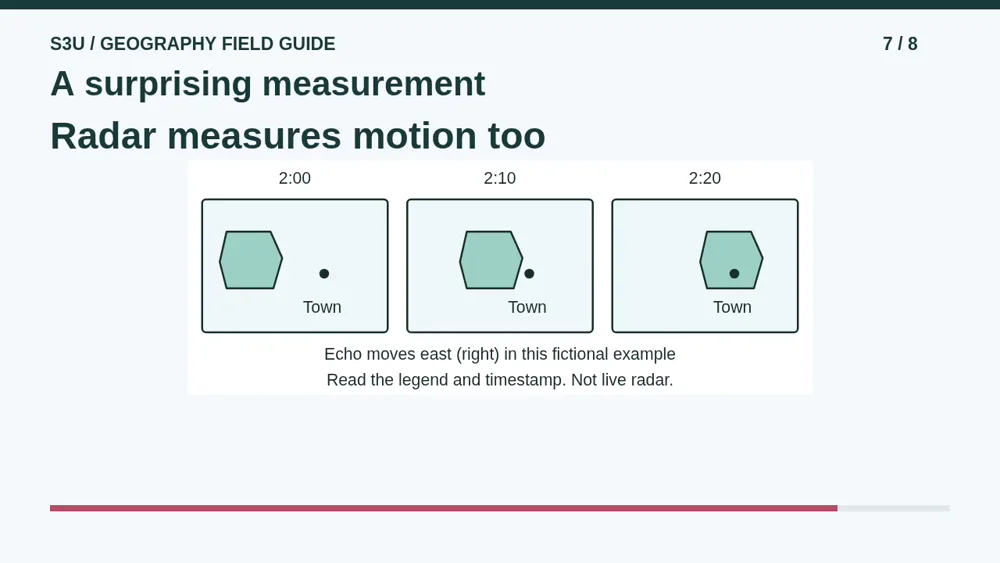
Fun fact. Doppler radar can measure motion toward or away from it. That is different from measuring every wind direction equally. Radar also has limits. Its beam samples above the ground, and non weather targets can sometimes make echoes.
8. Do not guess about danger
Audio: 2:17
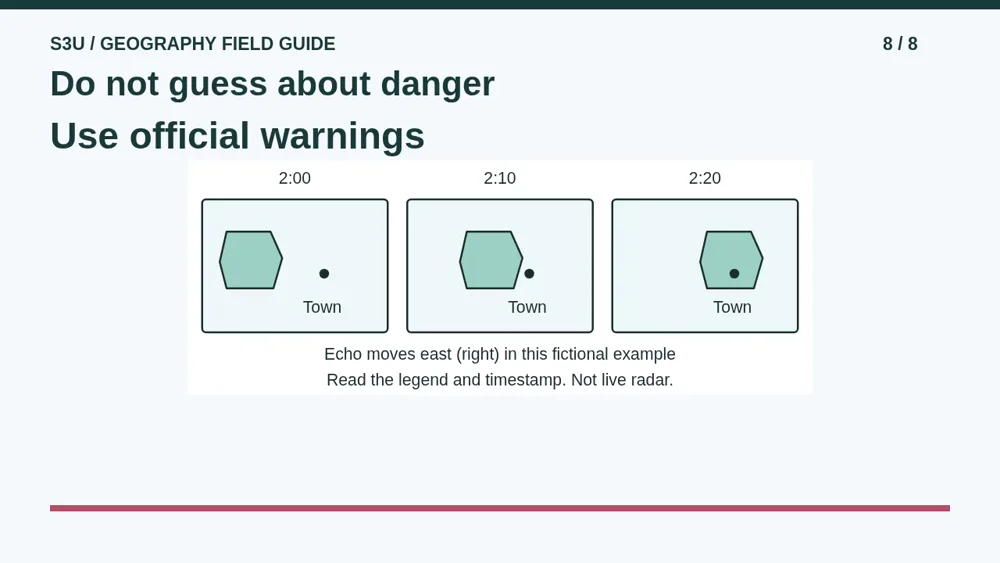
A strong return alone does not prove a tornado. Combine radar with other observations and official warnings. Ask an adult about real local weather risks. These drawings are only for practice. Continue to the worksheet and become a careful reader of radar evidence.
Show your understanding
You can point, explain aloud, draw or write.
- Use the product labels and a sequence of times to describe the movement of an echo.
- Separate a supported observation from a claim about future weather or ground conditions that the pictures cannot prove.
Try it yourself
Pause at the question and explain your answer before continuing.
Complete the matching worksheet, then explain one new idea in your own words.
Next: your worksheet
Follow an echohttps://s3u.com/gc311
Lesson: https://s3u.com/listen/weather-radar