Geography / Grade 4
Map scale: a small line, a longer trip
Learning goal: Convert map centimeters to real meters, combine route segments and compare a direct route.
Before you start: Multiply and divide by two hundred, then add or compare route lengths. All map lengths and units are spoken; pause or jot them down if helpful. Do not measure your screen.
Read or print this lesson What to practice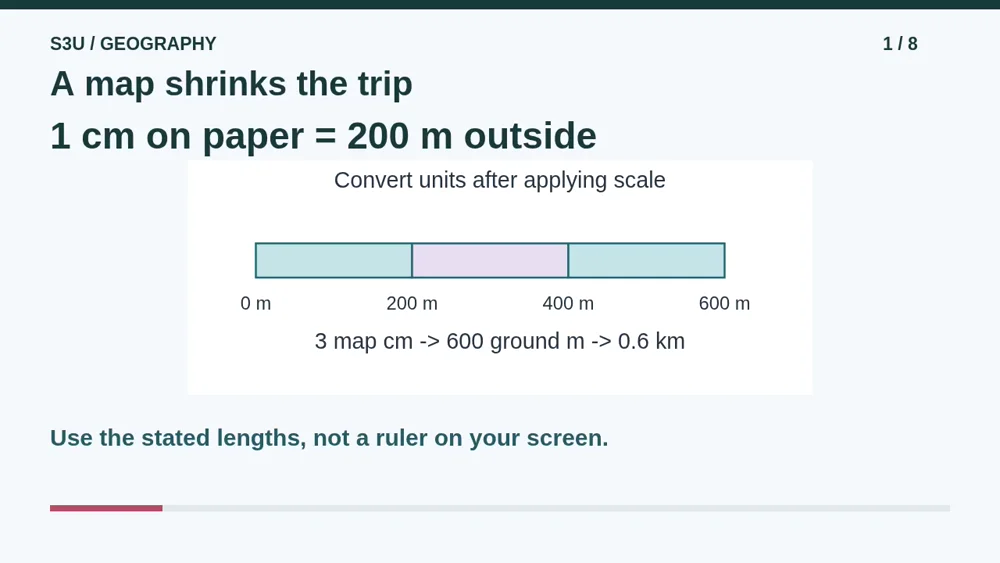
Audio and video share one lesson record. Keep this page open while listening.
Download audio Downloads do not save lesson progress.
The audio could not load. The transcript is still available below.
Next: your worksheet
Plan a Route Using Map Distances
Checking sign-in...
Read the transcript
Saved reading place
Audio transcript and practice. Reading or printing does not count as playback time or an assessed grade.
1. A map shrinks the trip
Audio: 0:00
A map lets a long trip fit on a small page. Our practice scale says one centimeter on the printed map stands for two hundred meters in the real place. Always read the stated scale. A line on your screen may look larger or smaller when you zoom.
2. Use the scale once for each unit
Audio: 0:19
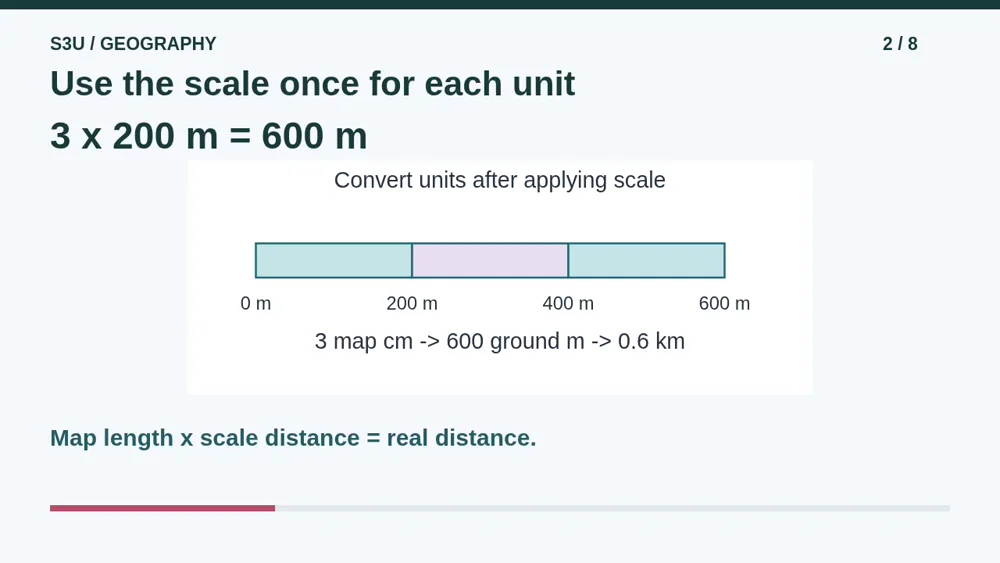
The diagram shows a three-centimeter map segment. Each centimeter represents two hundred meters. Three groups of two hundred make six hundred meters. Write the real-world unit with the answer so we do not mistake six hundred meters for six hundred centimeters on the map.
3. A trip can have two parts
Audio: 0:40
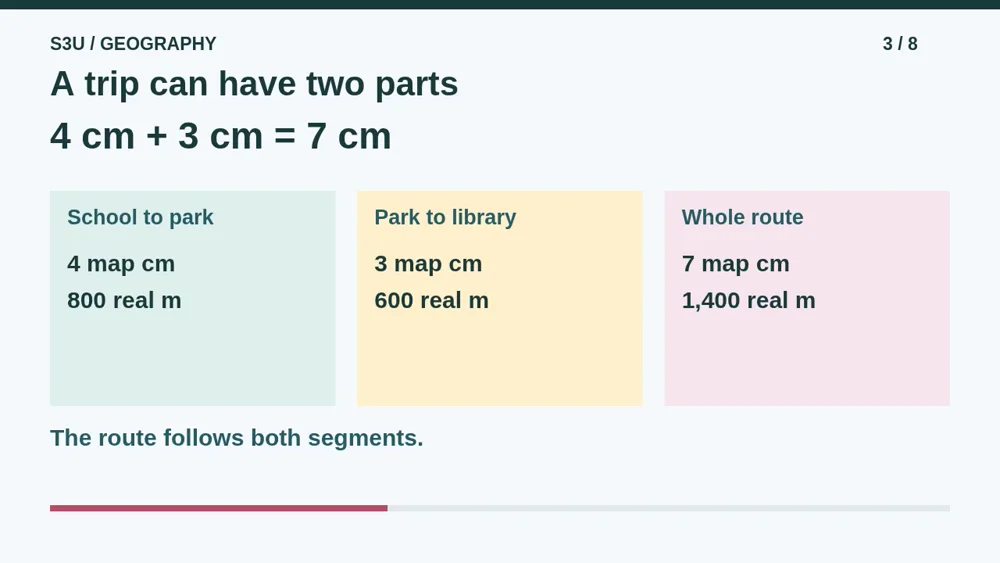
Imagine a fictional trip from school to a park, then from the park to a library. The first map segment is four centimeters and the next is three. Add the segments because we travel both. Seven centimeters on this map represent fourteen hundred meters altogether.
4. Compare with a direct route
Audio: 1:01
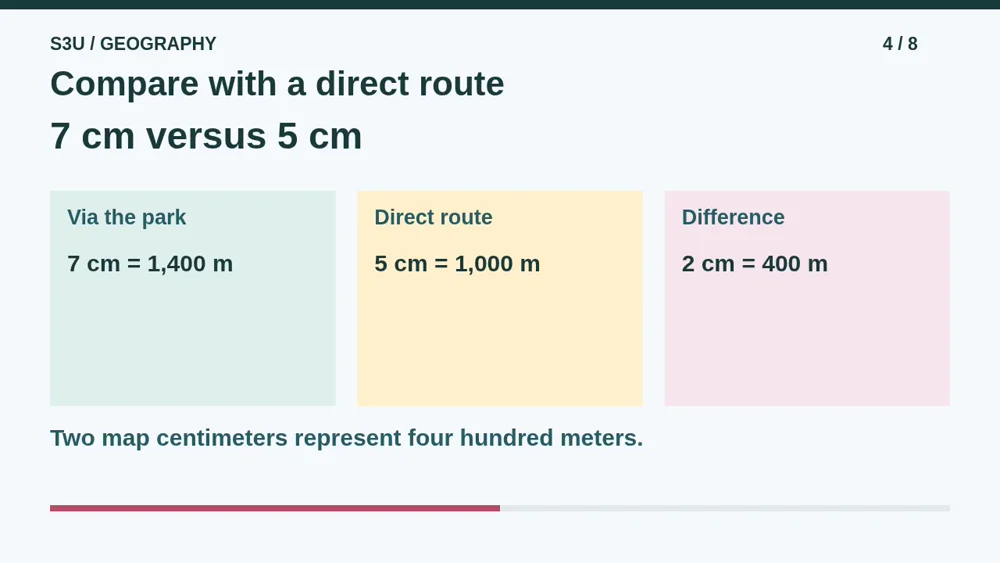
Suppose a direct school-to-library route measures five centimeters on the same map. The route through the park is seven. Their difference is two centimeters, which represents four hundred meters. Compare routes using the same scale. The shortest drawn route still needs to be a permitted route.
5. Pause: work back to the map
Audio: 1:23
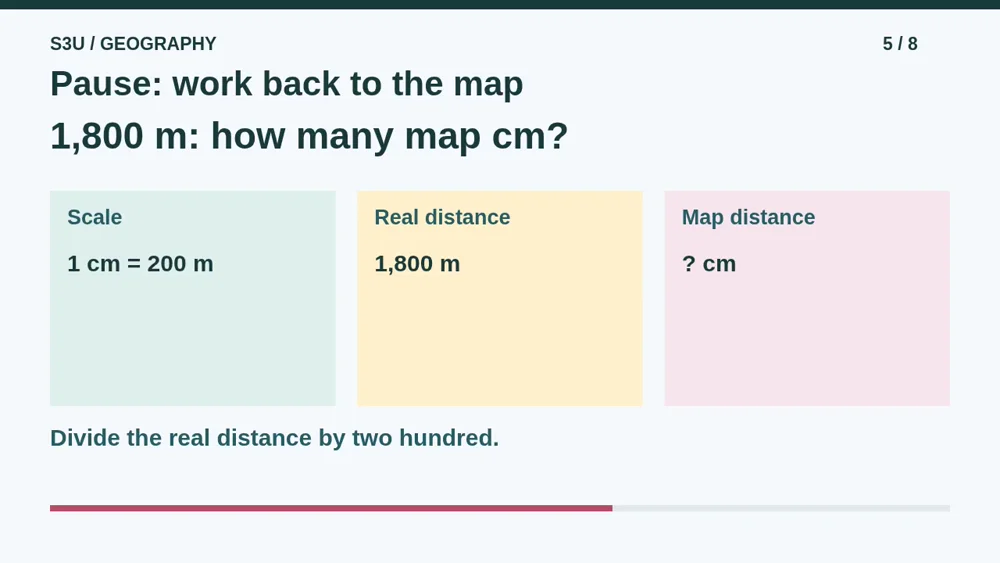
Pause and work backward. A route is eighteen hundred meters long in the real place. On this map, one centimeter represents two hundred meters. How many groups of two hundred are in eighteen hundred? Your answer should be a map length in centimeters.
6. Check by converting it back
Audio: 1:43
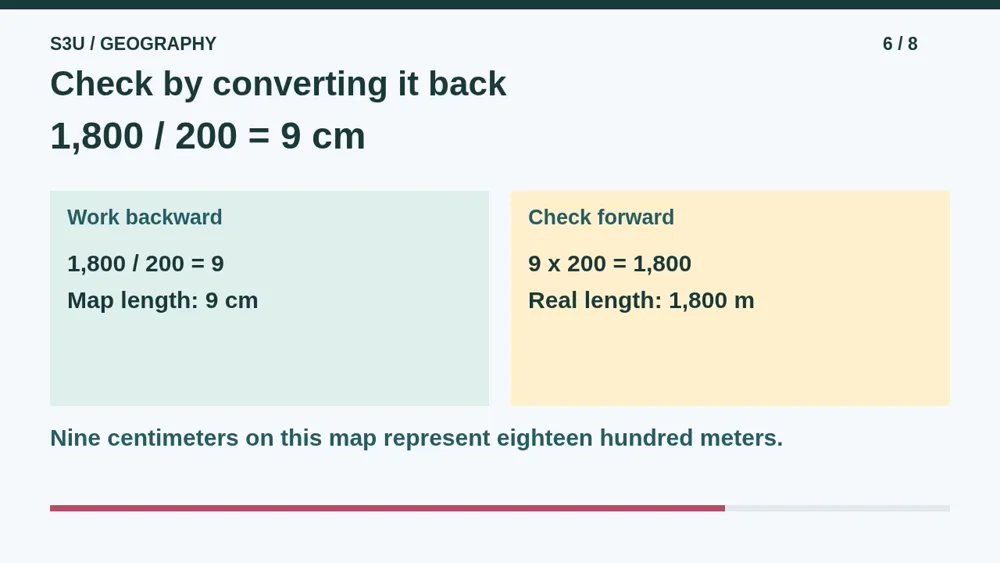
Eighteen hundred divided by two hundred is nine. The map length is nine centimeters. Check by multiplying nine by two hundred: that returns eighteen hundred meters. Keeping both units in view helps you tell which way you are converting.
7. Zooming does not move the library
Audio: 2:02
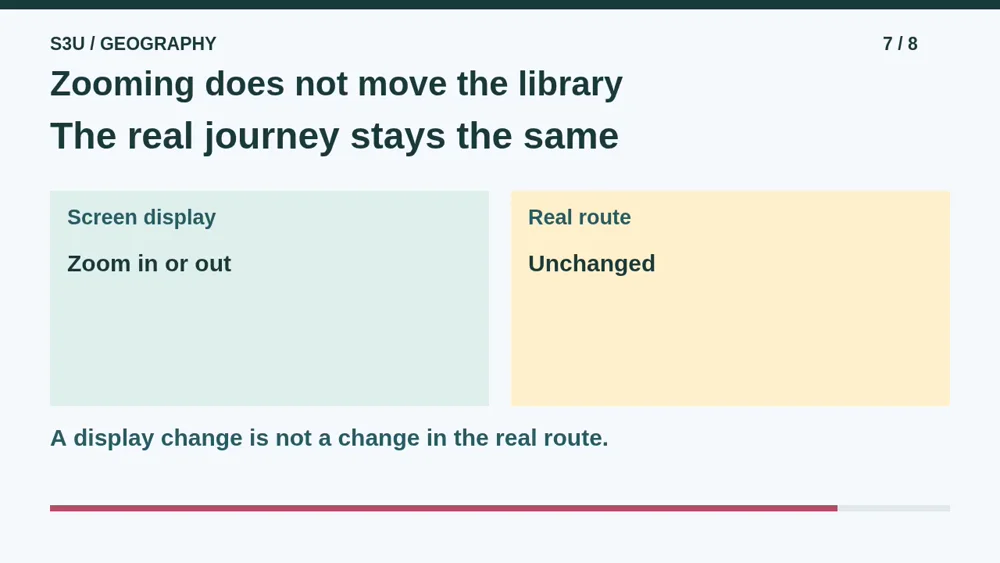
Fun fact: making a map image twice as large does not make the actual trip twice as long. The library stays where it is, even if its label fills your screen. Use stated map measurements or a correctly resized scale bar instead of guessing from screen size.
8. Plan a route and explain it
Audio: 2:22
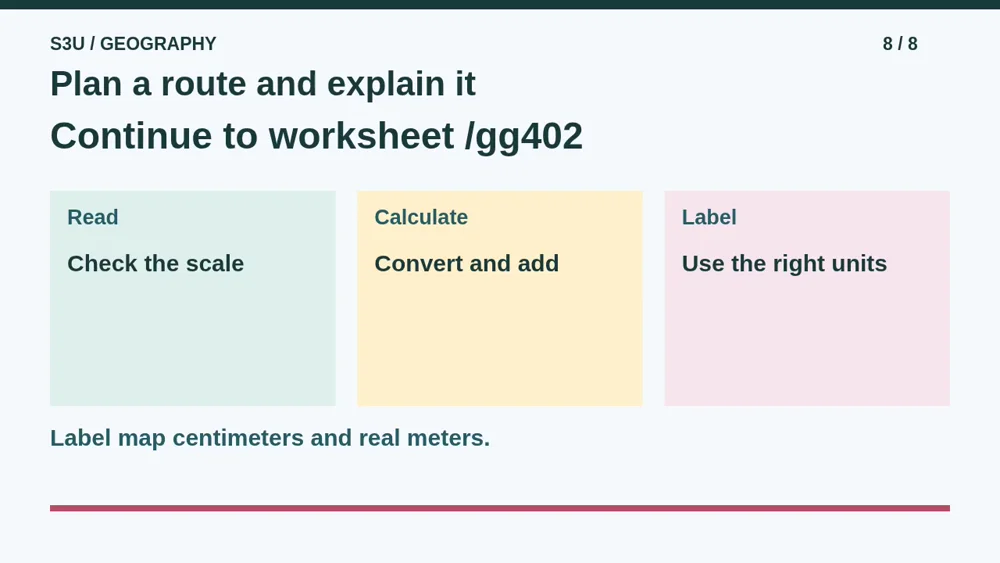
Continue to the route worksheet. Read its scale, convert each distance, and add only the segments the route actually uses. When comparing two routes, subtract their lengths in the same units. A clear calculation should tell another traveler exactly which trip you measured.
Show your understanding
You can point, explain aloud, draw or write.
- Use the stated scale to convert each map segment to real distance with units.
- Compare a route made of several segments with a direct route, without assuming they have equal length.
Try it yourself
Pause and work backward. A route is eighteen hundred meters long in the real place. On this map, one centimeter represents two hundred meters. How many groups of two hundred are in eighteen hundred? Your answer should be a map length in centimeters.
Continue to the matching worksheet. Explain your reasoning before checking your answers.
Next: your worksheet
Plan a Route Using Map Distanceshttps://s3u.com/gg402
Lesson: https://s3u.com/listen/map-distance