Science / Grade 5
Follow oxygen: lungs, heart and body
Learning goal: Trace lung gas exchange and the blood route, distinguish connected organ jobs, and repair a simplified body-system model.
Before you start: Follow spoken starting places and destinations, naming what moves on each route. No breathing changes, personal measurements or health information are needed.
Read or print this lesson What to practice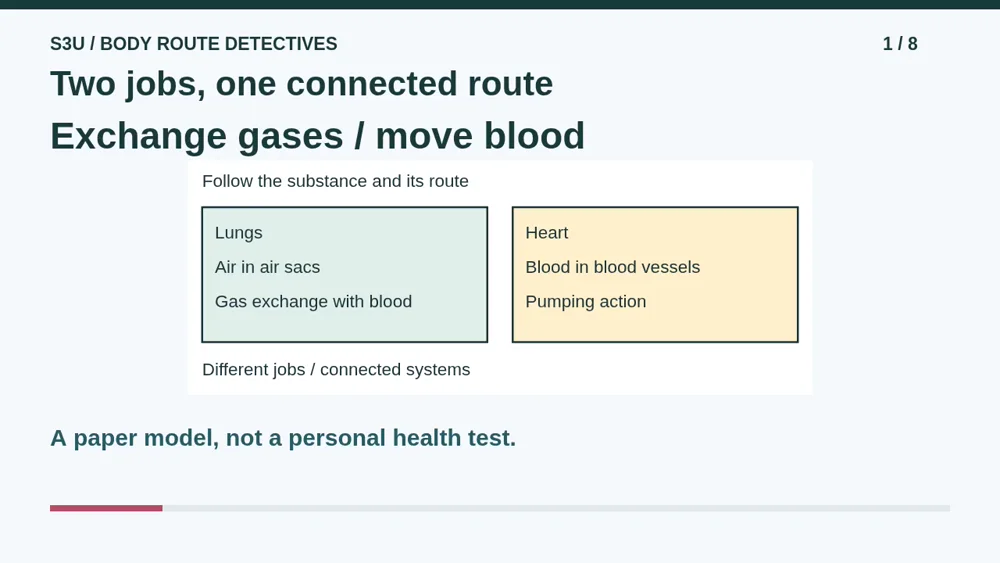
Audio and video share one lesson record. Keep this page open while listening.
Download audio Downloads do not save lesson progress.
The audio could not load. The transcript is still available below.
Next: your worksheet
Oxygen Routes: Lungs, Heart and Body
Checking sign-in...
Read the transcript
Saved reading place
Audio transcript and practice. Reading or printing does not count as playback time or an assessed grade.
1. Two jobs, one connected route
Audio: 0:00
Imagine sorting two job cards: exchange gases, and pump blood. Which belongs with the lungs, and which with the heart? They work together, but they are not doing the same job. Today we will trace a simplified human body route and fix some mixed-up labels. Follow what is moving as well as where it goes. Air and blood need different routes, even if our imaginary delivery office keeps putting their cards in the same tray. Use the pictures or a spoken explanation. Do not hold your breath, change your breathing, or collect personal measurements for this lesson.
2. First, follow the air
Audio: 0:41
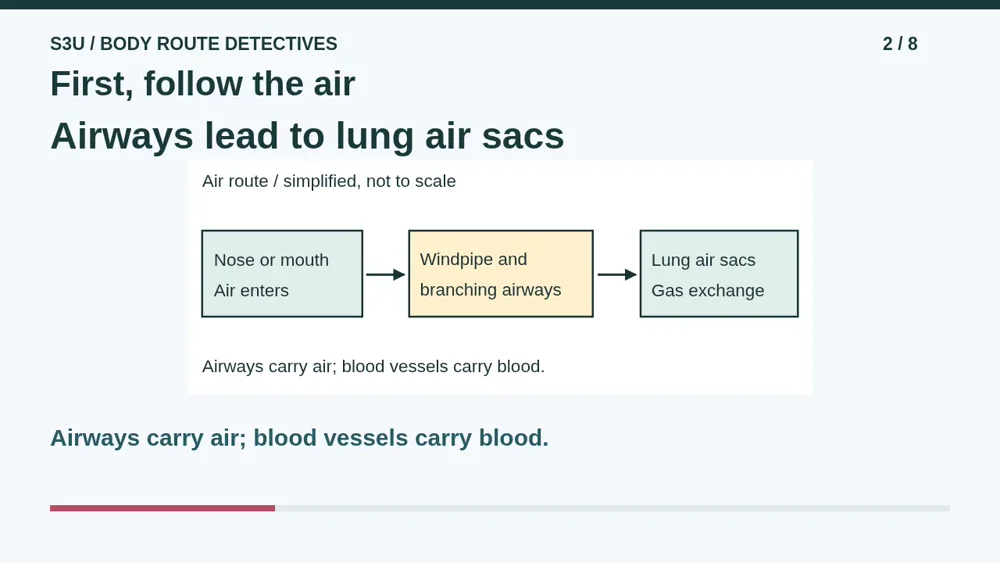
Start with air entering through the nose or mouth. It passes along the windpipe and branching airways to tiny air sacs in the lungs. These sacs are called alveoli. Our diagram shows the route, not the exact shape, size, or number of all these parts. Air does not travel through the heart on its way to a lung air sac. Keep an air-route label on this part of the drawing. In the next picture, we zoom in on the meeting place between air in a sac and blood in nearby very small vessels.
3. Two gases, opposite directions
Audio: 1:17
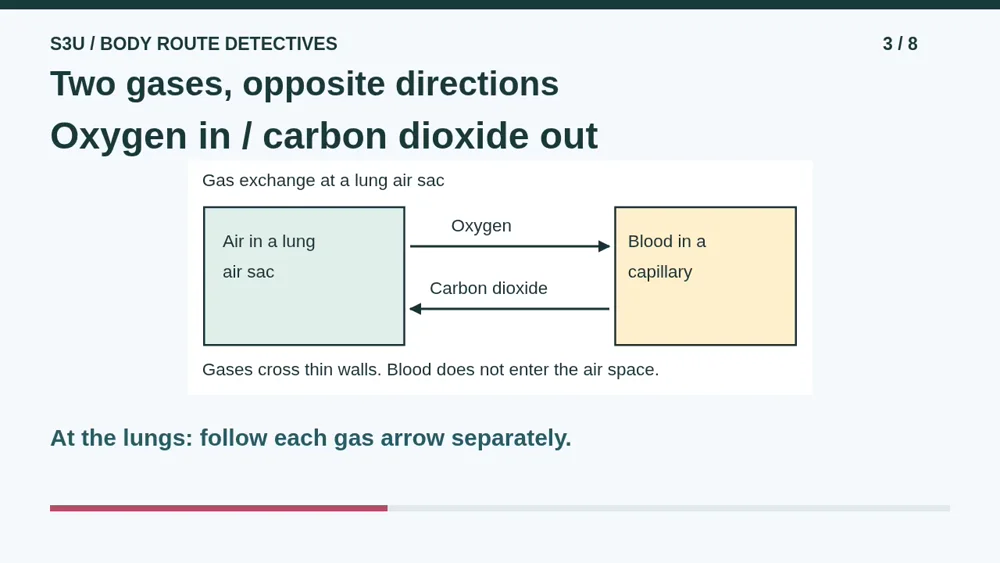
At a lung air sac, oxygen moves from the air across thin walls into nearby blood. Carbon dioxide moves the other way, from blood into the air sac, and can leave when air is breathed out. These are gas-exchange arrows. They do not mean blood pours into the air space, or that the entire air sac climbs into a blood vessel. Read one arrow at a time: name the gas, name its starting place, then its destination. If a poster swaps these two arrows, the organ names might look right while the directions are wrong.
4. Now, follow the blood loop
Audio: 1:55
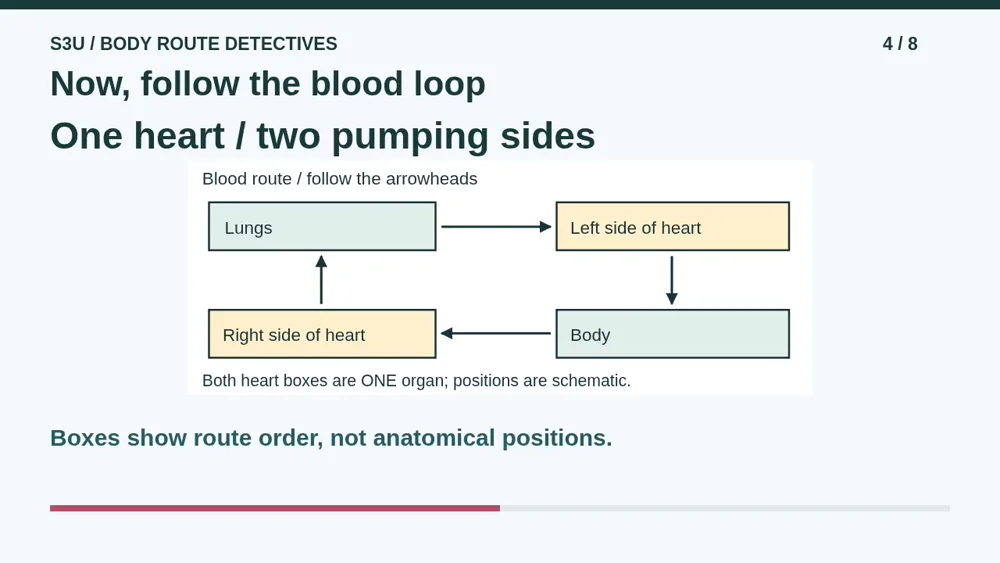
Blood leaving the lungs returns to the left side of the heart. That side pumps it toward the body. Blood returning from the body goes into the right side of the heart, which pumps it to the lungs. Then the route continues. Both heart boxes are parts of one heart, not two different hearts. Left and right name the body parts; they do not mean the left and right edges of this page. Our boxes make the sequence easier to follow. Trace the arrowheads rather than guessing from where a box sits or which color it has.
5. The route reaches body cells
Audio: 2:32
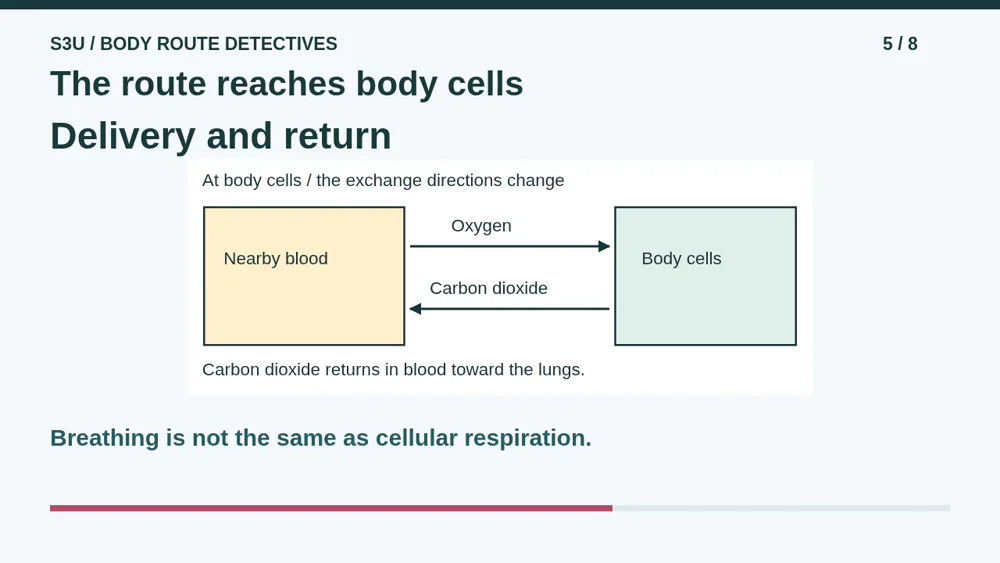
At body tissues, oxygen moves from blood to cells. Many cells use oxygen in processes that release usable energy from food. Carbon dioxide produced by cells moves into blood and travels back toward the lungs. This cell chemistry is different from moving air in and out when you breathe. Energy is transferred, not created out of nothing. The return journey matters too: our delivery office cannot only bring things in and forget everything that must leave. This is a simplified connection between systems, not a drawing of every vessel, chamber, molecule, or chemical reaction.
6. Pause: repair the job cards
Audio: 3:16
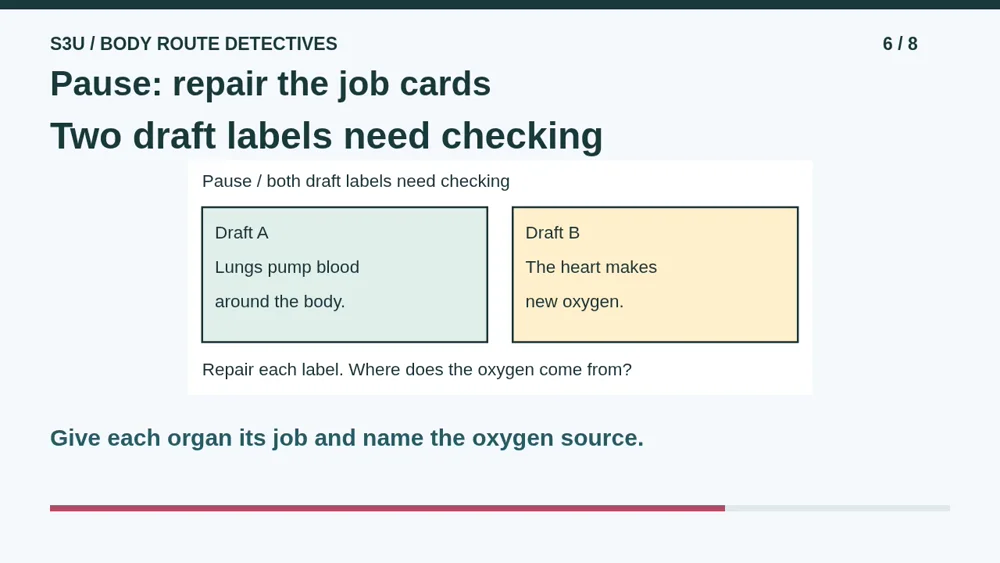
Pause for a fresh museum task. Draft A says, the lungs pump blood around the body. Draft B says, the heart makes new oxygen. Repair both labels and explain how the corrected jobs connect. Where does the oxygen come from? You can write two short sentences or say your explanation aloud. Use a job and a direction as evidence, not a favorite color or a guess about the picture. Stay with this paper model. No breath-holding, exercise test, or personal health story is needed to answer. Continue when you have an explanation for each card.
7. Check the jobs, not just names
Audio: 3:59
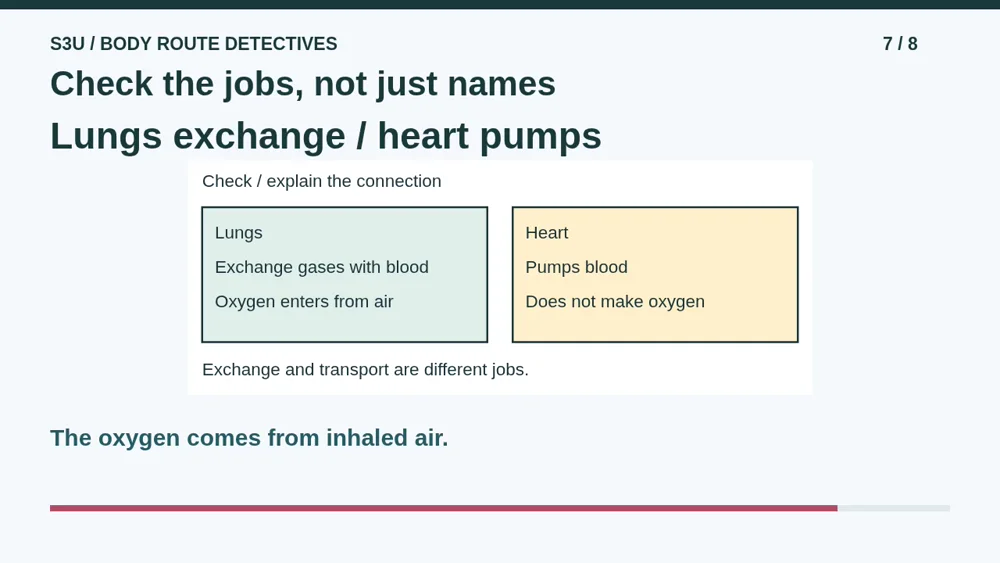
Draft A needs the lung gas-exchange job. Oxygen from inhaled air crosses into blood at lung air sacs, while carbon dioxide crosses out of blood there. Draft B needs the heart pumping job: it moves blood carrying oxygen, rather than making the oxygen. One system provides the exchange surface and air route; the other provides blood transport. If you corrected only one label, revisit the other job. As a second check, say the blood route from lungs to left heart side, body, right heart side, and back to lungs. Keep the two heart sides within one organ.
8. A working muscle needs delivery
Audio: 4:42
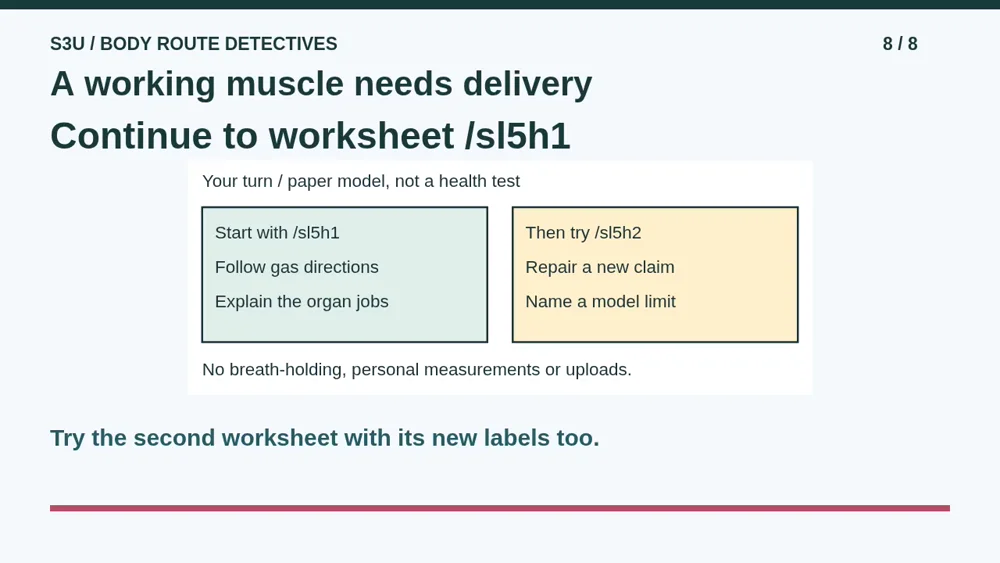
Fun fact: the heart muscle itself needs a blood supply bringing oxygen and nutrients. Being the pump does not make it exempt from deliveries. Continue to the worksheet below, then try the second worksheet with a new set of labels and claims. Explain the organ jobs, follow the gas directions, and identify what a simplified route cannot tell you. It cannot show a particular person's health or breathing rate. You do not need to share health information or upload work. Watching prepares you; explaining a fresh model is your next step.
Show your understanding
You can point, explain aloud, draw or write.
- Explain opposite oxygen and carbon-dioxide exchange directions at lung air sacs and distinguish exchange from pumping blood.
- Trace lungs, left heart side, body, right heart side and lungs; repair a job-label error and state a limit of the simplified model.
Try it yourself
Pause at the two incorrect museum labels. Repair each organ job and explain where the oxygen comes from.
Continue to both worksheets. Follow each arrow, explain the connection, and distinguish the model from personal health information.
Next: your worksheet
Oxygen Routes: Lungs, Heart and Bodyhttps://s3u.com/sl5h1
Lesson: https://s3u.com/listen/follow-oxygen