Reading / Grade 7
Source checking: follow the evidence
Learning goal: Trace repeated claims to one record and compare dated notices with authentic corrections.
Before you start: Read short dated notices and identify who or what a statement refers to.
Read or print this lesson What to practice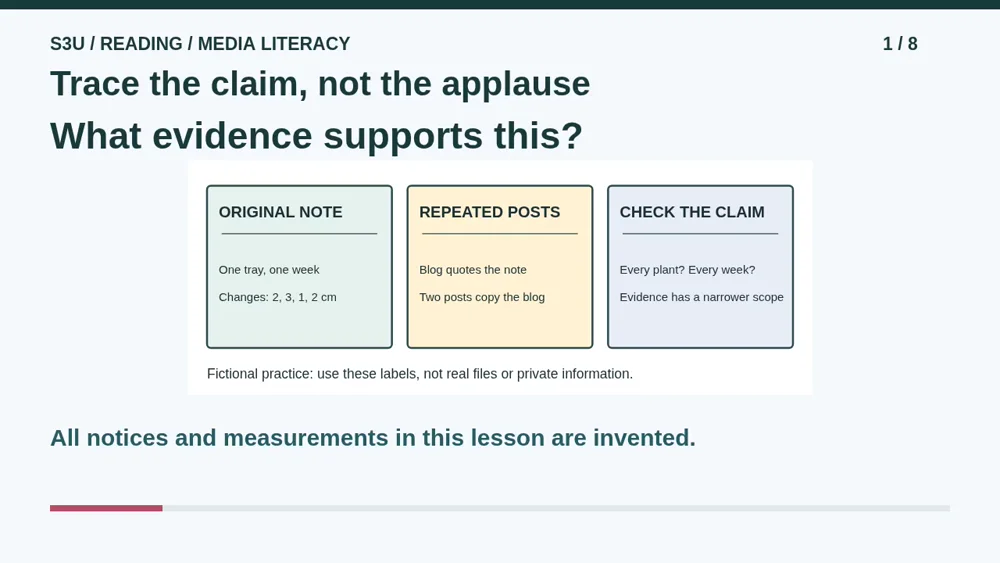
Audio and video share one lesson record. Keep this page open while listening.
Download audio Downloads do not save lesson progress.
The audio could not load. The transcript is still available below.
Next: your worksheet
Trace a Claim to Its Evidence
Checking sign-in...
Read the transcript
Saved reading place
Audio transcript and practice. Reading or printing does not count as playback time or an assessed grade.
1. Trace the claim, not the applause
Audio: 0:00
A headline can be confident, colorful and widely repeated while making a claim its evidence does not support. Today we will trace fictional posts to their original note and check an old screenshot against a correction. We are practicing how to investigate a claim, not choosing the loudest page.
2. Repeated posts can share one source
Audio: 0:22
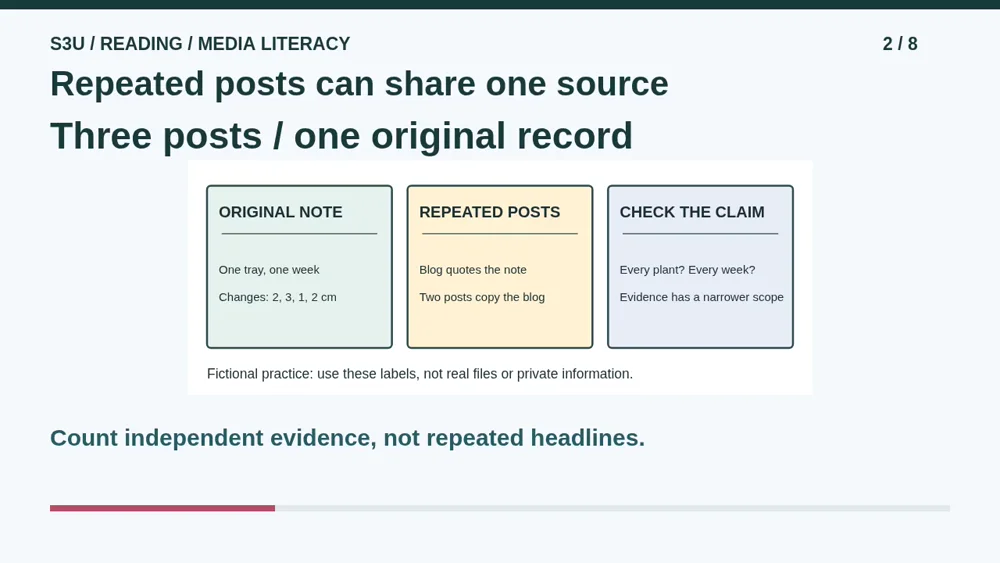
An invented class note measures four seedlings in one tray for one week. A blog quotes it, and two posts copy the blog. Those three later pages do not create three new experiments. They all lead back to one measurement record. Repetition can spread a claim without adding another observation.
3. Match the claim to the measurement
Audio: 0:45
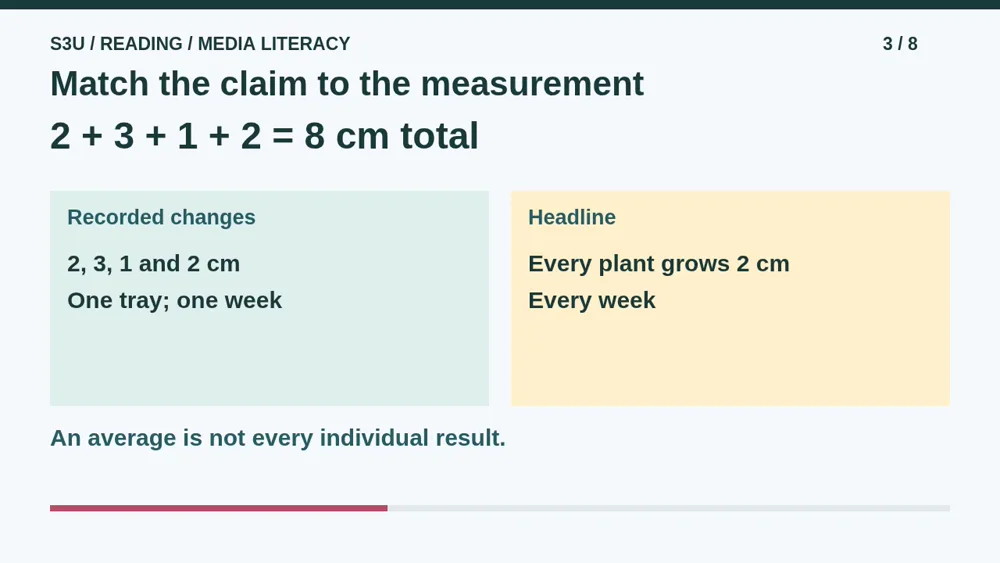
The measured changes were two, three, one and two centimeters. Their total is eight, so the average across four seedlings is two. But not every seedling grew two centimeters. One tray, one week and no comparison experiment also cannot establish that the method causes that result for every plant. Keep the conclusion inside the evidence.
4. A newer share can contain older news
Audio: 1:12
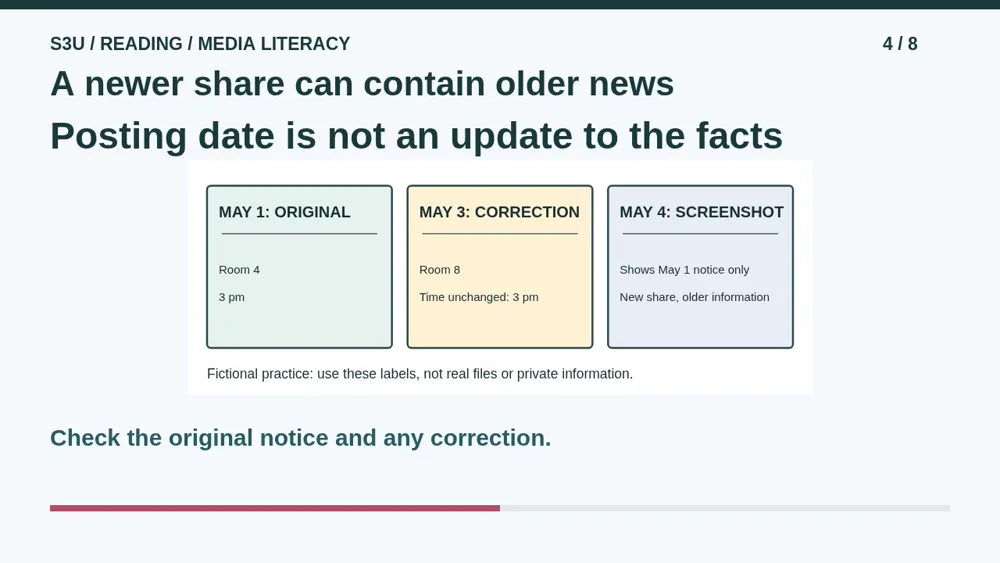
Our fictional club first announces Room Four on May first. Its authentic May third correction changes the room to Eight, keeping the start time at three P M. A screenshot shared on May fourth still shows the old notice. The screenshot traveled later, but its contents did not read the correction on the way.
5. Pause: follow a fresh correction
Audio: 1:35
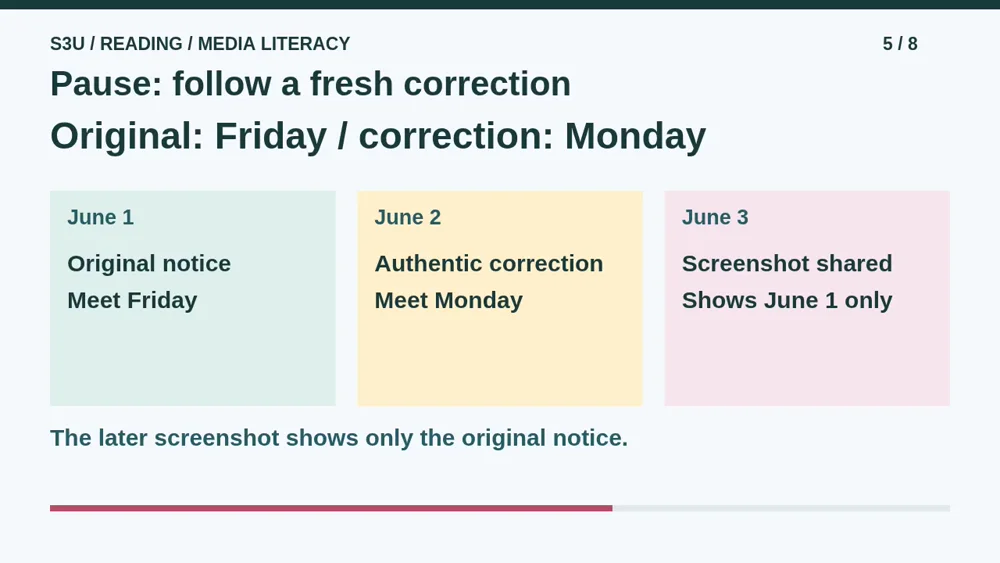
Try a new set of fictional dates. A June first notice says Friday. An authentic June second correction says Monday. On June third, someone shares a screenshot showing only the first notice. No later correction exists in this exercise. Pause and choose the current meeting day. Explain why the most recent share is not the best evidence here.
6. Use the correction for this question
Audio: 2:03
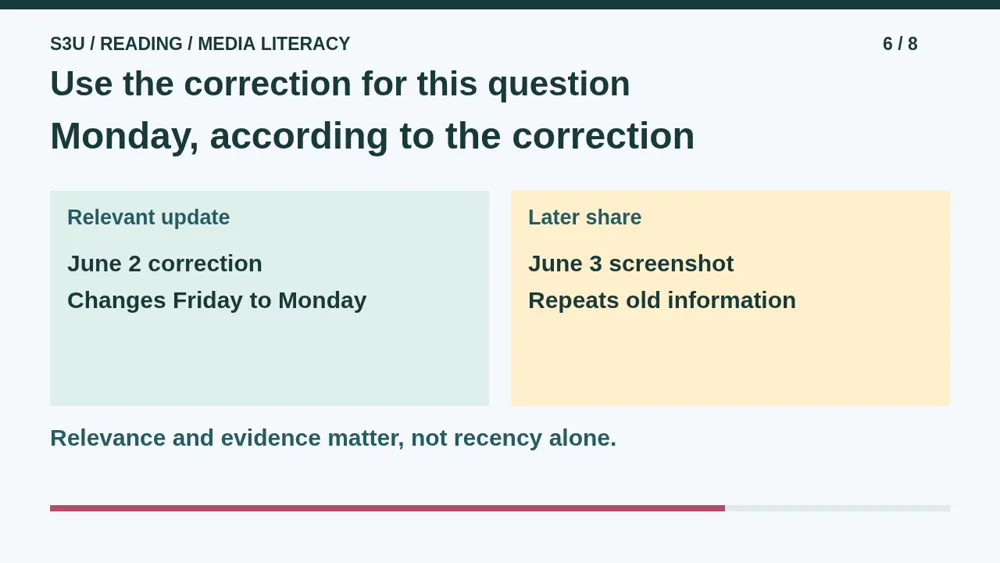
Monday is the current day according to the authentic correction. The later screenshot only repeats the old information. A newer page is not automatically better for every question either. Check what it contains, where it came from and whether it actually supports the answer. If a needed update cannot be verified, say so.
7. Many copies can mean one observation
Audio: 2:28
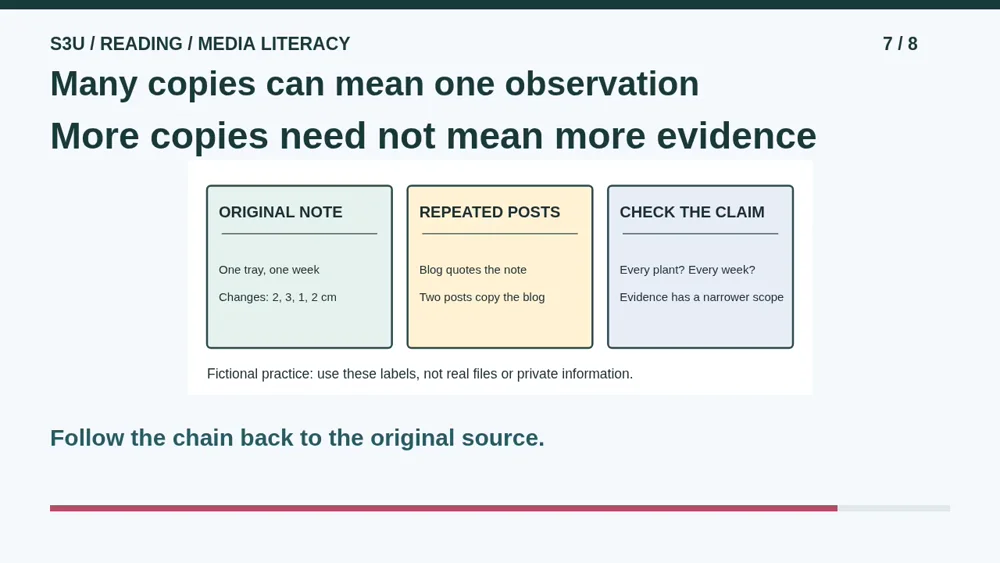
Fun fact: a hundred pages can all repeat the same single observation. Counting pages and counting independent evidence are different jobs. Our fictional seedling note makes that visible. Look for the original record, check its limits and compare genuinely independent evidence where available. Confidence should follow what you can actually verify.
8. Continue as an evidence detective
Audio: 2:55
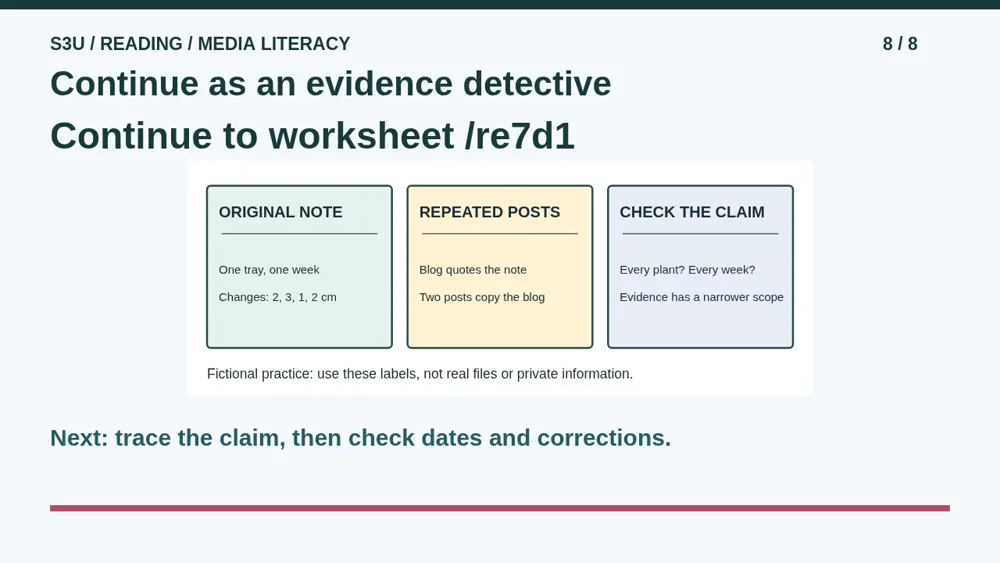
Continue to the worksheet below. Count the original records, add the seedling changes and compare the headline with what was measured. Then try Check Dates, Context and Corrections. These are invented practice cases. You do not need to contact anyone, visit unfamiliar sites or reveal personal information to complete them.
Show your understanding
You can point, explain aloud, draw or write.
- Trace repeated claims back to their original evidence instead of counting copies as new evidence.
- Use dates and a supported correction to explain which fictional notice answers the question.
Try it yourself
Pause at the Friday-to-Monday correction and choose which information answers the current meeting-day question.
Continue to the evidence worksheet, then check dates and corrections. All practice cases are invented.
Next: your worksheet
Trace a Claim to Its Evidencehttps://s3u.com/re7d1
Lesson: https://s3u.com/listen/source-checking