Math / Grades 3-4
Fractions have places
Learning goal: Count equal gaps from zero, pass one whole, and compare fraction positions using the same unit length.
Before you start: Count small whole numbers and recognize equal parts. Review Name equal parts if needed. Keep the distance from zero to one fixed.
Read or print this lesson What to practiceThe video could not load. The transcript is still available below.
Next: your worksheet
Place Fractions on a Number Line - Practice 1
Checking sign-in...
Read the transcript
Saved reading place
Video transcript and practice. Reading or printing does not count as playback time or an assessed grade.
1. Fractions have places
Video: 0:00
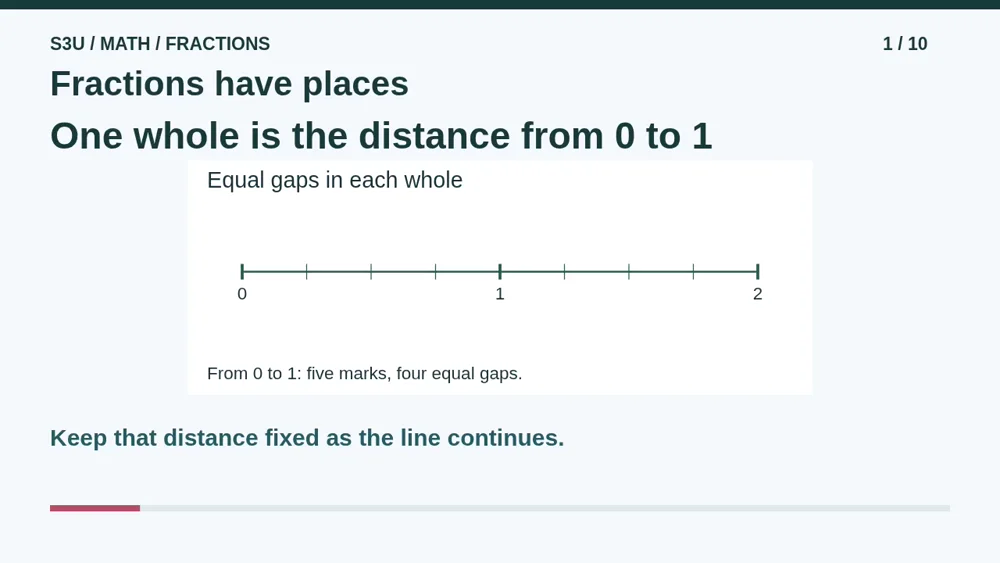
A fraction can name a place on a number line. Start at zero. The distance from zero to one is our whole. This line continues to two, with the same distance for the next whole. We will divide each whole into equal gaps and use them like steps. Our marker does not need fancy shoes. It needs equal steps and a clear starting place.
2. Count gaps, not marks
Video: 0:27
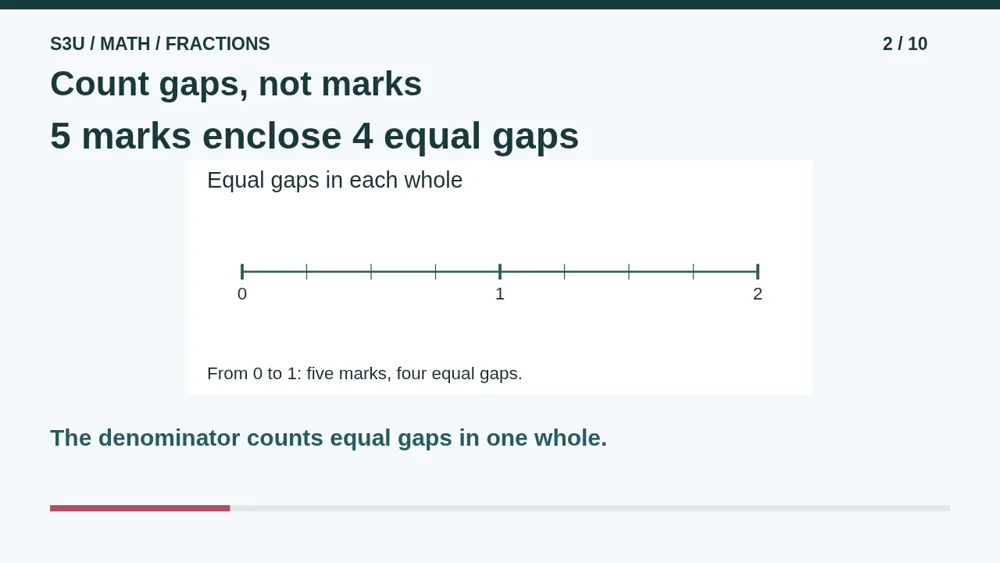
Look just between zero and one. There are five marks, including the two ends. But there are four equal gaps between those marks. Each gap is one fourth of the whole distance. The bottom number in a fraction is called the denominator. Here it is four, not five. Point to each gap as you count. The starting mark is where we begin, not a step we already traveled.
3. Three steps from zero
Video: 0:55
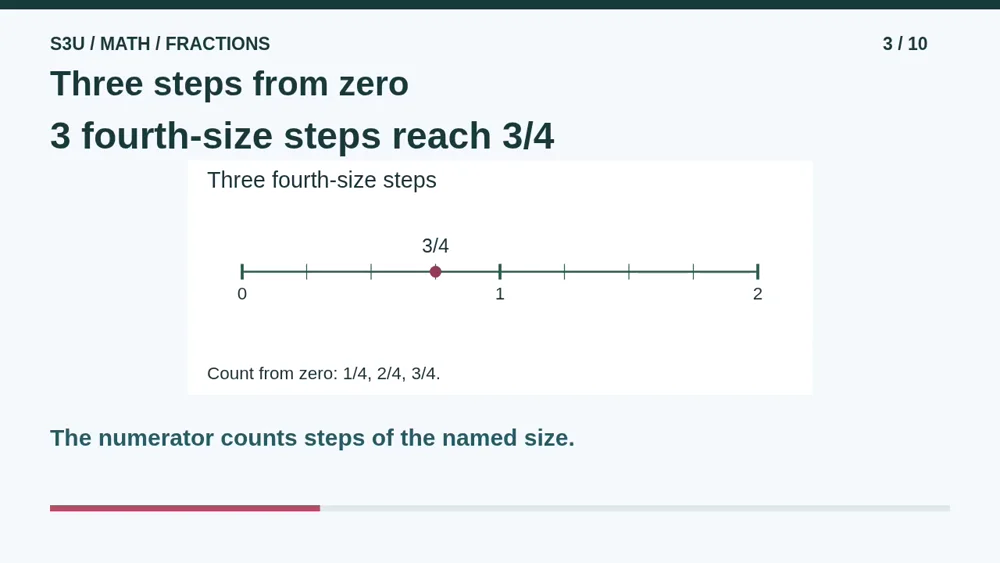
Move three fourth-size steps to the right from zero. One fourth, two fourths, three fourths. We land at three fourths. The top number, the numerator, tells how many steps of that size we traveled. We are still left of one whole. One more fourth-size step would reach one. The fraction tells both the size of a step and how many of those steps to count.
4. Zero is a real place
Video: 1:23
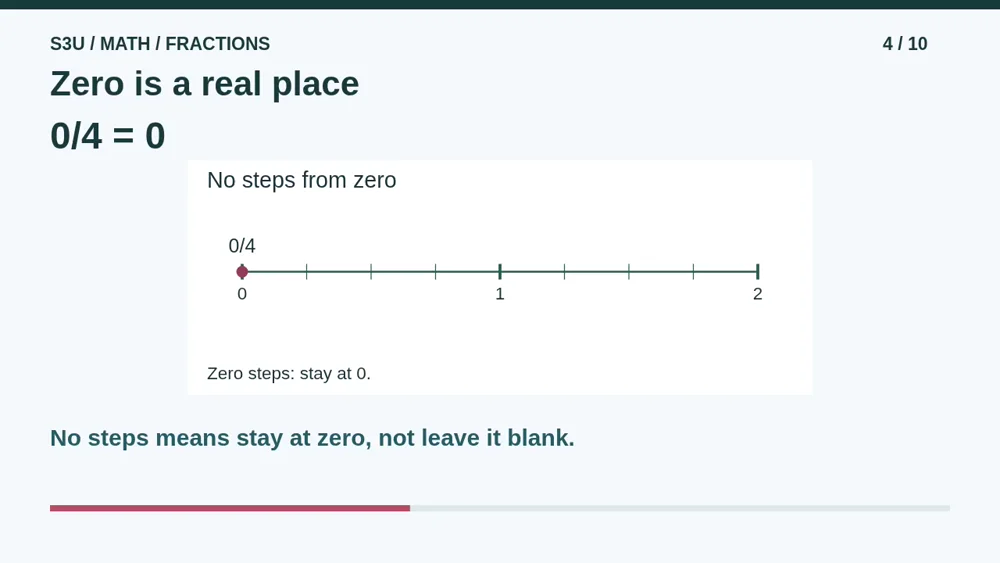
What if we take zero fourth-size steps? We stay at zero. Zero fourths is zero. This is an answer, not an empty space waiting to be filled. The four still names the step size, but the zero says we do not take any steps. Our marker can stay home for this trip. On a worksheet, write zero when zero is the answer.
5. Keep going past one
Video: 1:49
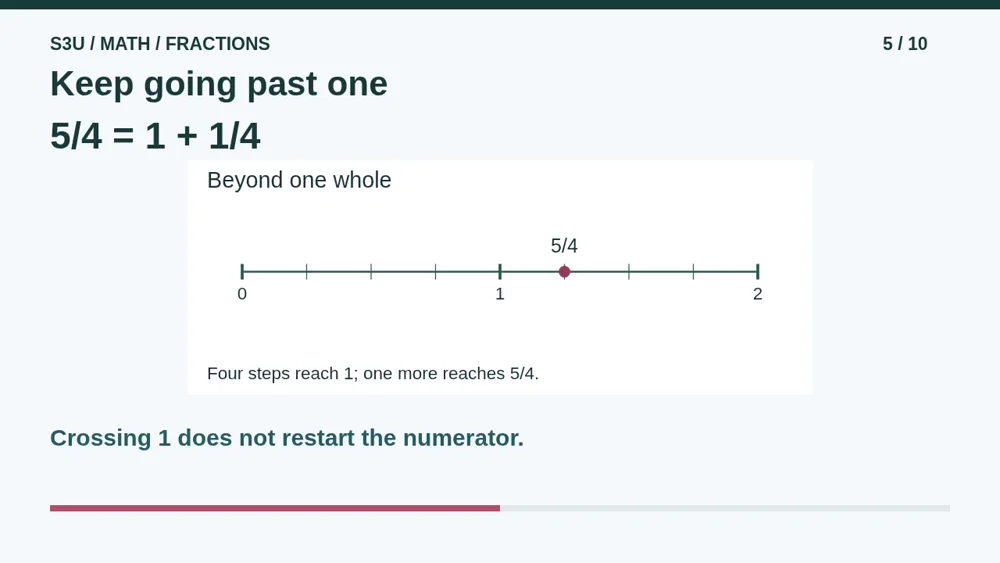
Now take five fourth-size steps from zero. The first four reach one whole. The fifth reaches one whole and one fourth. We can name that same place five fourths. Fractions are allowed to be greater than one. Keep the same step size after passing one. Do not restart the total count. Five steps from zero are still five steps, even though we passed a whole along the way.
6. Pause: find a new place
Video: 2:18
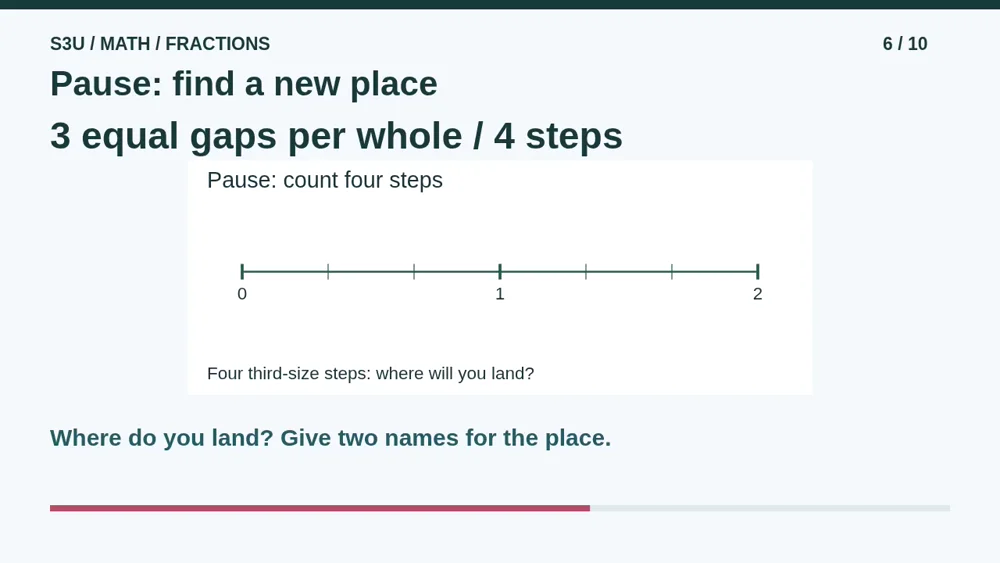
Pause for a new line. Each whole has three equal gaps. Start at zero and take four of those steps to the right. Where do you land? Name the place as a fraction, then as a whole and a fraction. Draw or point before you continue. Remember to count the spaces you travel, keep each whole the same length, and keep counting after you pass one.
7. Check the four steps
Video: 2:45
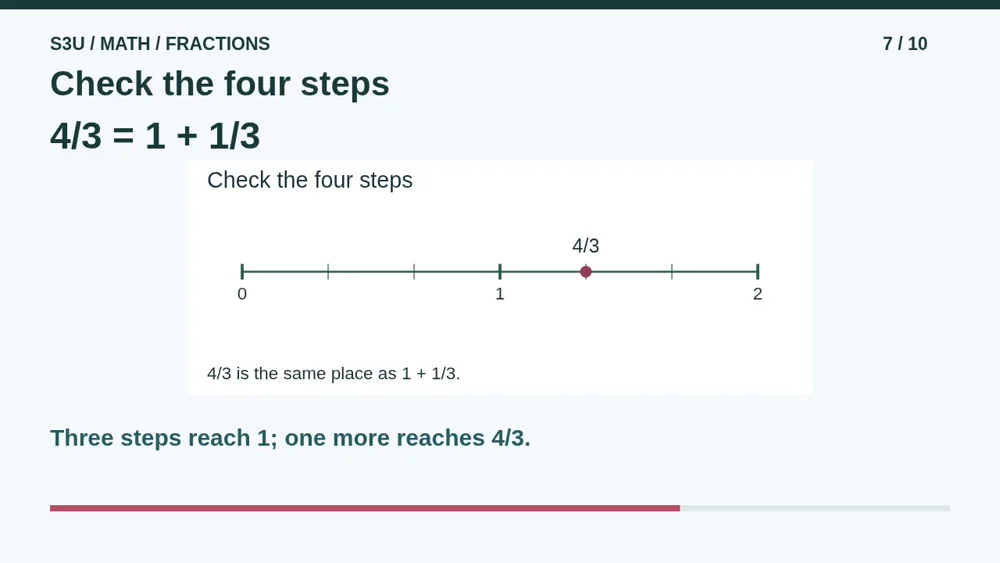
Three third-size steps reach one whole. One more step reaches one whole and one third. All four steps together reach four thirds. The two names describe one place. If you wrote four sixths, check which marks you counted. There are six gaps across the entire distance from zero to two, but only three gaps in one whole. The denominator describes one whole, not the entire drawing.
8. Same place, smaller steps
Video: 3:15
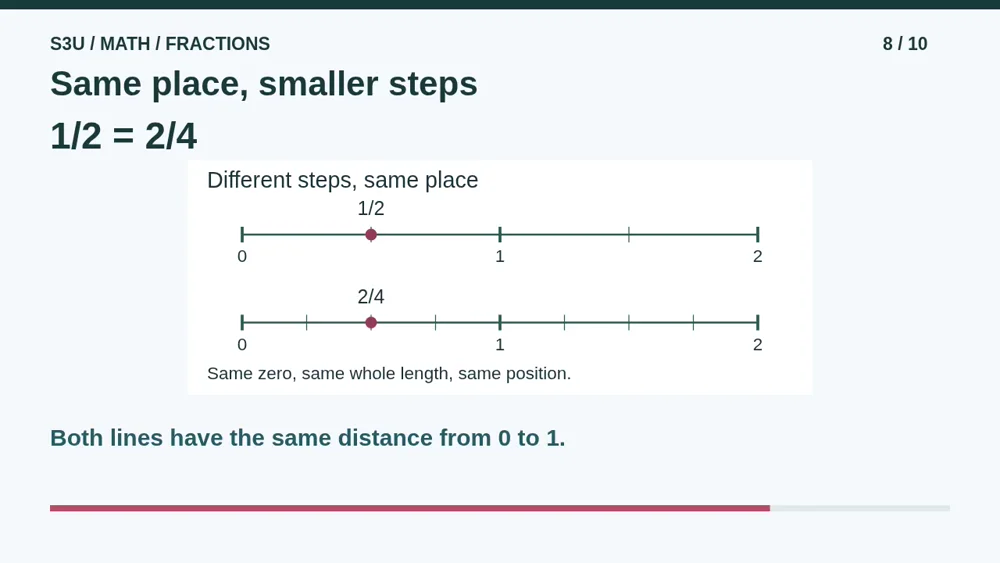
Fun fact: a place can have more than one fraction name. The upper line has two equal gaps in each whole. The lower line has four. Both lines keep the same distance from zero to one. One half-size step and two fourth-size steps land at the same place. One half equals two fourths. Making the steps smaller does not move the place. It changes how many steps we count.
9. Compare on the same scale
Video: 3:45
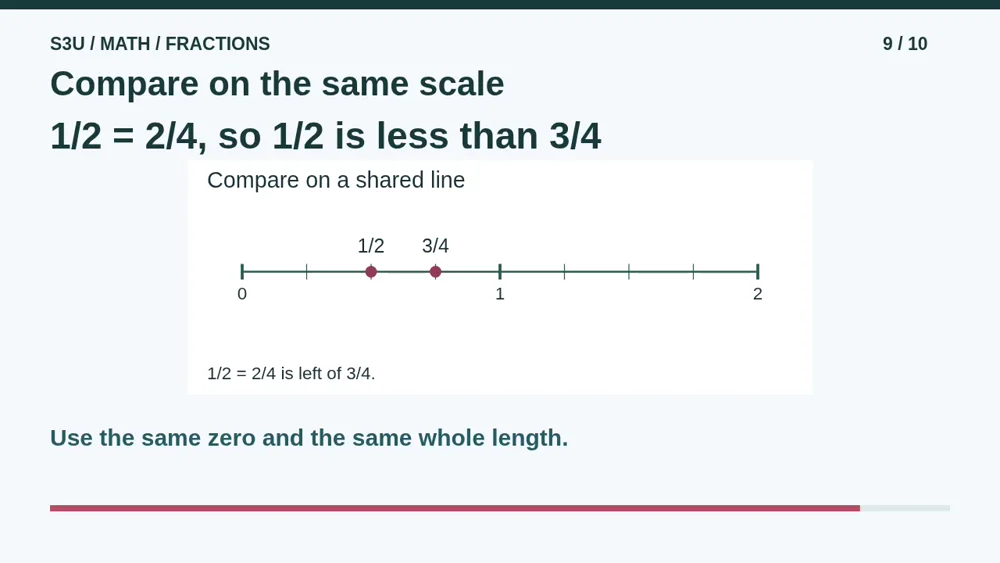
To compare one half and three fourths, use one shared number line. One half is two fourths. Two fourths is left of three fourths, so one half is smaller. A longer drawing on paper does not automatically mean a larger number. First match the zero and the length of one whole. Then compare the places. That keeps a stretched drawing from tricking us.
10. Continue to your worksheet
Video: 4:13
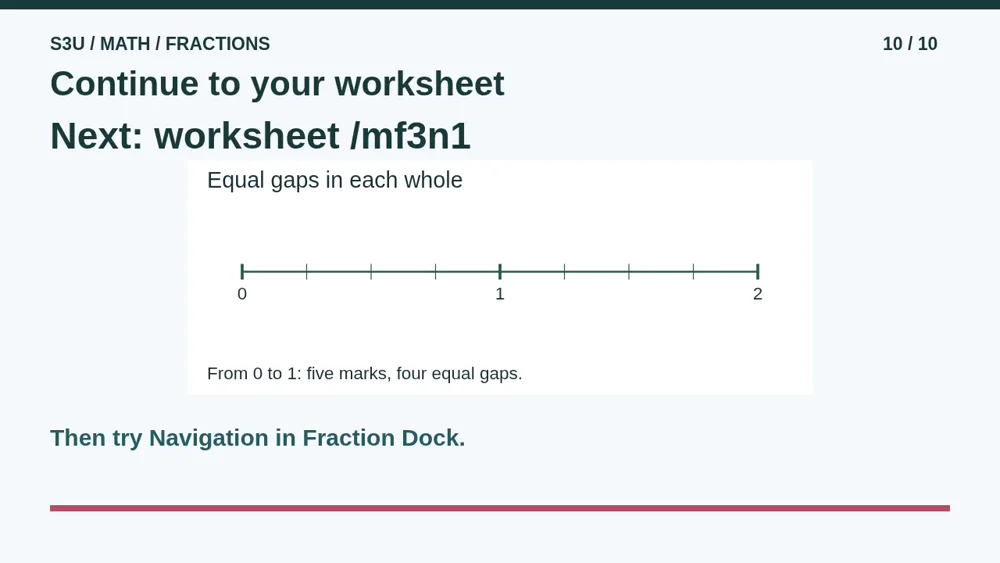
Continue to the number line worksheet below. Its questions use fresh numbers. Find the whole, count equal gaps, then count steps from zero. Write zero when no steps are taken, and keep counting beyond one. The comparison worksheets ask you to explain which place is farther right on a shared scale. After the paper practice, choose Navigation in Fraction Dock to place and compare the markers yourself.
Show your understanding
You can point, explain aloud, draw or write.
- Locate zero, a fraction below one and a fraction above one by counting equal gaps from zero, not boundary marks.
- Explain equivalent names and compare positions using a shared zero and whole length, then solve fresh worksheet questions.
Try it yourself
Pause at the line with three equal gaps per whole. Take four steps from zero and give two names for the position.
Continue to the position and comparison worksheets, then choose Navigation in Fraction Dock. Keep zero and the whole length fixed.
Next: your worksheet
Place Fractions on a Number Line - Practice 1https://s3u.com/mf3n1
More fraction positions · Compare fraction positions · More position comparisons
Place markers in Fraction Dock Navigation · Review Name equal parts
Lesson: https://s3u.com/lessons/fractions-have-places