Math / Grade 3
Name equal fraction parts
Learning goal: Keep the whole fixed, check equal-sized parts and explain what the numerator and denominator count.
Before you start: Count up to ten and compare the sizes of parts in a strip. X marks identify selected parts without needing color.
Read or print this lesson What to practiceThe video could not load. The transcript is still available below.
Next: your worksheet
Count Equal Fraction Parts - Practice 1
Checking sign-in...
Read the transcript
Saved reading place
Video transcript and practice. Reading or printing does not count as playback time or an assessed grade.
1. Start with one whole
Video: 0:00
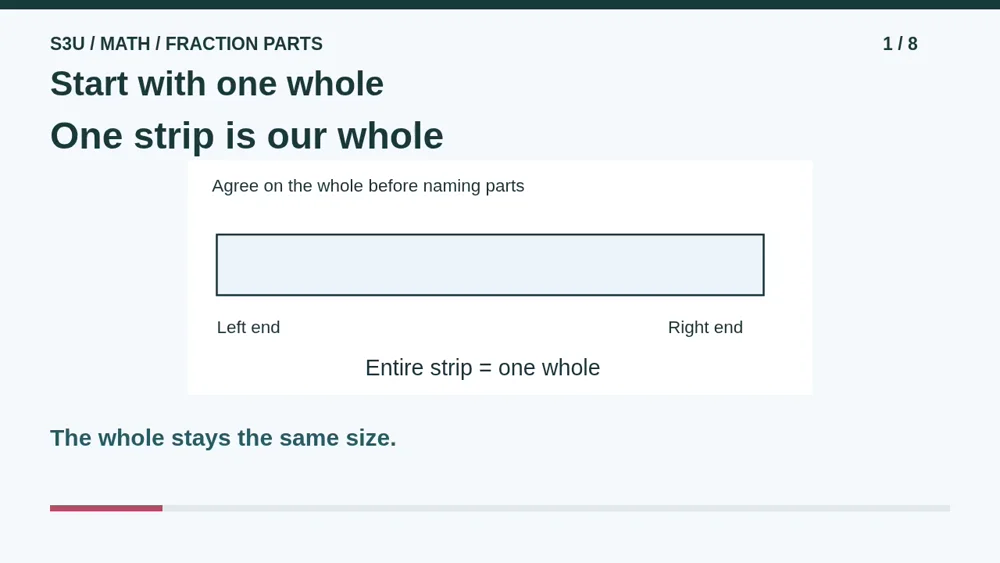
Here is one paper strip. We will call the entire strip one whole. We can describe part of it with a fraction. First we must agree on the whole. Our strip will not grow while we count. It has not ordered a bigger paper jacket. Point to the two ends of the whole strip.
2. Equal parts matter
Video: 0:22
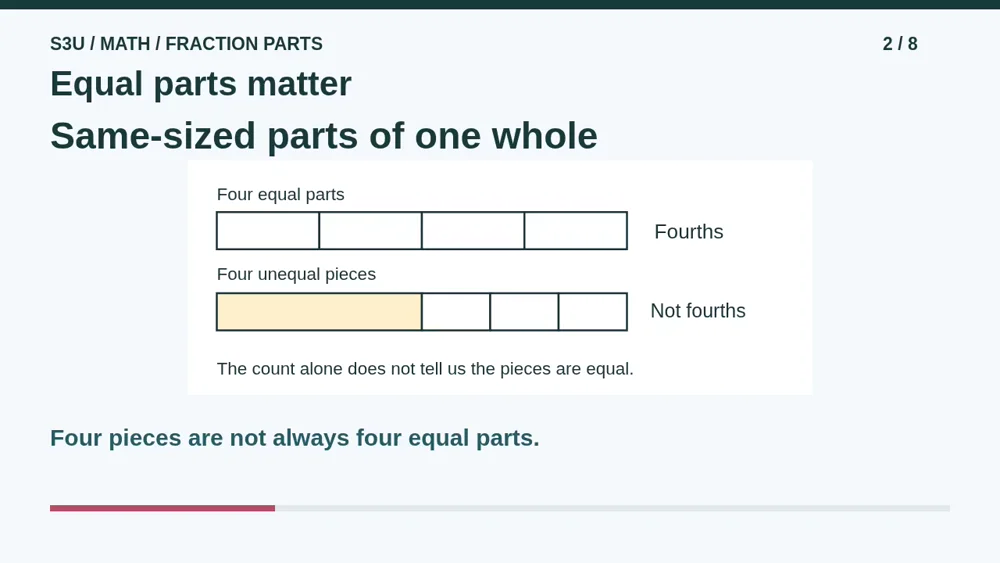
Look at these matching strips. The top strip has four equal parts. Each part is one fourth of that whole. The bottom strip also has four pieces, but one piece is much bigger. We cannot call those four unequal pieces fourths. Count the pieces, but also check their sizes. A fraction model needs equal parts.
3. Count all the equal parts
Video: 0:47
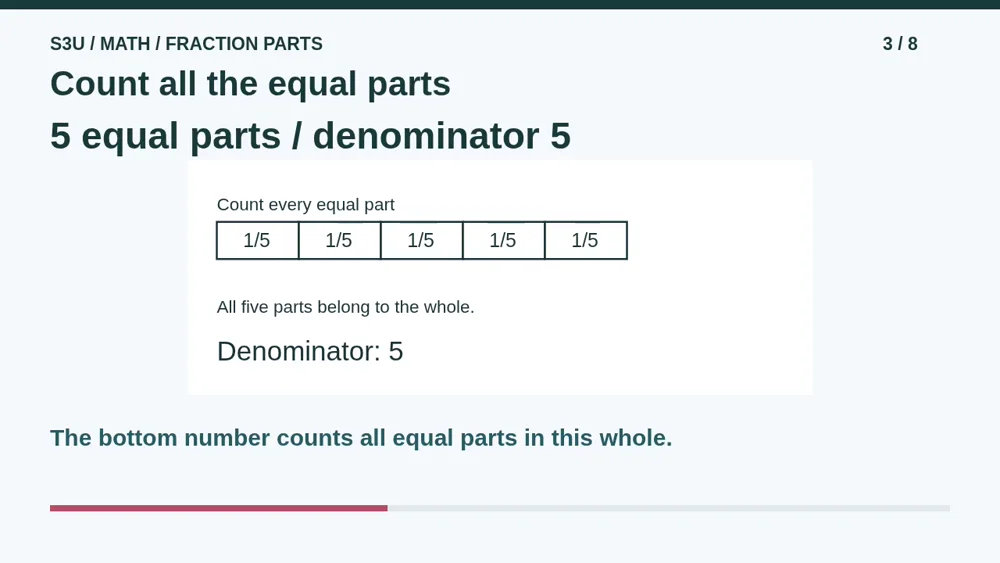
This whole strip is split into five equal parts. Count all five, including the parts that are not marked. The bottom number of our fraction is five. That bottom number is called the denominator. Each equal part is one fifth. We are counting the pieces in the whole strip, not just the pieces we choose.
4. Count the selected parts
Video: 1:11
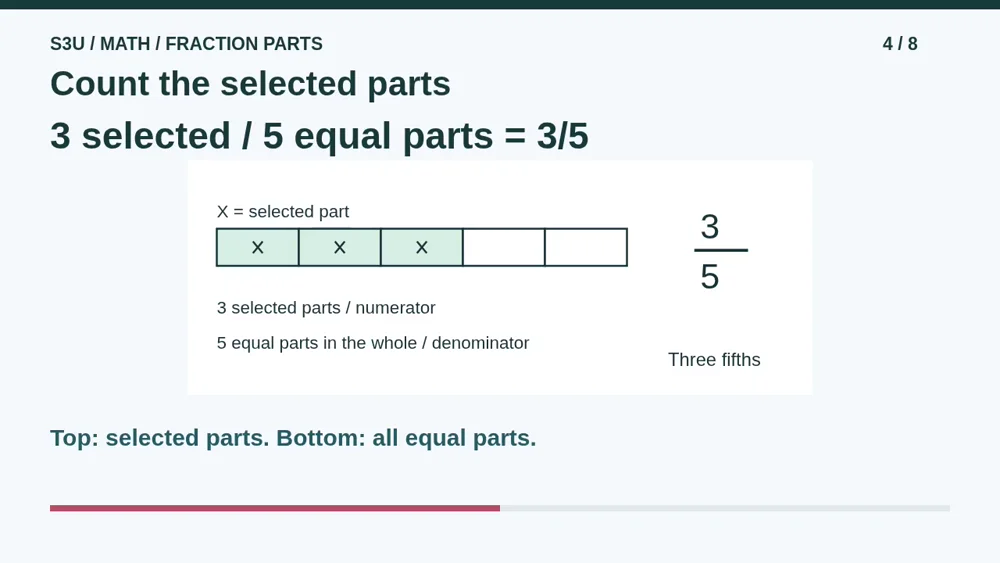
Three of the five equal parts have an X. The top number is three because three parts are selected. That top number is called the numerator. Three over five means three fifths. The two unmarked parts still belong to the whole. Do not leave them out when finding the bottom number. The whole has five parts, not three.
5. Pause: name the marked part
Video: 1:36
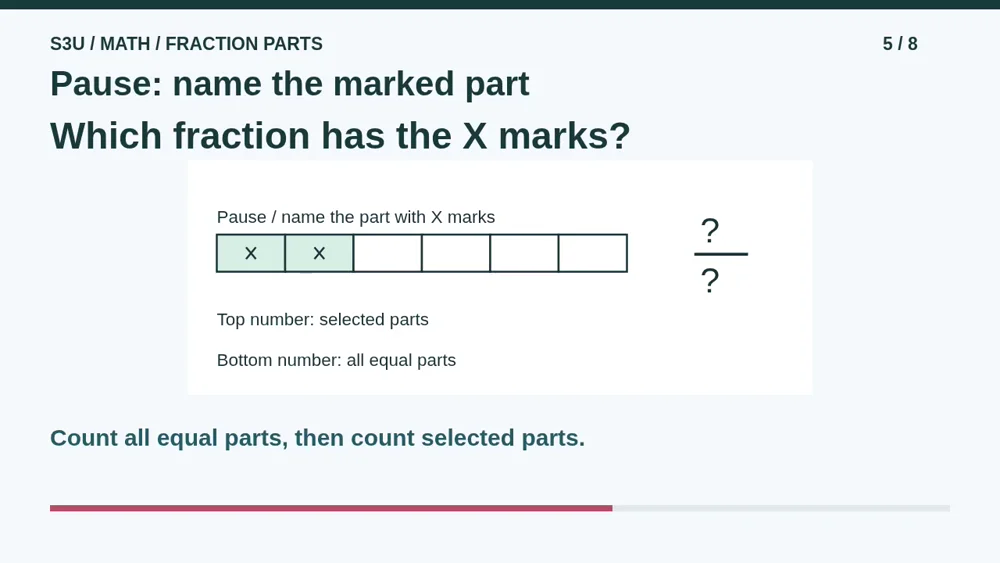
Now try a fresh strip. It has six equal parts. Two have an X. Pause the video. What fraction is selected? Say the bottom number and what it counts. Then say the top number and what it counts. You can point, explain aloud, or write your fraction. Do not use the five from our earlier strip.
6. Check both numbers
Video: 2:03
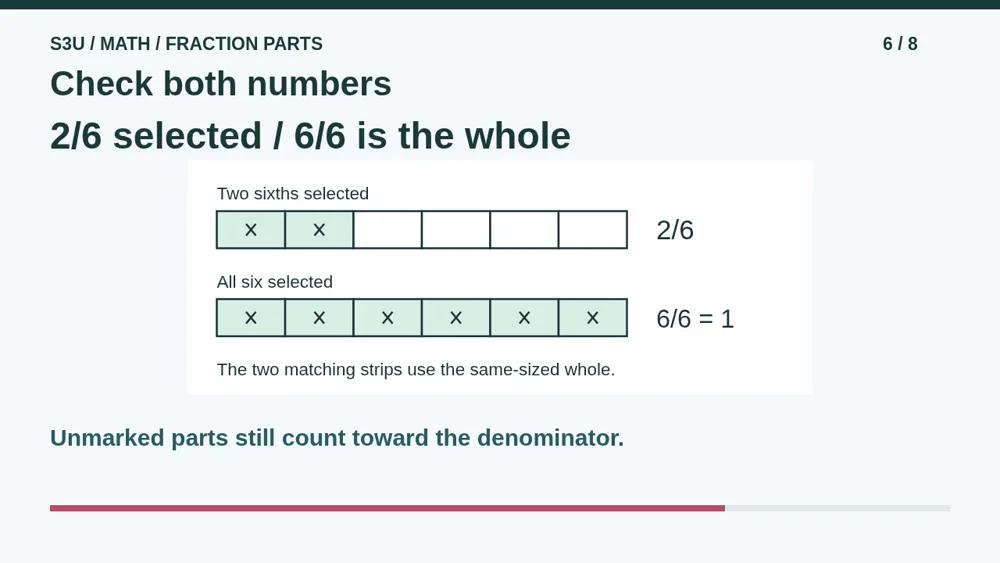
The selected fraction is two sixths. Six counts all equal parts, and two counts the selected parts. If every part were selected, we would have six sixths. That is one whole strip. A denominator of six does not mean six strips. It tells us how this one whole has been split into equal parts.
7. More parts, smaller pieces
Video: 2:27
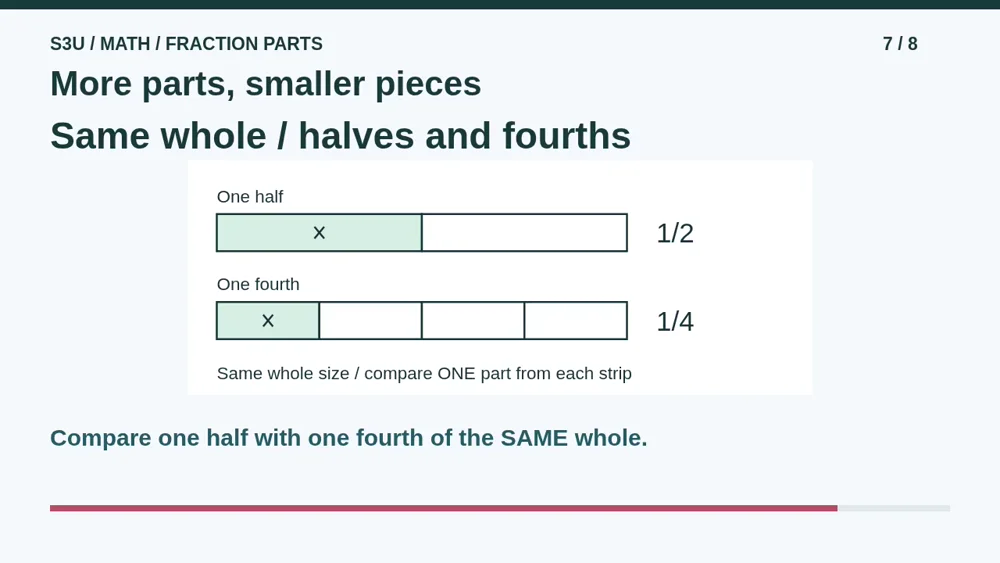
Fun fact: when the whole stays the same size, splitting it into more equal parts makes each single part smaller. One fourth of this strip is smaller than one half of the matching strip. A bigger bottom number does not automatically mean a bigger piece. Always check that the wholes match before comparing the pictures.
8. Continue to the worksheet
Video: 2:50
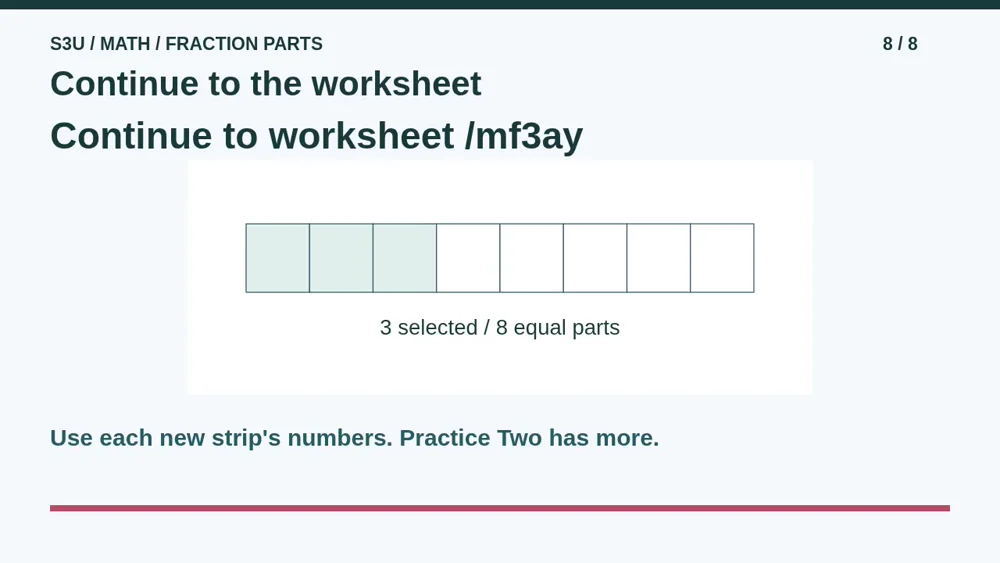
Continue to the worksheet below. For each strip, count all equal parts for the denominator and selected parts for the numerator. Use the numbers in that question. Practice Two gives you another set. You can work on screen, explain aloud, or use a printed page. The important part is explaining what each number counts.
Show your understanding
You can point, explain aloud, draw or write.
- Check that a whole has equal-sized parts before naming a fraction.
- Explain the numerator as the selected count and the denominator as all equal parts, including unselected ones.
Try it yourself
Pause at six equal parts with two X marks. Name the fraction and explain what each number counts.
Continue to the worksheet and Practice Two. Count unmarked parts too when finding the denominator; explain aloud or on paper.
Next: your worksheet
Count Equal Fraction Parts - Practice 1https://s3u.com/mf3ay
Build and compare fractions at Fraction Dock
Lesson: https://s3u.com/lessons/name-equal-parts