Math / Grade 7
Two questions, two fractions
Learning goal: Choose the correct group for each denominator, compare catches with false alarms on one checked batch, and report unchecked records separately.
Before you start: Read fractions and distinguish caught errors, missed errors and false alarms. Review A flag asks for evidence if those labels are new.
Read or print this lesson What to practiceThe video could not load. The transcript is still available below.
Next: your worksheet
Two Questions, Two Denominators
Checking sign-in...
Read the transcript
Saved reading place
Video transcript and practice. Reading or printing does not count as playback time or an assessed grade.
1. Which group are we counting?
Video: 0:00
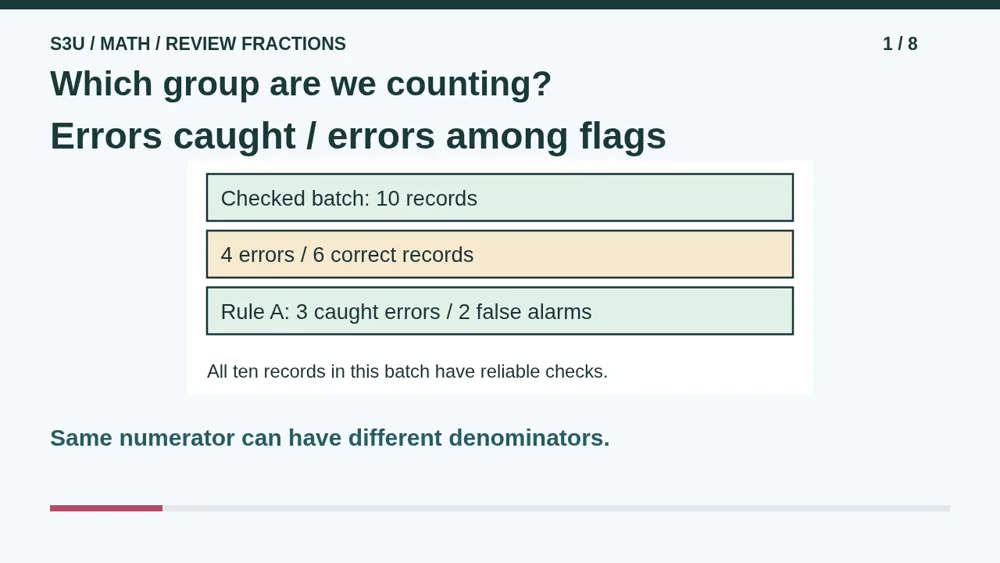
A review rule can catch errors and also raise false alarms. To describe it clearly, ask two different questions. What fraction of known errors did it catch? And what fraction of its flags identified errors? Our invented batch contains ten checked records: four recording errors and six correct records. Every record in this batch has an independent reliable check. We are describing this batch, not promising how the rule will work tomorrow.
2. Start with all known errors
Video: 0:34
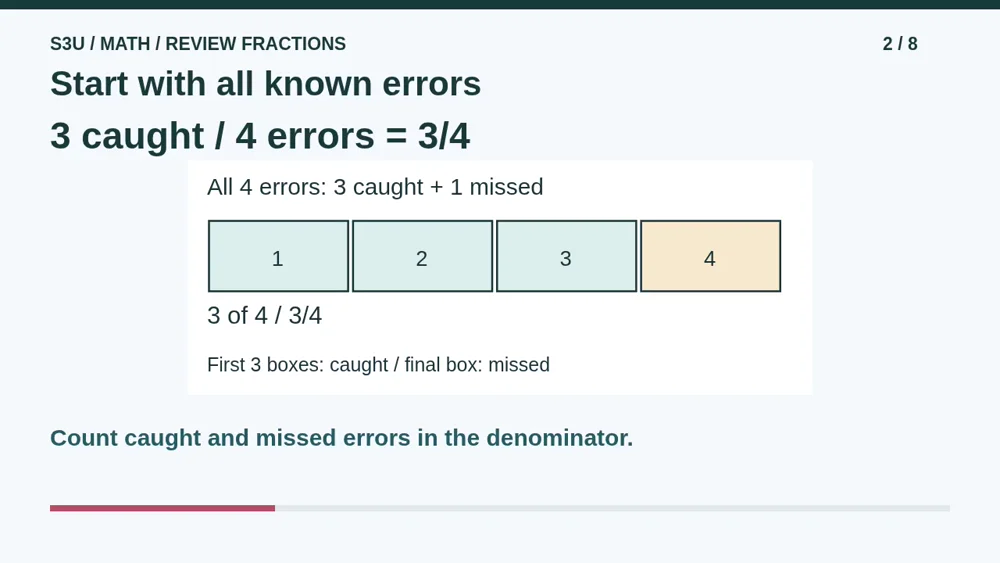
Rule A catches three of the four known errors and misses one. For the fraction of errors caught, start with all four errors. Three caught plus one missed gives a denominator of four. The numerator is the three caught errors, so the fraction is three fourths. Do not use all ten records here. Correct records are not part of the group named by this question. Say the group name before you choose the denominator.
3. Now start with all flags
Video: 1:05
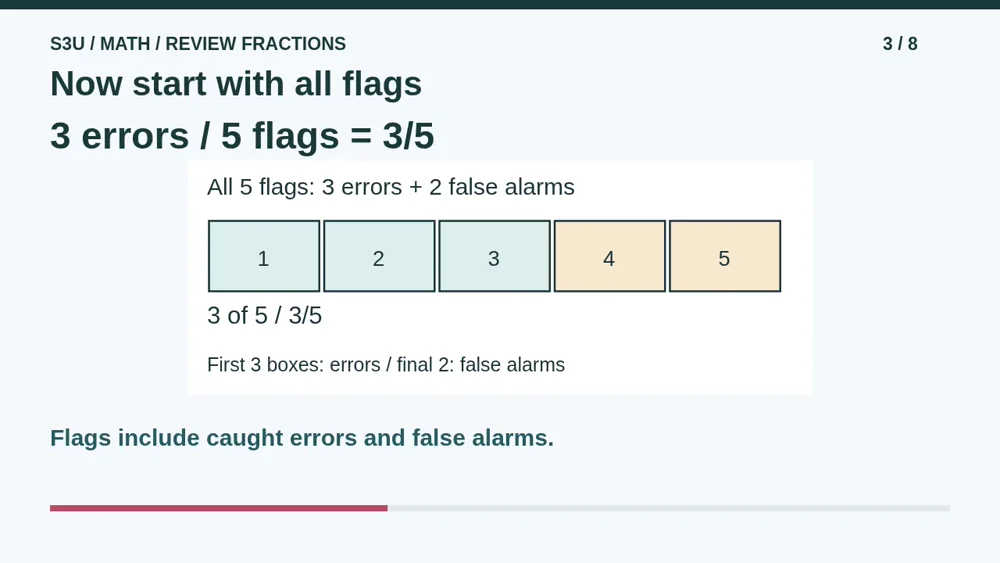
Rule A also flags two correct records. Those are false alarms for recording errors. Its total flags are three caught errors plus two false alarms: five flags. Three of those five identify errors, so the fraction of flags identifying errors is three fifths. The numerator stayed three, but the denominator changed because the question changed. A fraction without its group is like an envelope without an address: the numbers are there, but where do they belong?
4. More catches, more false alarms
Video: 1:40
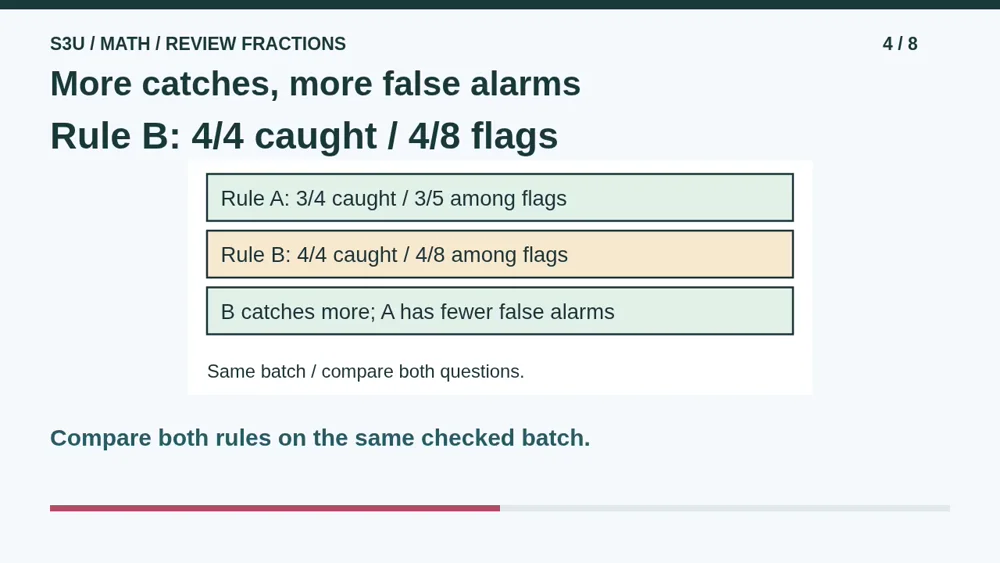
On the same ten records, Rule B catches all four errors but also flags four correct records. Its catch fraction is four out of four. Its flags identify errors four times out of eight, or one half. Rule A caught three fourths of the errors, and three fifths of its flags identified errors. Rule B catches a larger fraction, but a smaller fraction of its flags identifies errors. Neither fraction alone describes this tradeoff. The rules were compared on the same checked batch.
5. Pause: choose both groups
Video: 2:17
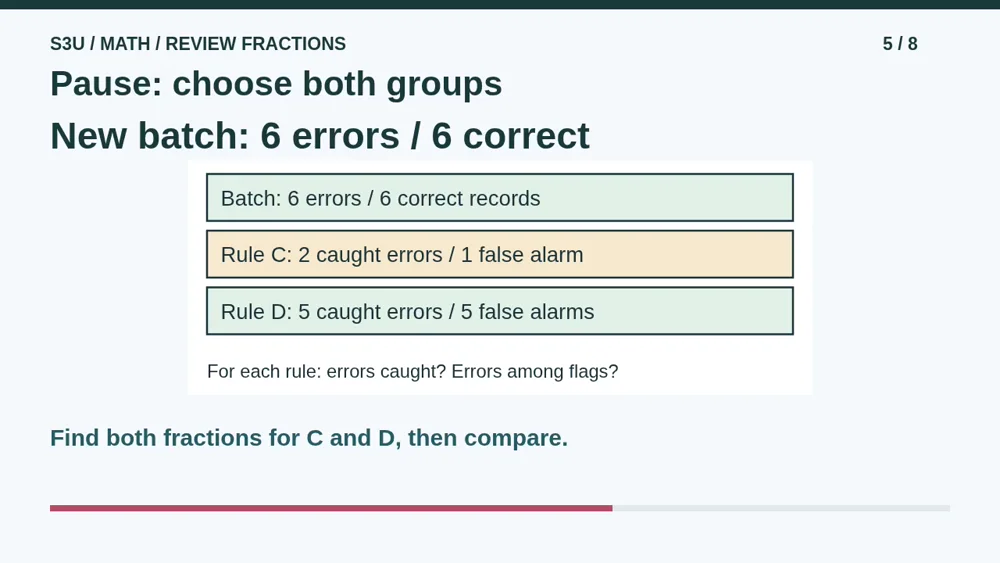
Pause with a new batch of twelve checked records: six errors and six correct records. Rule C catches two errors and flags one correct record. Rule D catches five errors and flags five correct records. Find the fraction of errors caught by each rule, then the fraction of each rule's flags that identifies errors. Which rule has the larger catch fraction? Which has the larger fraction of correct flags? Write the group names beside your fractions before continuing.
6. Check the denominators
Video: 2:53
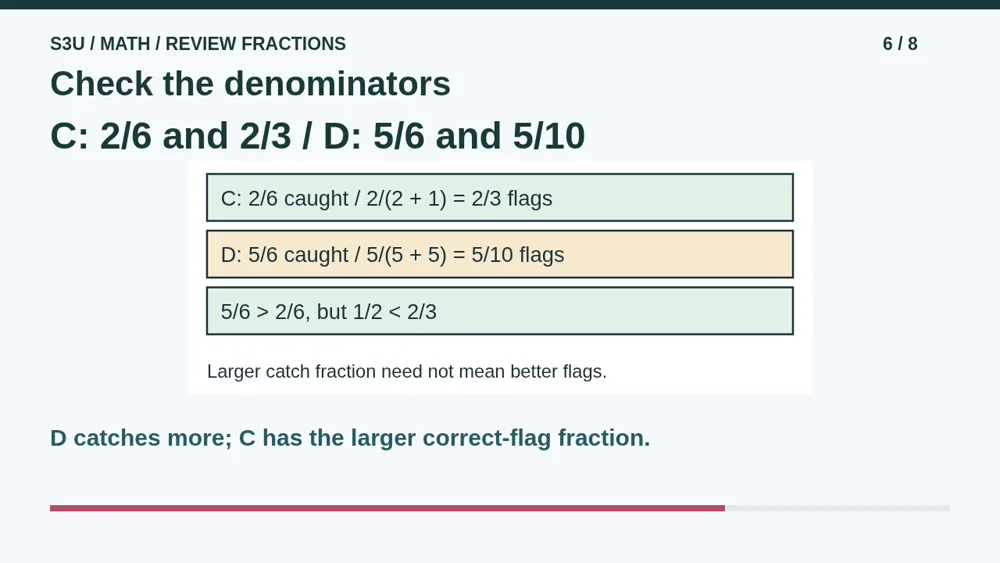
Both catch fractions use the six known errors. Rule C catches two sixths; Rule D catches five sixths. For flags, C has two caught errors plus one false alarm, giving two thirds. D has five caught errors plus five false alarms, giving five tenths, or one half. D has the larger catch fraction, but C has the larger fraction of flags identifying errors. If you used twelve for every denominator, go back and name the particular group each question asks about.
7. Missing evidence stays missing
Video: 3:29
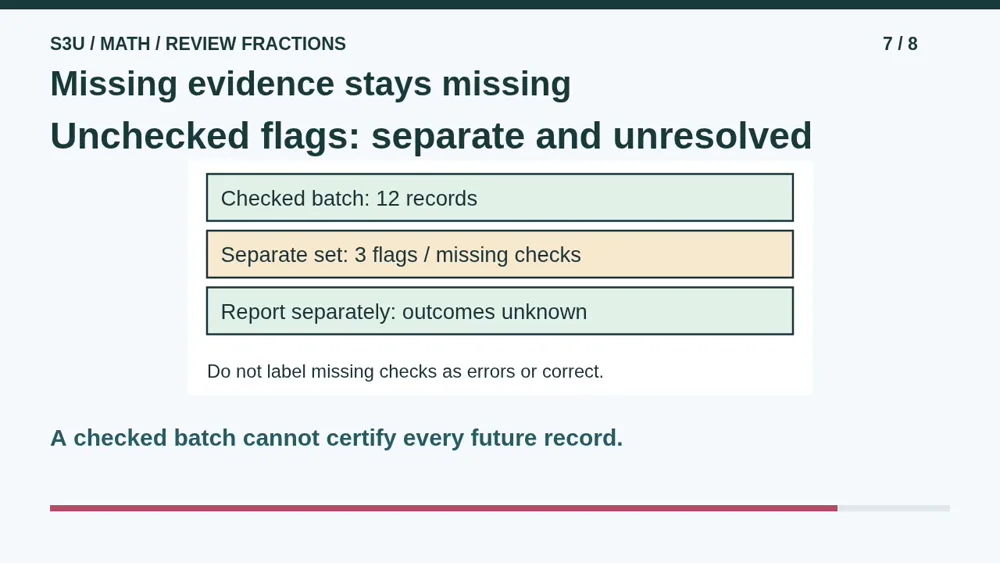
Suppose there are also three flagged records with no independent checks, outside our twelve-record batch. Report them separately as unresolved; do not guess that they are errors or correct records. Fun fact: flagging every checked record catches every known error, but also flags every correct record. On our first ten-record batch, that would catch four out of four errors, while only four out of ten flags identify errors. A perfect catch fraction alone is not the whole story.
8. Continue to the worksheet
Video: 4:05
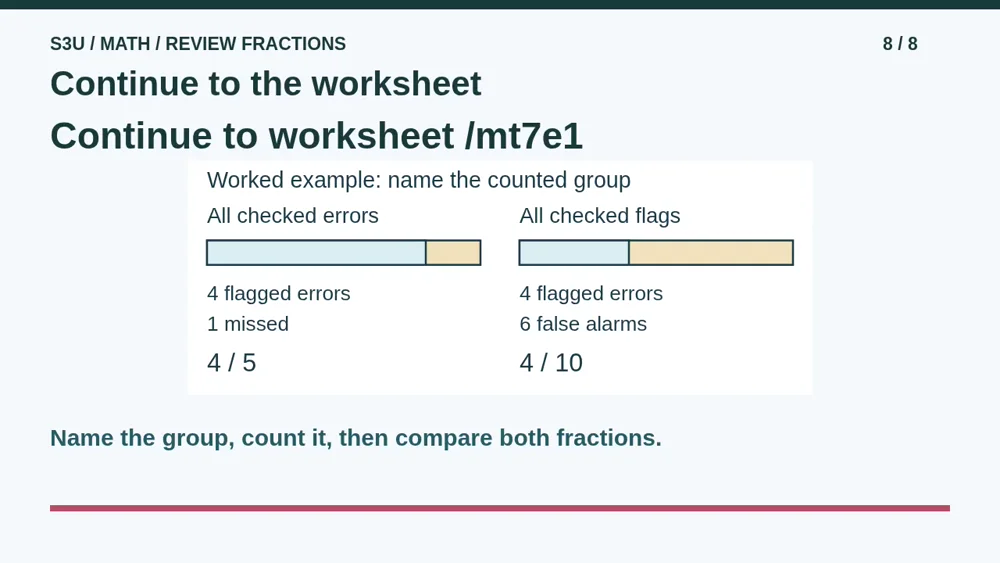
Continue to the review fractions worksheet below. Its batches and rules are different from this video, so start with its own worked example. Name the group in each question, count all members of that group, and then form the fraction. Keep unchecked records separate and avoid turning one batch result into a future guarantee. The second worksheet gives another tradeoff to explain. Rule Patrol can help you revisit flags and evidence, but it does not assess these fraction comparisons.
Show your understanding
You can point, explain aloud, draw or write.
- Use all checked errors for a catch fraction and all checked flags for a correct-flag fraction.
- Compare both fractions on the same batch, keep unchecked outcomes separate and avoid unsupported future guarantees.
Try it yourself
Pause at the twelve-record batch. Calculate both fractions for C and D and explain the tradeoff.
Continue to the worksheet using its own batch counts. Name the denominator group and keep unchecked flags separate.
Next: your worksheet
Two Questions, Two Denominatorshttps://s3u.com/mt7e1
Try Rule Patrol: choose Flags need evidence
Try another review comparison · Review flags and evidence
Lesson: https://s3u.com/lessons/two-review-fractions