Math / Grade 7
Record both sides of a transaction
Learning goal: Follow debit and credit sides, post cash and supplier events, and explain a three-account entry using a fictional workshop.
Before you start: Add and subtract whole numbers and distinguish assets, liabilities and owner capital. These are fictional paper records with explicit exclusions.
Read or print this lesson What to practiceThe video could not load. The transcript is still available below.
Next: your worksheet
Two Sides of a Workshop Entry - Practice 1
Checking sign-in...
Read the transcript
Saved reading place
Video transcript and practice. Reading or printing does not count as playback time or an assessed grade.
1. Debit and credit name the sides
Video: 0:00
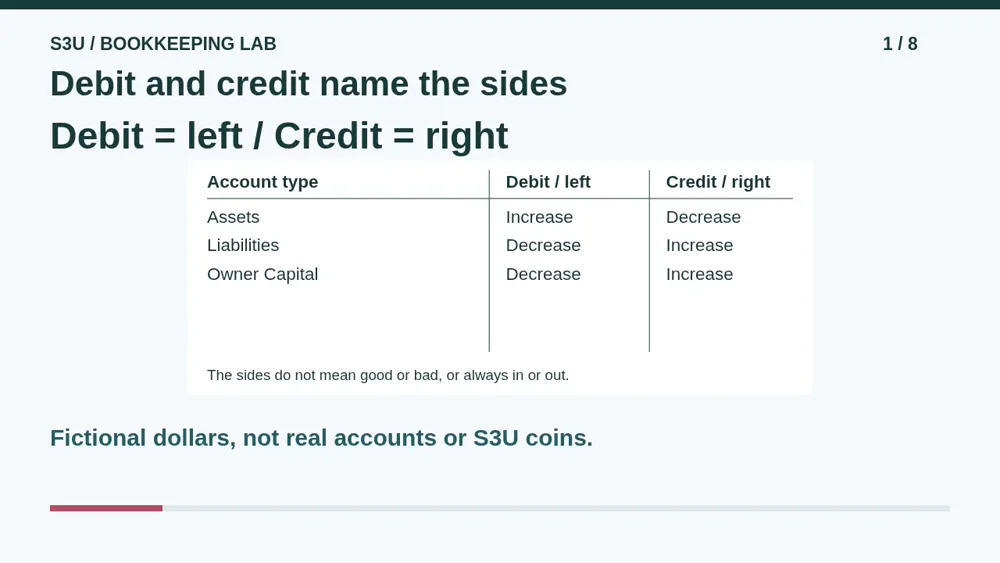
Welcome to a paper workshop. Today, debit means the left side of an account, and credit means the right. Neither word means good or bad. Assets, such as cash and equipment, increase on the debit side. Liabilities and owner capital increase on the credit side. We use fictional dollars, with no interest, tax, fees, depreciation, sales or expenses in this lesson.
2. Record the owner and the loan
Video: 0:29
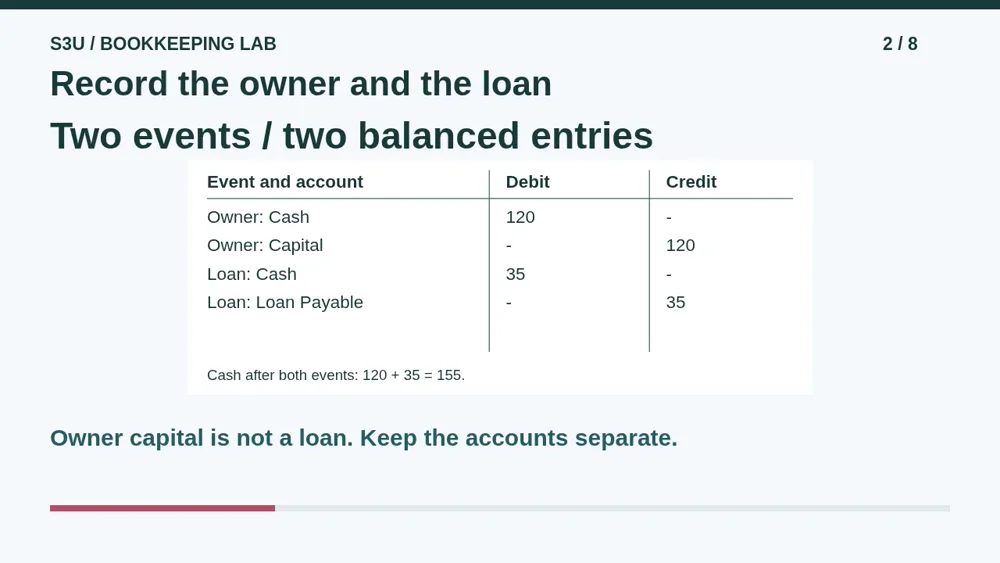
Start with zero balances. The owner puts in one hundred twenty dollars. Debit Cash one hundred twenty and credit Capital one hundred twenty. Next, borrowing brings in thirty-five. Debit Cash thirty-five and credit Loan Payable thirty-five. Each entry has equal debit and credit totals. Cash has grown to one hundred fifty-five, but the loan also brought an obligation to repay.
3. Equipment replaces some cash
Video: 1:00
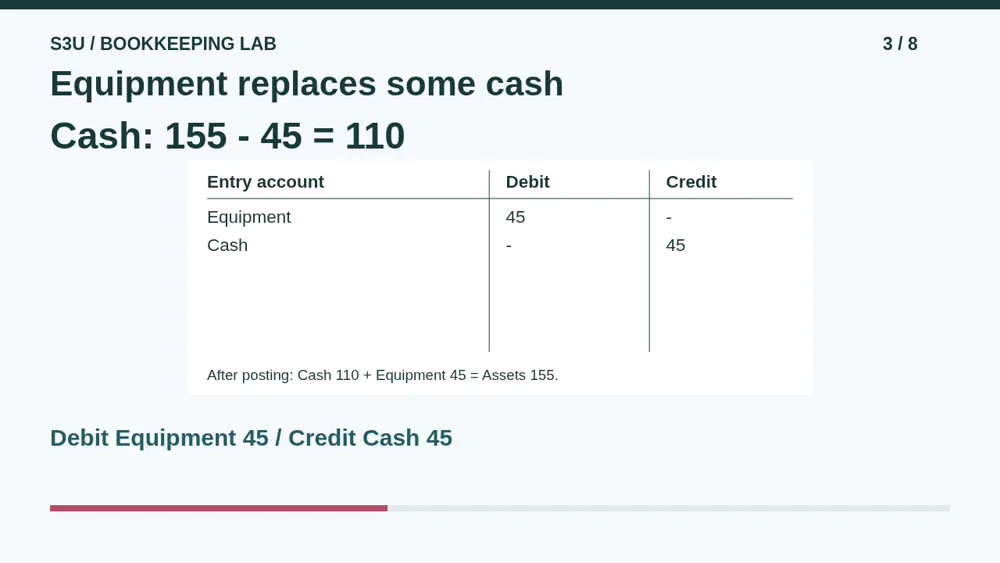
The workshop buys equipment for forty-five dollars cash. Equipment is an asset in our model. Debit Equipment forty-five because it increases. Credit Cash forty-five because that asset decreases. Cash is now one hundred ten, but the equipment has not vanished into a mysterious expense drawer. Cash plus equipment is still one hundred fifty-five. Always name the account before deciding what a debit or credit changes.
4. Repay part of the loan
Video: 1:34
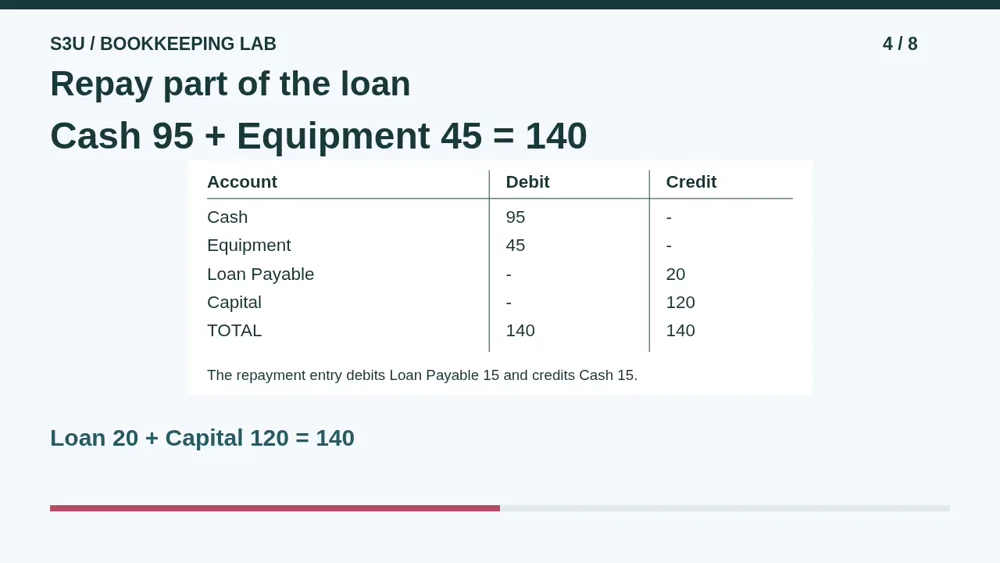
Now repay fifteen dollars of loan principal. Debit Loan Payable fifteen to reduce the liability. Credit Cash fifteen to reduce cash. Cash ends at ninety-five, equipment at forty-five, the loan at twenty, and capital at one hundred twenty. Assets total one hundred forty. Liabilities plus capital also total one hundred forty. Here a debit reduced a liability; it did not increase every account.
5. Pause: equipment arrives before payment
Video: 2:07
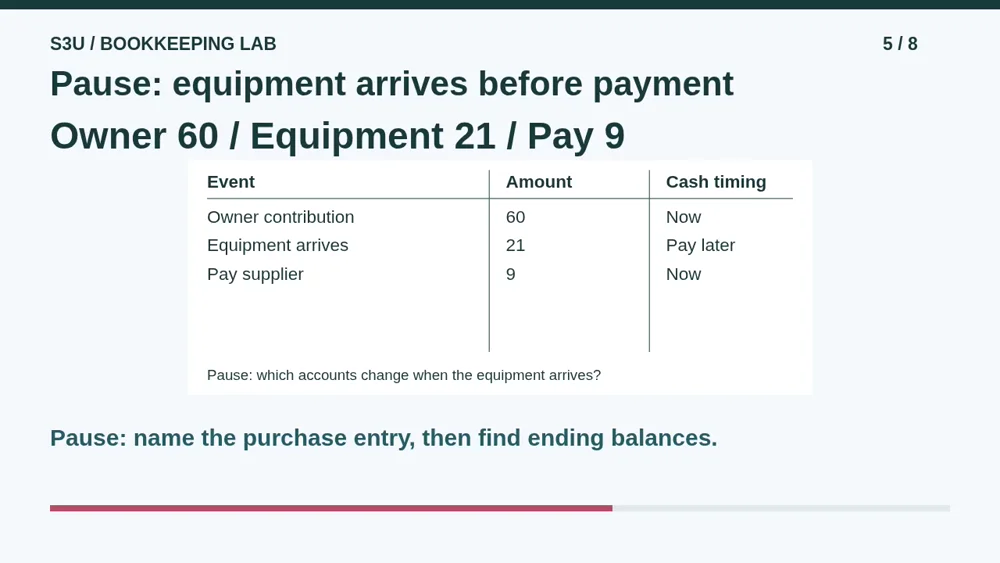
Try a new workshop, starting from zero. Its owner contributes sixty cash. Equipment costing twenty-one arrives, with payment to the supplier due later. Then the workshop pays nine toward that supplier bill. Pause here. Name the two accounts in the equipment purchase entry. Find ending cash, equipment, and the amount still owed to the supplier. The purchase and the payment are different events.
6. Check the supplier timing
Video: 2:39
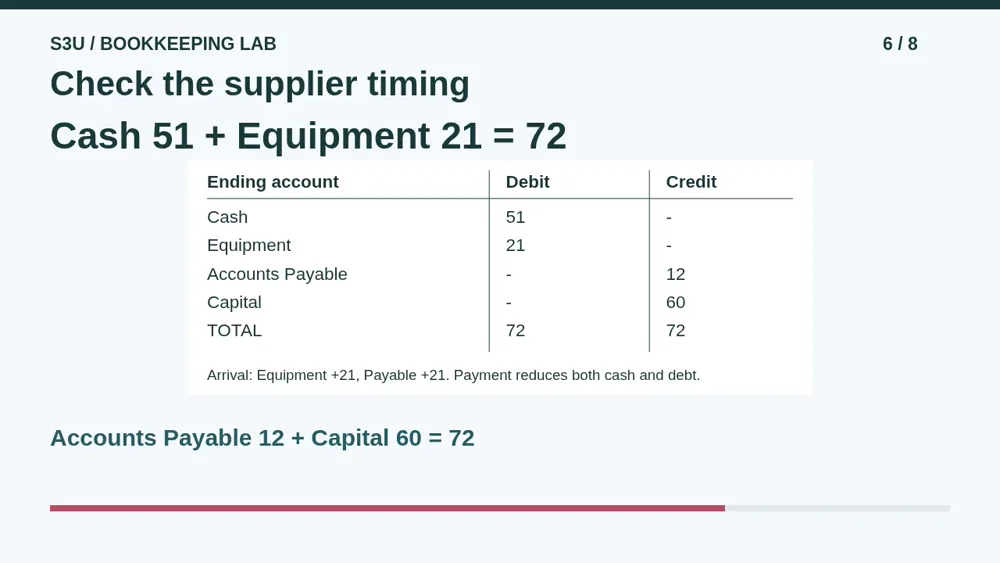
On arrival, debit Equipment twenty-one and credit Accounts Payable twenty-one. Cash has not moved yet. Payment later debits Accounts Payable nine and credits Cash nine. Cash is fifty-one, equipment twenty-one, and the supplier is still owed twelve. Capital is sixty. Both sides total seventy-two. If you subtracted twenty-one from cash on arrival as well, you counted money leaving when the story said it had not.
7. One entry can use three accounts
Video: 3:12
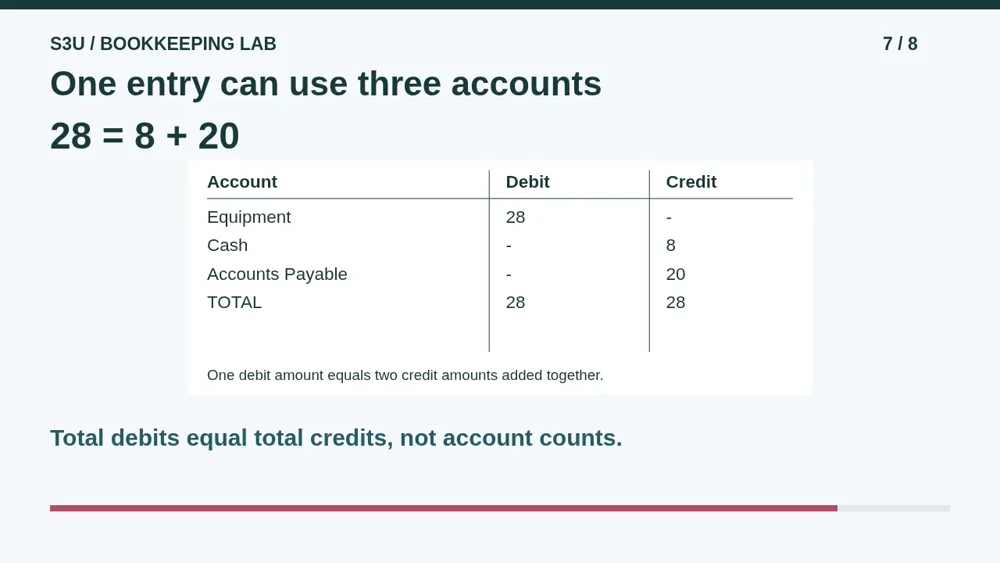
Fun fact: double-entry does not mean exactly two accounts. In a separate example, equipment costs twenty-eight. Pay eight now and owe twenty to its supplier. Debit Equipment twenty-eight, credit Cash eight, and credit Accounts Payable twenty. One debit matches two credits in value. The accounts do not need equal team sizes. They need equal total amounts and the right description of what happened.
8. Continue to your journal worksheet
Video: 3:43
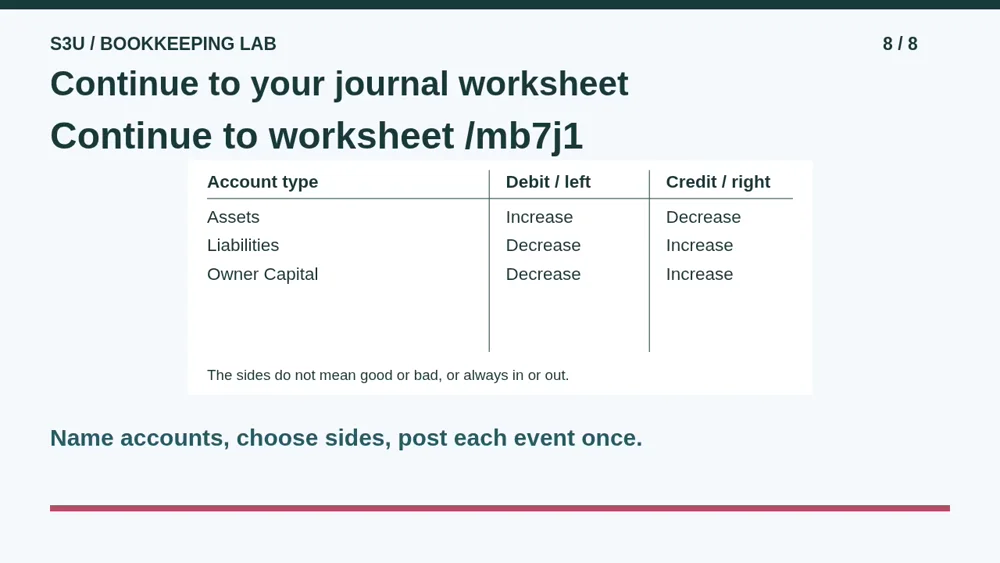
Continue to the worksheet below. Its workshop uses different amounts, so do not copy the lesson balances. For each event, name the accounts, decide what increased or decreased, and choose the correct side. Check equal debit and credit totals before finding ending balances. Then try the alternate practice, including a supplier purchase and a three-account entry. Keep everything fictional; no real accounts or personal records are needed.
Show your understanding
You can point, explain aloud, draw or write.
- Choose debit and credit sides from the account type and direction of change, keeping supplier purchases separate from later payment.
- Post each event once, check balances against the accounting equation and explain why a balanced entry may involve three accounts.
Try it yourself
Pause at owner cash 60, equipment 21 due later, then supplier payment 9. Name the purchase entry and ending balances.
Continue to the worksheet with its own amounts, then try the alternate journal practice. No real accounts or financial records are needed.
Next: your worksheet
Two Sides of a Workshop Entry - Practice 1https://s3u.com/mb7j1
Lesson: https://s3u.com/lessons/record-both-sides