Math / Grade 3
Plan before spending
Learning goal: Separate a pretend spending plan from actual payments, and count money set aside without counting it twice.
Before you start: Add and subtract whole numbers up to 500. All prices are fictional and use cents.
Read or print this lesson What to practiceThe video could not load. The transcript is still available below.
Next: your worksheet
Plan a Pretend Craft Budget
Checking sign-in...
Read the transcript
Saved reading place
Video transcript and practice. Reading or printing does not count as playback time or an assessed grade.
1. A plan is not a payment
Video: 0:00
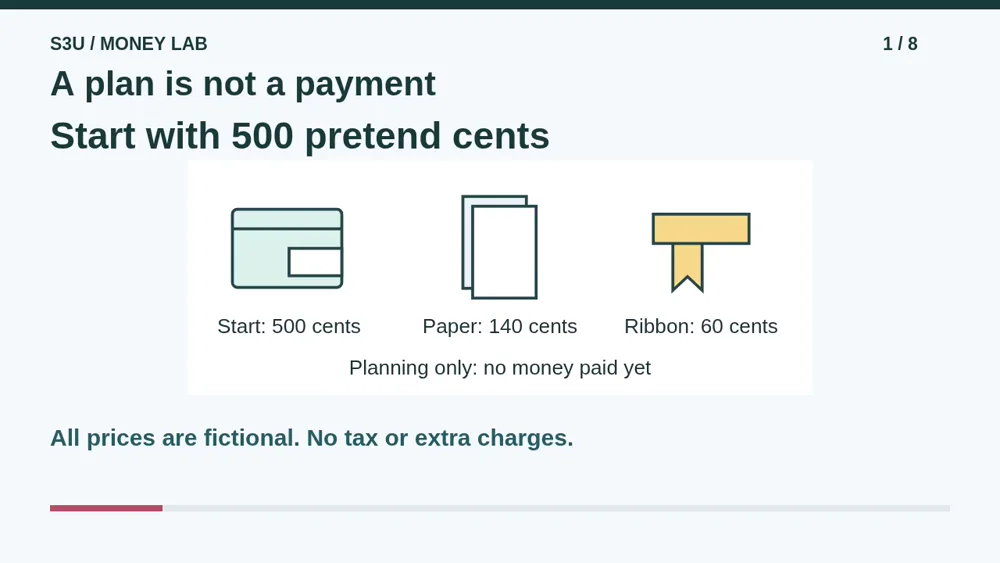
Our pretend craft shop sells paper and ribbon. We have five hundred cents. Before buying anything, we can make a budget: a plan for how to use that money. Writing down a plan does not spend it. Our paper wallet can relax for a moment.
2. Add the planned costs
Video: 0:19
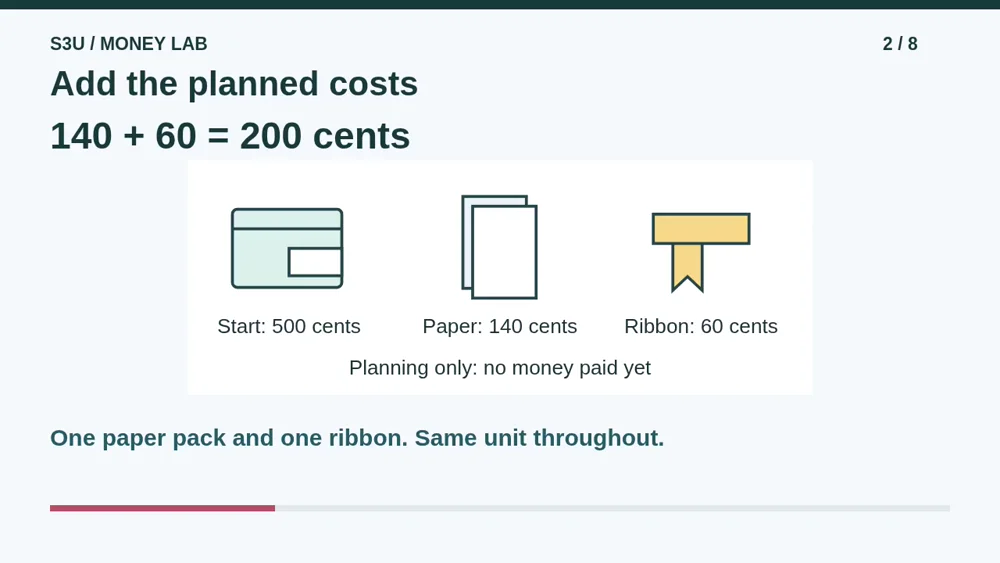
One paper pack costs one hundred forty cents. One ribbon costs sixty cents. Add those prices to find the planned cost: two hundred cents. Every number is in cents. At this point we have only made a plan, so we still hold five hundred cents.
3. Record what actually happens
Video: 0:39
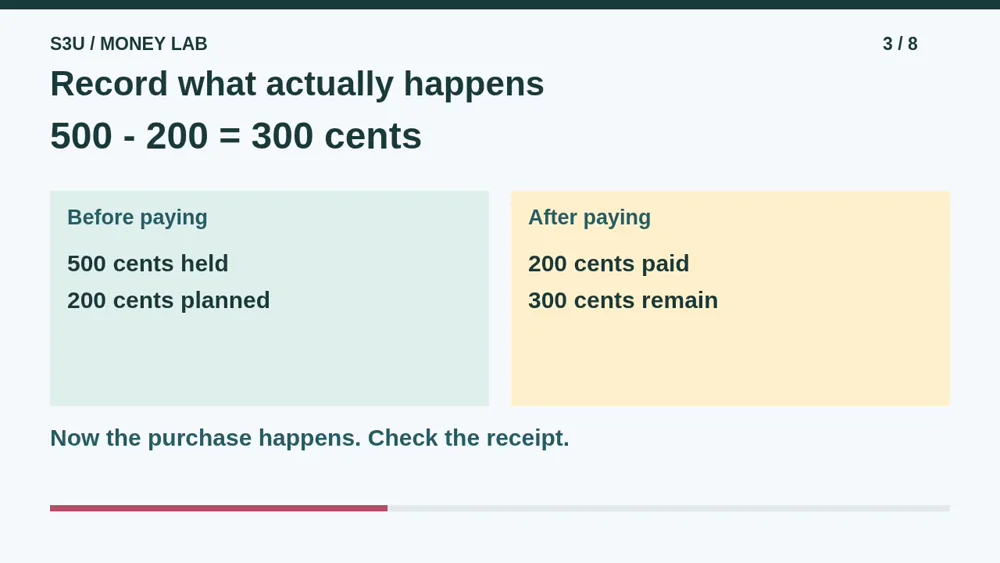
Now we actually buy the paper and ribbon for two hundred cents. Subtract the payment from five hundred. Three hundred cents remain. Check that the receipt matches the agreed prices. If it does not, ask a trusted adult to help check the difference. Do not secretly change the receipt.
4. Set some money aside
Video: 1:02
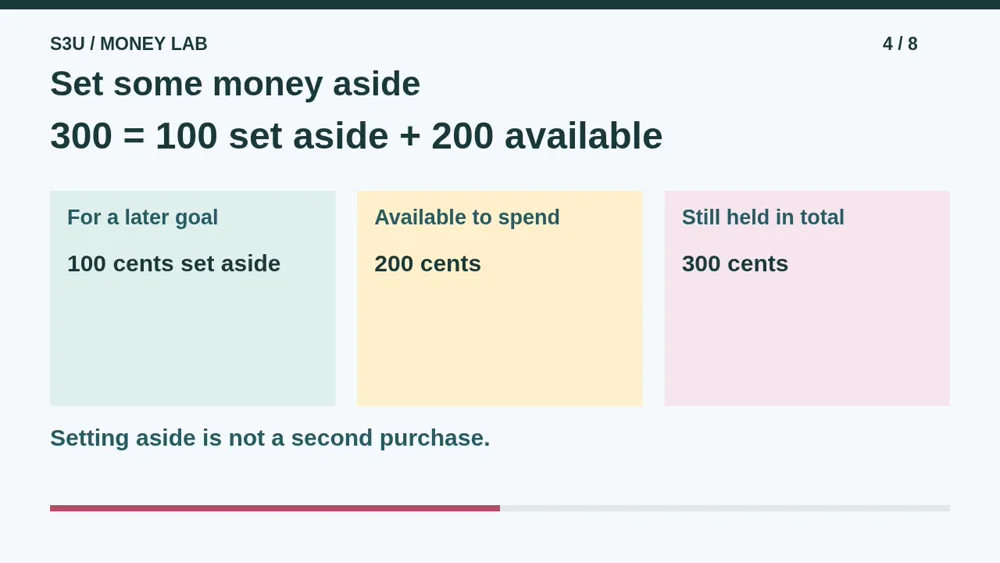
We decide to keep one hundred of our remaining cents for a later goal. That leaves two hundred available to spend now. We still have three hundred altogether. Setting some money aside changes our plan for it. It does not mean we paid someone another hundred cents.
5. Pause: try a new plan
Video: 1:23
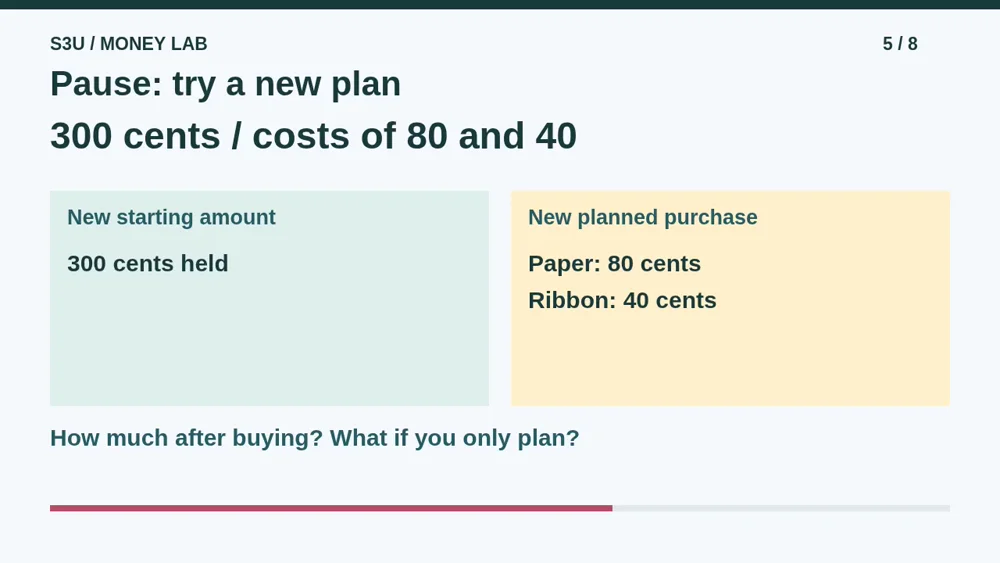
Try a fresh shop with different stated prices. You have three hundred cents. Paper costs eighty cents and ribbon costs forty cents. Pause and add the two costs. How much would remain after buying both? If you only wrote the plan and bought nothing, how much would you still hold?
6. Check the plan and the payment
Video: 1:45
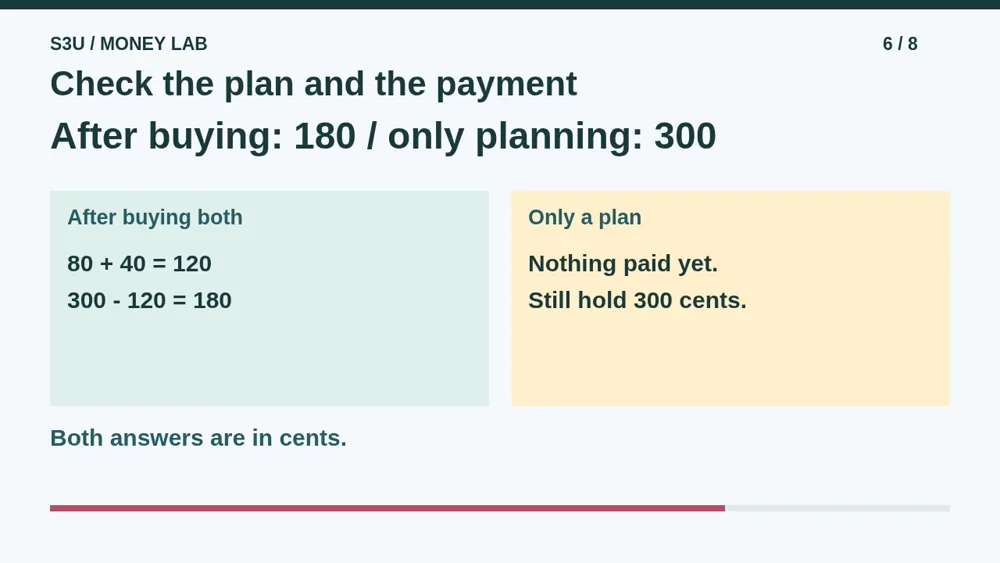
The two costs add to one hundred twenty cents. After paying that amount, one hundred eighty cents remain. But if you only made the plan, you still hold three hundred cents. The words after buying matter. They tell us whether money actually went out.
7. A new unit, not extra money
Video: 2:05
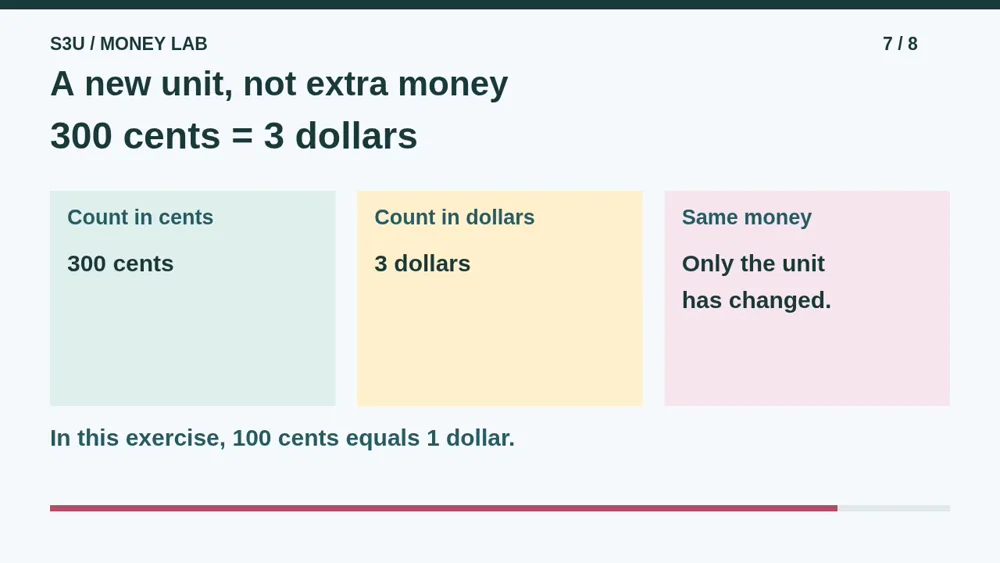
Fun fact: one dollar and one hundred cents name the same amount of money. Our three hundred cents can also be called three dollars. The number looks smaller, but no money disappeared. Keep the units together when you add or subtract.
8. Continue to your craft budget
Video: 2:24
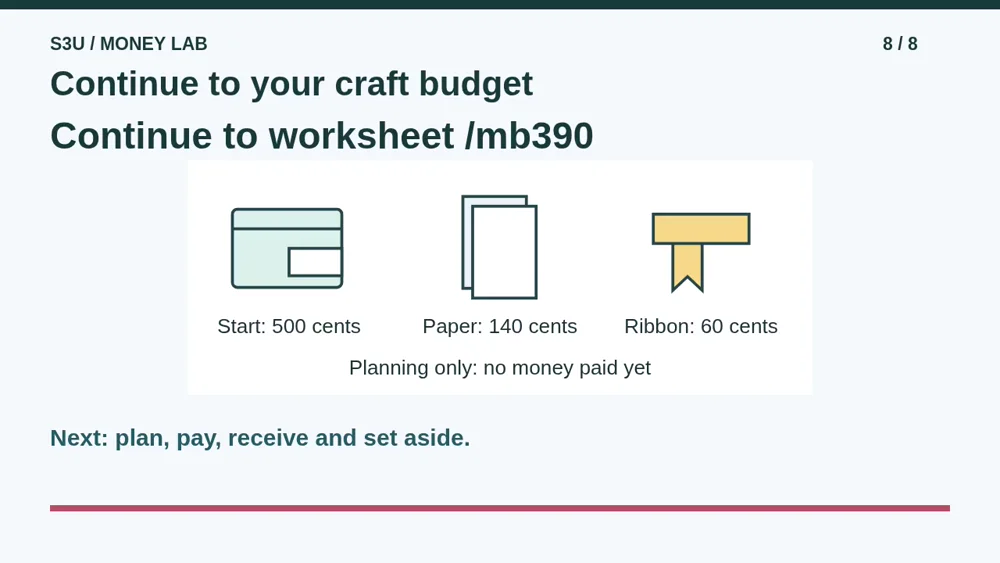
Continue to the worksheet below. It has its own starting amount and prices. Add costs, subtract actual payments, and add money when it is received. Then separate the amount set aside from the amount available to spend. Use only the pretend figures, not your family's private money information.
Show your understanding
You can point, explain aloud, draw or write.
- Distinguish a planned cost from a completed payment when calculating the money still held.
- Separate money set aside from money available to spend without subtracting it twice from the total held.
Try it yourself
Pause at the new 300-cent budget with costs of 80 and 40. Compare the amount after buying with the amount held if you only plan.
Continue to the worksheet. Keep all amounts in cents and use only the fictional figures.
Next: your worksheet
Plan a Pretend Craft Budgethttps://s3u.com/mb390
Practice payments and change at Cash Counter
Lesson: https://s3u.com/lessons/plan-before-spending