Reading / Grade 7
Look beyond the frame
Learning goal: Compare cropped and complete drawings, check later captions and distinguish a proposed map from a completion record.
Before you start: Count small sets, subtract a part from a whole and distinguish a drawing from a label about it. Use only the invented records.
Read or print this lesson What to practiceThe video could not load. The transcript is still available below.
Next: your worksheet
Visual Evidence: Beyond the Picture Border
Checking sign-in...
Read the transcript
Saved reading place
Video transcript and practice. Reading or printing does not count as playback time or an assessed grade.
1. What is outside the picture?
Video: 0:00
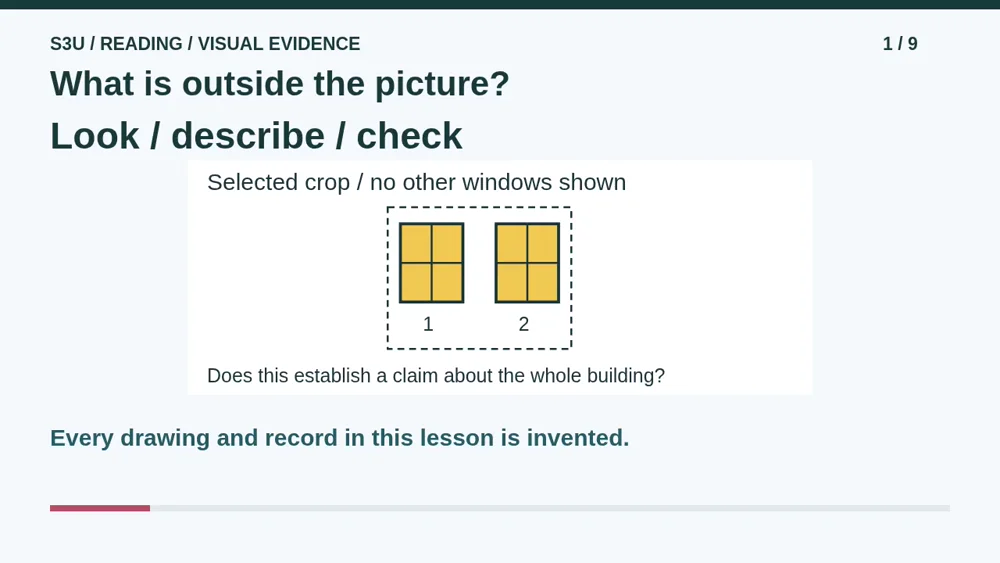
Two bright windows fill this cropped drawing. Someone says the whole building was lit all evening. Can two windows carry that enormous claim? They might ask for a smaller job. Start by describing what is actually shown: two windows drawn as lit. A crop is a selected part of an image. We do not yet know what the complete drawing includes. Before accepting the claim, look beyond the border. All our drawings, places and dates are invented practice records, not photographs of real events.
2. A wider view changes the question
Video: 0:38
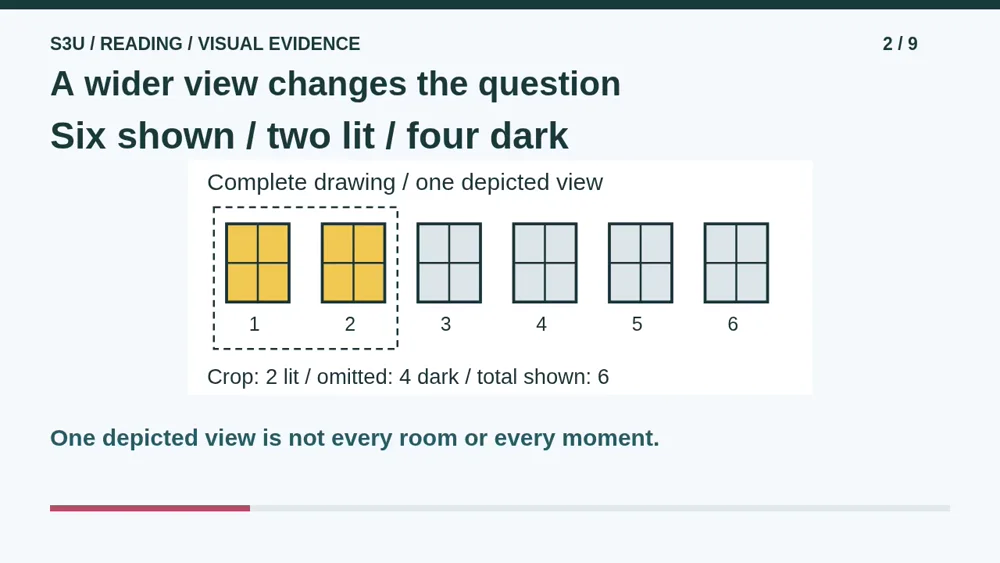
Here is the complete drawing. It depicts six windows: two lit and four dark. The crop kept only the two lit windows. Four windows were left outside its border. The crop did not change those two windows, but it hid useful context. Even the complete drawing is only this view at one moment. It does not tell us about every room, the other side of the building, or the whole evening. Describe it carefully: two lit and four dark windows are shown. That is a smaller claim the drawing can support.
3. A label is a claim to check
Video: 1:16
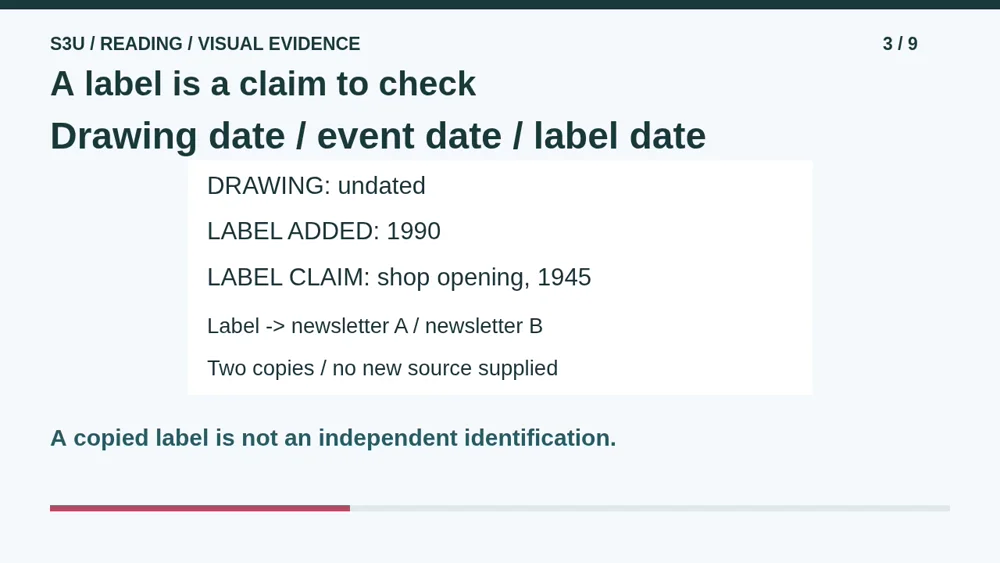
Now someone finds a label added in nineteen ninety. It calls the undated drawing a shop opening in nineteen forty-five. Three different dates could matter: when the drawing was made, when the claimed event happened, and when the label was added. Only the label date is supplied as known here. The label gives no source for its event claim. Two newsletters copy it. Those copies are not two independent witnesses. The identification remains unverified. A later label is not automatically correct, but being later does not automatically make its claim false either.
4. Look for relevant support
Video: 1:59
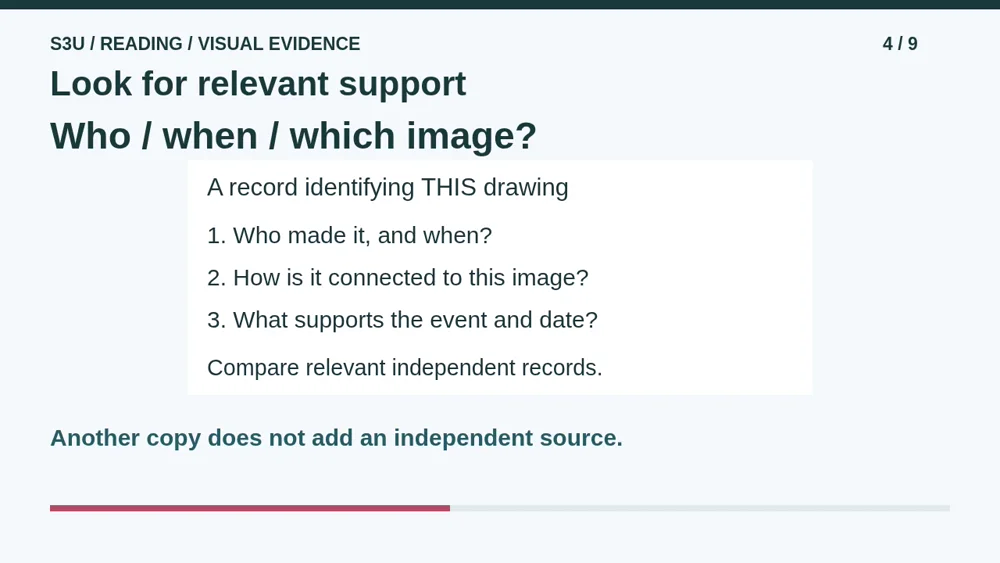
What would help us check the label? Look for a record that identifies this particular drawing and explains the event and date, such as an original dated note from its maker. Check who made that note, when, and how it connects to the image. Compare relevant independent records where available, including records that disagree. A brighter print or another copy of the same label does not supply that missing identification. Finding a useful record is a reason to investigate further, not permission to stop checking. Keep unknown details unknown until the evidence supports a conclusion.
5. Read this map key
Video: 2:42
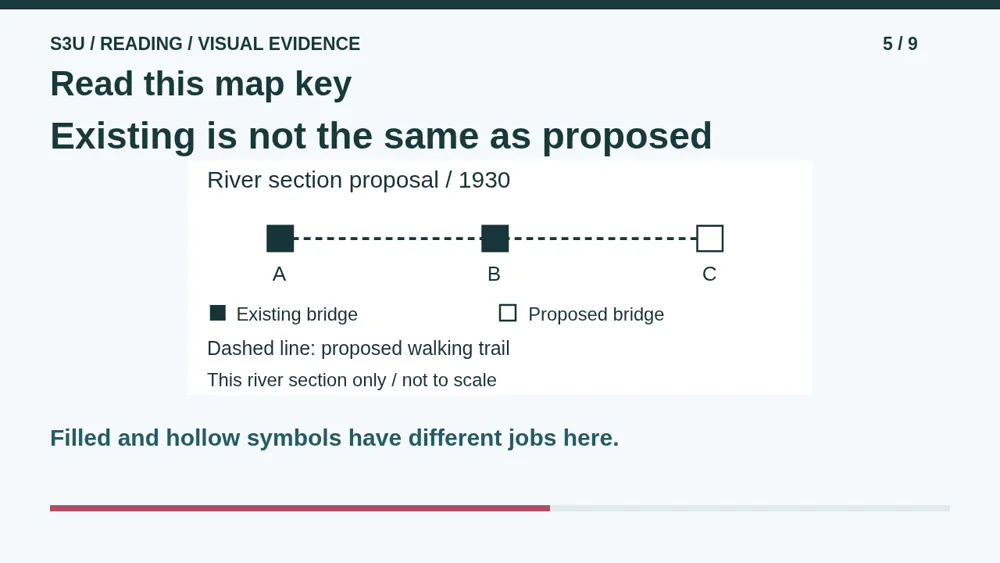
Images can also show intentions. This invented river plan was drawn in nineteen thirty. Its key says filled squares are existing bridges and a hollow square is a proposed bridge. We see two filled squares and one hollow square. So the plan marks two bridges as existing and proposes another. A dashed line means a proposed walking trail. That line does not prove that visitors could already use it. Use the key on this map rather than a symbol meaning remembered from somewhere else. These symbols report the plan; they are not a completion certificate.
6. A proposal cannot report completion
Video: 3:24
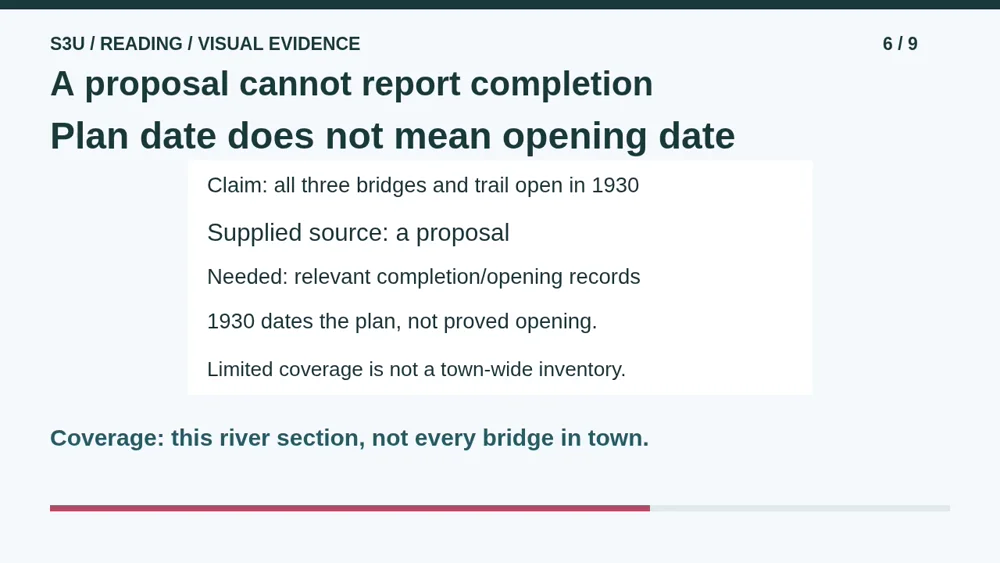
A later newsletter says all three bridges and the trail were open in nineteen thirty, using only this plan. Does the plan establish that? No. Its date dates the proposal, not the completion or opening of the proposed work. Dated construction and opening records for these particular places would help check the claim. Also notice the stated coverage: only this river section is shown. Two existing bridge symbols do not establish the town-wide total. A map can be useful and still have limits. Our job is to name those limits, not throw the whole map away.
7. Pause: inspect a fresh record
Video: 4:08
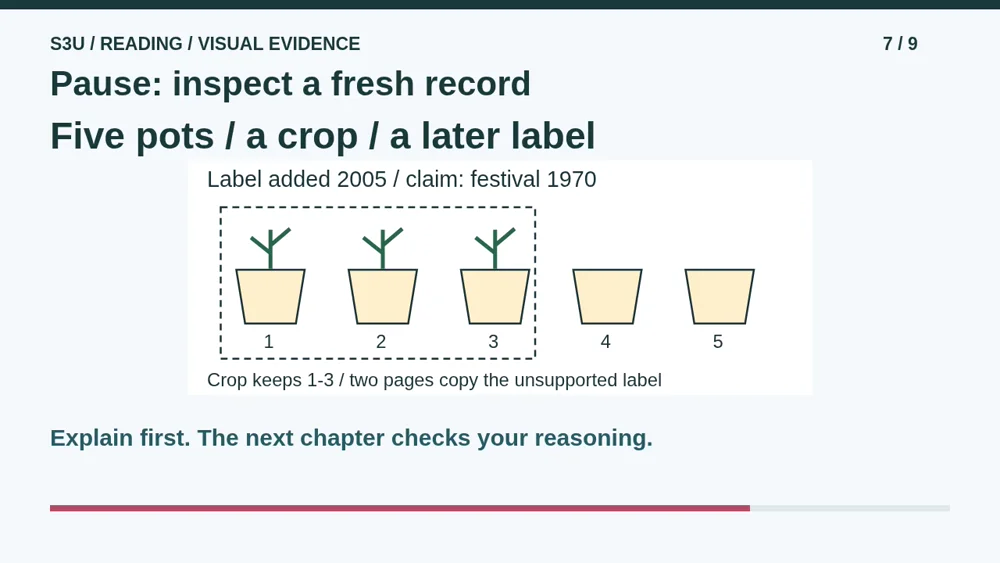
Pause with a new invented drawing. It shows five pots. Pots one, two and three have sprouts; pots four and five have bare soil. The marked crop keeps only the first three pots. An added label dates from two thousand five and claims a festival in nineteen seventy, with no supporting source supplied. Two pages repeat it. How many pots are outside the crop? Does the full drawing show that every pot has a sprout? Which date belongs to the label, and is the festival identification verified? Point, speak or write your reasons before continuing.
8. Check the size of each claim
Video: 4:51
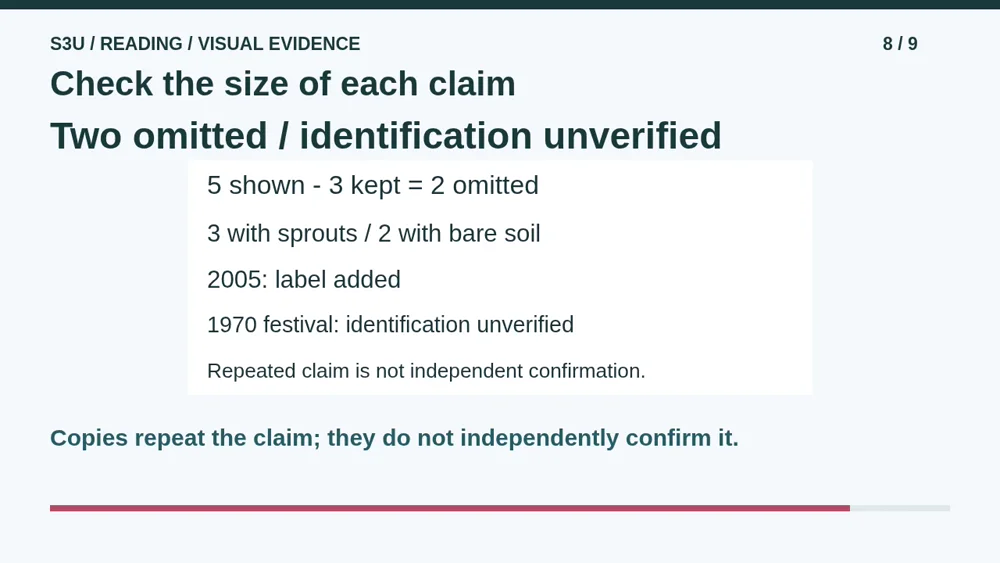
There are five pots in the full drawing and three in the crop, so two pots are omitted. The full drawing shows three sprouts and two pots with bare soil. It does not show a sprout in every pot. Two thousand five is the date the label was added, not an established drawing date or festival date. Nineteen seventy belongs to the unsupported festival claim. The repeating pages add no independent support. We cannot confirm or disprove the identification from these records alone. If you changed a claim, explain which visible detail or missing evidence changed your reasoning.
9. Take the questions to new records
Video: 5:34
Fun fact: a drawing and its label can be created decades apart. A date next to a picture is not automatically the date of the scene. Keep three questions with you. What does the picture actually show, and what is outside its coverage? Who supplied the label, and what supports it? What does this map key mean, and does the record show existing work or proposed work? Continue to the picture-border worksheet for a different drawing. Then inspect the plan worksheet and try Source Desk. Careful uncertainty is part of a good explanation, not a failed guess.
Show your understanding
You can point, explain aloud, draw or write.
- Compare a crop with a full drawing without extending either beyond its supplied coverage.
- Separate image, event and caption dates; explain copied claims, map keys and why a proposal does not confirm completion or opening.
Try it yourself
Pause at the five-pot drawing. Explain the omitted count, sprout claim, label date and unverified festival identification.
Continue to the picture-border worksheet, then map-key practice and Source Desk. Keep visible details, claims and missing evidence separate.
Next: your worksheet
Visual Evidence: Beyond the Picture Borderhttps://s3u.com/re7v1
Practice with fresh visual records
Lesson: https://s3u.com/lessons/look-beyond-the-frame