History / Grade 6
From plant to page
Learning goal: Follow papyrus from a wetland resource to crossing-layer sheets and written records, without treating one object as a whole society.
Before you start: Recognize a plant, a made object and a written message as different things. Use the supplied pictures, with reading support if helpful.
Read or print this lesson What to practiceThe video could not load. The transcript is still available below.
Next: your worksheet
Ancient Egypt: Materials from the Nile
Checking sign-in...
Read the transcript
Saved reading place
Video transcript and practice. Reading or printing does not count as playback time or an assessed grade.
1. A plant is not a notebook yet
Video: 0:00
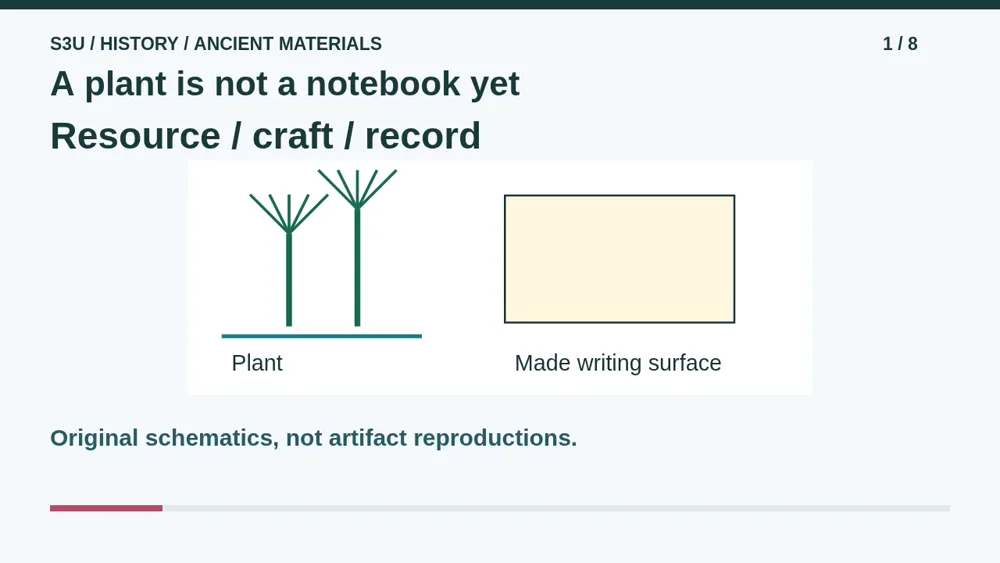
A plant does not grow ready-made homework pages. Someone has to do the work! In ancient Egypt, craftspeople used papyrus to make a writing material. We will follow the connection from a wetland plant to a made object and then to evidence of an activity. Our pictures are original schematics, not ancient objects. You only need to look and explain; do not collect, cut or process plants.
2. Start with the resource
Video: 0:30
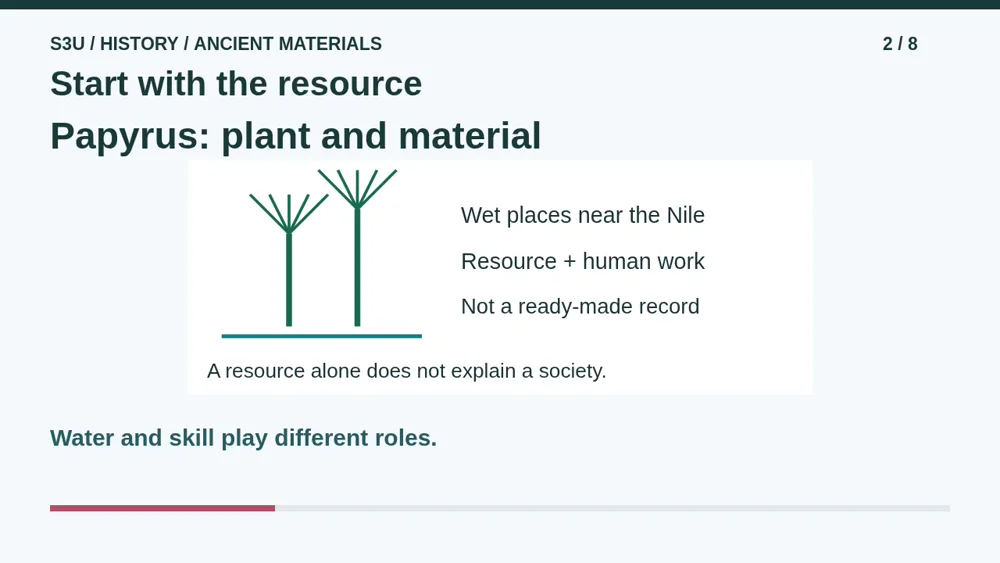
Papyrus grew in wet areas associated with the Nile, including its delta. The word papyrus can name the plant or the writing material made from it. A resource makes some activities possible, but it does not perform them. People still need knowledge, labor and choices. A plant beside water does not explain who learned to write, what a document says, or every decision made in a society.
3. Crossing layers, not a weave
Video: 0:59
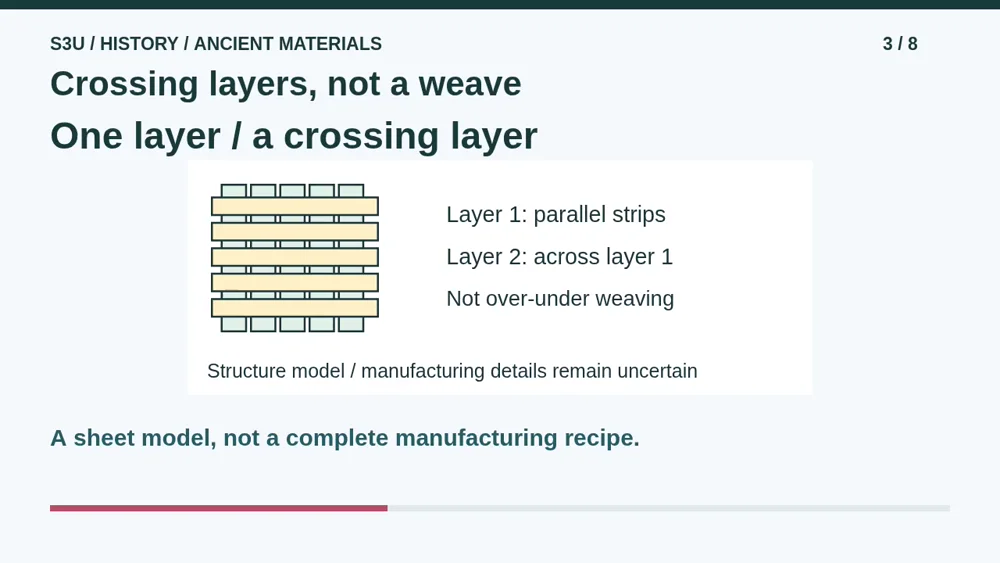
Papyrus sheets were made from strips of the plant stem interior. One layer of strips lay across another. In our drawing, the strips in each layer stay beside one another; we are not weaving them alternately over and under. Pressing and drying helped form the sheet, but details of the ancient method remain uncertain. This picture explains the crossing structure. It is not a complete recipe, and you do not need to reproduce it.
4. An object and its use
Video: 1:30
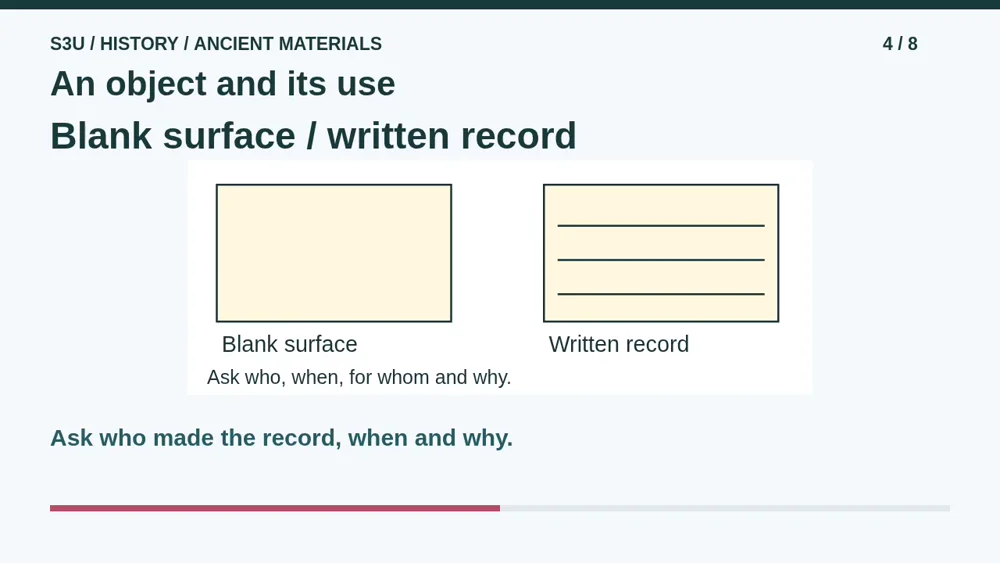
A blank sheet shows a writing material, not the contents of a message. A document with a readable account gives evidence about a particular use. Ask who created it, when, and for what purpose. Surviving papyrus includes administrative records, but one record is not a survey of everybody. We can study its material and its words while still asking what is missing. A helpful page does not know the entire civilization.
5. Pause: choose the closer evidence
Video: 2:03
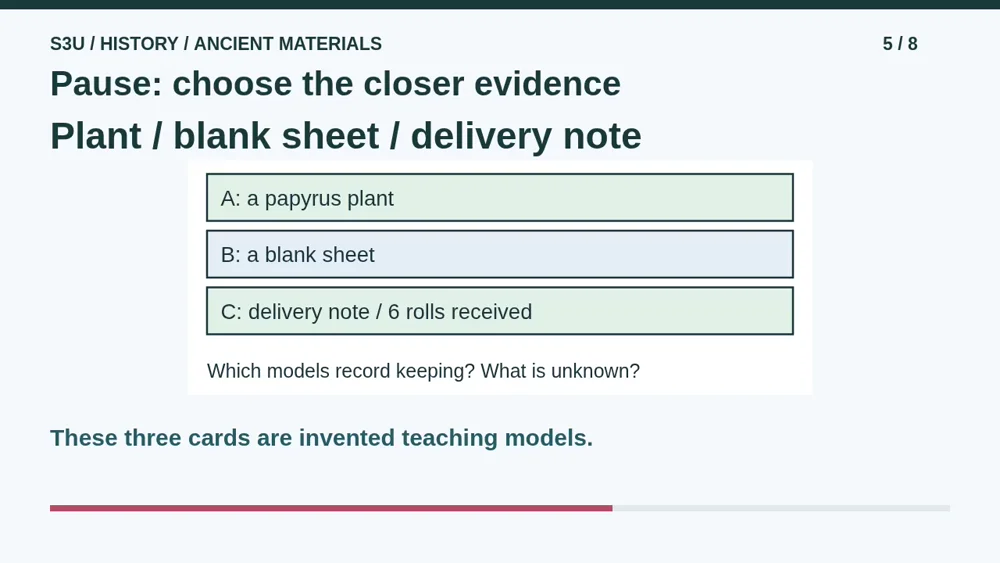
Pause and compare three new teaching cards. A shows a papyrus plant. B shows a blank sheet. C models a delivery note written on papyrus, listing six rolls received. Which card most directly represents use of the material for record keeping? Do the cards show that every Egyptian could write? What question would you ask about the maker of C? These are invented cards, not translations of a real ancient document.
6. Match the evidence to the question
Video: 2:36
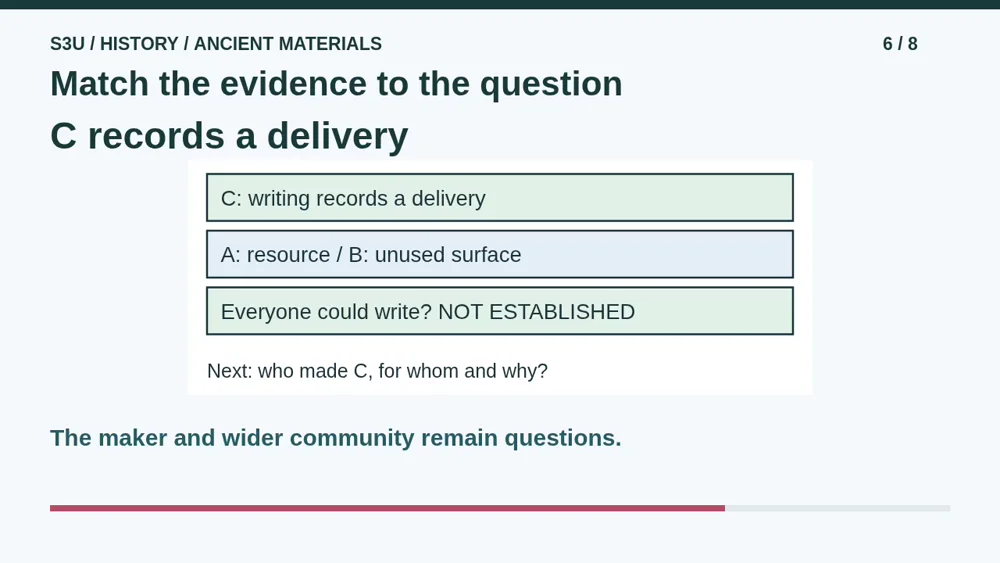
C most directly represents record keeping because it contains a written delivery note. A represents the resource, and B the unused surface. None establishes that every Egyptian could write. A useful next question is who made the note, for whom and why. Do not replace that question with an invented name. Different people and activities leave different traces, and some traces survive while others do not.
7. Not just for writing
Video: 3:07
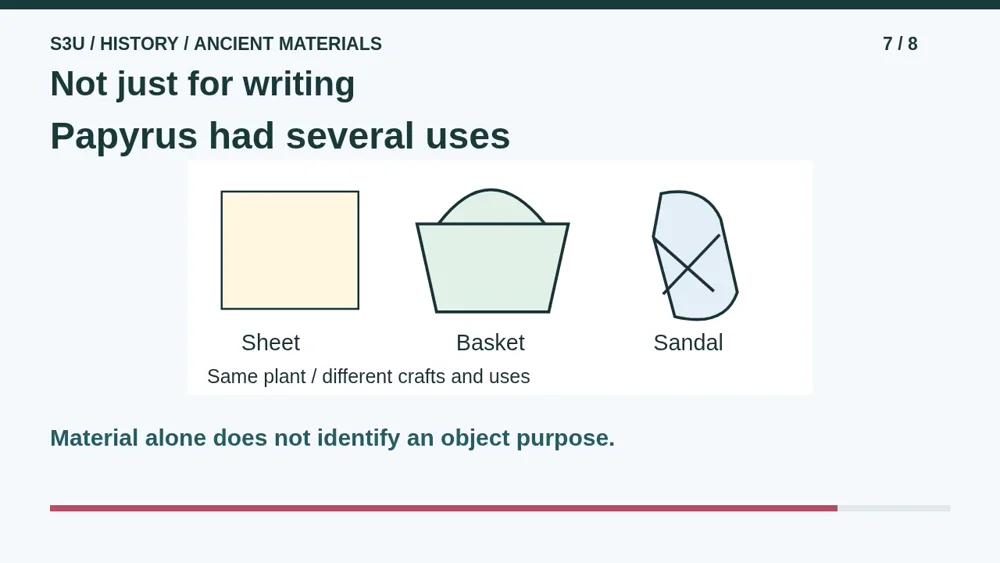
Fun fact: papyrus was also used in objects such as baskets and sandals. The same plant could support different crafts. That does not turn a sandal into a letter, although it might take you to someone who can read one! Look at the form and evidence of use, not only the material. A plant name alone cannot identify what an object was made to do or who used it.
8. Continue to the worksheet
Video: 3:34
Continue to the worksheet below. Read its passage about papyrus and use the supplied evidence for each answer. Explain how crossing layers differ from a pile of loose strips. Keep the resource, the finished material and a particular written record distinct. Choose questions that help investigate origin and purpose, not questions designed to force a favorite guess. Spoken answers or dictation are welcome, and no plant experiment or upload is needed.
Show your understanding
You can point, explain aloud, draw or write.
- Explain papyrus as both plant and writing material, describing crossing layers without calling them an over-under weave or a complete recipe.
- Choose the written note as the closest evidence of record keeping and ask about its maker and purpose without inferring universal literacy.
Try it yourself
Pause at the plant, blank sheet and delivery-note cards. Choose the closest model of record keeping and explain what remains unknown.
Continue to the worksheet. Explain crossing layers, then ask about the maker, purpose and limits of a record. No plant collection or processing is needed.
Next: your worksheet
Ancient Egypt: Materials from the Nilehttps://s3u.com/ha601
Lesson: https://s3u.com/lessons/from-plant-to-page