Science / Grades 3-5
Falling objects and air resistance
Learning goal: Compare flat and crumpled paper, then predict a fall without air resistance.
Before you start: Compare an object's shape and mass and identify things that should stay alike in a fair comparison.
Read or print this lesson What to practiceThe video could not load. The transcript is still available below.
Next: your worksheet
Gravity and Falling Paper
Checking sign-in...
Read the transcript
Saved reading place
Video transcript and practice. Reading or printing does not count as playback time or an assessed grade.
1. A paper puzzle
Video: 0:00
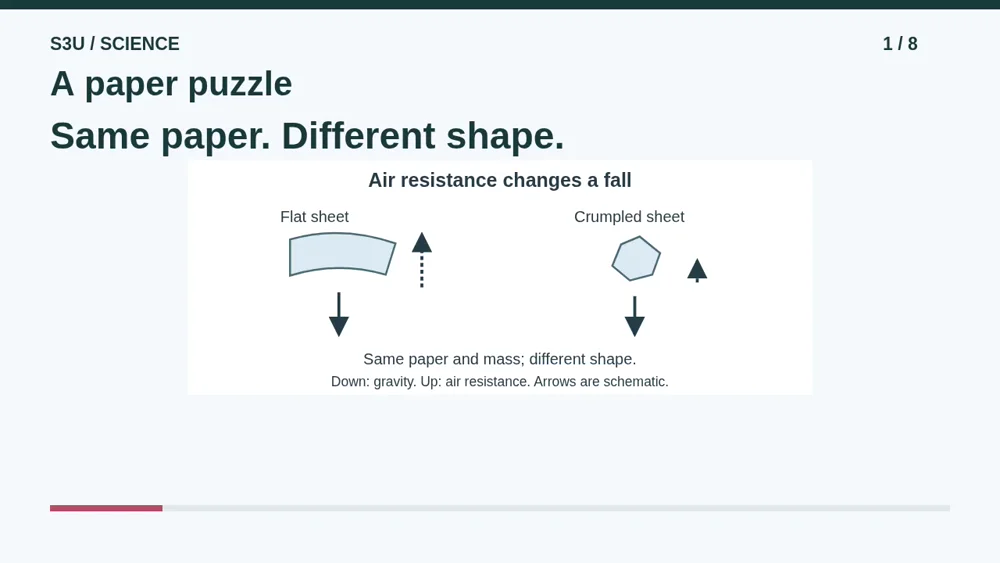
A flat sheet of paper flutters to the floor. The same sheet, crumpled into a ball, usually falls more quickly. Did crumpling give it extra mass? No. The shape changed how the moving paper met the air. Today we will separate gravity from air resistance.
2. Two effects at once
Video: 0:22
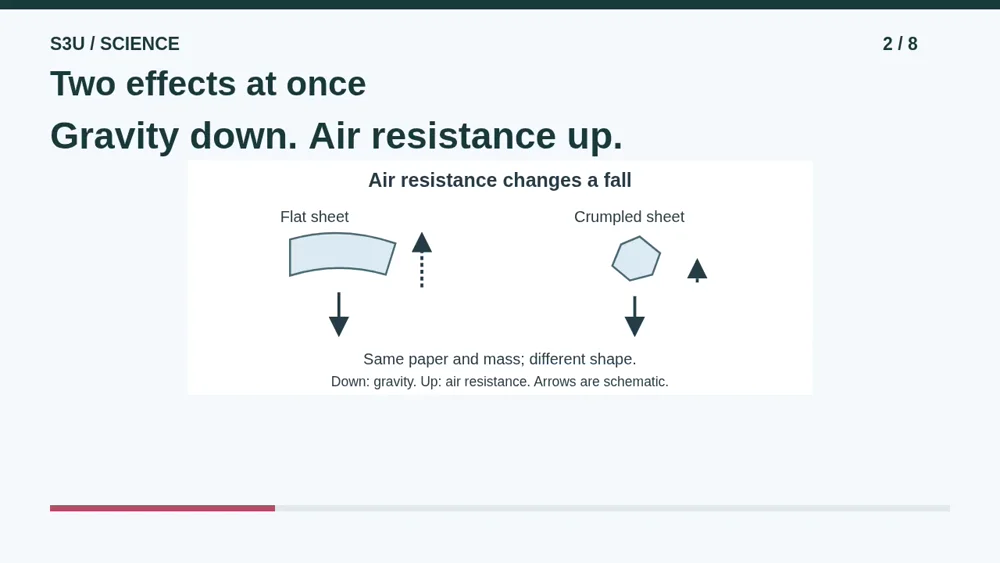
Gravity pulls falling paper downward. As the paper moves down through still air, air resistance pushes upward against its motion. A broad flat sheet often meets more resistance than a tightly crumpled one. Air is not nothing, even if it looks empty.
3. Set up a fair comparison
Video: 0:42
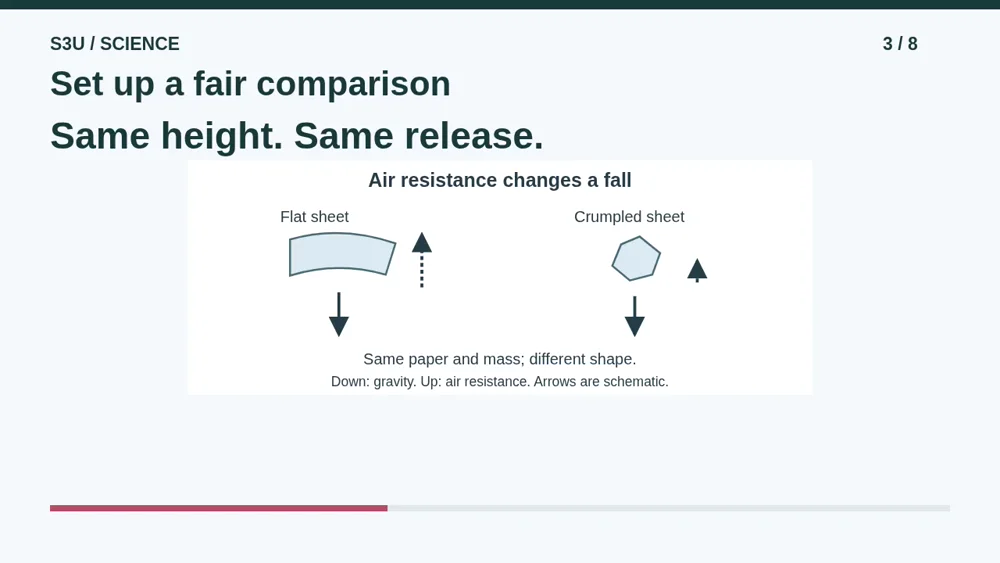
With an adult, drop a sheet from a low height over a clear floor. Then crumple that same sheet and repeat from the same height. Do not throw it. Keep the paper dry and use still indoor air. We are changing shape, not adding paper.
4. Repeat and describe
Video: 1:01
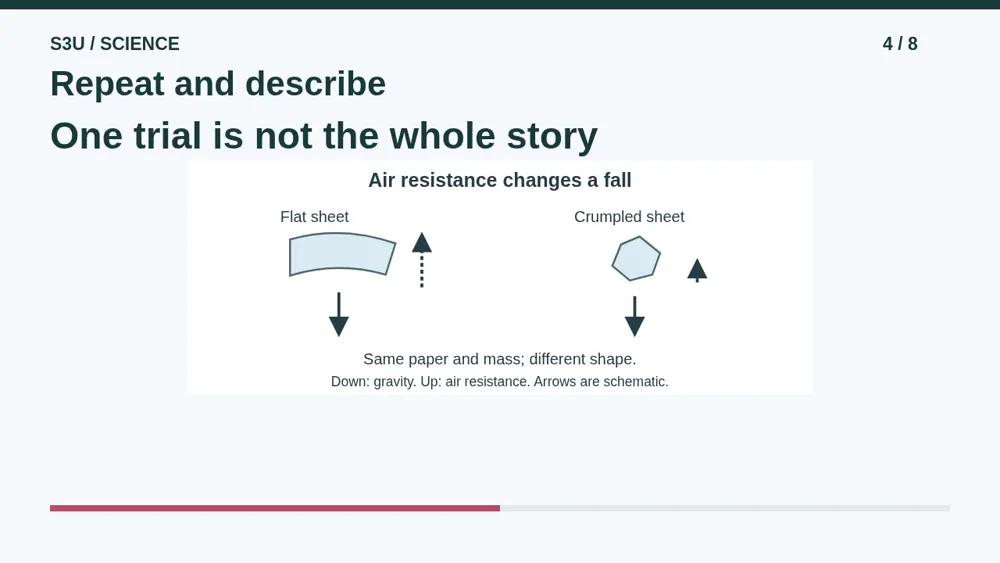
Repeat each shape several times. Record which shape took longer. Paper can turn, wobble, and drift, so a single drop may surprise you. Do not announce a universal law from one dramatic paper landing. Your notebook deserves more than one line of evidence.
5. Imagine there is no air
Video: 1:22
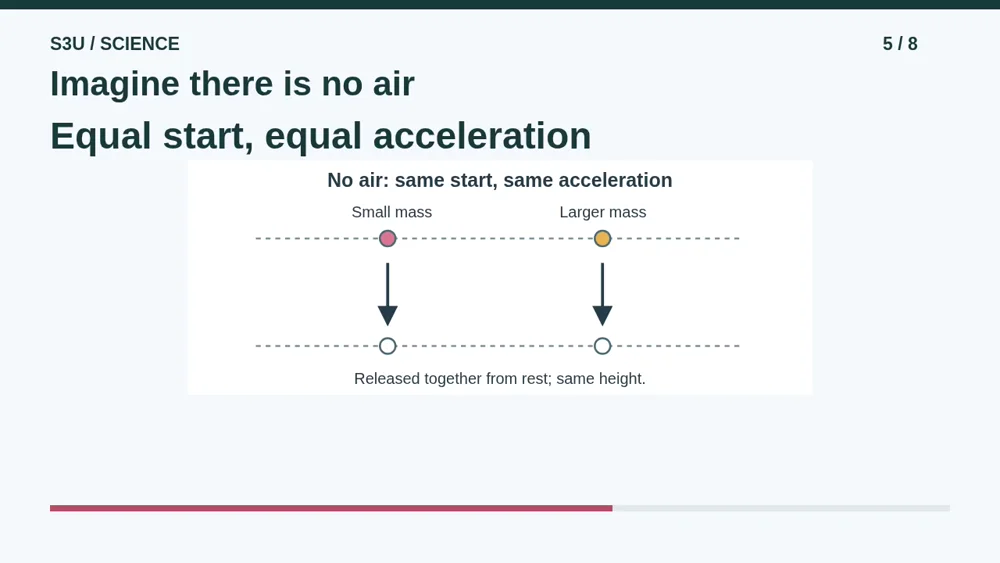
Without air resistance, objects released together from rest at the same height fall with the same acceleration in the same gravitational field. A heavier object does not win simply because it is heavier. Our no-air picture is a model, not a home experiment.
6. Pause: predict the landing
Video: 1:42
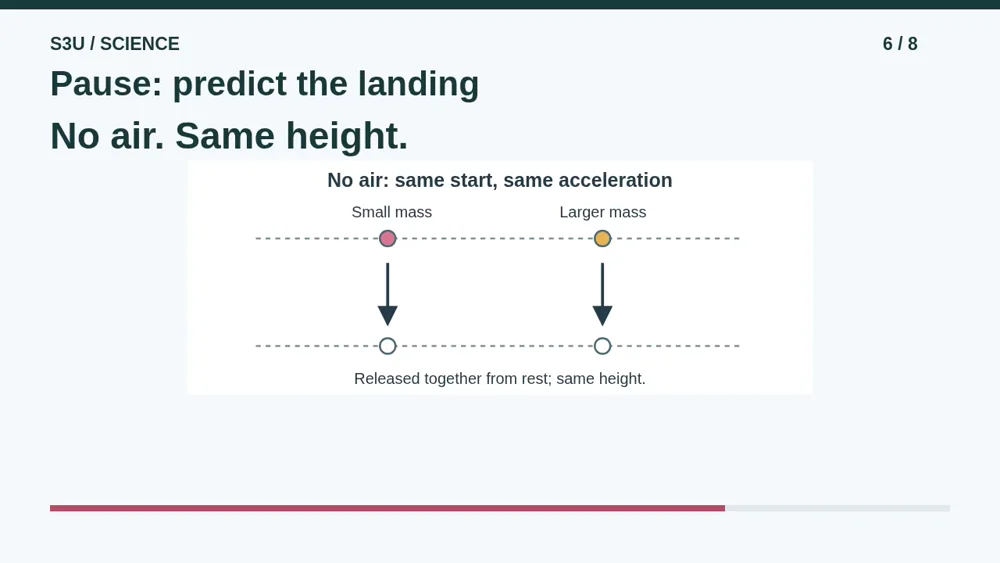
Imagine two balls with different masses. Release both from rest at the same height, in a place with no air. Pause and predict which reaches the ground first. Keep the starting conditions in mind. Neither ball gets a secret head start.
7. The Moon demonstration
Video: 2:01
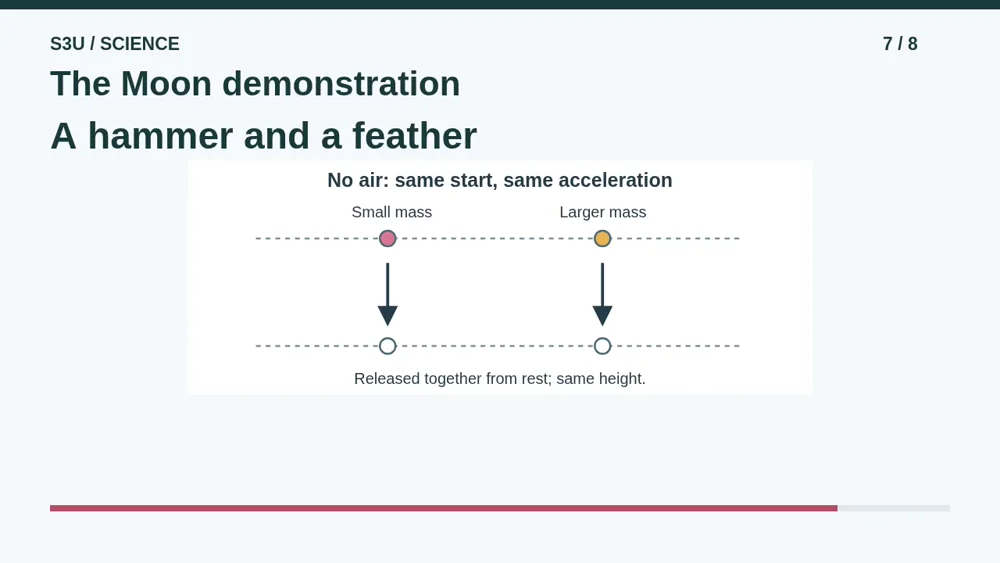
They arrive together in this model. Here is a real surprise: on Apollo fifteen, David Scott released a hammer and a feather on the Moon. With essentially no air to slow the feather, they reached the ground together. The Moon still has gravity.
8. Use evidence, not a slogan
Video: 2:20
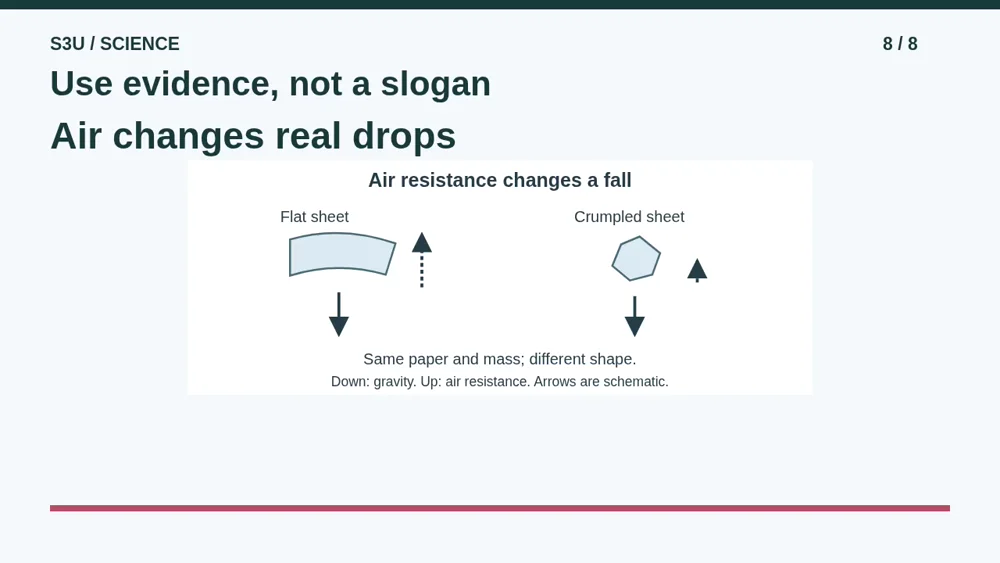
A flat paper experiment does not prove heavier objects always fall faster. Our paper had the same mass before and after crumpling. Shape and air mattered. Continue to the worksheet to plan fair tests, read observations, and explain when the no-air model is useful.
Show your understanding
You can point, explain aloud, draw or write.
- Explain how flat and crumpled forms of the same paper can fall differently through air.
- State how the prediction changes in the no-air model, without confusing a shape change with a mass change.
Try it yourself
Which conditions must stay alike in a fair paper-drop comparison?
Explain why changing shape is not the same as changing mass.
Next: your worksheet
Gravity and Falling Paperhttps://s3u.com/sf320
Lesson: https://s3u.com/lessons/falling-and-air