Math / Grade 7
Count two-draw paths
Learning goal: Name individual tiles, count ordered paths with and without returns, and distinguish a known first draw from a whole-pair probability.
Before you start: Count equally likely individual tiles, read fractions, and track which tiles remain after a draw. Use Return a tile or leave it out first when needed.
Read or print this lesson What to practiceThe video could not load. The transcript is still available below.
Next: your worksheet
Count Two-Draw Paths with Returns
Checking sign-in...
Read the transcript
Saved reading place
Video transcript and practice. Reading or printing does not count as playback time or an assessed grade.
1. Give every tile a name
Video: 0:00
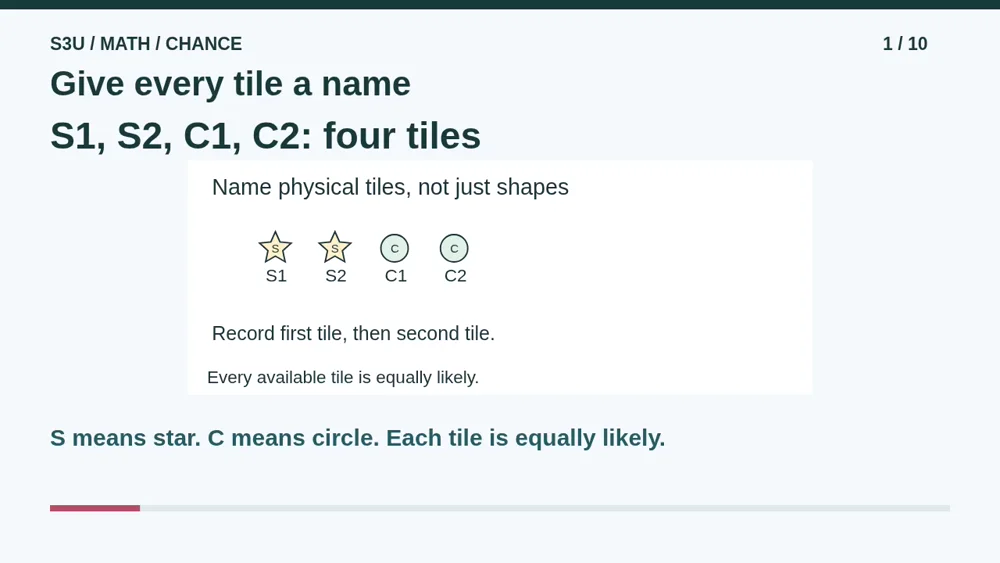
A pretend bag has two star tiles and two circle tiles. Give the stars names: star one and star two. Call the circles circle one and circle two. Each available tile has the same chance of being drawn. The labels do not change the chance. They help us keep track. Two stars may look alike, but they are not the same physical tile. Apparently even tiles need name tags.
2. Draw, return, draw again
Video: 0:31
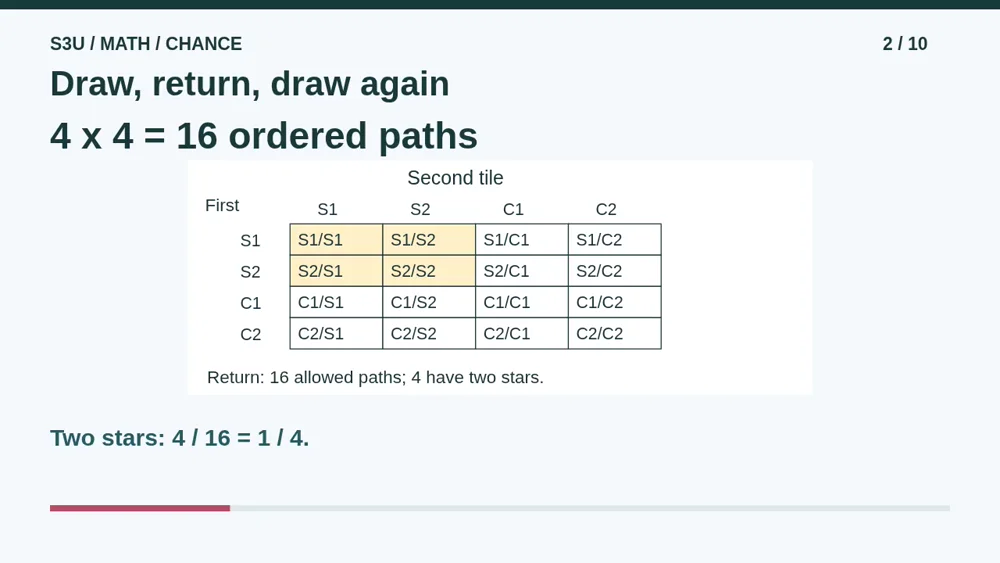
Draw once, put that tile back, and mix before drawing again. There are four first choices. Every first choice can be followed by any of the four tiles. That gives sixteen equally likely ordered paths. First tile goes down the chart; second tile goes across. Four paths contain two stars: star one then star one, star one then star two, star two then star one, and star two then star two. Four sixteenths is one quarter.
3. Exactly one star means one
Video: 1:05
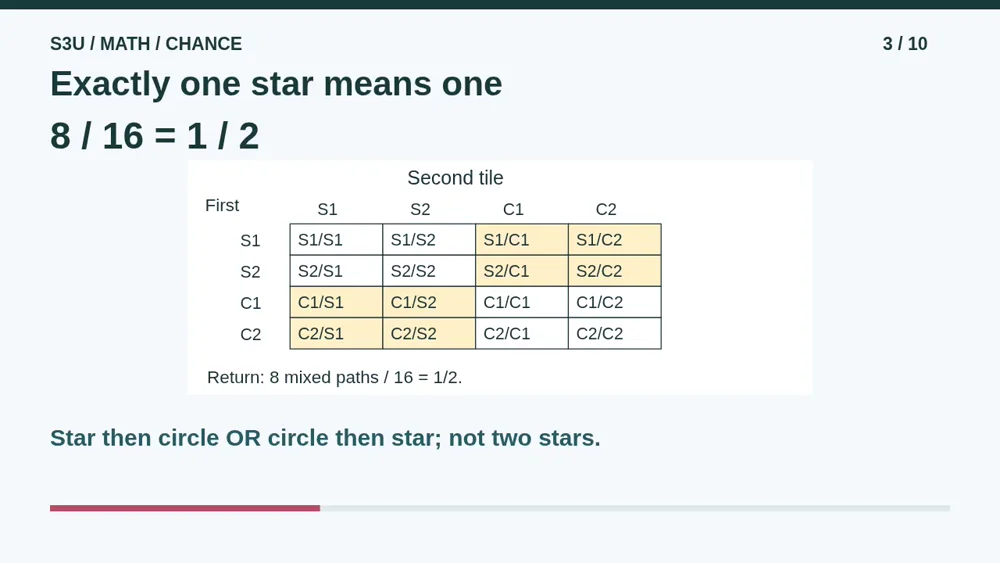
Reset the same bag and keep the return rule. Now ask for exactly one star across the two draws. Four paths start with a star and end with a circle. Four other paths start with a circle and end with a star. These groups do not overlap. Eight of the sixteen paths match, so the chance is one half. If the question says star first and circle second, only the first four paths count. Read the event carefully.
4. Leave the first tile out
Video: 1:38
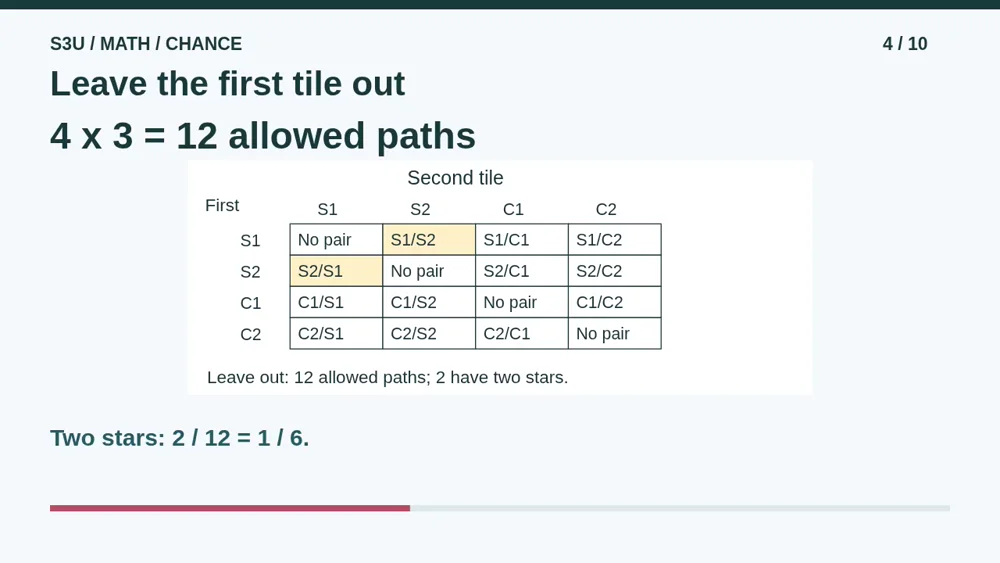
Reset to the same four tiles. This time leave the first tile out. Every first choice leaves three tiles for the second draw. There are twelve equally likely paths. Cross out only the four paths that repeat the same physical tile. Two stars can still happen: star one then star two, or star two then star one. Two twelfths simplifies to one sixth. Do not cross out every same-shape pair. A different star is still a different tile.
5. What if the first is known?
Video: 2:13
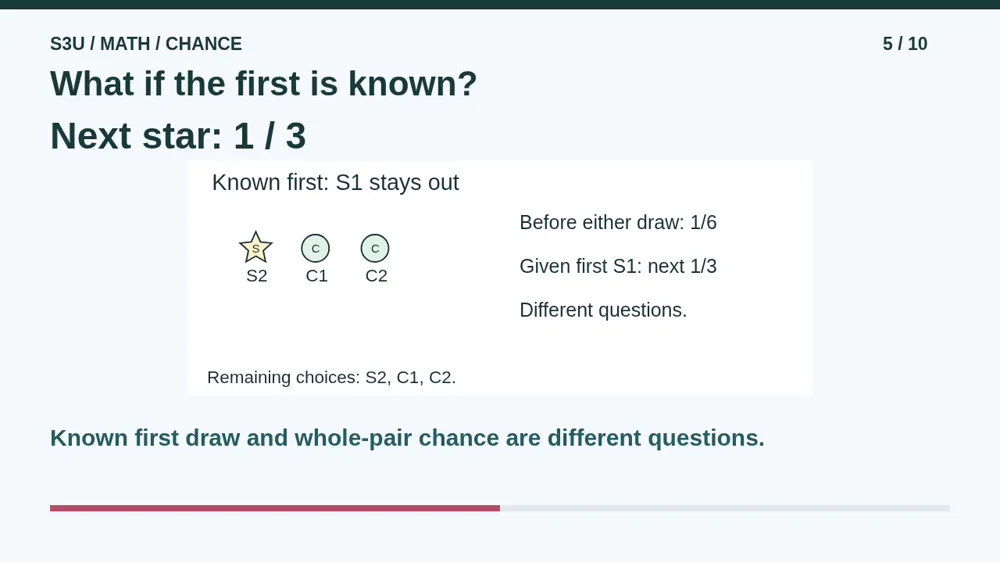
Keep the no-return rule. Before drawing, the chance of two stars was one sixth. Now someone tells us that the first tile was star one. It stays out. Only star two, circle one and circle two remain, so the chance of a star next is one third. That is not a correction to one sixth. We asked a different question with new information. Choose the possible outcomes for the question you actually have.
6. Pause: try a fresh bag
Video: 2:45
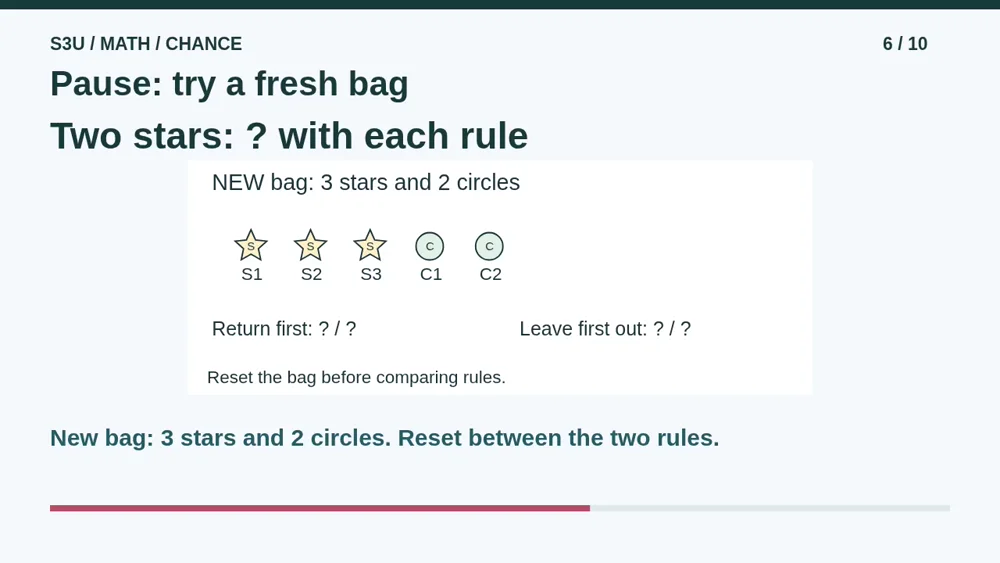
Pause for a fresh bag with three individually named stars and two individually named circles. All five tiles are equally likely. First, draw twice and return the first tile. What is the chance of two stars? Then reset the bag and leave the first tile out. What is the chance of two stars under that rule? List or count physical paths. Explain the total number of paths and how many have two stars before simplifying either fraction.
7. Check both path counts
Video: 3:19
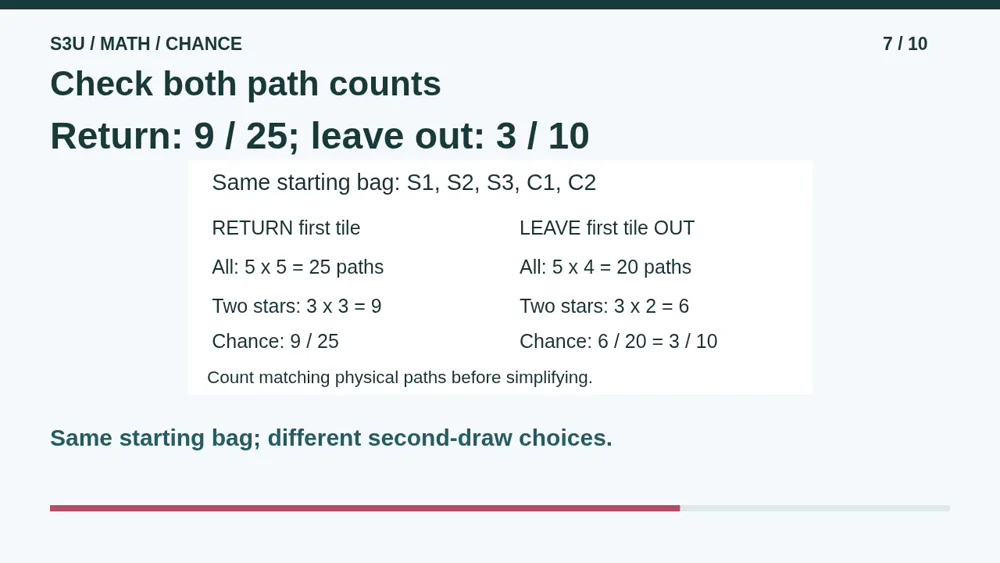
With returns, five first choices each have five second choices, making twenty-five paths. Three possible first stars each have three second stars, making nine matching paths. The chance is nine twenty-fifths. Without returns, five first choices each leave four tiles: twenty paths. Each of the three first stars leaves two other stars, giving six matching paths. Six twentieths simplifies to three tenths. The bag did not change its starting contents. The return rule changed the available second choices.
8. Fun fact: order can hide
Video: 3:58
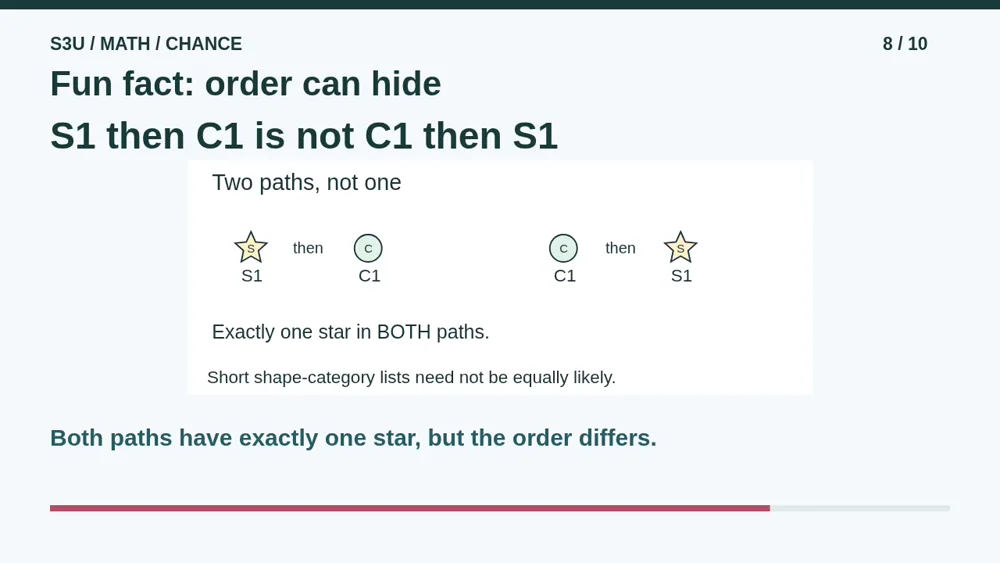
Fun fact: two paths can have the same shapes but a different order. Star one then circle one and circle one then star one both have exactly one star. They are still two separate paths. If you collapse everything into two stars, two circles, or mixed shapes, those three category names are not automatically equally likely. Physical labels help us count how many paths belong to each category. A neat short list is not always a fair probability list.
9. An observation is one result
Video: 4:33
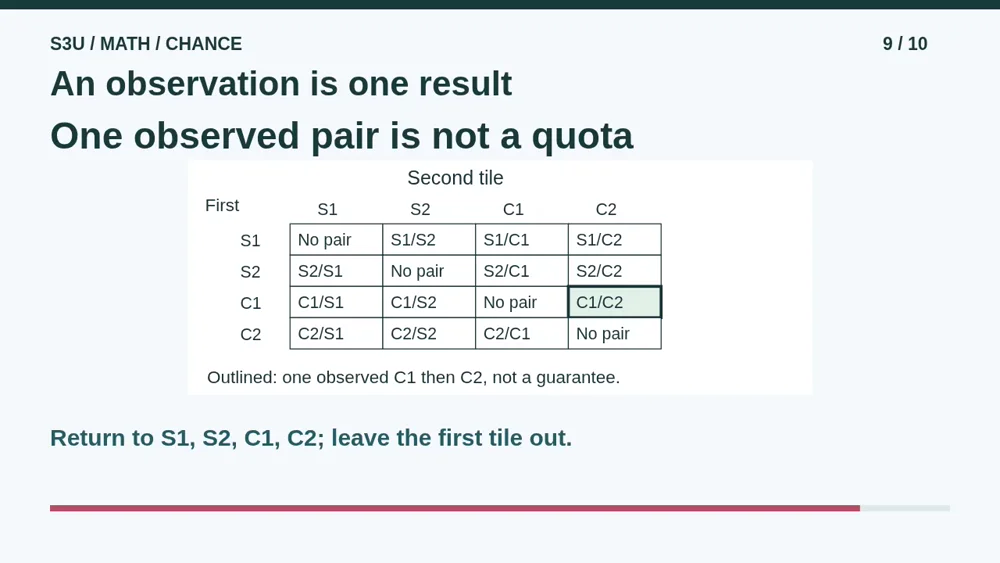
Return to our original two-star, two-circle bag and leave the first tile out. Suppose one run gives circle one then circle two. That is one allowed path in the twelve-path chart. It does not prove that circles are certain, or that stars are due next. A new run starts with a reset bag. Keep the counted model probability separate from the result of one run. Chance Lab can help you compare a prediction with the paths and observations.
10. Continue to the worksheets
Video: 5:07
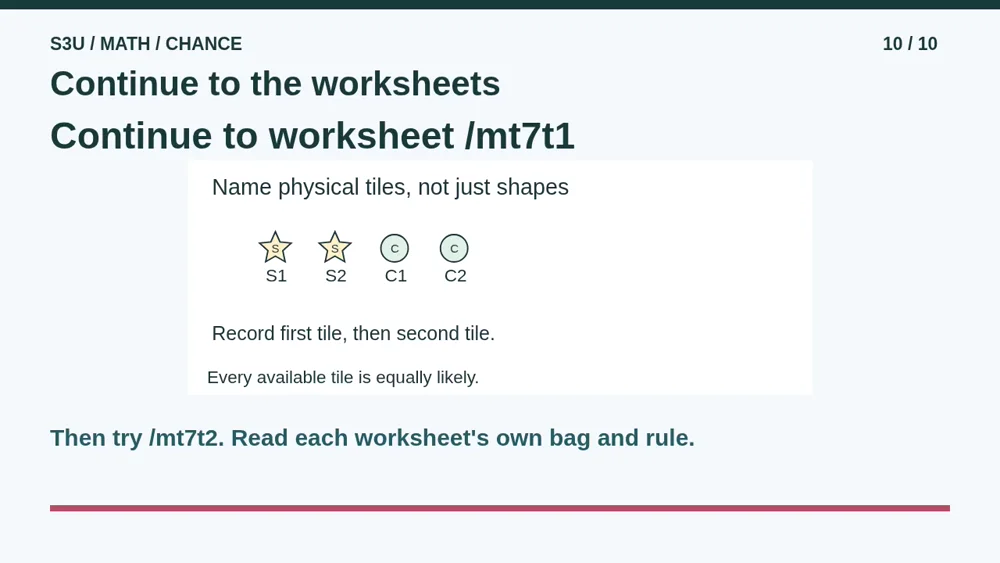
Continue to the worksheet below for paths with returns, then try the second worksheet without returns. Use each worksheet's own bag. Name individual tiles, decide whether the first tile returns, and count matching ordered paths out of all allowed paths. If a first draw is already known, use the smaller set of remaining choices. Explain your reasoning, not just a fraction. The worksheets and fresh printable practice are the next step; watching this lesson alone does not establish understanding.
Show your understanding
You can point, explain aloud, draw or write.
- Count matching ordered physical-tile paths out of all allowed paths, comparing return rules and exactly-one versus ordered events.
- Distinguish the next draw after a known first result from a whole-pair probability, and keep one observation separate from the model.
Try it yourself
Pause at three stars and two circles. Count all ordered paths and two-star paths under each return rule.
Continue to both worksheets using their own bags. Explain exactly one star, a known first draw and an observed pair separately.
Next: your worksheet
Count Two-Draw Paths with Returnshttps://s3u.com/mt7t1
Lesson: https://s3u.com/lessons/count-two-draw-paths