Reading / Grade 5
Combine word parts and context
Learning goal: Connect photo, graph and familiar parts to complete word meanings without inventing missing details.
Before you start: Use bio, geo, tele and micro as meaning clues and read the supplied short word notes. The earlier word-part lesson offers a helpful starting point.
Read or print this lesson What to practiceThe video could not load. The transcript is still available below.
Next: your worksheet
Combine Word Clues and Context
Checking sign-in...
Read the transcript
Saved reading place
Video transcript and practice. Reading or printing does not count as playback time or an assessed grade.
1. Put the clues back together
Video: 0:00
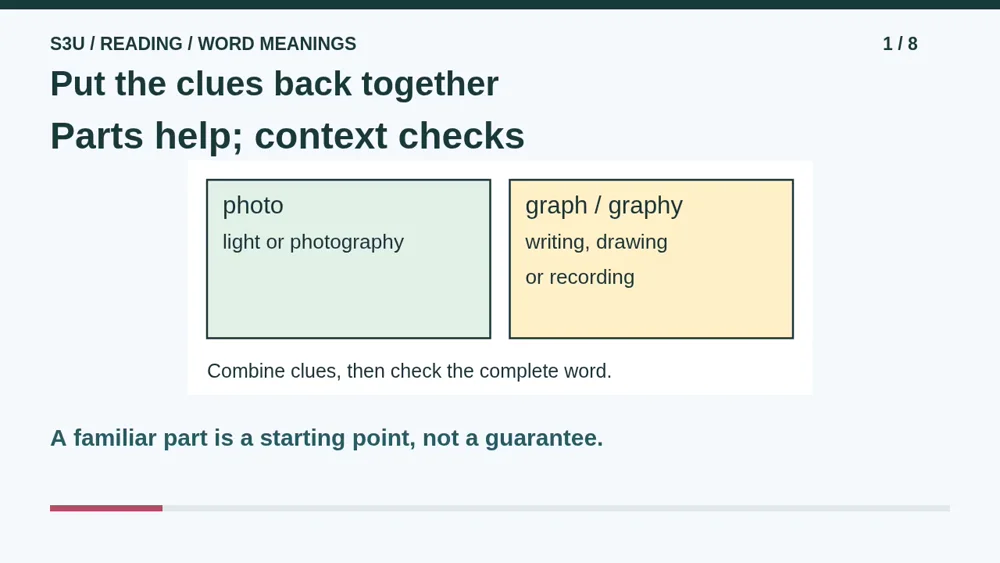
You know some useful clues inside words. Now let us combine them without guessing more than they tell us. Photo can connect with light or photography. Graph and related forms such as graphy connect with writing, drawing or recording. We will use complete word notes, then ask whether our explanation fits. This is a reading investigation, not a contest to cut every long word into the most pieces.
2. A photograph records using light
Video: 0:30
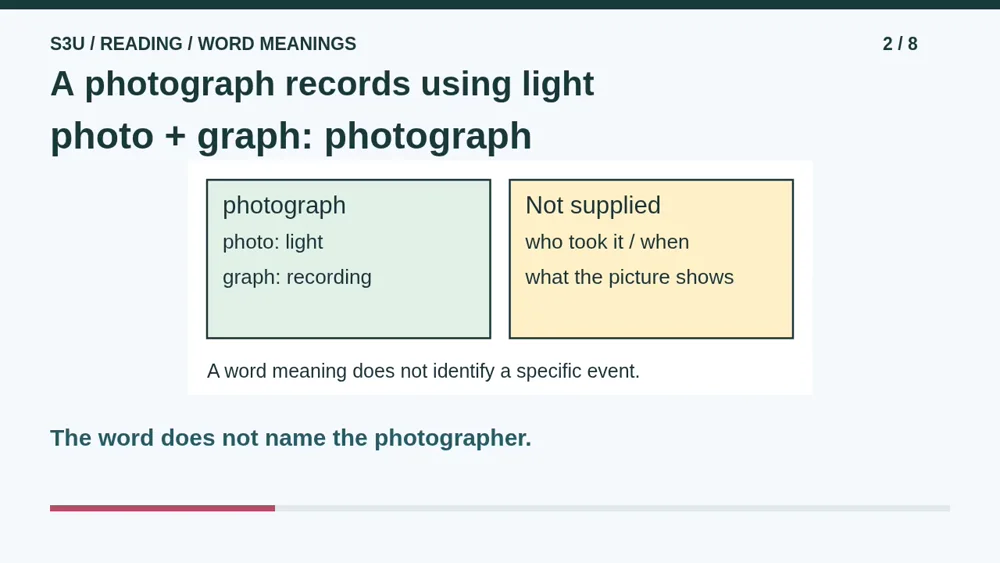
A photograph is a picture recorded using light. Photo contributes the light clue, and graph contributes the recording clue. Together they support the complete meaning. But they do not tell us who took a particular photograph, when it was made, or what it shows. A word part cannot sneak into the picture and read a name badge. For those details, we need evidence about that particular picture.
3. Distance plus recording
Video: 1:00
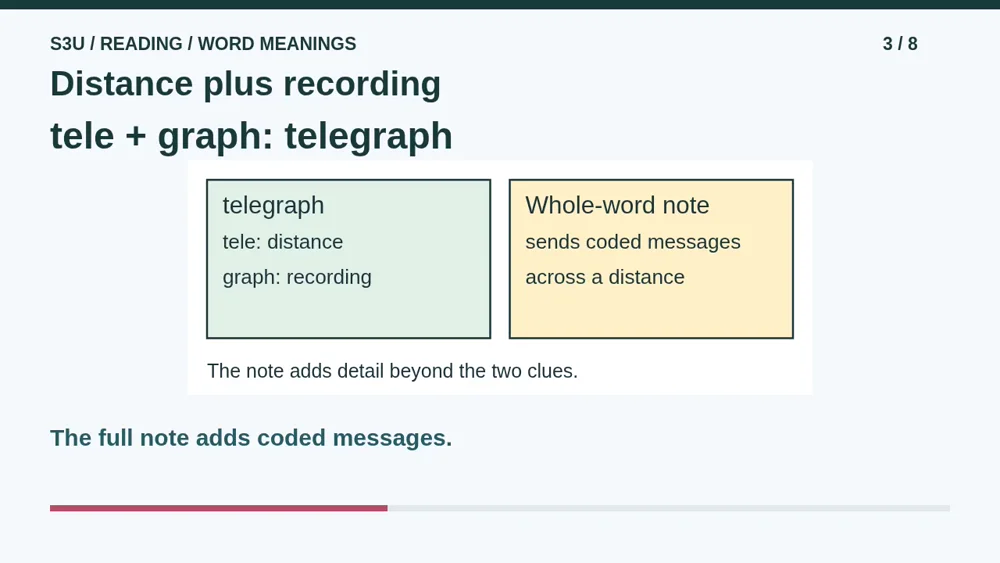
A telegraph sends coded messages across a distance. Tele supplies the distance clue. Graph connects with writing or recording. Putting those ideas together helps us understand the word, and the complete note adds the detail about coded messages. Compare it with telephone, which carries speech. The shared distance clue does not erase that difference. Always return to the whole word after inspecting its parts.
4. Related parts, different whole words
Video: 1:32
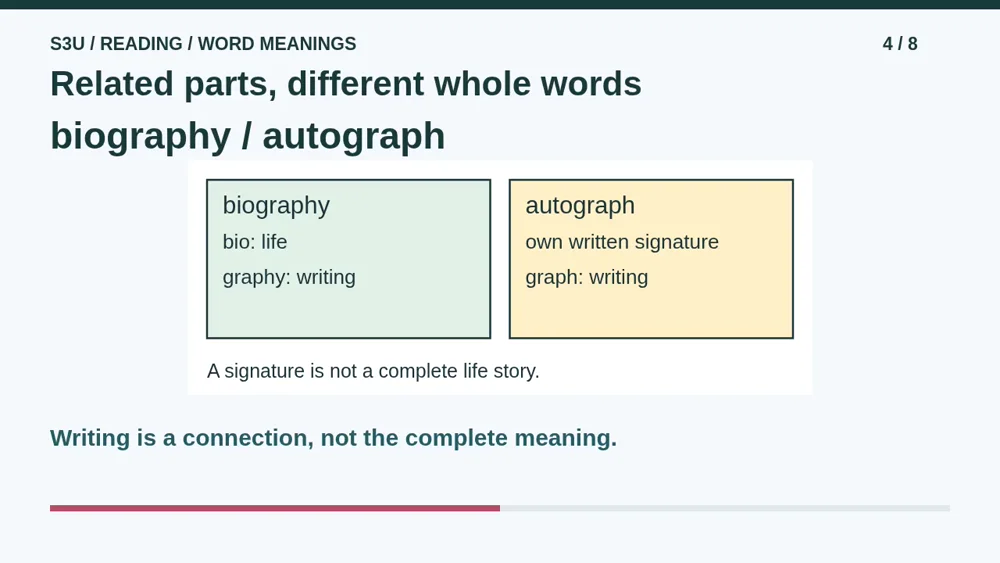
A biography is an account of a person's life. Bio connects with life, and graphy with writing. An autograph is a person's own written signature. Its graph part also connects with writing, but an autograph is not a whole life story. That would make signing a birthday card a very long job. Notice the shared connection, then use each complete word and note to keep the meanings separate.
5. Pause: compare two recording clues
Video: 2:01
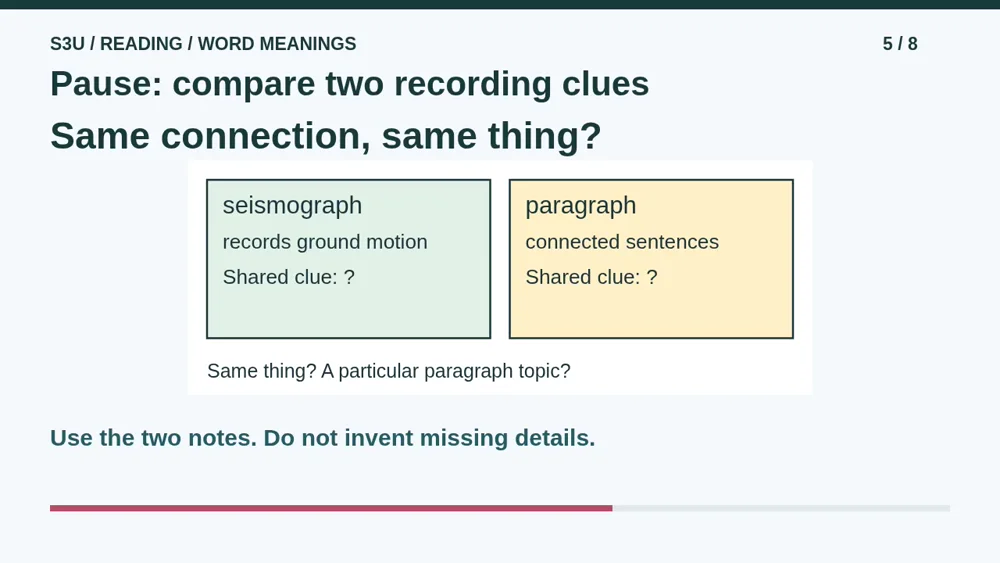
Pause and compare two notes. A seismograph records ground motion. A paragraph is a connected group of sentences in writing. Which writing or recording clue appears in both words? Does that shared clue mean the words name the same thing? Does it tell you the topic of the paragraph? Use the notes and explain both a useful connection and a limit. You do not need to work out every other word part to answer.
6. Check what the notes support
Video: 2:33
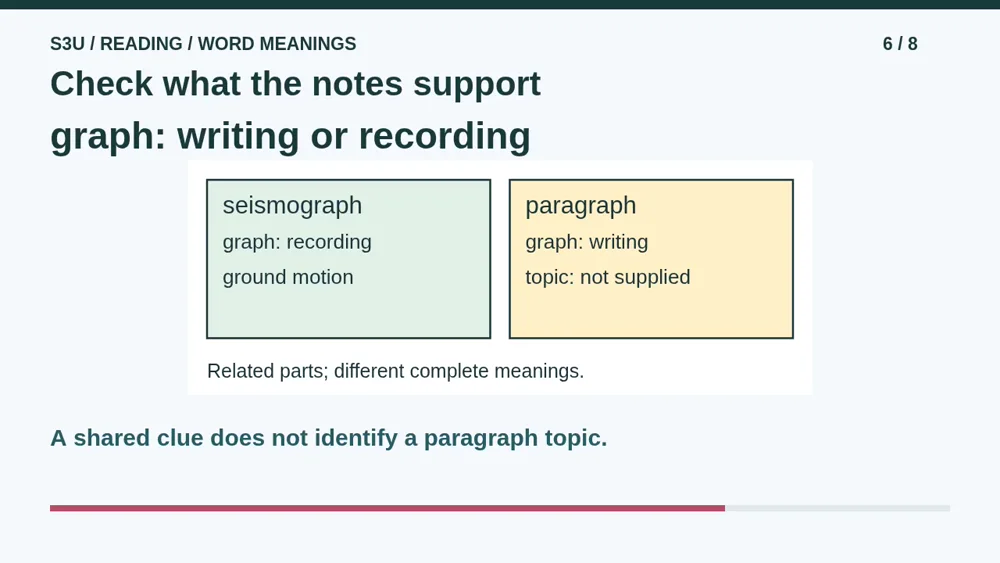
Graph supplies the writing or recording connection in both words. The seismograph note describes recording ground motion. The paragraph note describes connected sentences. Those notes do not name the same thing, and neither the graph part nor the paragraph note gives a particular paragraph's topic. It might be about a library, a game, or something else. Say what the evidence supports, then stop before adding a detail it never supplied.
7. A light clue is not a camera rule
Video: 3:06
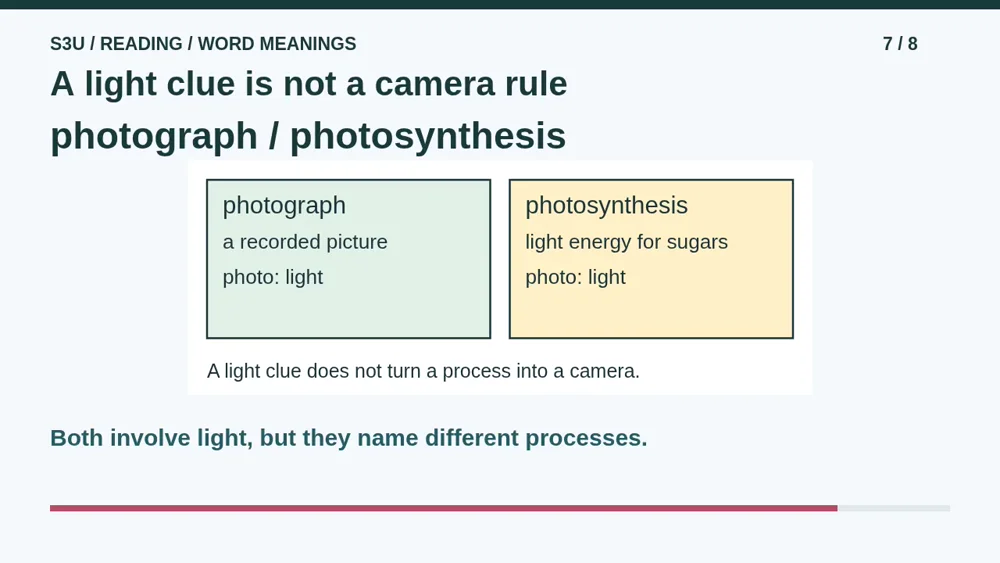
Fun fact: the photo part can help with both photograph and photosynthesis. A photograph records a picture using light. Photosynthesis uses light energy to make sugars. The shared light clue does not make the second process a kind of camera. This is why a familiar part is useful without being a complete definition. Read the rest, check the note, and keep different meanings different.
8. Continue with clues and context
Video: 3:36
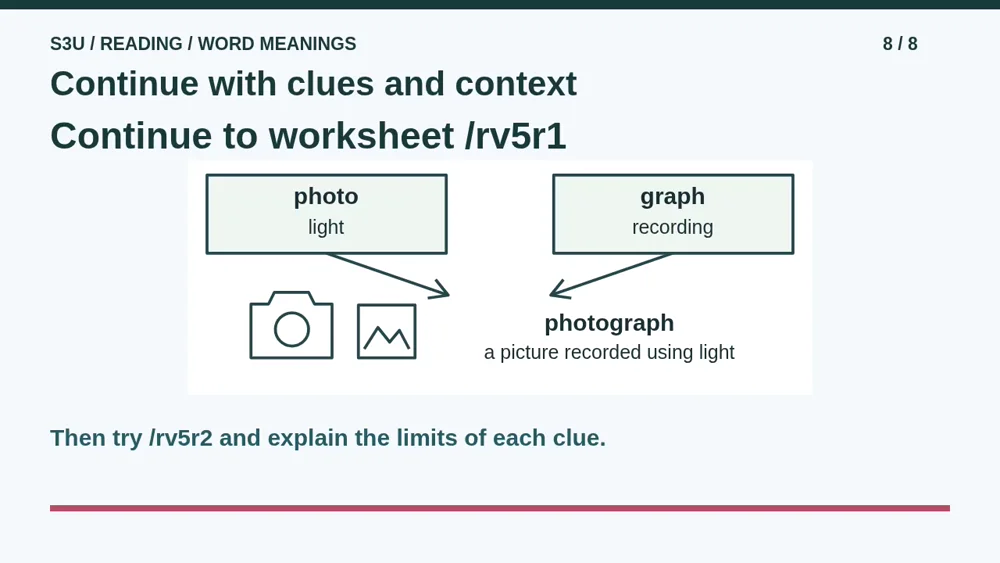
Continue to the clues and context worksheet below. Combine parts when they help, read the supplied notes, and check whether a choice claims more than the evidence gives. Then use the alternate worksheet for another comparison. You can return to Word roots and meaning in Spelling Lab for guided spelling. Taking time to check a whole word is part of good reading, not a sign that your word detective has lost their magnifying glass.
Show your understanding
You can point, explain aloud, draw or write.
- Combine photo and graph or familiar parts with the whole-word note, distinguishing related meanings from identical meanings.
- Compare seismograph and paragraph and explain why their recording or writing connection does not supply a paragraph topic or a specific event detail.
Try it yourself
Pause to compare seismograph and paragraph using the supplied notes. Explain their shared clue and why it does not identify the paragraph topic.
Continue to the context worksheet, then the alternate form. A shared part does not make whole words interchangeable or supply facts about a particular event.
Next: your worksheet
Combine Word Clues and Contexthttps://s3u.com/rv5r1
Lesson: https://s3u.com/lessons/combine-parts-and-context