Reading / Grade 1 / supported practice
Change a short-a word
Learning goal: Read short words with a helper, change one letter at a time, and check every letter before reading a tiny sentence.
Before you start: Work with an adult who can model the short-a sound and the consonant sounds in each word. Learn unfamiliar sounds first; letter matching alone is not decoding.
Read or print this lesson What to practiceThe video could not load. The transcript is still available below.
Next: your worksheet
Short-a Word Changes - Practice 1
Checking sign-in...
Read the transcript
Saved reading place
Video transcript and practice. Reading or printing does not count as playback time or an assessed grade.
1. One little change
Video: 0:00
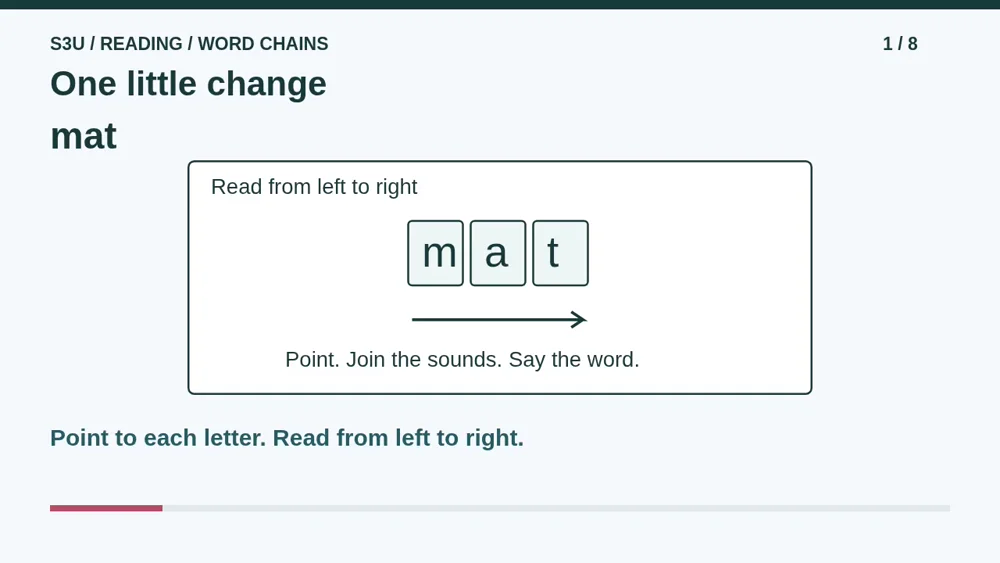
This word is mat. We will change one letter at a time. Read with someone who can help you with the sounds. If these letter sounds are new, stop and learn them together first. Point to each letter from left to right. Join the sounds. Then say the whole word: mat.
2. Change the first letter
Video: 0:23
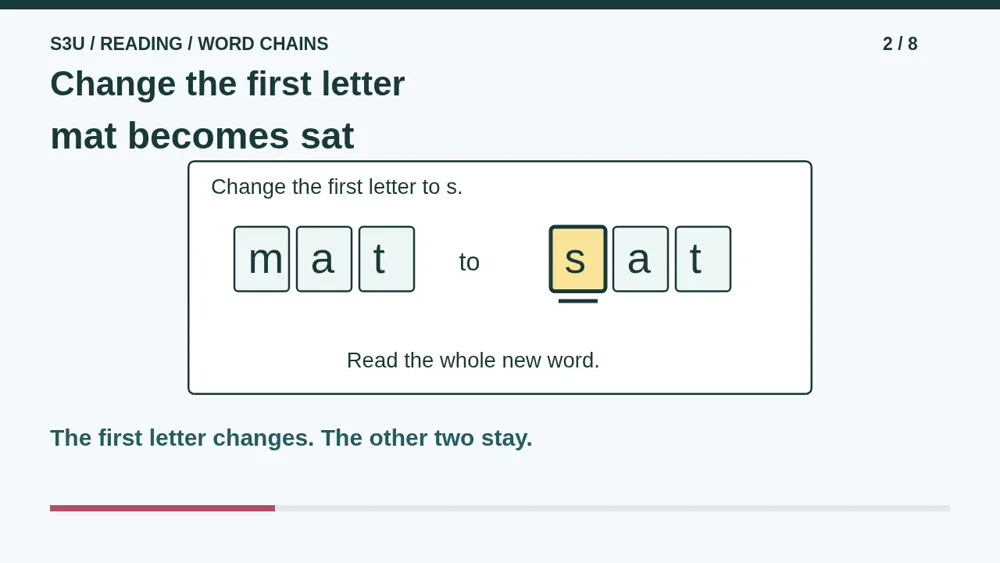
Start with mat. Change the first letter to s. Leave the other two letters where they are. Read every letter again, from left to right. The new word is sat. Mat. Sat. We changed one letter, and we got a different word. Do not skip the end just because the start changed.
3. Check the end too
Video: 0:48
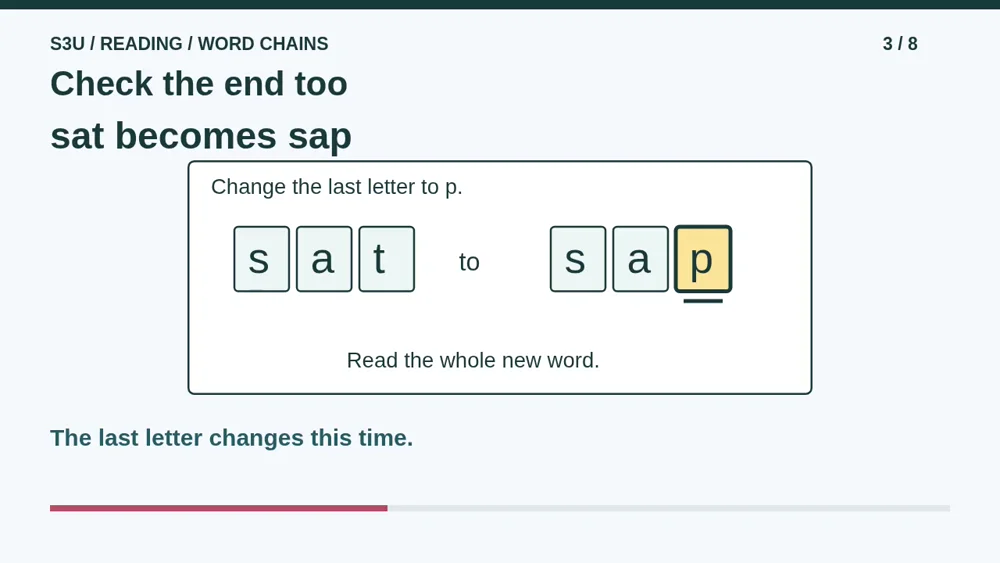
Now start with sat. Change the last letter to p. Read the whole new word: sap. Sap is a liquid in a plant. Sat and sap start the same way, but they do not end the same way. Your eyes need to travel all the way to the last letter.
4. Read a tiny sentence
Video: 1:08
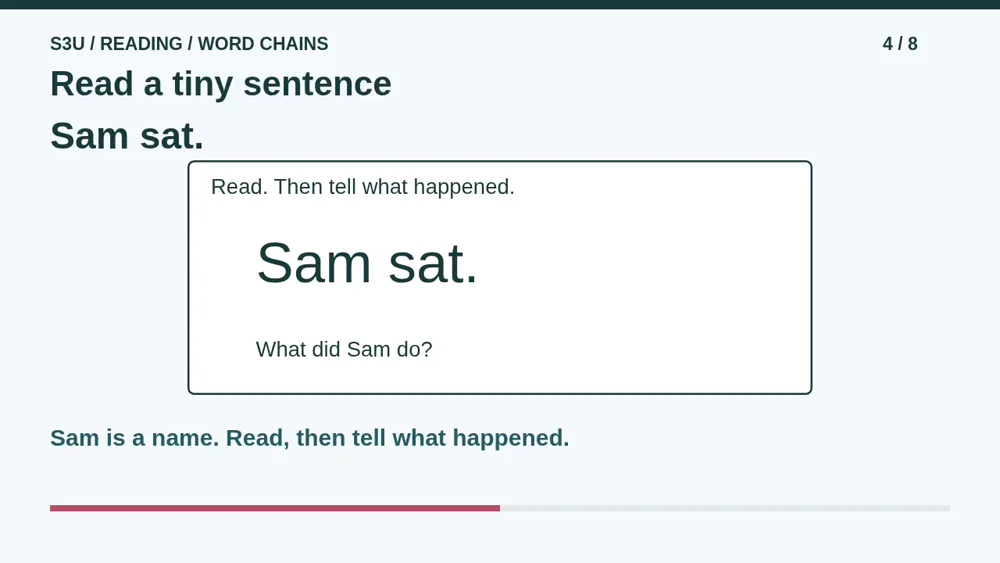
Here is a tiny sentence. Sam is a name. The capital S starts the name, and the dot ends the sentence. Read it: Sam sat. What did Sam do? Sam sat. We read the words first. Then we think about what they mean. Sam can sit on an imaginary giant hat, if that makes you smile.
5. Pause and try a new chain
Video: 1:35
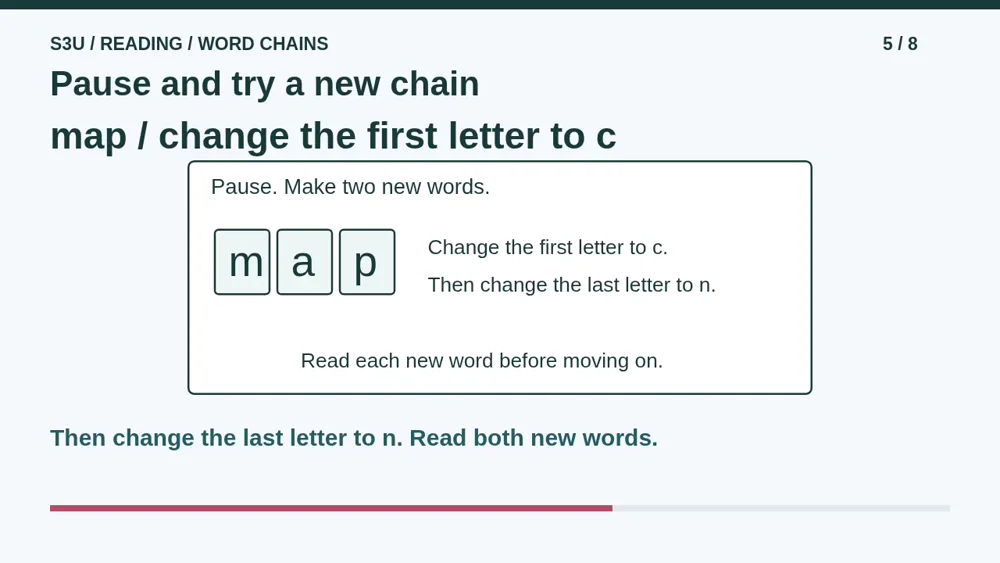
Pause here. Start with map. Change only the first letter to c. Point to all three letters and read your new word. Next, change only the last letter to n. Read that word too. Take your time. Ask for a sound if you need one, then try joining the sounds yourself.
6. Check your two changes
Video: 1:59
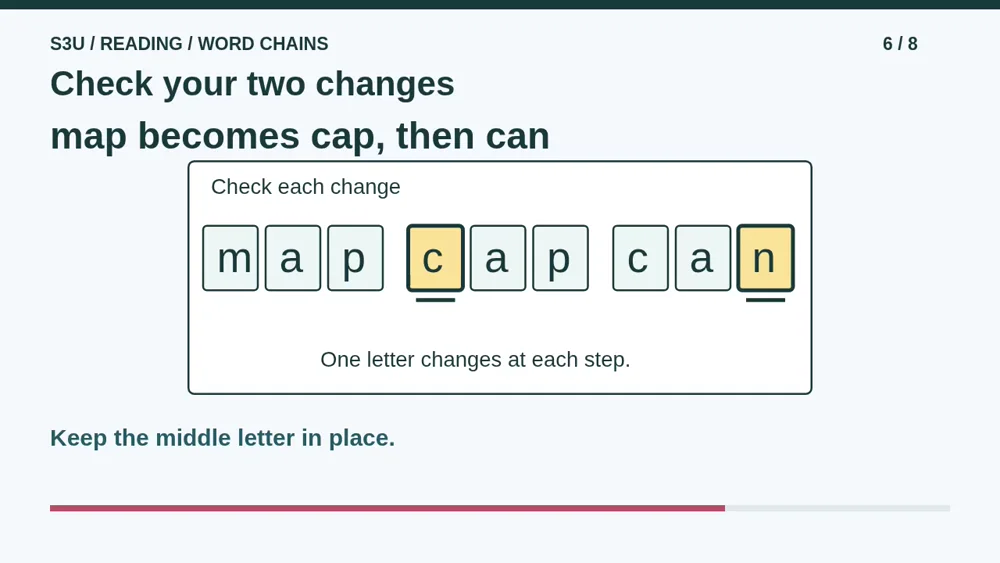
Changing the first letter of map to c makes cap. Changing the last letter of cap to n makes can. Map. Cap. Can. The middle letter stayed the same. If you read a different word, point to the letter that changed. Read all three letters again. A careful second try helps us learn.
7. The order matters
Video: 2:25
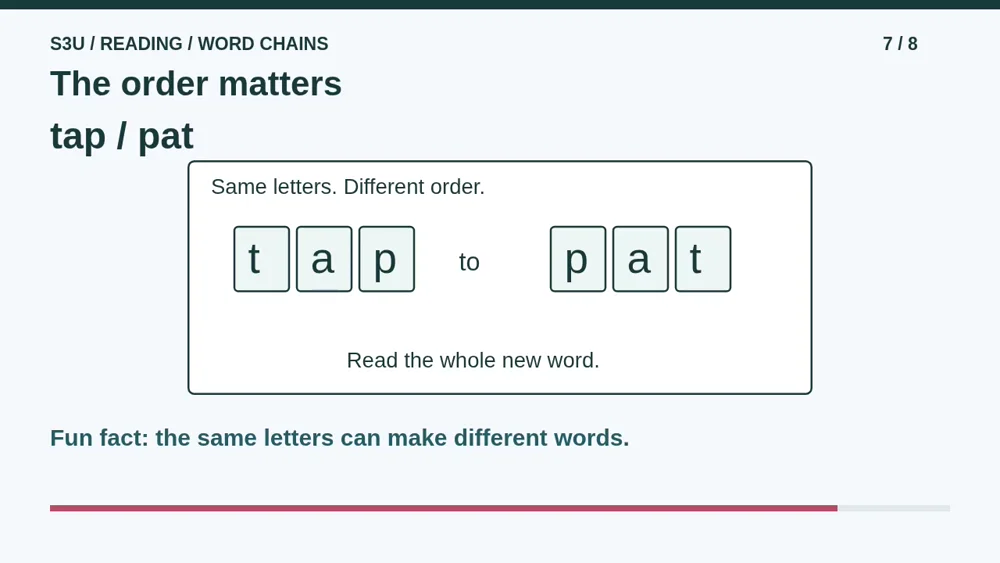
Fun fact: tap and pat use the same three letters, in a different order. Read tap from left to right. Now read pat from left to right. Moving the letters can change the word. We do not read backward to check a word. We check each letter in its place, then read the whole word.
8. Your next word chain
Video: 2:47
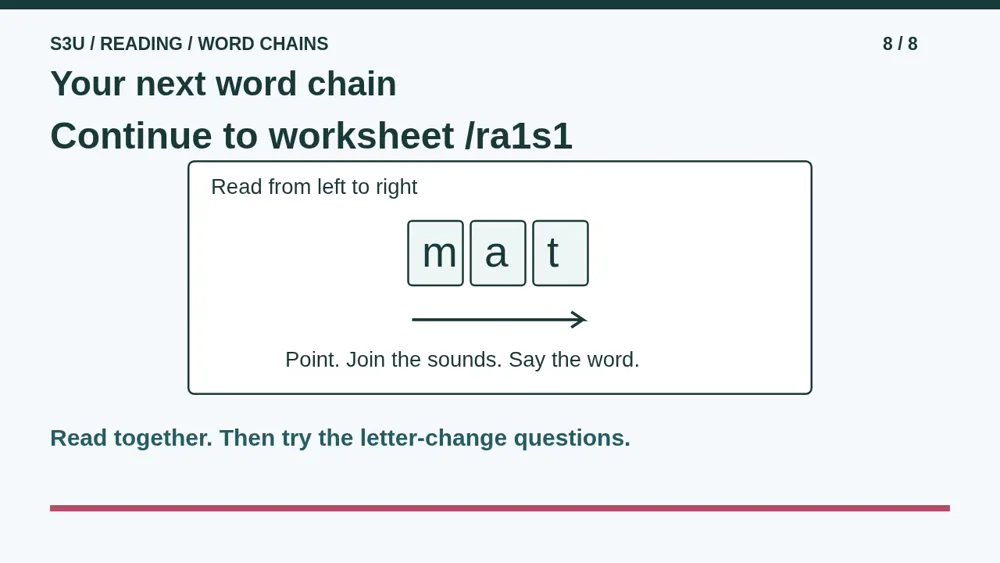
Open the worksheet below. Read the word chains with your helper. Point to each letter and join the sounds. Then try the letter-change questions. You may point to an answer or write it. The questions check letter changes. Your helper can listen to your reading. Try the second sheet another day. Small steps, plenty of practice.
Show your understanding
You can point, explain aloud, draw or write.
- Change one stated first or last letter while keeping the others in place.
- With a helper, join the sounds from left to right, reread the whole word and explain Sam sat. Automatic questions check letter changes, not spoken fluency.
Try it yourself
Pause at map. Make each letter change and read both new words with your helper.
Continue to the worksheet. Read together first, then answer the letter-change questions.
Next: your worksheet
Short-a Word Changes - Practice 1https://s3u.com/ra1s1
Lesson: https://s3u.com/lessons/change-a-short-a-word