Science / Grade 5
Break, move and settle
Learning goal: Separate weathering, erosion and deposition using the action in each record, without inventing a missing journey.
Before you start: Read a short event description and distinguish a change in place from movement. Ask a trusted adult to read the invented records if useful.
Read or print this lesson What to practiceThe video could not load. The transcript is still available below.
Next: your worksheet
Separate Weathering, Erosion, and Deposition
Checking sign-in...
Read the transcript
Saved reading place
Video transcript and practice. Reading or printing does not count as playback time or an assessed grade.
1. Follow the action
Video: 0:00
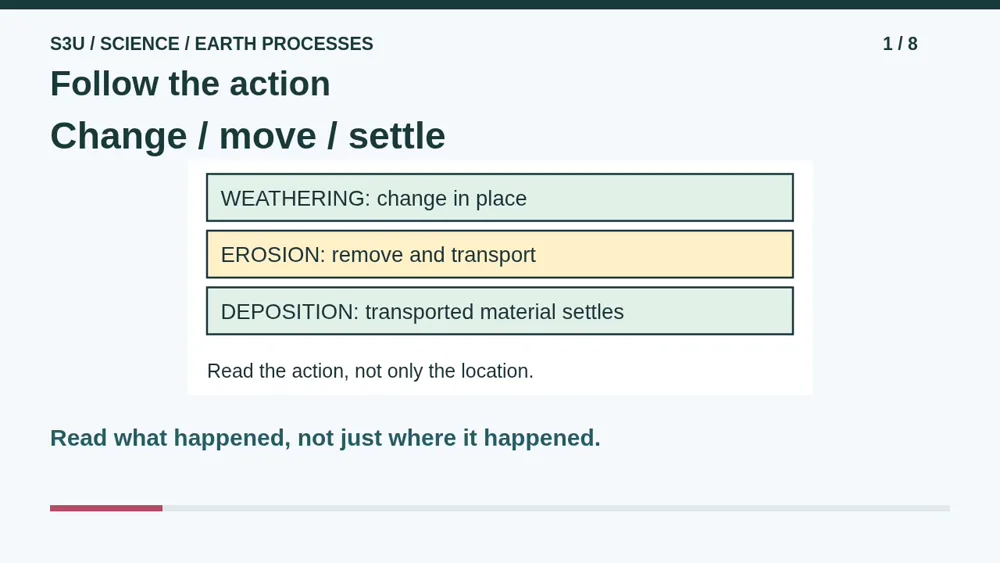
A pile of sand has not kept a travel diary. To explain its story, we need evidence of what happened. Today we will separate three processes: weathering, erosion and deposition. Weathering breaks down or changes rock in place. Erosion removes and transports material. Deposition leaves transported material in a new place. These processes can belong to one longer story, but they do different jobs. We will use invented drawings, not collect or experiment with real rocks.
2. Weathering happens in place
Video: 0:38
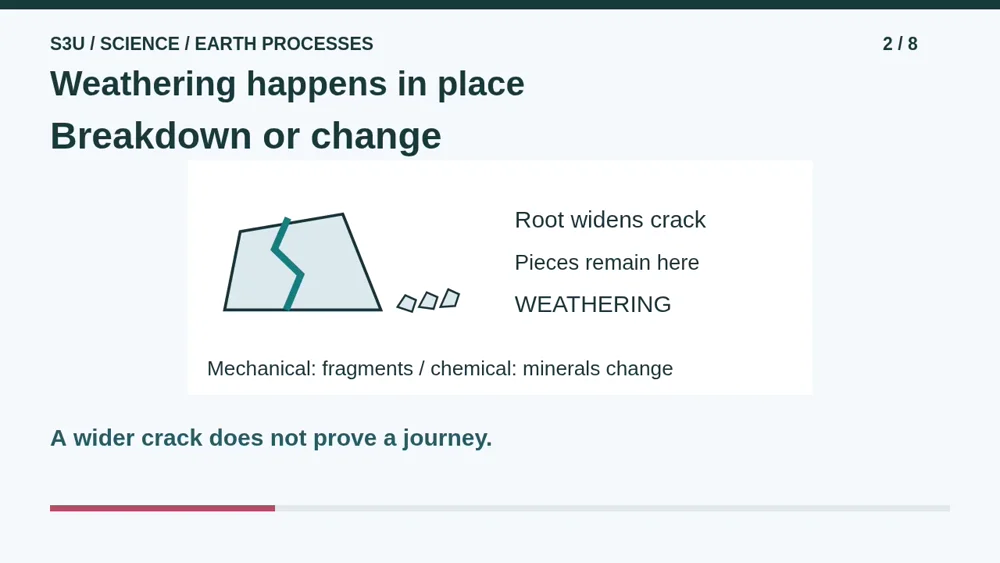
In our first record, a growing root widens a crack. Pieces break from the rock, but remain beside it. The breakdown is weathering. Mechanical weathering breaks rock into smaller fragments. Chemical weathering changes minerals within rock. Both describe changes where the rock is, not a journey to a different hill. The root is not driving a delivery truck. If a later event moves those fragments, that event needs its own evidence and explanation.
3. Erosion moves material
Video: 1:13
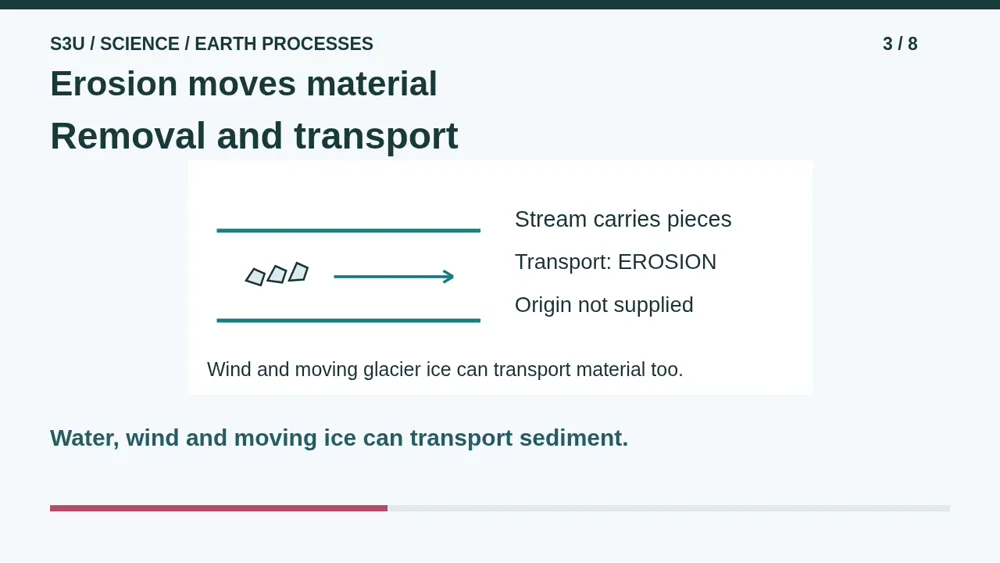
Now a stream picks up loose fragments and carries them downstream. The transport is erosion. Moving water is one agent that can carry sediment, but wind and moving glacier ice can transport material too. The useful clue in this record is carries. Being beside a river is not enough: our description actually states that the fragments move with the water. Do not invent a particular starting place if the record does not give one.
4. Deposition leaves material
Video: 1:46
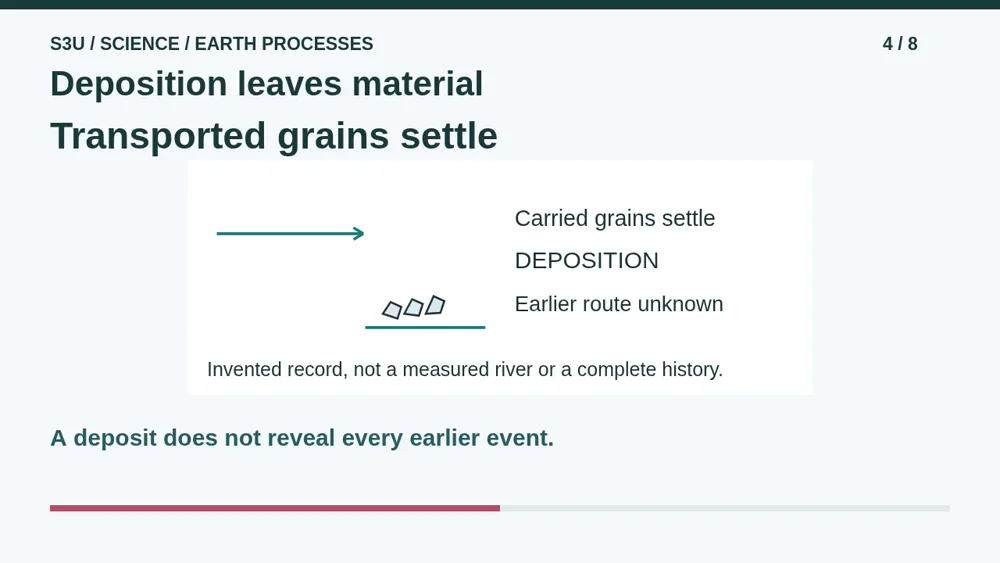
Farther downstream, some transported grains settle where the water slows. Leaving that transported material is deposition. We can now describe a possible sequence: breakdown, transport and settling. But finding a pile today is not the same as watching its whole history. The pile alone does not identify the original rock, the route, or the exact time of travel. A careful explanation separates the event we observed from the earlier events that remain unknown.
5. Pause: read three new records
Video: 2:22
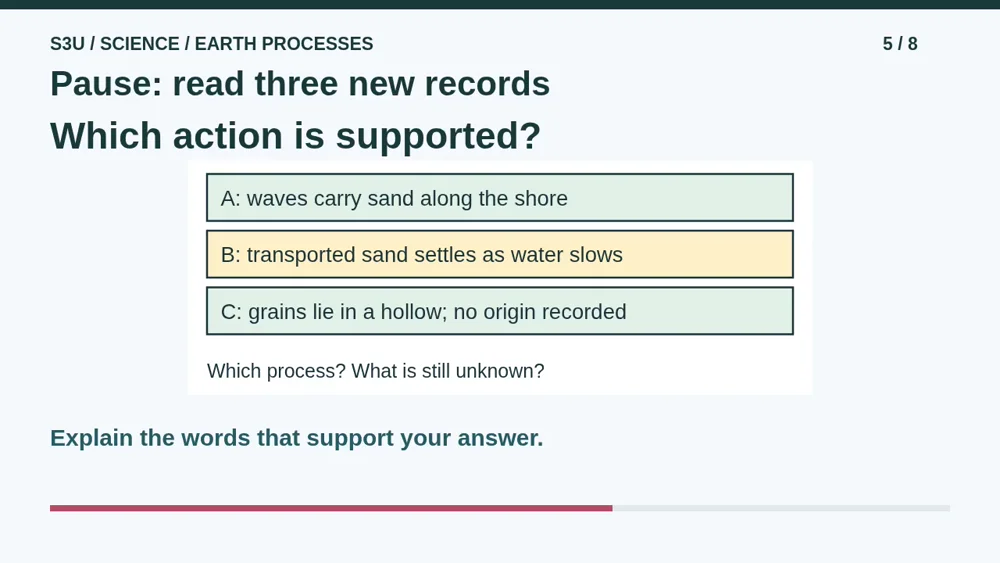
Pause for three new coastal records. Record A says waves carry loose sand along the shore. Record B says some of that transported sand settles as the water slows. Record C says only that grains are lying in a hollow. Which process is stated in A? Which is stated in B? Does C establish where the grains originally came from? Say your reasons using the action words. You can ask someone to read the records again.
6. Check the action and the limit
Video: 2:56
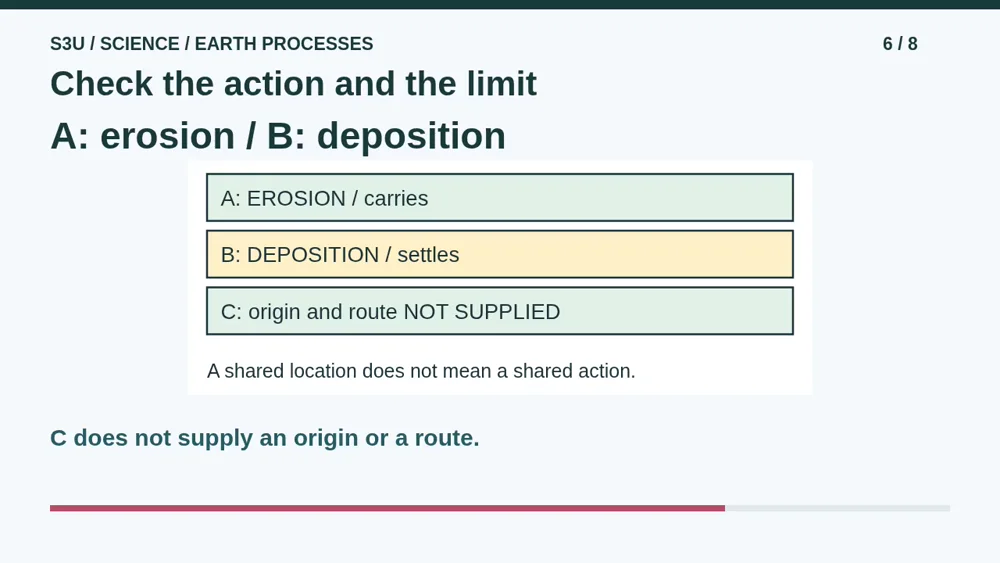
A describes erosion because waves carry the sand. B describes deposition because transported sand settles. C gives the location of grains but no record of their origin or route. We should not invent a named cliff or a particular storm. If you called every coastal event erosion, reread the verbs. Carrying and settling describe different actions, even beside the same water. Getting a label right matters less than being able to explain the evidence for it.
7. One agent, different jobs
Video: 3:32
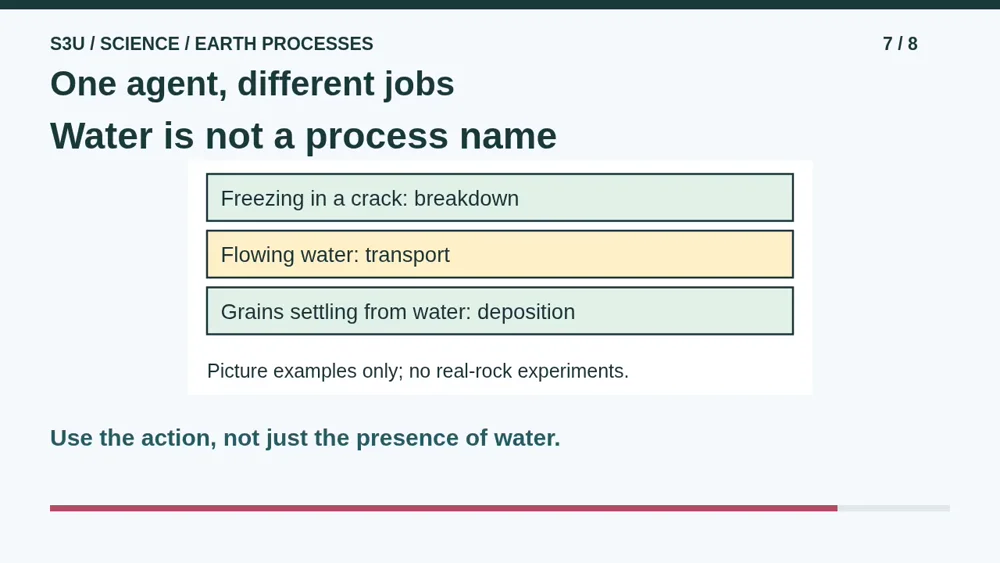
Fun fact: water can be involved in all three parts of this story. Water freezing in a crack can help break rock apart. Flowing water can transport fragments. Transported grains can then settle from the water. That does not mean every wet rock is undergoing all three processes at once. Ask what action the record actually supports. These are picture examples only. Do not freeze, heat, hit or taste rocks, and do not try an experiment with acids or dust.
8. Continue to the worksheet
Video: 4:08
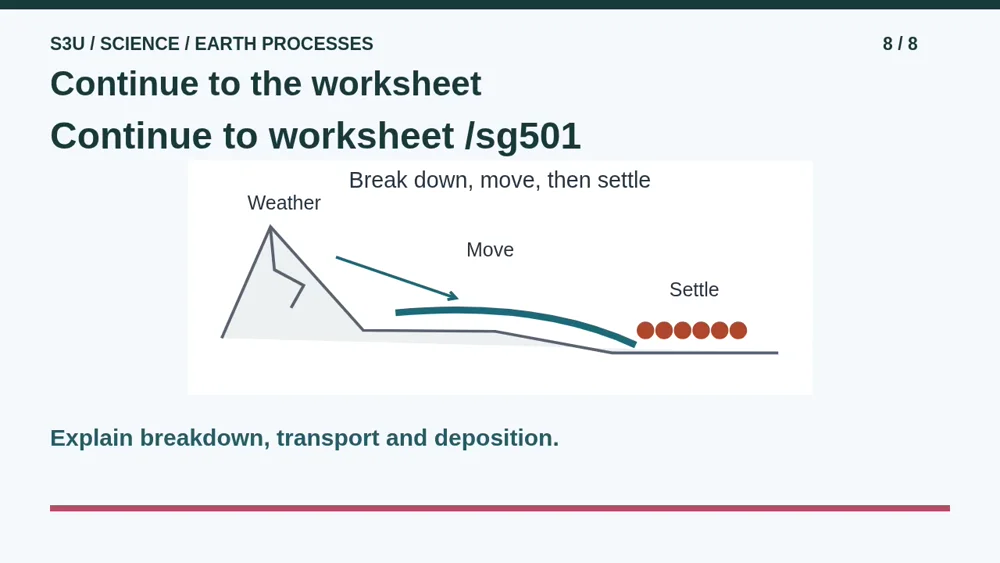
Open the worksheet below to practice separating weathering, erosion and deposition. Read the full event before choosing a process, then explain the action that supports your choice. For a longer paper project, try the first session of Rock Evidence Lab. Keep a first explanation and revisit it when new evidence appears. You may speak or dictate instead of writing. You do not need to collect anything, upload a picture, or know the age of a real rock.
Show your understanding
You can point, explain aloud, draw or write.
- Use the stated action to distinguish weathering, erosion and deposition, even when water is involved in all three.
- Explain why finding grains alone does not establish a particular source, transport route or date.
Try it yourself
Pause at the three coastal records. Name the stated actions and explain what the grains in a hollow cannot reveal.
Continue to the worksheet, then the first Rock Evidence Lab journal. Use paper evidence only; no collecting or real-rock experiments.
Next: your worksheet
Separate Weathering, Erosion, and Depositionhttps://s3u.com/sg501
Lesson: https://s3u.com/lessons/break-move-and-settle