Science / Grade 4
Moonlight and changing phases
Learning goal: Separate the whole Moon from its visible disk, follow selected phases and distinguish a changing view from a lunar eclipse.
Before you start: Recognize a whole round object and distinguish it from the face visible in a picture. Use the supplied models rather than looking toward the Sun.
Read or print this lesson What to practiceThe video could not load. The transcript is still available below.
Next: your worksheet
Why the Moon Has Phases
Checking sign-in...
Read the transcript
Saved reading place
Video transcript and practice. Reading or printing does not count as playback time or an assessed grade.
1. One Moon, changing views
Video: 0:00
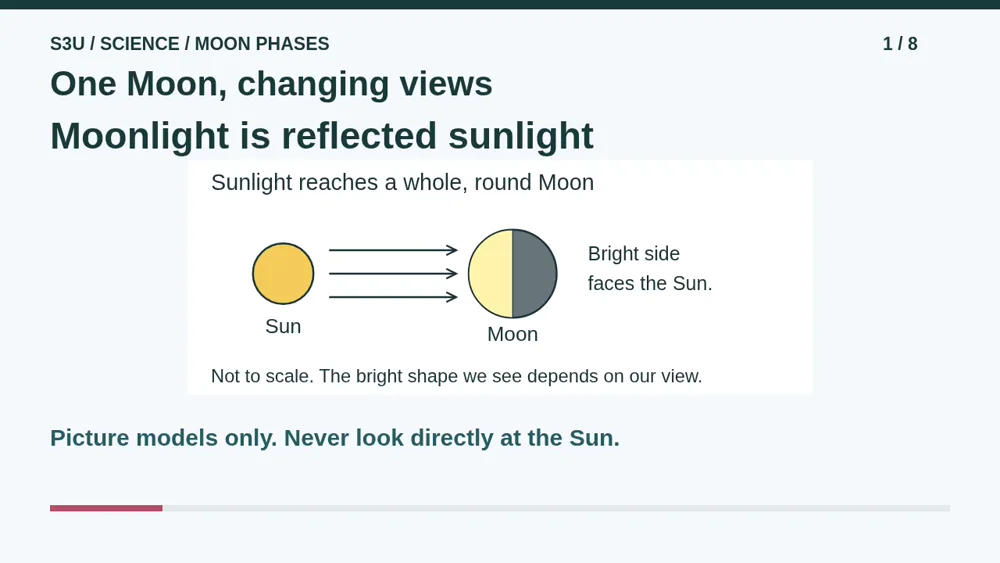
Our Moon has not hired a new shape designer every week. It stays a whole, round world. Sunlight reaches its surface, and some of that light reaches our eyes. Today we will use pictures to explain why its bright shape seems to change. We are studying the light we see, not pieces breaking off. Use these models; never look directly at the Sun.
2. A whole world and a visible disk
Video: 0:27
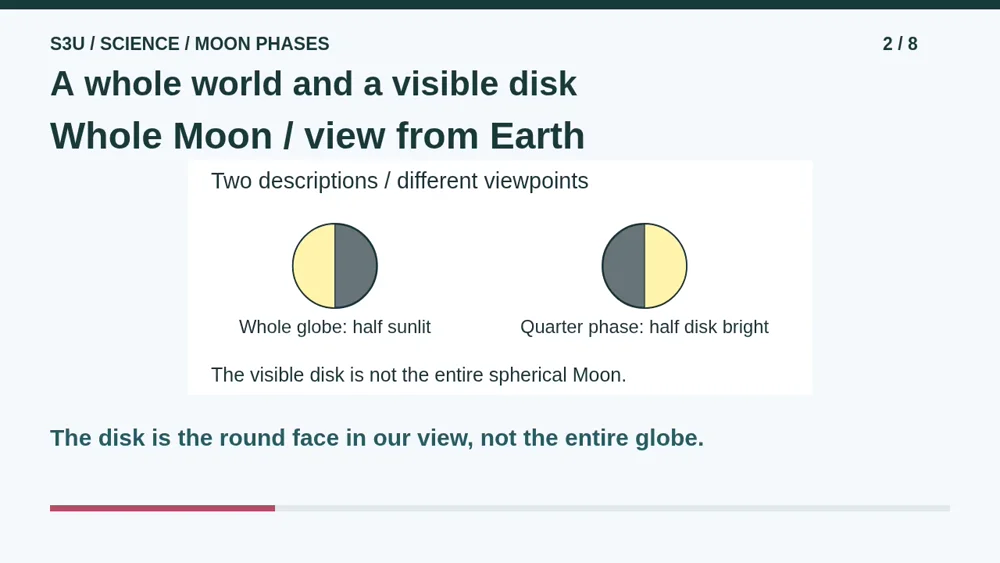
Outside an eclipse, sunlight reaches roughly half of the whole Moon. But from Earth we see only the side facing us. Call its round outline the visible disk. These are two different ideas: how much of the whole Moon is sunlit, and how much of our visible disk looks bright. At a quarter Moon, about half of that disk looks bright. The rest of the Moon is still there.
3. Follow the changing view
Video: 0:54
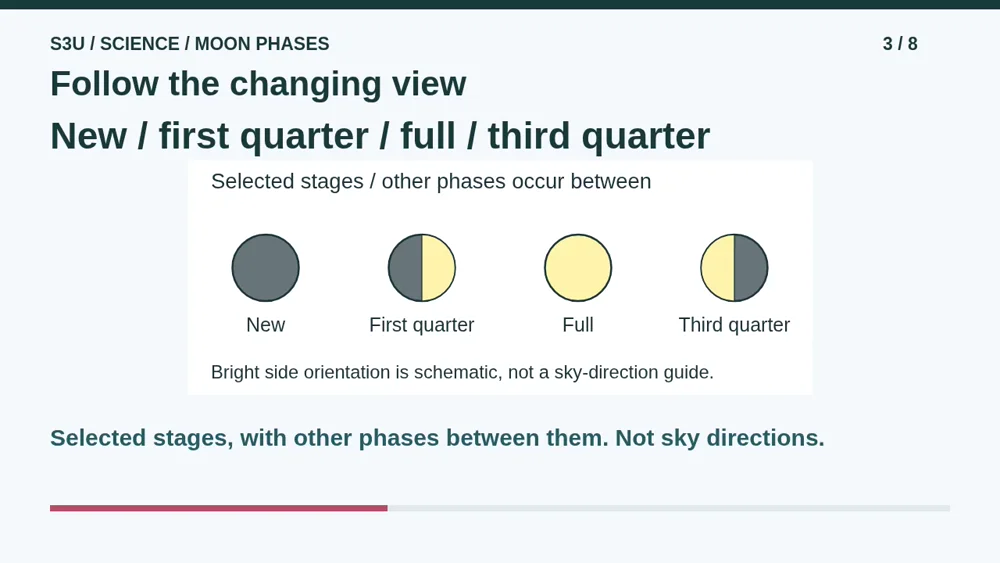
As the Moon travels around Earth, our view of its sunlit half changes. At new Moon, the bright side mostly faces away from us. At first quarter, half the disk looks bright. At full Moon, almost all the disk looks bright. Later, third quarter shows half again, while the visible bright portion is shrinking. There are crescent and gibbous stages between these selected pictures. The pictures are not evenly timed appointments.
4. A phase is not an eclipse
Video: 1:26
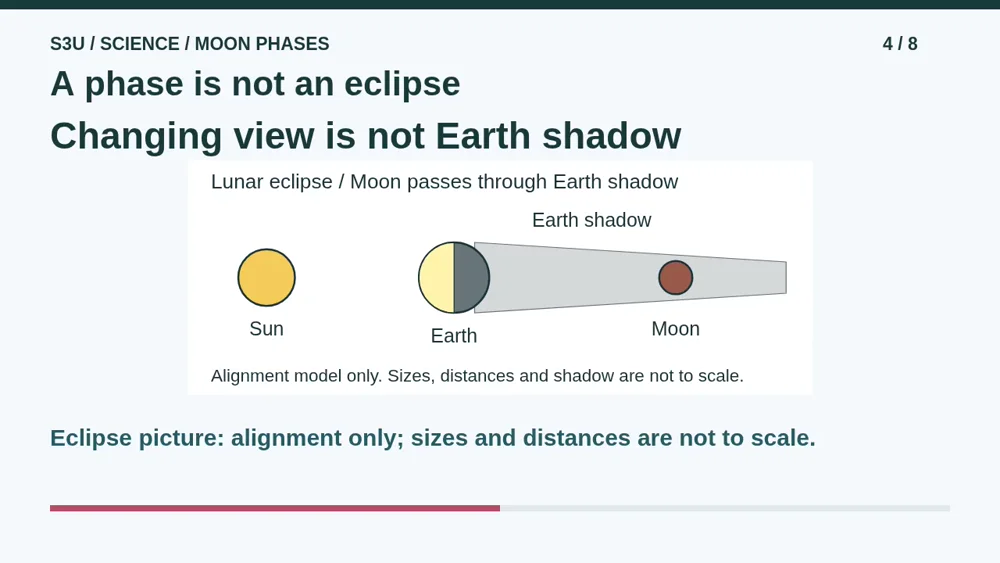
A lunar eclipse is different: the Moon passes through Earth's shadow. Ordinary phases do not need that shadow. A first quarter Moon is not a full Moon with Earth covering one side. Most full Moons are not eclipses either, because the Moon's tilted orbit usually carries it above or below the shadow. Our small alignment picture shows one eclipse arrangement, not what happens every month.
5. Pause: compare two observations
Video: 1:55
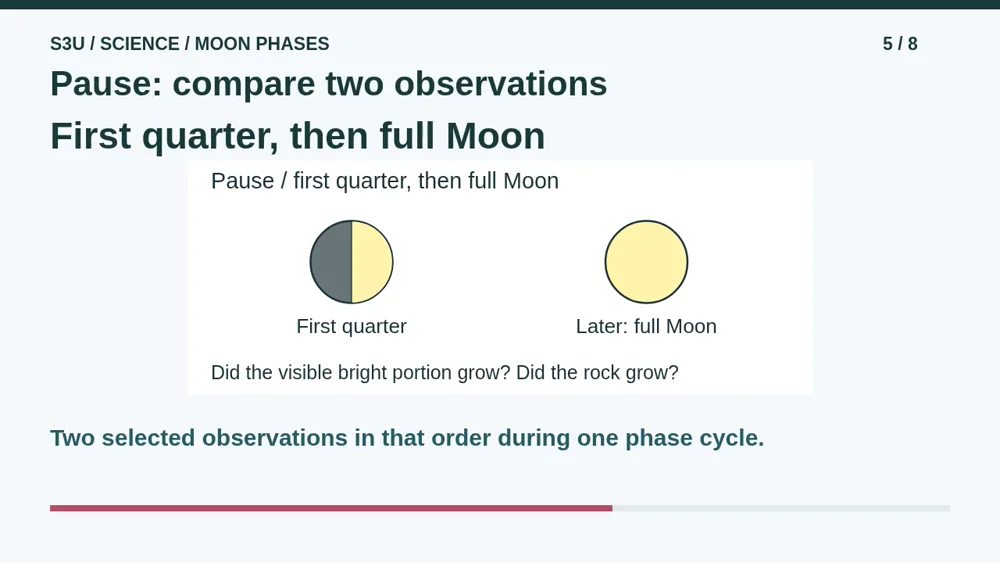
Imagine two selected observations during the same phase cycle. First you record first quarter. Later you record full Moon. Pause here. Did the sunlit portion of the visible disk grow or shrink between those observations? Did the Moon gain new rock to make that happen? Explain your answer with the words view and sunlight. Do not answer by saying that a cloud moved; these are the named phases.
6. Check what actually changed
Video: 2:27
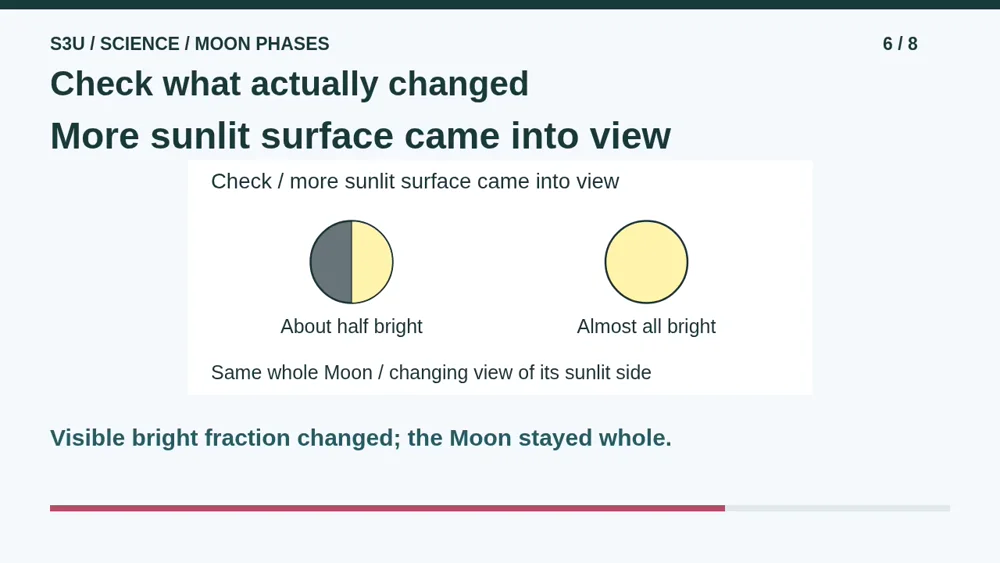
The visible bright portion grew from about half the disk to almost the whole disk. The Moon did not grow extra rock. Its movement changed our view of the surface lit by the Sun. Keep your explanation about the visible disk separate from the whole Moon. You can draw an unchanged round outline around both pictures. No lunar repair crew had to glue the other half back on.
7. The Moon can visit a daytime sky
Video: 2:55
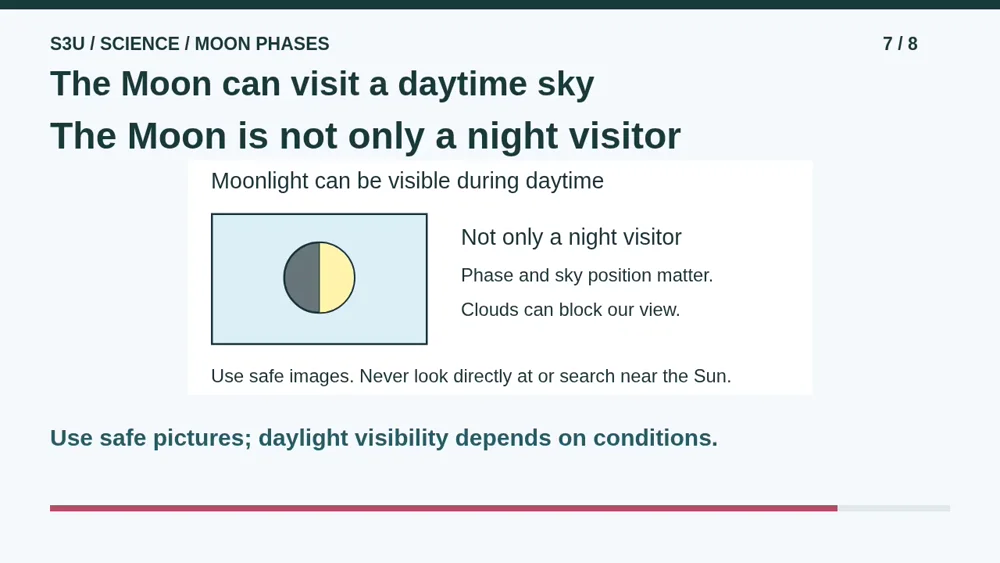
Fun fact: the Moon can be visible during daytime, too. Night is not a required ticket for moonlight. Whether it is easy to see depends on its phase, its place in the sky and conditions such as clouds. Our drawing is only a reminder, not a prediction for today. Looking at a safe Moon photograph is enough for this lesson. Never search near the Sun with your eyes or binoculars.
8. Continue to the Moon worksheet
Video: 3:24
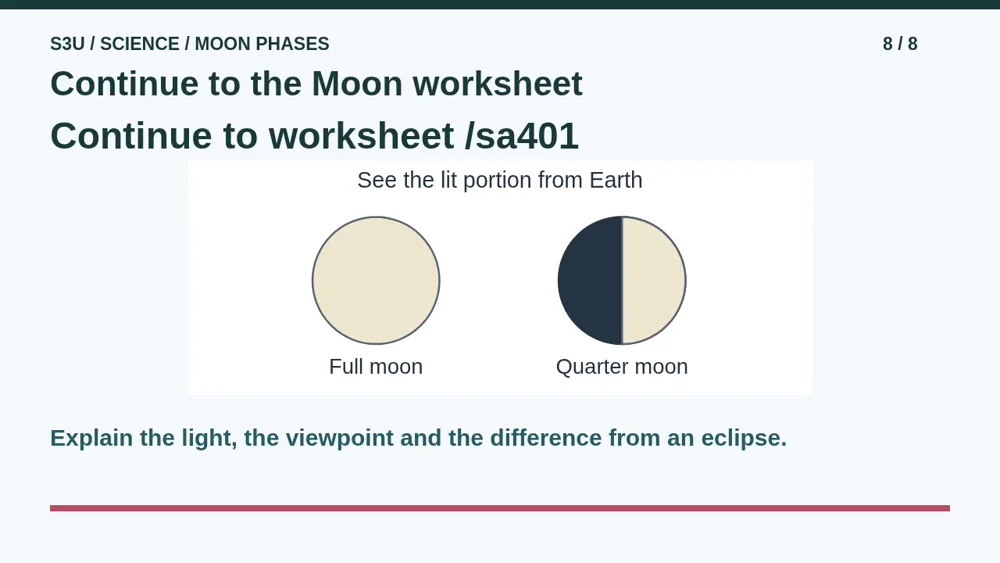
Continue to the worksheet below. Use the model to explain where moonlight comes from and why quarter Moon does not mean a quarter-sized Moon. Check each choice against your explanation before answering. You can print the sheet and draw your own round outlines beside it. Keep the unlit part in the drawing. The goal is to explain a changing view, not simply memorize a row of names.
Show your understanding
You can point, explain aloud, draw or write.
- Explain reflected sunlight and distinguish the whole Moon's sunlit half from the bright fraction of its visible disk.
- Follow first quarter to full Moon, explain why the Moon stays whole, and distinguish ordinary phases from a lunar eclipse.
Try it yourself
Pause between first quarter and full Moon. Explain what changed in the visible disk and what stayed whole.
Continue to the worksheet and draw the whole outline around each phase. Use pictures; never look directly at the Sun.
Next: your worksheet
Why the Moon Has Phaseshttps://s3u.com/sa401
Predict and compare Moon views in Moonlight Lab
Lesson: https://s3u.com/lessons/moonlight-and-phases