Creativity / Grade 5
Light mixing is not paint mixing
Learning goal: Predict ideal RGB light combinations, distinguish pigment absorption and describe grayscale values.
Before you start: Follow a chart with channels marked fully on or off. No special equipment or color discrimination is required.
Read or print this lesson What to practiceThe video could not load. The transcript is still available below.
Next: your worksheet
Light Mixing Is Not Paint Mixing
Checking sign-in...
Read the transcript
Saved reading place
Video transcript and practice. Reading or printing does not count as playback time or an assessed grade.
1. Name the system first
Video: 0:00
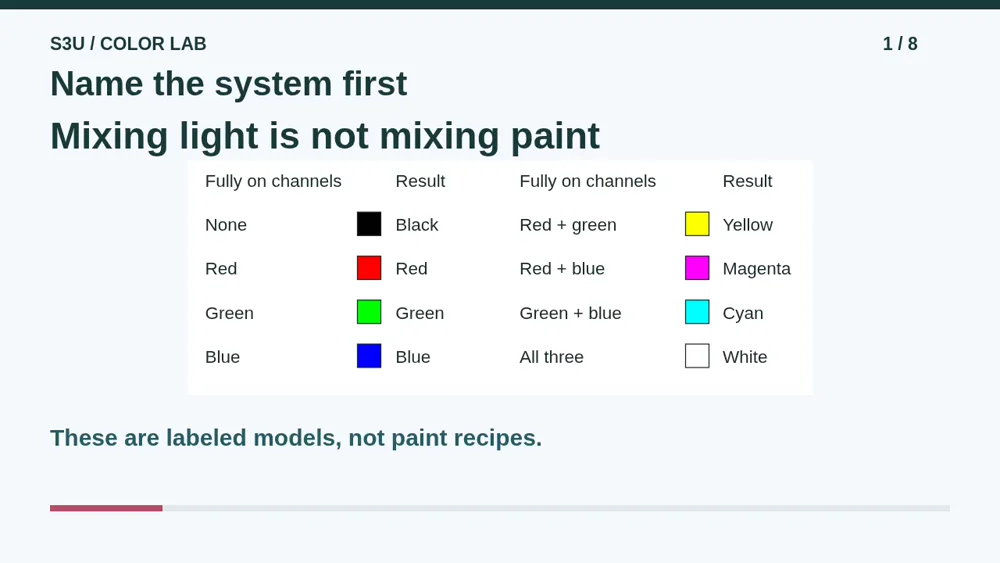
A screen and a painted picture can both look colorful, but they do not make color in the same way. A screen sends light toward your eyes. Pigments absorb some of the light that reaches them. Before predicting a mixture, ask which system you are describing.
2. Add light in an RGB model
Video: 0:19
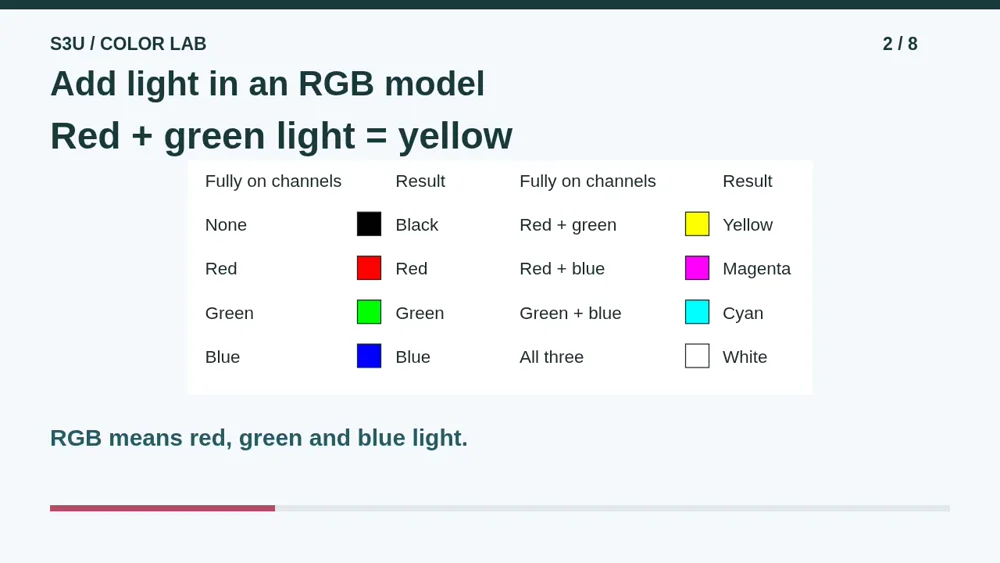
Our ideal model has three light channels: red, green and blue. Each can be off or fully on. Red and green together make yellow in this model. We are adding light, not stirring paint. The labels name the channels so you can follow the rule without relying only on the colored boxes.
3. All on, all off
Video: 0:42
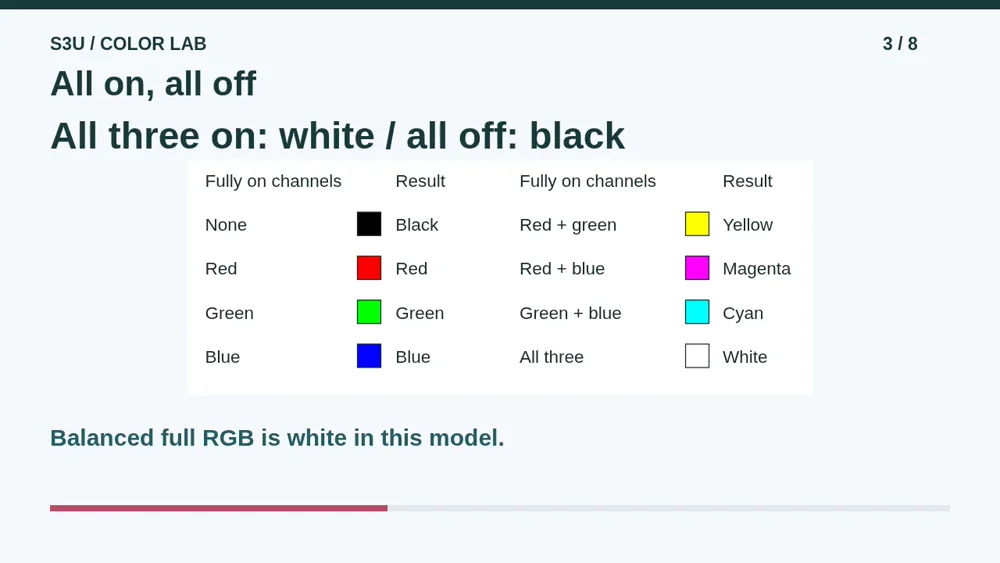
When all three channels are fully on and balanced, the model gives white. When all three are off, it gives black. Intermediate equal channel values give gray. Real devices have different settings and color ranges, so a diagram is not a promise that every screen looks identical.
4. Pigments work differently
Video: 1:04
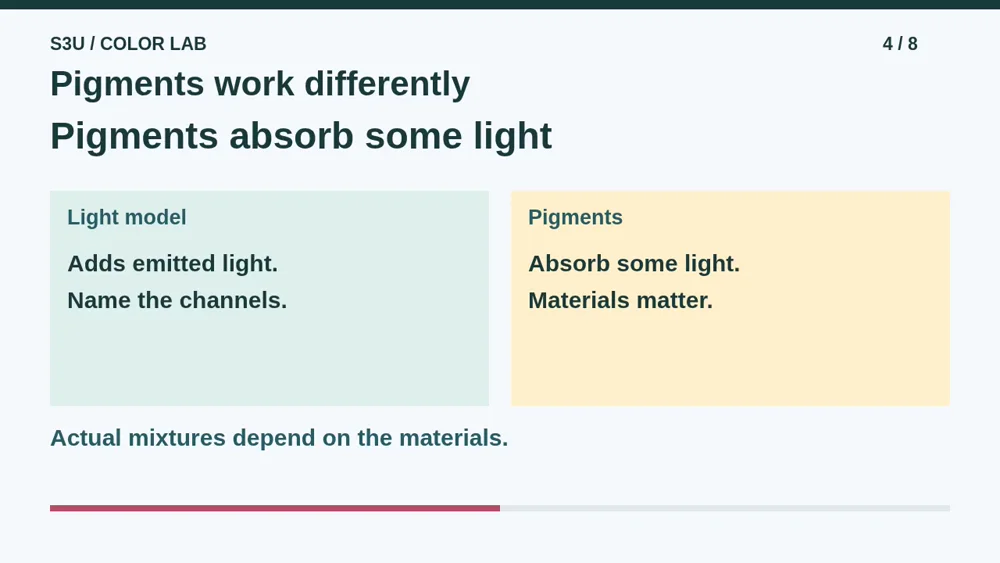
Pigments change which parts of incoming light are absorbed and which reach your eyes. Their mixtures depend on the actual materials. Printers commonly use cyan, magenta, yellow and black inks. You cannot take our red plus green light rule and use it as a guaranteed recipe for red and green paint.
5. Pause: a fresh light puzzle
Video: 1:27
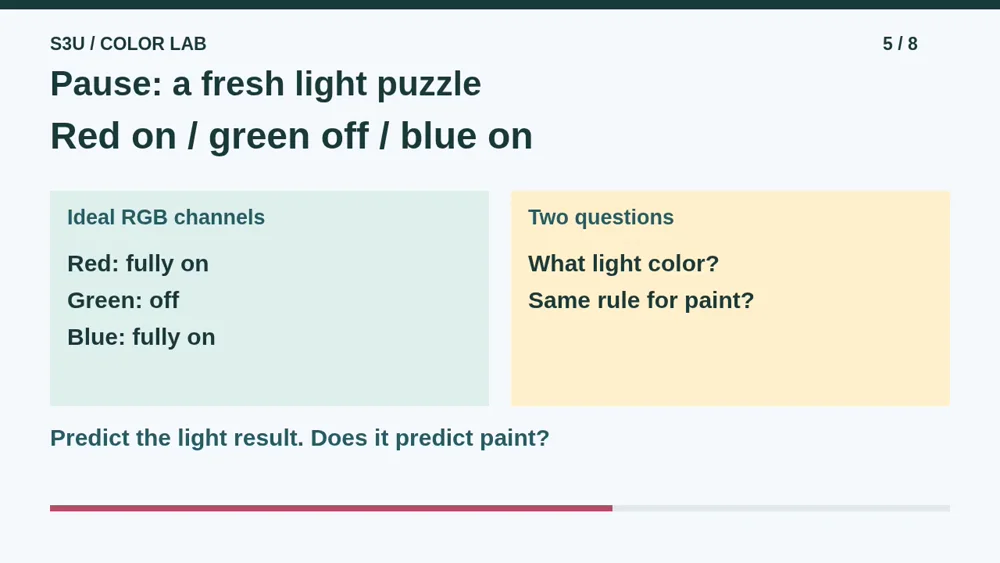
Try a fresh combination in our ideal light model. Red is fully on, green is off and blue is fully on. Pause and predict the result using the chart you saw earlier. Then answer a second question: does that result tell you exactly what happens when you mix red and blue paint?
6. Check both answers
Video: 1:49
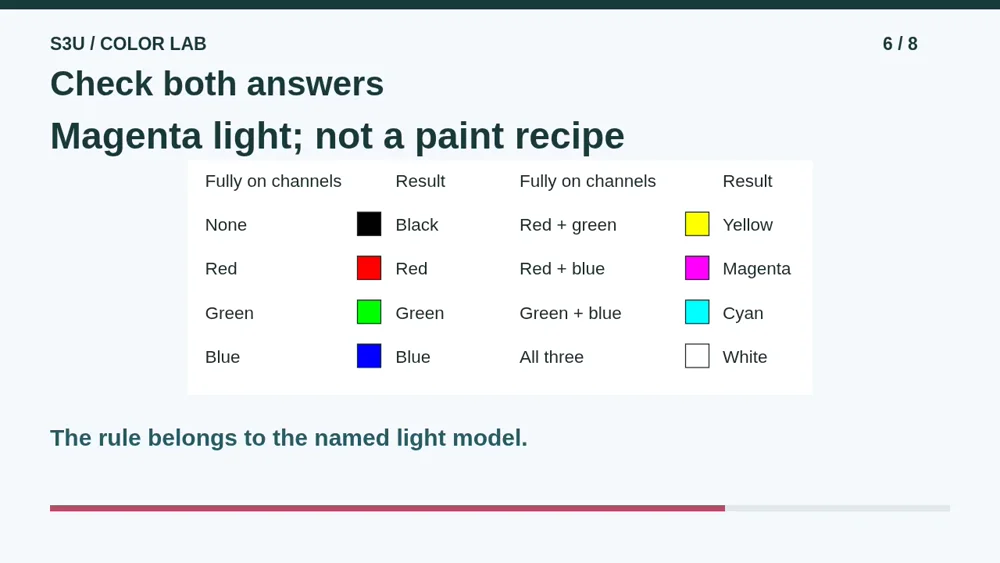
Red and blue light make magenta in this ideal model. That does not give an exact paint result. Pigments interact with incoming light differently, and the materials matter. Naming the system is part of the answer. A very confident paintbrush still cannot turn itself into a screen!
7. Color is not the only clue
Video: 2:12
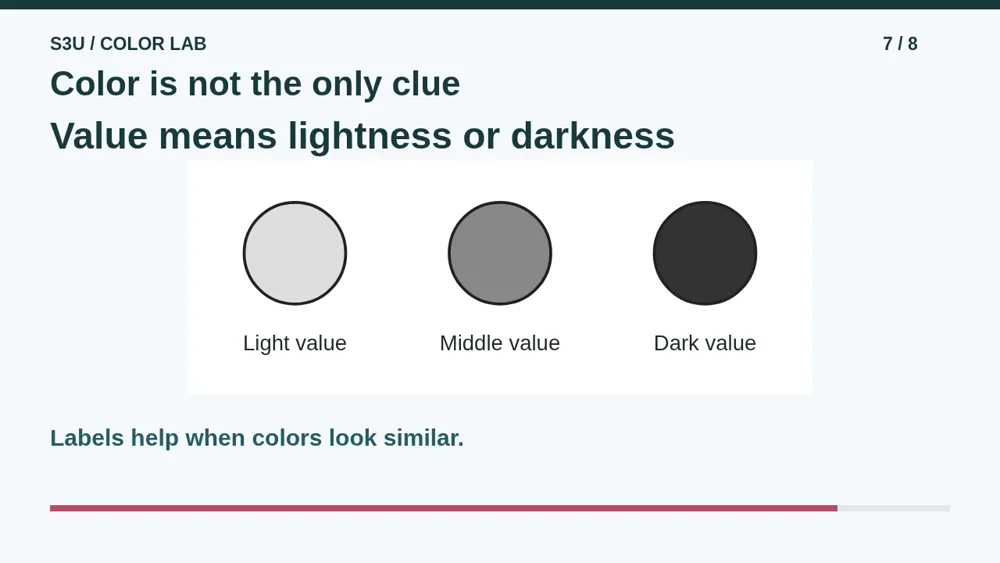
Fun fact: a black and white drawing still has values. Light, middle and dark tones can help show form without different color families. Artists use the word value for lightness or darkness. Labels and patterns also help people read a diagram when colors look similar or a printer uses only black ink.
8. Continue with the worksheet
Video: 2:36
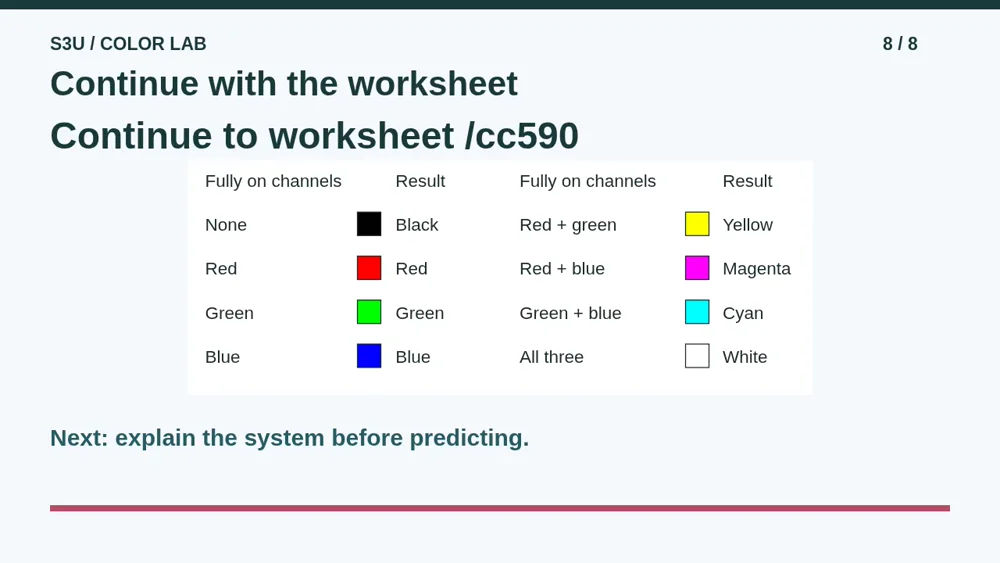
Continue to the worksheet below. Name the RGB channels, compare all on with all off, and explain why light rules are not paint recipes. Then choose a way to make a diagram understandable in grayscale. This lesson uses pictures only. No special lights, paints, uploads or equipment are needed.
Show your understanding
You can point, explain aloud, draw or write.
- Predict a combination in the named ideal RGB model and explain the all-on and all-off cases.
- Distinguish light mixing from pigment absorption and describe value as lightness or darkness.
Try it yourself
Pause with red and blue fully on and green off. Predict the light result and explain why it is not an exact paint recipe.
Continue to the worksheet. Name the system before predicting and use labels to explain grayscale-friendly diagrams.
Next: your worksheet
Light Mixing Is Not Paint Mixinghttps://s3u.com/cc590
Lesson: https://s3u.com/lessons/light-and-pigment