Math / Grade 7
Integers: explain signed changes
Learning goal: Trace positive and negative changes, subtract by adding the opposite, and check the result by reversing a journey.
Before you start: Locate signed integers, identify opposites and count unit intervals rather than starting ticks. Review the integer position lesson when needed.
Read or print this lesson What to practiceThe video could not load. The transcript is still available below.
Next: your worksheet
Signed Changes: Follow the Number Line
Checking sign-in...
Read the transcript
Saved reading place
Video transcript and practice. Reading or printing does not count as playback time or an assessed grade.
1. A robot needs a direction
Video: 0:00
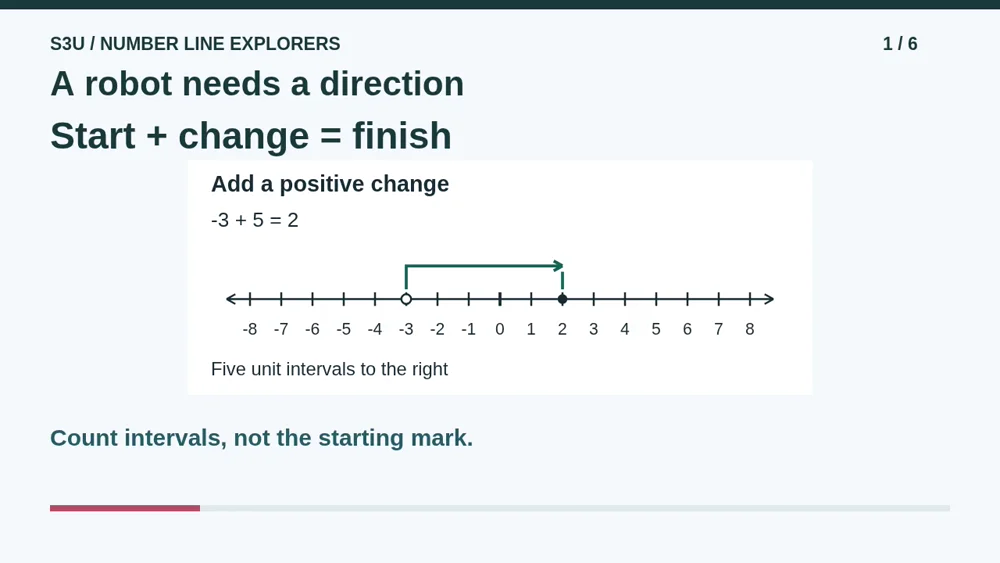
Our delivery robot has a number-line map. Its wheels are ready, but shouting five is not enough information. Which direction? Start at negative three and add positive five. A positive change moves right. Three unit steps reach zero, then two more reach positive two. So negative three plus five equals two. The starting mark is not the first step; a step crosses one interval. Say the starting position, the direction, and the distance before finding the finish. That small habit keeps a confident robot from delivering a parcel to the wrong number.
2. Adding can move left
Video: 0:43
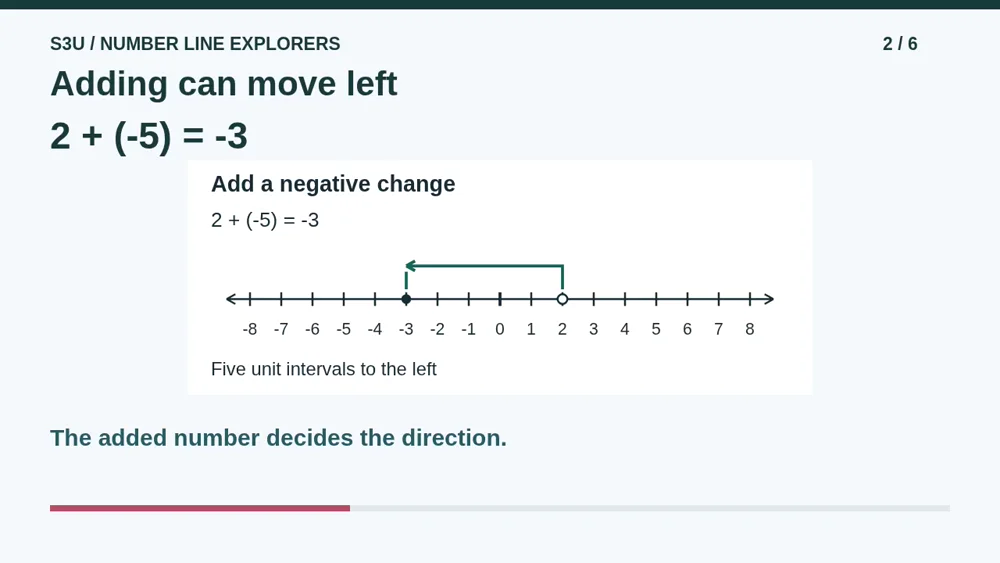
Now start at positive two and add negative five. The plus sign tells us to add. The negative sign belongs to the number being added and tells us the direction of this change. Move five units left: two to zero and three more to negative three. Adding does not always make a number greater. Adding a negative number makes it smaller. Parentheses help keep the operation and the signed number separate. Check this trip by reversing it: starting at negative three and adding positive five returns to positive two.
3. Subtraction reverses the change
Video: 1:23
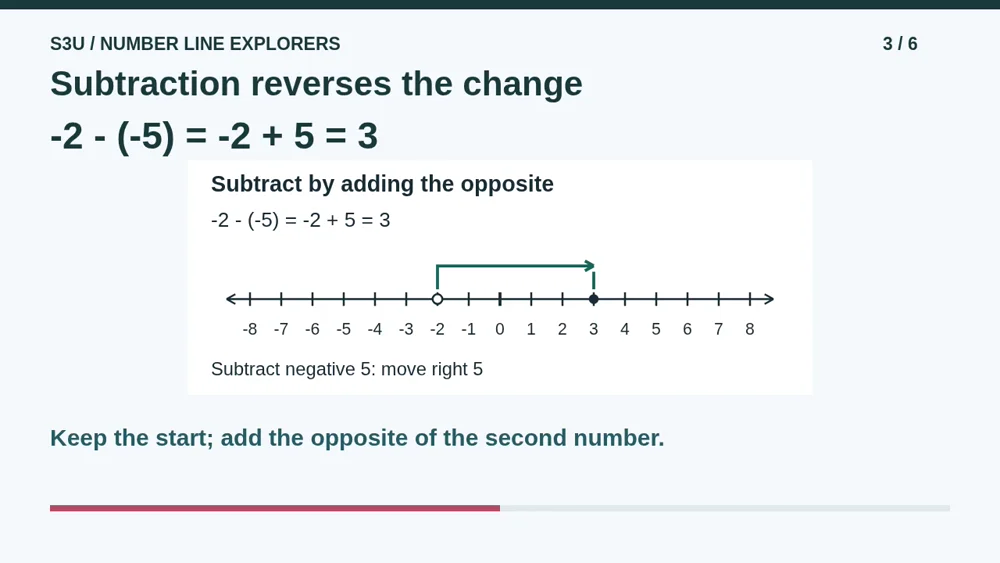
Subtracting a number means adding its opposite. Keep the starting value unchanged. For negative two minus negative five, the opposite of negative five is positive five. Start at negative two and move five units right, ending at three. To check, add the subtracted number back: three plus negative five returns to negative two. Do not use a vague rule about two minus signs anywhere in a question. Their jobs matter. Negative two plus negative five would move left and finish at negative seven. Subtracting positive five also moves left because its opposite is negative five.
4. Pause: same start, different orders
Video: 2:09
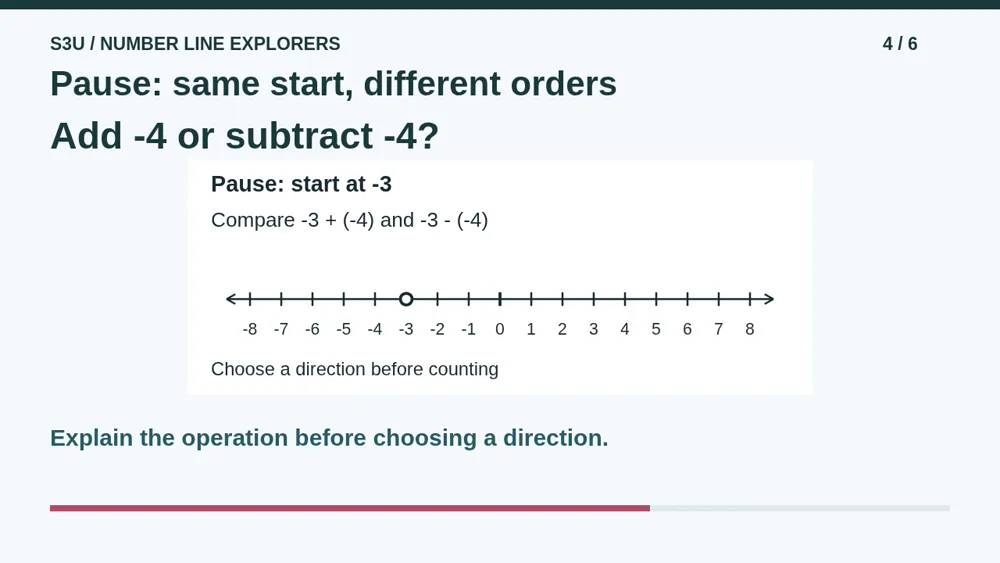
Pause and give the robot two separate journeys. Both begin at negative three. The first instruction is add negative four. The second instruction is subtract negative four. Find the finish for each journey and explain why the directions differ. You may sketch two number lines or use your finger on the picture. First name the operation. If it is subtraction, replace it with adding the opposite of the second number. Keep negative three as the starting position both times. Count four intervals only after deciding the direction. Continue when you have a reason, not just two guesses.
5. Check both journeys
Video: 2:54
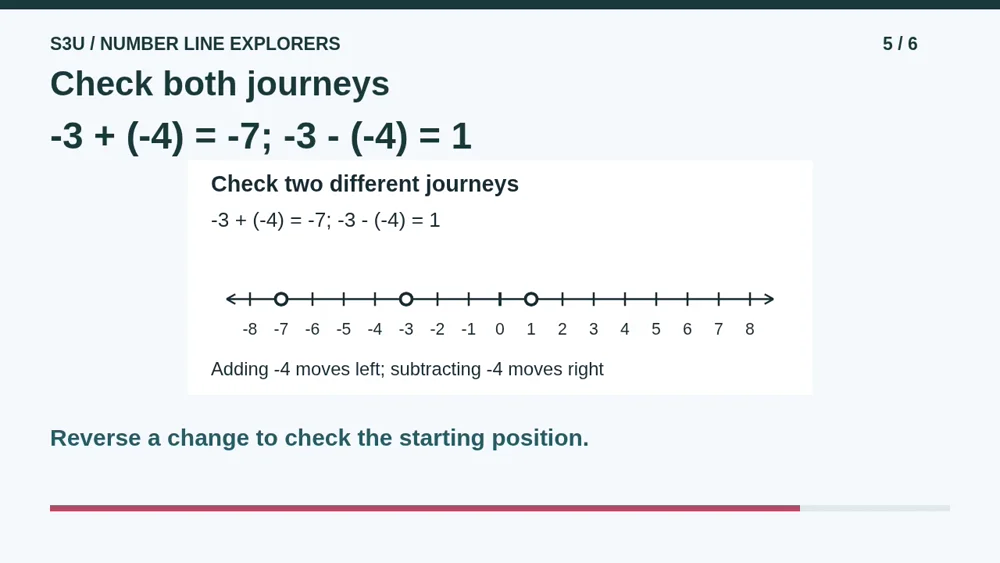
Adding negative four moves left from negative three to negative seven. Subtracting negative four means adding positive four, so it moves right from negative three to positive one. Check the second result: one plus negative four returns to negative three. Both instructions contain negative numbers, but they are different operations. A minus sign attached to a number identifies its sign. A subtraction sign between numbers tells you what operation to perform. Reading these jobs carefully works better than counting minus signs and hoping. Our robot can now explain its route instead of blaming the map.
6. Opposite trips can cancel
Video: 3:39
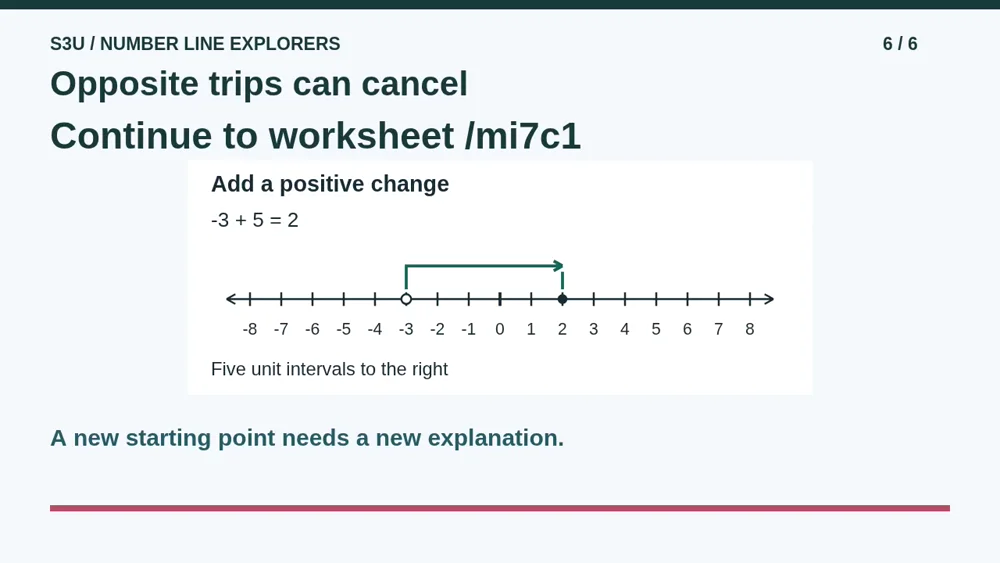
Fun fact: adding a change and then its opposite returns you to the starting number. Move five units right and five units left, and the net change is zero, even if you started below zero. Continue to the first worksheet, then try the changed situations on the second. Use the starting position, operation, direction, and number of intervals to explain your answers. Check one subtraction by adding the subtracted number back. When you can explain a new example, try it without looking at the worked model. Keep the number line nearby when you need it.
Show your understanding
You can point, explain aloud, draw or write.
- Explain integer addition as a starting position and a signed change, including crossing zero.
- Rewrite subtraction as adding the opposite and check a new result by adding the subtracted number back.
Try it yourself
Pause to compare adding -4 with subtracting -4 from the same starting position. Explain why the directions differ.
Continue to both worksheets. Name the starting value, operation, direction and distance; check a subtraction by adding back.
Next: your worksheet
Signed Changes: Follow the Number Linehttps://s3u.com/mi7c1
Lesson: https://s3u.com/lessons/integer-changes