Reading / Grade 6
Inside a narrator's view
Learning goal: Separate a first-person narrator's observations from interpretations, revise with new evidence and explain what remains unknown.
Before you start: Recognize a first-person narrator and distinguish a statement in a story from your own guess.
Read or print this lesson What to practiceThe video could not load. The transcript is still available below.
Next: your worksheet
Distinguish a Narrator's View from Everyone's View - Practice 1
Checking sign-in...
Read the transcript
Saved reading place
Video transcript and practice. Reading or printing does not count as playback time or an assessed grade.
1. A narrator has a position
Video: 0:00
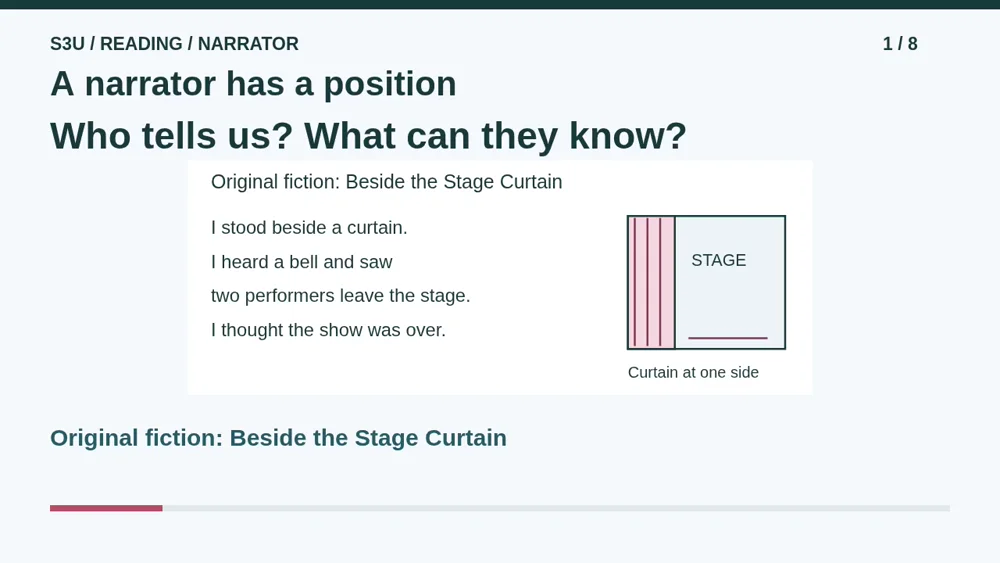
A narrator is the voice telling a story, not automatically the author. Read this invented account. I stood beside a curtain. I heard a bell and saw two performers leave the stage. I thought the show was over. This first-person narrator tells us what they heard, saw, and thought. The word I helps identify that voice. It does not give the narrator a magical view of every person and every room.
2. Separate a report from an inference
Video: 0:32
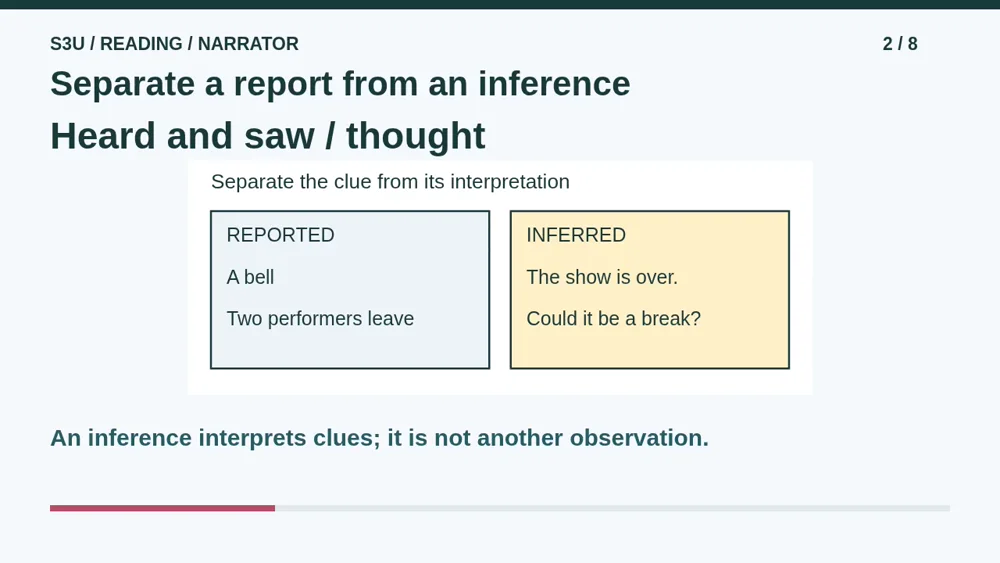
The narrator reports hearing a bell and seeing two performers leave. The claim that the show ended is an inference: an interpretation of those clues. It is possible, but the same clues could also fit a break. The words I thought mark uncertainty in this passage. An inference can be sensible without being confirmed. We should not quietly turn I thought into I knew.
3. Read what the next lines add
Video: 1:00
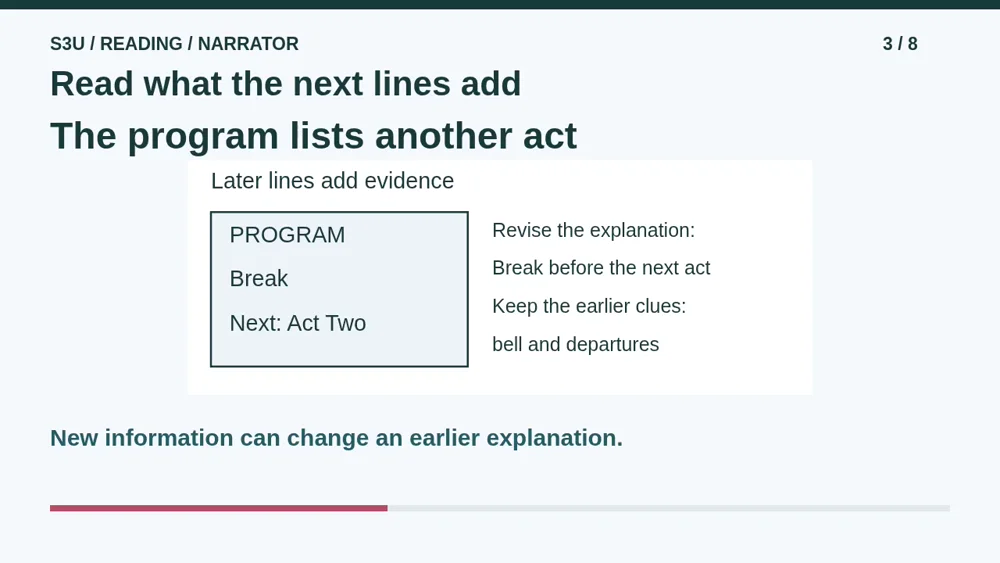
Now the story continues. I opened the program. It listed a break, followed by Act Two. I crossed out show over and wrote break before the next act. The new lines give the narrator a reason to revise the first interpretation. The earlier bell and departures still belong in the account. A corrected explanation does not erase every useful observation. Fortunately, a pencil does not charge a fee for changing your mind.
4. Keep the claim within its limits
Video: 1:34
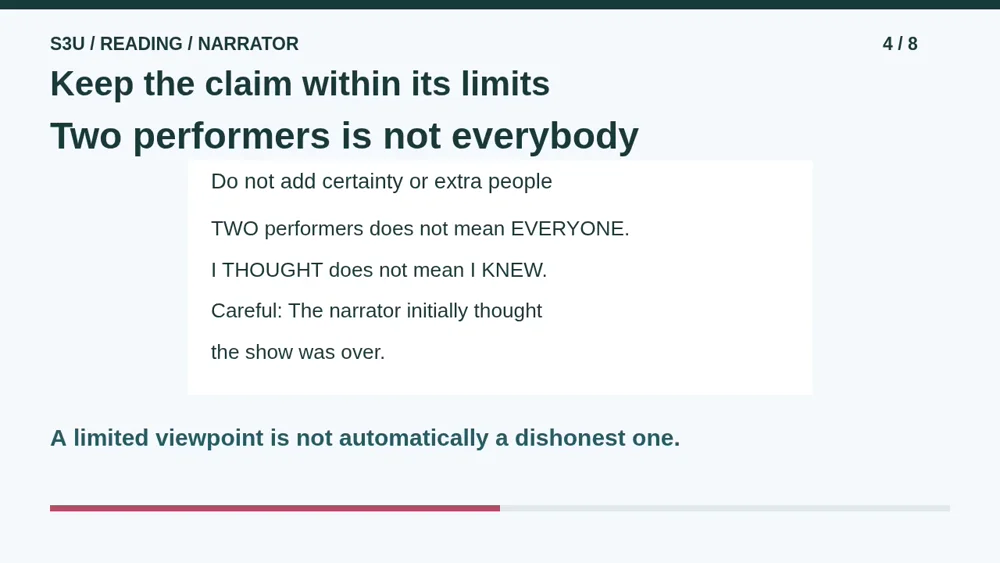
Suppose we summarize the first lines as everyone knew the show had ended. That adds both everyone and knew. Neither is supported. The narrator saw two performers and described a thought, not everybody's knowledge. A more careful summary is: the narrator initially thought the show was over. A limited viewpoint is not automatically dishonest or useless. Explain the specific limit and look for what the text adds.
5. Pause: the covered scoreboard
Video: 2:06
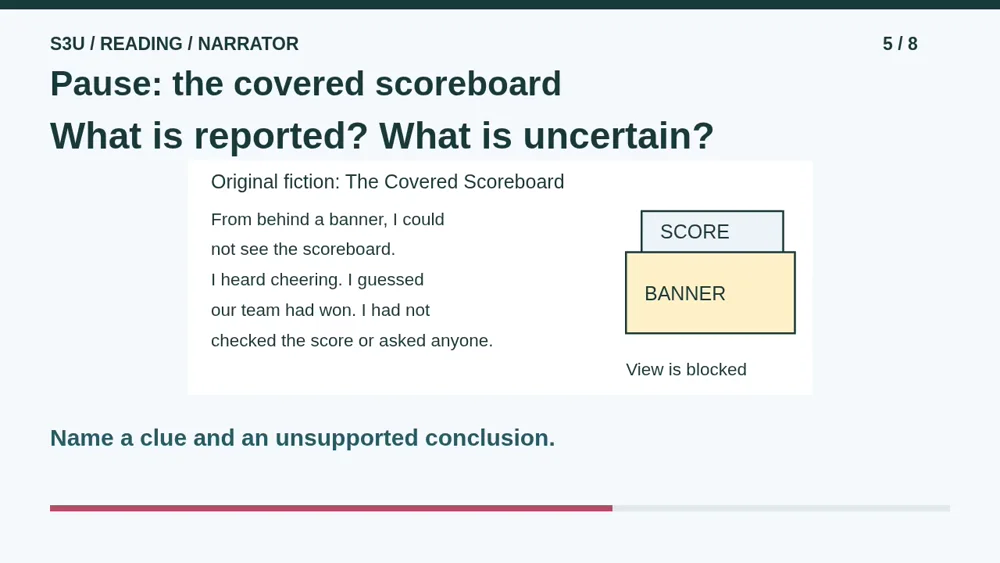
Read this fresh invented account. From behind a banner, I could not see the scoreboard. I heard cheering. I guessed our team had won. I had not checked the score or asked anyone. Pause. What does the narrator report hearing? Is a win confirmed? Explain why cheering alone does not settle that question, and suggest one way the narrator could check. Do not invent a score.
6. Check the narrator's conclusion
Video: 2:38
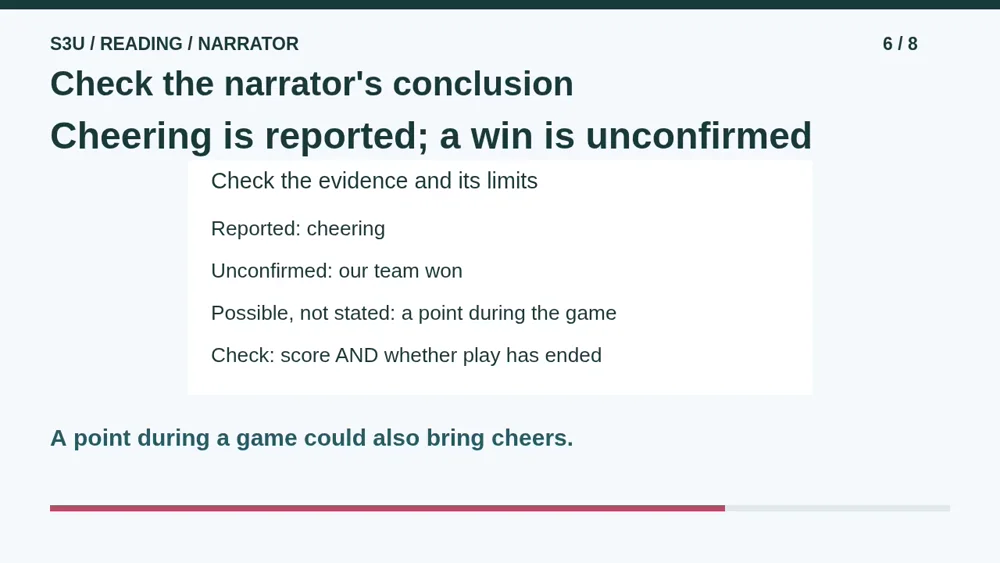
The account reports cheering. Winning is a guess, not a confirmed result. People might cheer for a point before a game ends; that is an alternative possibility, not a new fact about this story. The narrator could move to read the scoreboard and check whether play has finished, or ask someone who has that information. We still cannot announce a score or a winner from the supplied lines.
7. One event can support two accounts
Video: 3:06
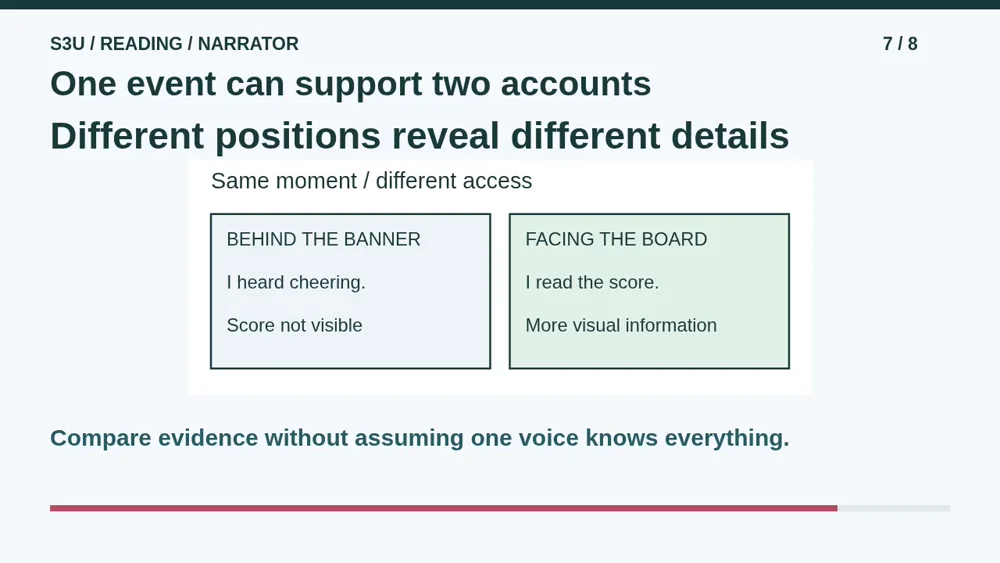
Fun fact: two narrators can describe the same moment differently without either one lying. In our invented setting, a person behind the banner can truthfully report hearing cheers while a person facing the board can report the displayed score. Their positions offer different information. Compare what each account actually says and how it was obtained. More viewpoints can help, but agreement alone is not a guarantee that every claim is correct.
8. Continue to the worksheet
Video: 3:38
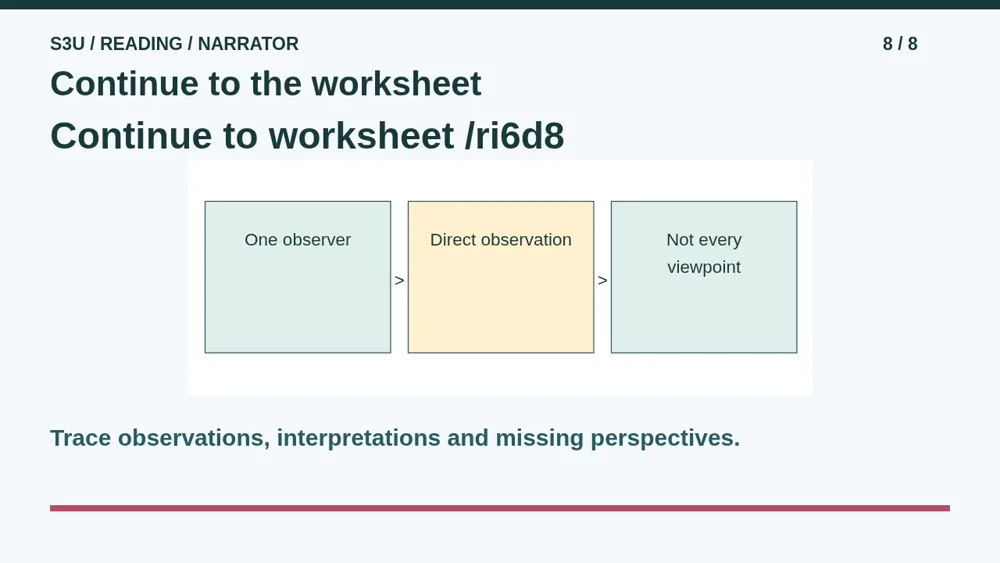
Continue to the worksheet below. Its narrator stands in a different place and reports a different event. Identify what the account directly reports, what the narrator interprets, and what remains unknown. Use the passage to explain your answers. Practice Two adds another story and a revised explanation. Discuss or write your reasoning without sharing a real person's private messages or experiences. These fictional texts provide all the evidence needed.
Show your understanding
You can point, explain aloud, draw or write.
- Separate a narrator's reported observations from interpretations and revise an interpretation when the text adds evidence.
- Explain why one narrator's limited experience does not establish what everyone knew, and identify a useful way to check an uncertain claim.
Try it yourself
Pause at the covered scoreboard. Identify a reported observation, an uncertain interpretation and a way to check without inventing a result.
Continue to the worksheet and Practice Two. Explain the narrator's specific limits; a limited viewpoint is not automatically dishonest.
Next: your worksheet
Distinguish a Narrator's View from Everyone's View - Practice 1https://s3u.com/ri6d8
Lesson: https://s3u.com/lessons/inside-a-narrators-view