Math / Grade 1 / supported practice
Hours and half-hours
Learning goal: Read short and long clock hands, match digital times and explain why half past is not the next hour.
Before you start: Recognize numbers 1 to 12 and distinguish longer from shorter. A helper may read the words aloud.
Read or print this lesson What to practiceThe video could not load. The transcript is still available below.
Next: your worksheet
Hours and Halves: Clock Set One
Checking sign-in...
Read the transcript
Saved reading place
Video transcript and practice. Reading or printing does not count as playback time or an assessed grade.
1. Two hands, two jobs
Video: 0:00
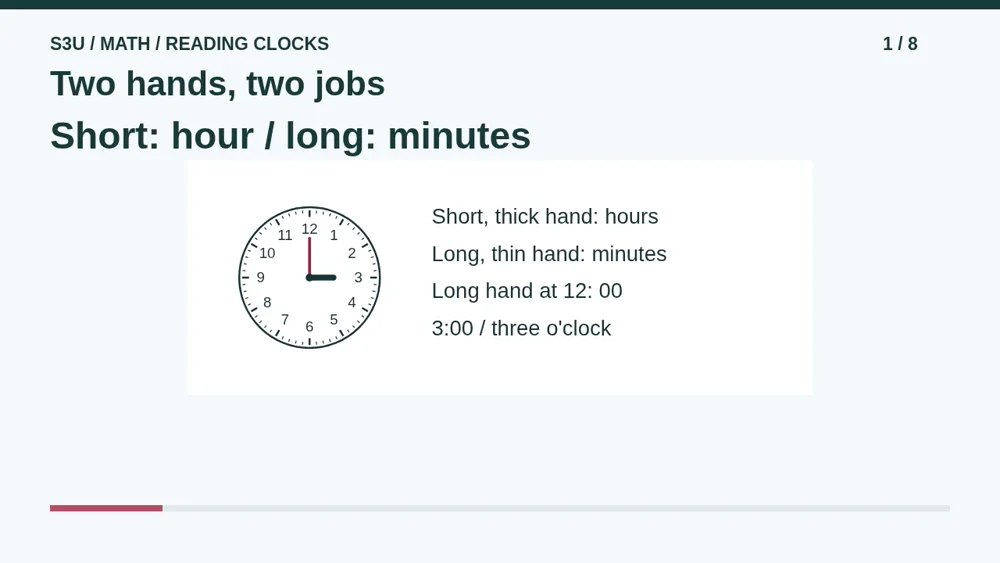
This clock has two hands. No fingers, though! The short, thick hand tells the hour. The long, thin hand tells the minutes. Point to the short hand. It points to three. The long hand points straight up to twelve. This is three o'clock. We say three o'clock when the minute hand is at twelve.
2. A clock with digits
Video: 0:26
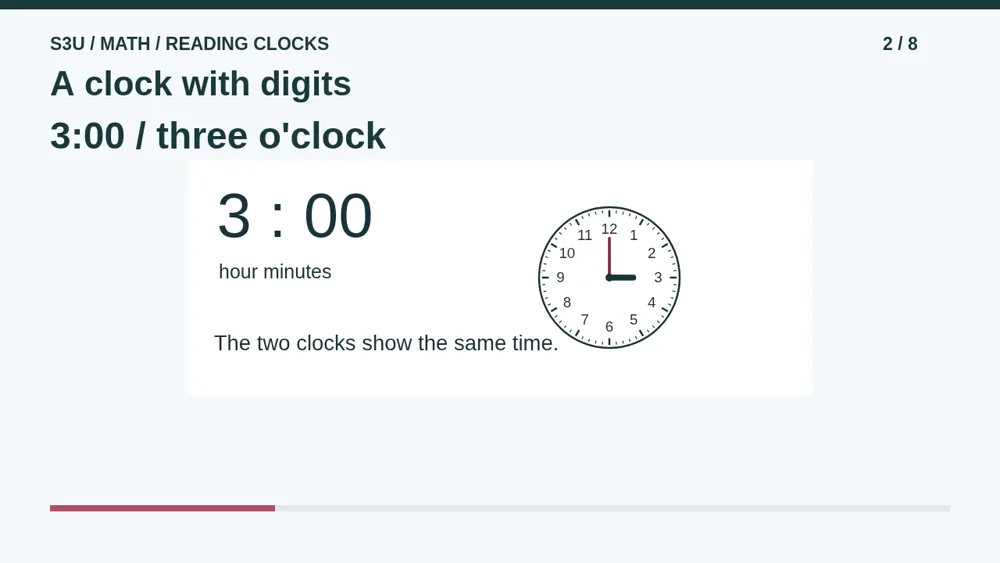
A digital clock uses numbers instead of hands. Read the number before the two dots first. That is the hour: three. Read the two digits after the dots for minutes. Zero zero means no minutes past the hour. Three, two dots, zero zero is three o'clock. The dots are called a colon. Both clocks in the picture show the same time.
3. Halfway around
Video: 0:53
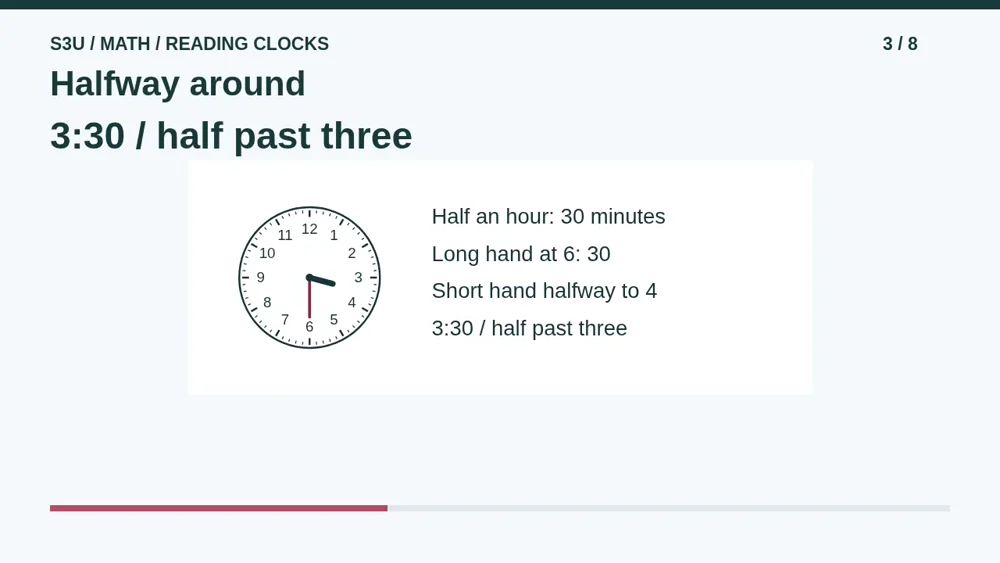
One hour has sixty minutes. Half an hour has thirty. After thirty minutes, the long hand has traveled halfway around to six. The short hand has moved too. It is halfway between three and four. The time is three thirty, or half past three. We write three before the dots and thirty after them.
4. Almost is not there yet
Video: 1:18
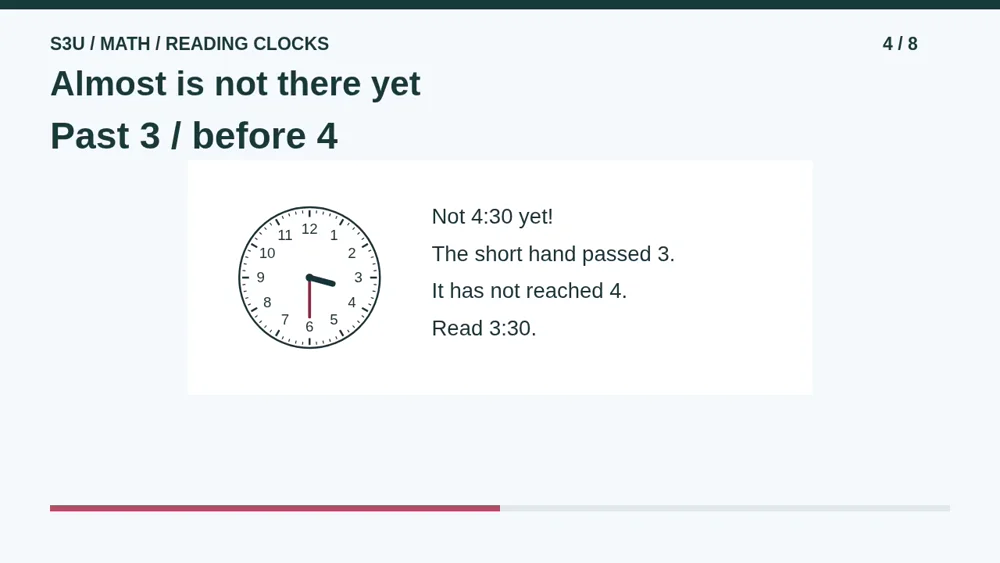
Our pretend clock robot says four thirty. Wait, robot! Look at the short hand. It has passed three, but it has not reached four. The hour is still three. The long hand at six shows thirty minutes, not six minutes. This clock says three thirty. The robot was looking at the next hour too soon.
5. Pause and read two clocks
Video: 1:43
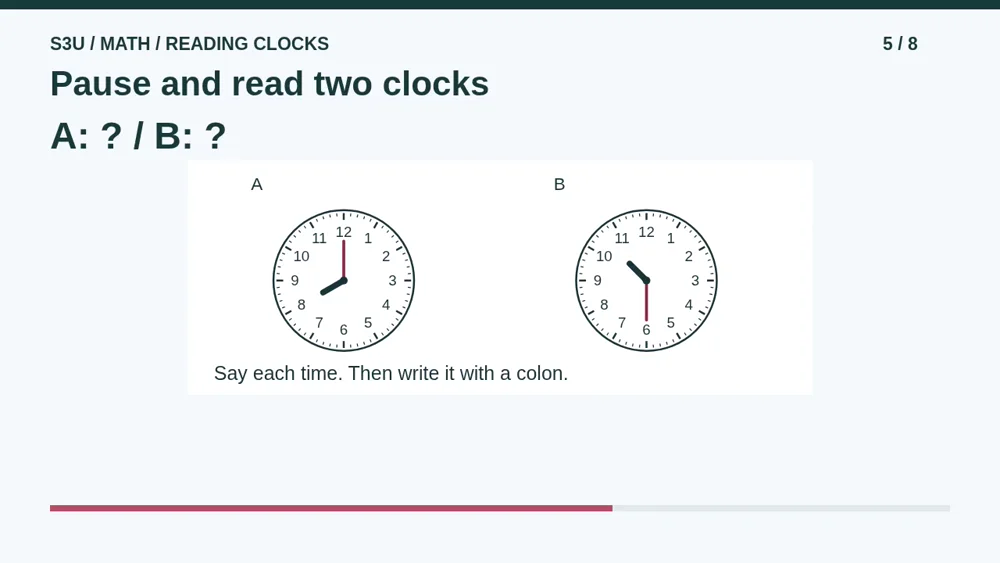
Pause and look at clock A. Which number has the short hand reached? Where is the long hand? Say the time. Now try clock B. Which two numbers is its short hand between? Say the time, then write it with a colon. Take your time. The clocks on this picture will wait for you.
6. Check both hands
Video: 2:08
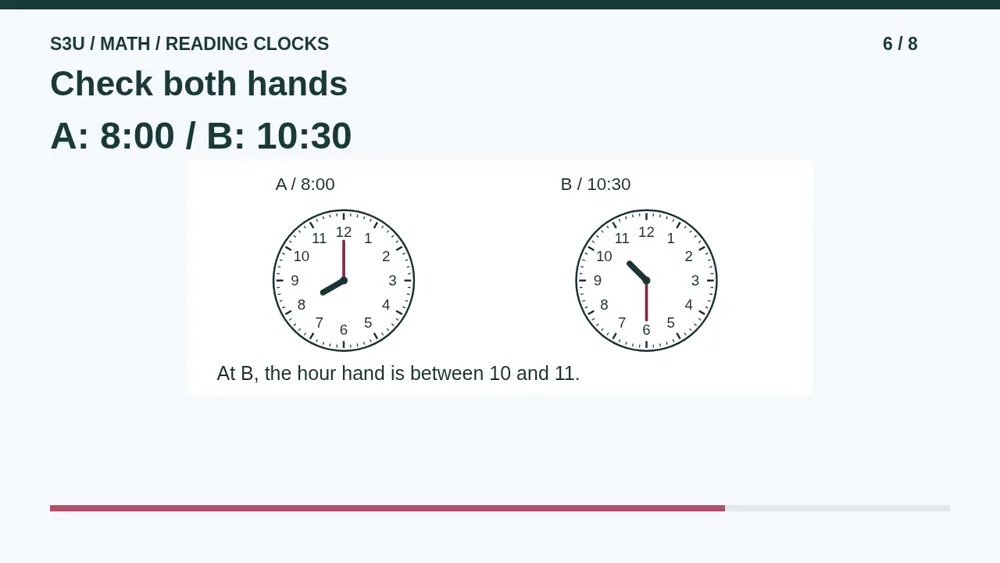
Clock A is eight o'clock, written eight, colon, zero zero. Its short hand is at eight and its long hand is at twelve. Clock B is ten thirty. The short hand is halfway between ten and eleven. The long hand is at six. If you said eleven thirty, find the hour the short hand has already passed: ten.
7. Twelve comes before one
Video: 2:33
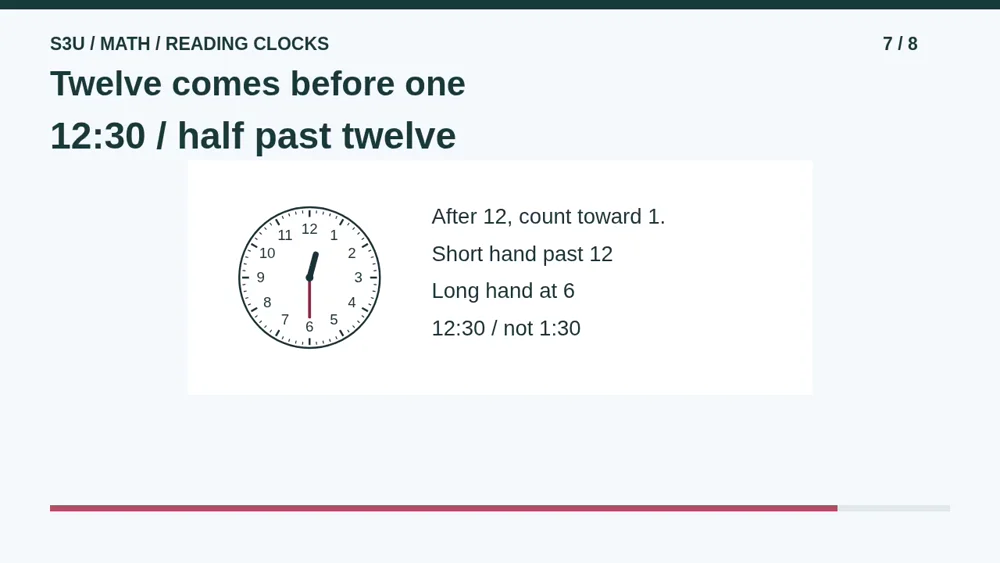
After twelve, this clock starts counting toward one again. Here the short hand is between twelve and one. The long hand is at six. It is twelve thirty, not one thirty. These clock hands alone do not tell us whether it is daytime or nighttime. We need more information for that.
8. Try the clock worksheets
Video: 2:56
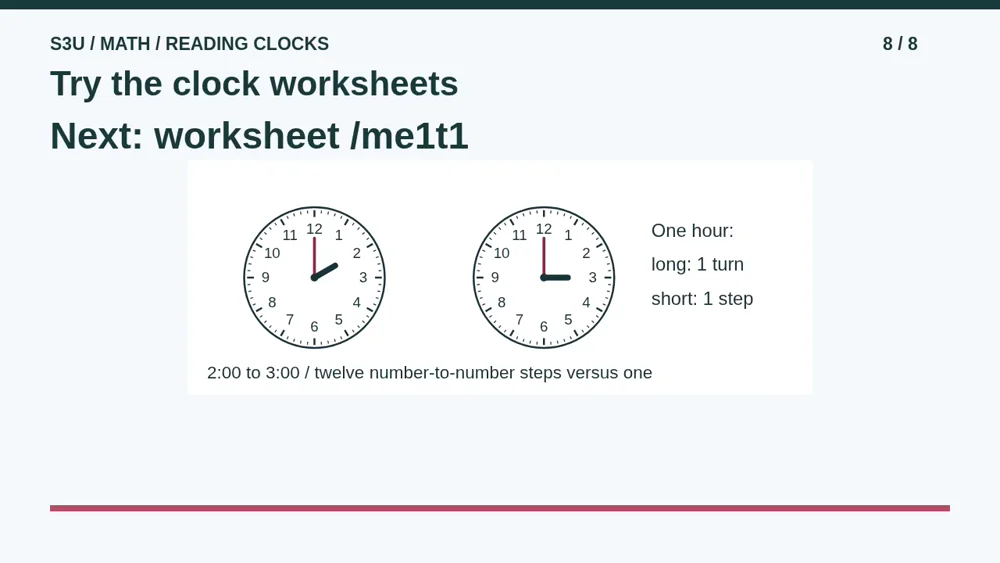
Here is a clock fact. From two o'clock to three o'clock, the long hand makes one whole trip around the clock. The short hand only moves from two to three. Same hour, different journeys! Continue to the worksheet below. It has different times to read. Say the hour, say the minutes, and choose the matching digital time. Then try the second clock set.
Show your understanding
You can point, explain aloud, draw or write.
- Identify each hand by its length and read whole hours or half-hours, including twelve thirty.
- Match the clock hands to hour:minutes without rounding the hour hand up to the next number.
Try it yourself
Pause at clocks A and B. Say each time, then write the hour and minutes with a colon.
Continue to the worksheet for four different clocks. Try the second set after explaining both hands.
Next: your worksheet
Hours and Halves: Clock Set Onehttps://s3u.com/me1t1
Lesson: https://s3u.com/lessons/hours-and-half-hours