Math / Grade 4
Fractions of collections: share, then select
Learning goal: Split a collection into equal groups and use the numerator to select the needed parts.
Before you start: Make equal groups from a collection and read a fraction's numerator and denominator.
Read or print this lesson What to practiceThe video could not load. The transcript is still available below.
Next: your worksheet
Find Fractions of a Collection
Checking sign-in...
Read the transcript
Saved reading place
Video transcript and practice. Reading or printing does not count as playback time or an assessed grade.
1. The fraction describes a collection
Video: 0:00
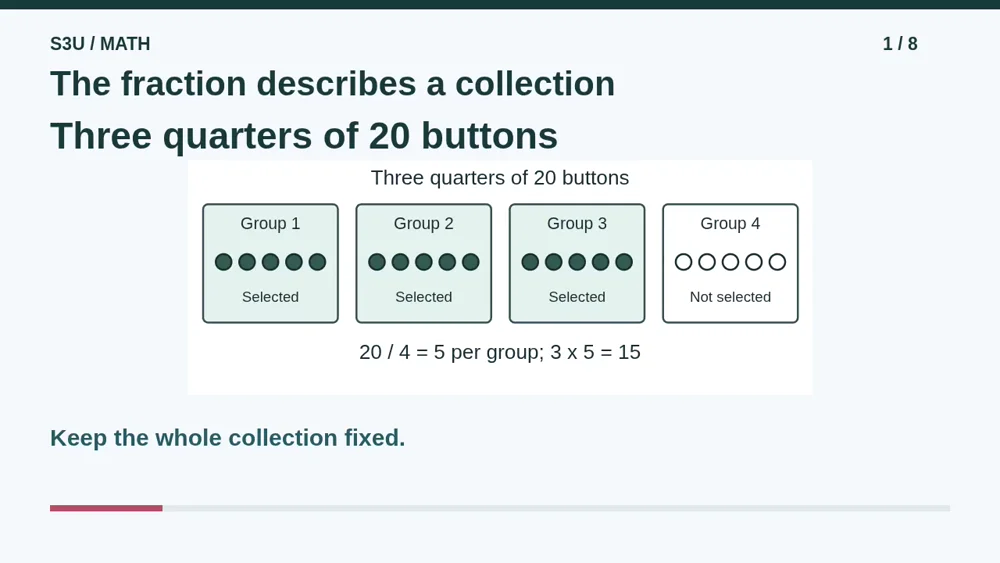
A fraction can describe part of a collection, not only part of a pizza. We have twenty buttons and want three quarters of them. First decide what counts as the whole. Here, all twenty buttons are the whole collection. We are not cutting each tiny button into pieces.
2. The bottom number makes the groups
Video: 0:20
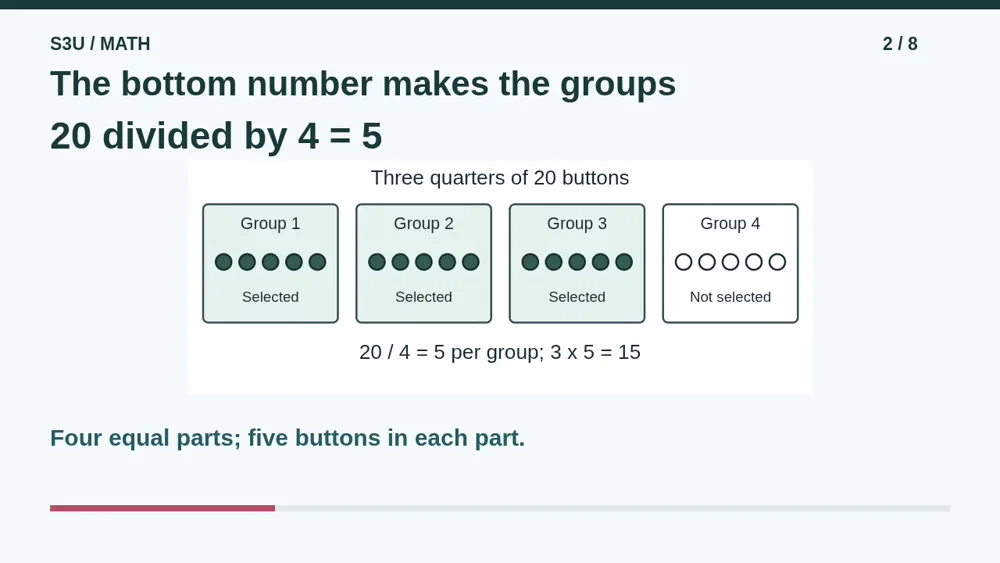
The bottom number, called the denominator, is four. Split the twenty buttons into four equal groups. Each group has five buttons, so one quarter of the collection is five. Equal groups matter: four piles of different sizes would not each be one quarter.
3. The top number selects parts
Video: 0:39
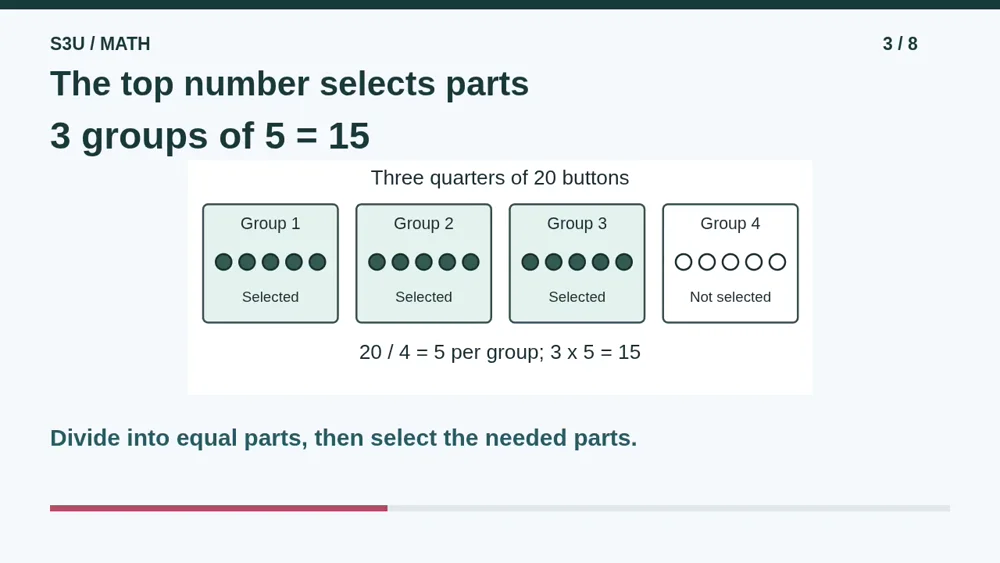
The top number, the numerator, is three. Take three of our equal groups. Each contains five buttons, so three groups contain fifteen. That is three quarters of twenty. The fourth group stays unselected. It has not disappeared, and the button shop has not secretly raised its prices.
4. Check the whole and the part
Video: 1:02
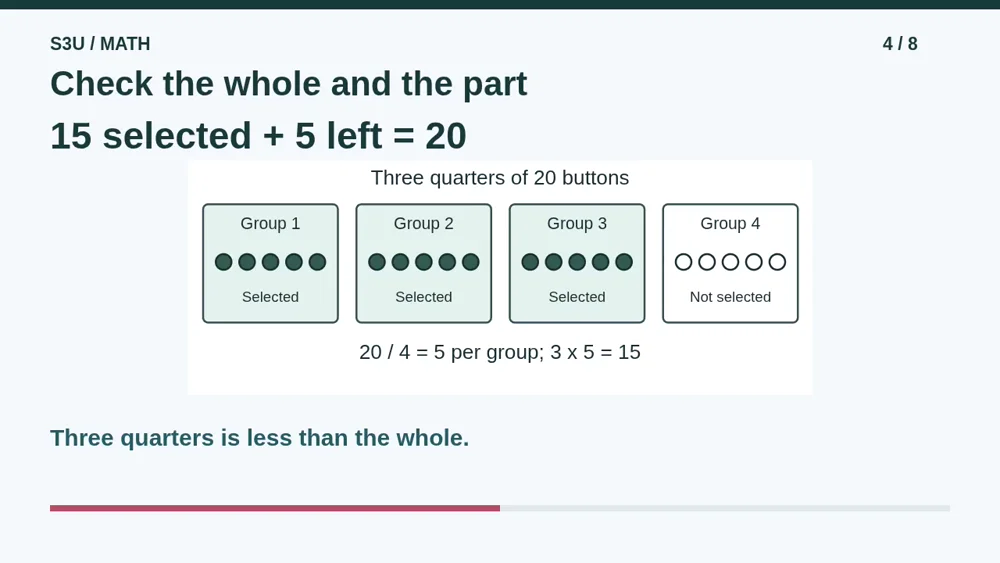
Check that all the parts still make the original collection. Fifteen chosen buttons plus five unselected buttons equals twenty. We wanted less than one whole collection, so an answer greater than twenty would not fit this question. A quick size check can catch a surprising mistake.
5. Pause with a new collection
Video: 1:23
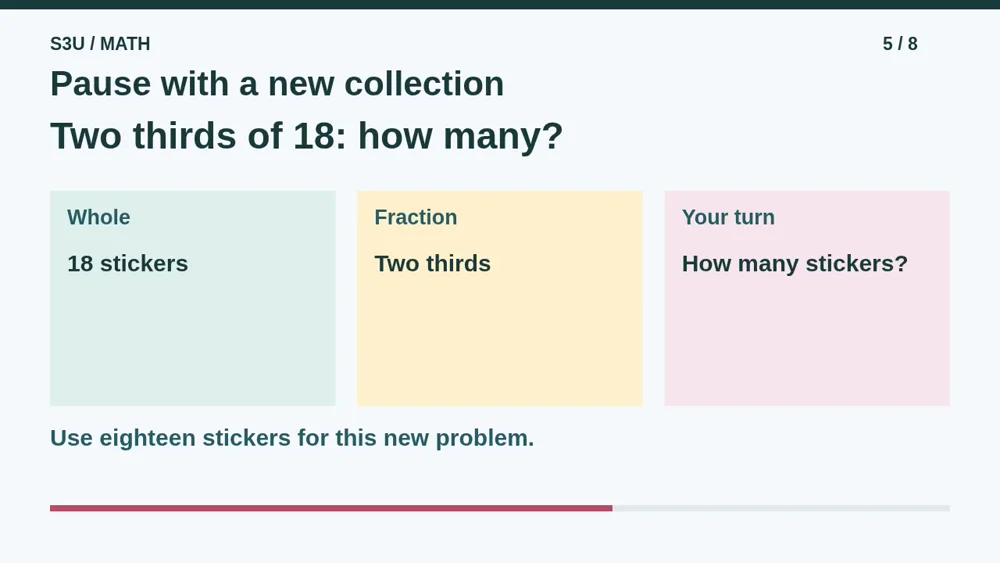
Now try two thirds of eighteen stickers. Pause the video. Split eighteen into three equal groups, then choose two of those groups. Explain what the three tells you to do and what the two tells you to do. This is a new collection, not the twenty buttons in our picture.
6. Share into three, select two
Video: 1:44
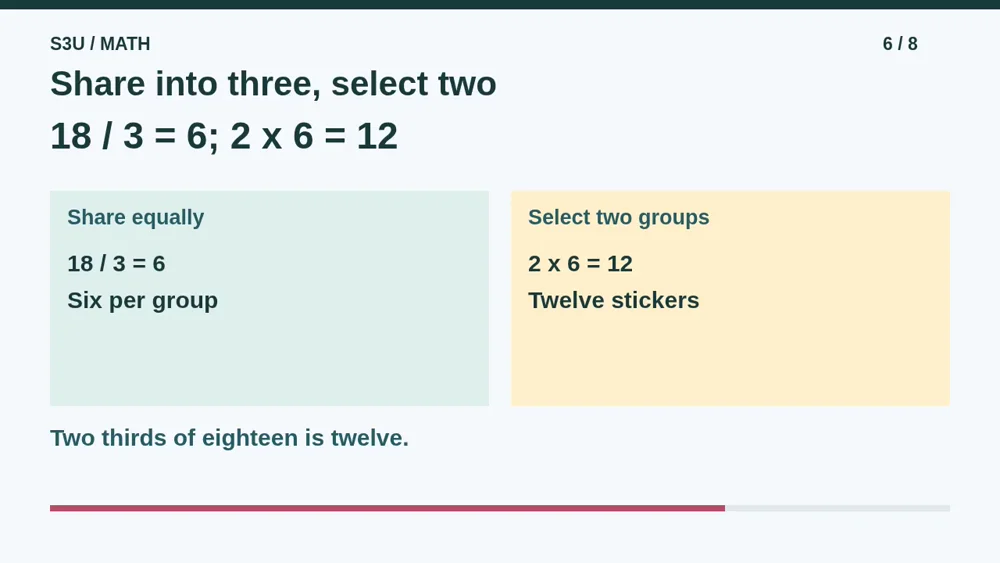
Each third of eighteen has six stickers. Two of those thirds have twelve stickers. Six remain unselected. If you divided by two and took three groups, you would be answering a different question. Read the fraction carefully before starting your calculation.
7. Different names can pick the same part
Video: 2:04
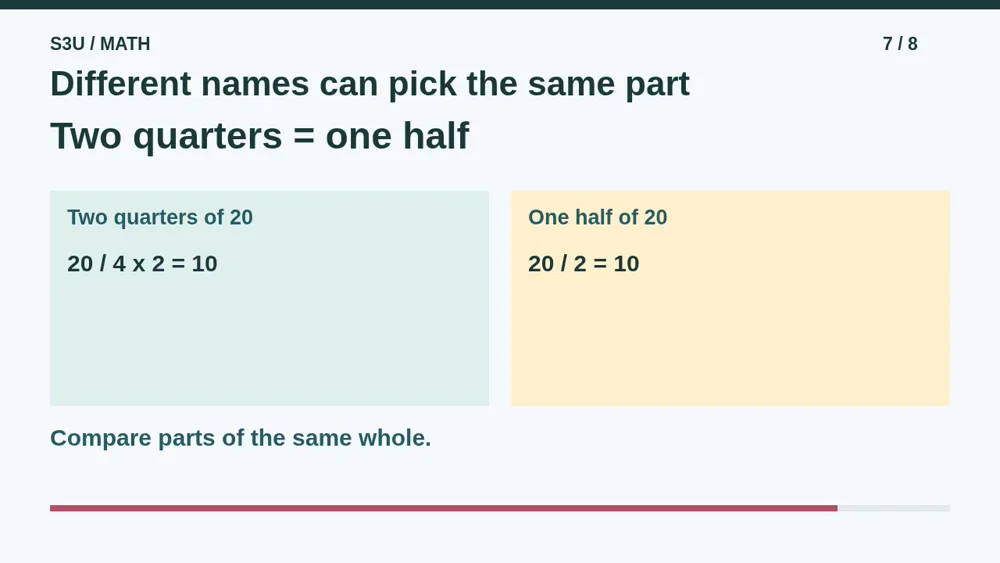
Fun fact: in our twenty-button picture, selecting two of the four groups would pick ten buttons. Half of twenty is also ten. Two quarters and one half name the same fraction of this fixed collection. Different fraction names do not require different amounts.
8. Use the groups in your practice
Video: 2:24
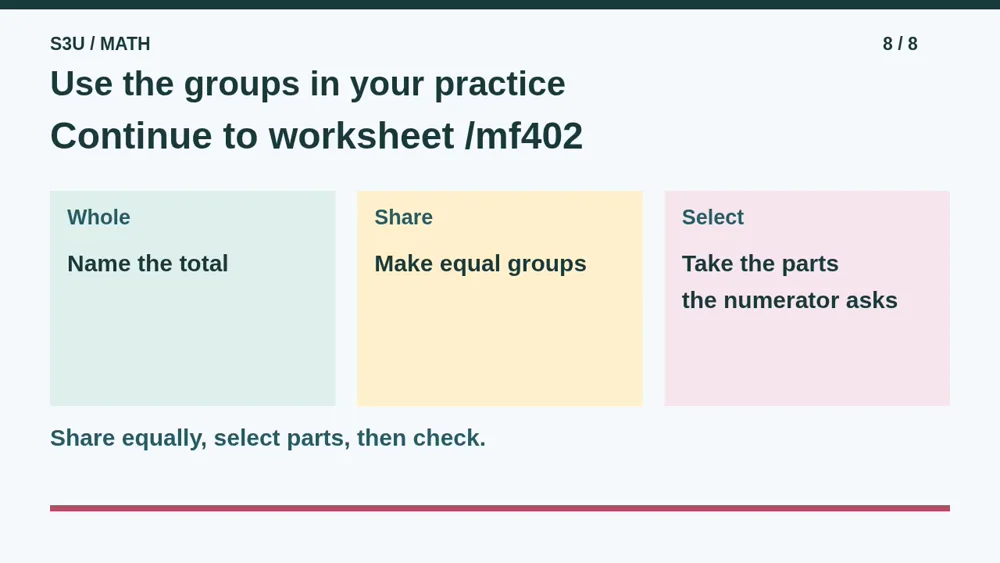
Continue to the worksheet. For each problem, name the whole collection, divide it into the number of equal parts shown on the bottom, and select the number shown on top. Draw groups when it helps. Check your result against the size of the whole before submitting.
Show your understanding
You can point, explain aloud, draw or write.
- Split a collection into the denominator's number of equal groups.
- Use the numerator to select groups and count the requested fraction of the collection.
Try it yourself
Now try two thirds of eighteen stickers. Pause the video. Split eighteen into three equal groups, then choose two of those groups. Explain what the three tells you to do and what the two tells you to do. This is a new collection, not the twenty buttons in our picture.
Continue to the matching worksheet. Explain your reasoning before checking your answers.
Next: your worksheet
Find Fractions of a Collectionhttps://s3u.com/mf402
Lesson: https://s3u.com/lessons/fraction-collections