Science / Grade 5
Food webs: follow the energy arrows
Learning goal: Read food-to-consumer arrows, trace branching paths and distinguish a model from a complete menu.
Before you start: Follow arrows and recognize that living things need food or make it.
Read or print this lesson What to practiceThe video could not load. The transcript is still available below.
Next: your worksheet
Follow Energy through a Food Web
Checking sign-in...
Read the transcript
Saved reading place
Video transcript and practice. Reading or printing does not count as playback time or an assessed grade.
1. An arrow needs a meaning
Video: 0:00
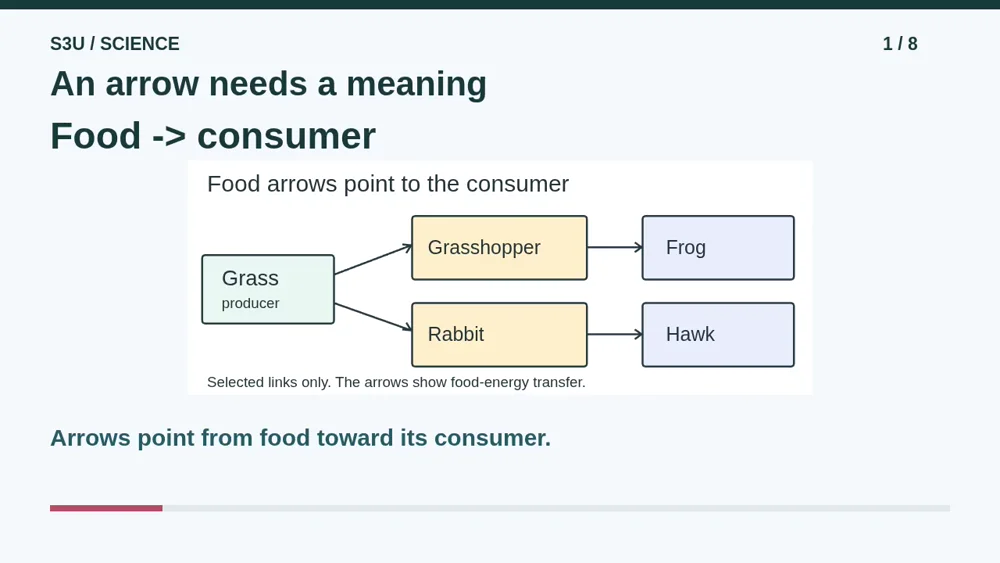
A food-web arrow has a specific job. In our model it points from food to the organism that eats it, showing a direction of energy transfer. It is not a chase arrow. Read the legend before deciding who is eating whom in the meadow.
2. Start with a producer
Video: 0:19
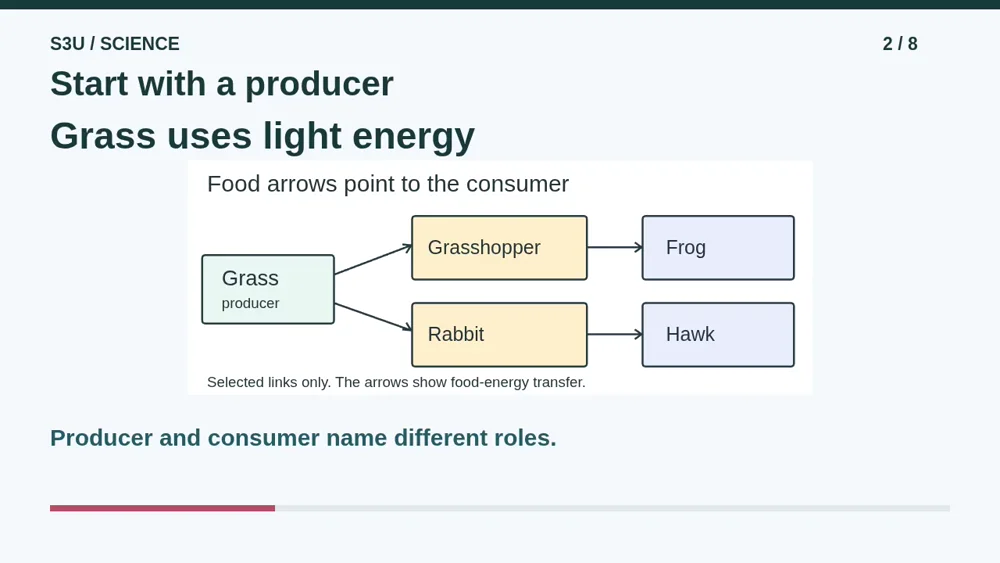
Grass is a producer in this model. It can use light energy to make sugars. Grasshoppers and rabbits are consumers because they obtain food by eating. These names describe feeding roles, not which organism is more important or which one deserves a shiny medal.
3. Follow one route at a time
Video: 0:40
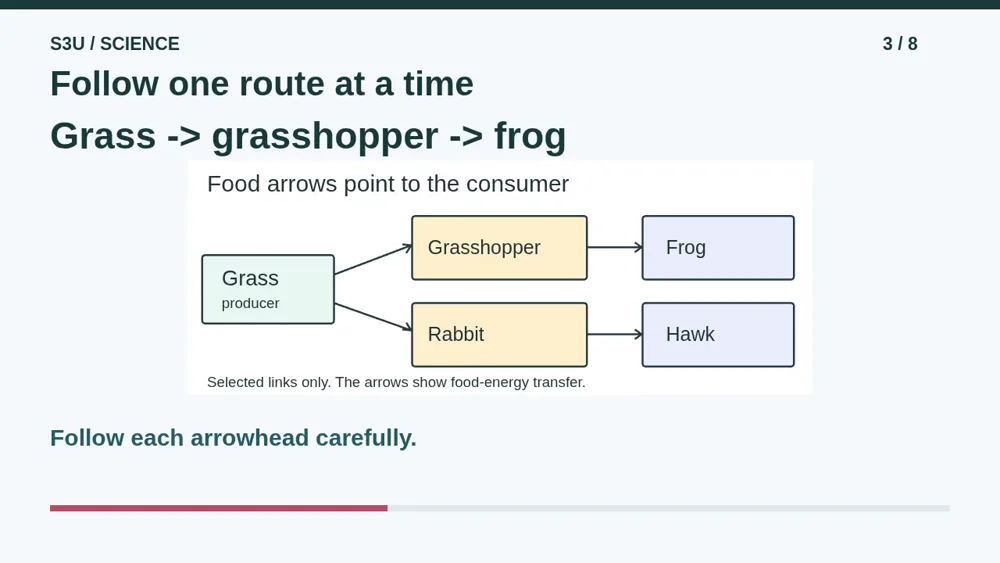
Trace the upper route. The grasshopper eats grass, and the frog eats the grasshopper. Energy is transferred along these feeding relationships. Start at the tail of each arrow and follow its head. If you accidentally reverse the route, your explanation may describe an entirely different meal.
4. Look for a second route
Video: 1:03
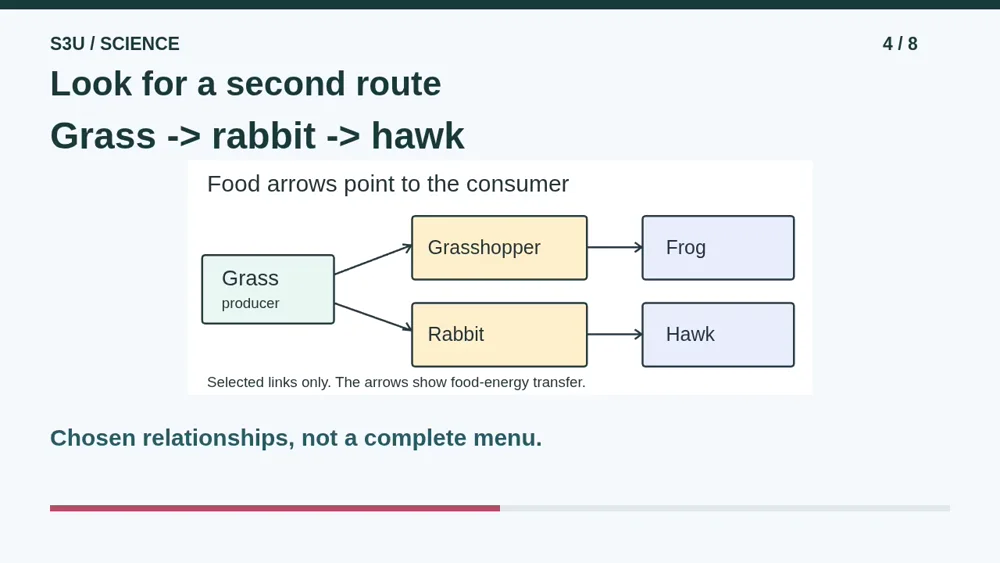
Now follow the lower route from grass to rabbit to hawk. Our model branches because grass feeds more than one listed consumer. We are showing chosen relationships, not every possible meal. The picture's missing arrows do not prove that other feeding relationships never occur.
5. Pause: try a new water model
Video: 1:25
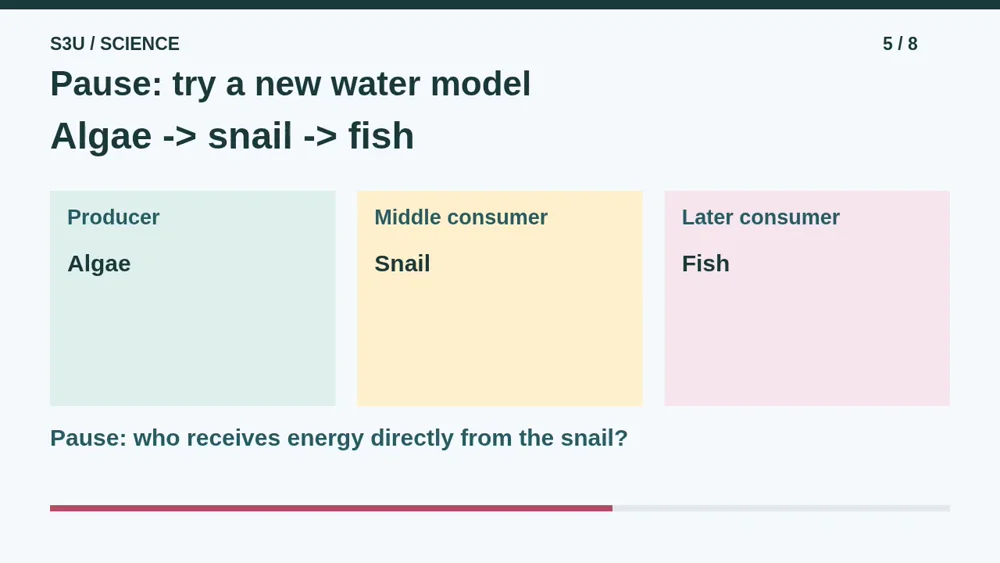
Here is a new fictional pond model. Algae feed a snail, and the snail feeds a fish. Pause and explain which organism receives food energy directly from the snail. Point to the arrow that supports your answer. Do not answer using the meadow picture from earlier.
6. Check the direct connection
Video: 1:47
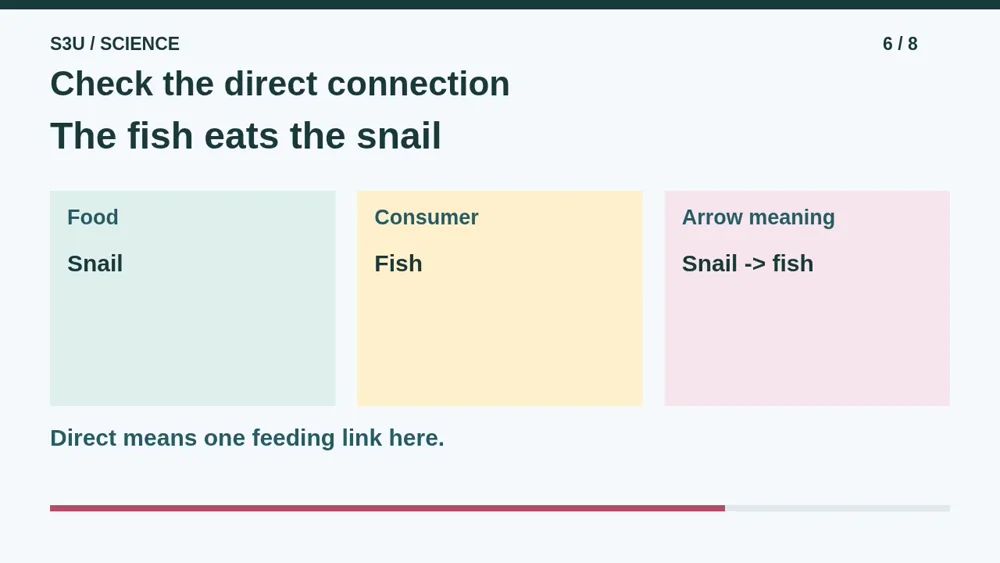
The fish receives energy directly by eating the snail in this model. The arrow goes from snail to fish. Algae supply energy earlier in the chain, but earlier and directly are different ideas. That small word directly changes which connection the question asks you to inspect.
7. A web is not just one chain
Video: 2:09
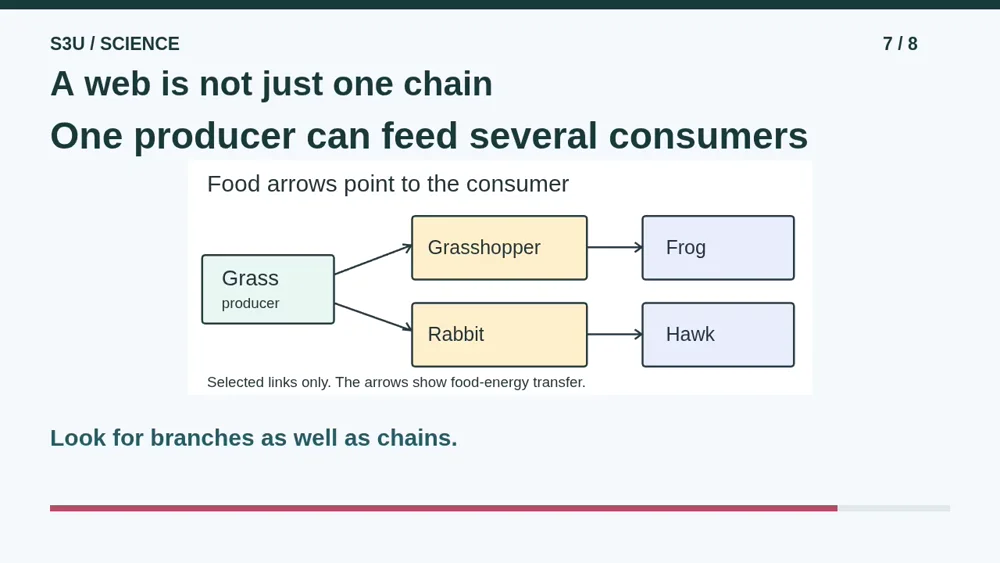
Fun fact: a food web can show several routes from the same producer. Our grass connects to both a grasshopper and a rabbit. A single straight chain would miss that branching relationship. More arrows can reveal more connections, but even a larger model still leaves some details out.
8. Energy flows; nutrients can cycle
Video: 2:31
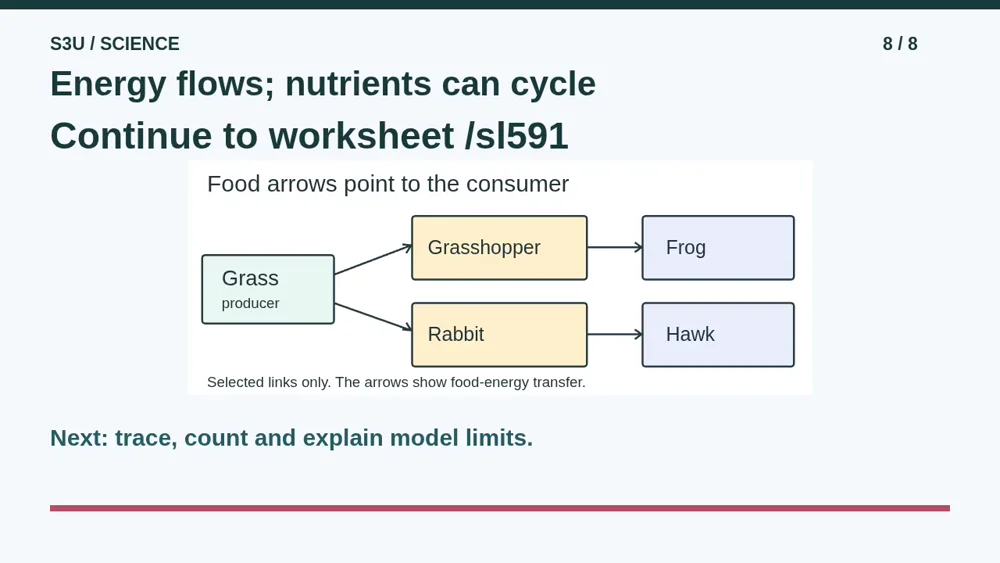
Continue to the worksheet below. Read each feeding arrow, count only the four given feeding links and explain one limit of the model. Decomposers can return nutrients to the environment, but energy does not cycle in the same way. Keep those two ideas separate as you explain.
Show your understanding
You can point, explain aloud, draw or write.
- Trace a food-to-consumer path, including a branch in the web.
- Explain why one diagram is not a complete list of everything an organism eats.
Try it yourself
Here is a new fictional pond model. Algae feed a snail, and the snail feeds a fish. Pause and explain which organism receives food energy directly from the snail. Point to the arrow that supports your answer. Do not answer using the meadow picture from earlier.
Continue to the matching worksheet. Explain your observations before checking your answers.
Next: your worksheet
Follow Energy through a Food Webhttps://s3u.com/sl591
Lesson: https://s3u.com/lessons/food-web-paths