Math / Grade 8
Follow the cash
Learning goal: Sort actual cash movements into operating, investing and financing, then explain a falling balance and a noncash purchase.
Before you start: Add and subtract signed whole numbers. Distinguish cash from earned revenue, and review Profit for a period, position at a date when needed. Use only the fictional records.
Read or print this lesson What to practiceThe video could not load. The transcript is still available below.
Next: your worksheet
Cash Flow: Follow the Cash
Checking sign-in...
Read the transcript
Saved reading place
Video transcript and practice. Reading or printing does not count as playback time or an assessed grade.
1. Follow what actually moved
Video: 0:00
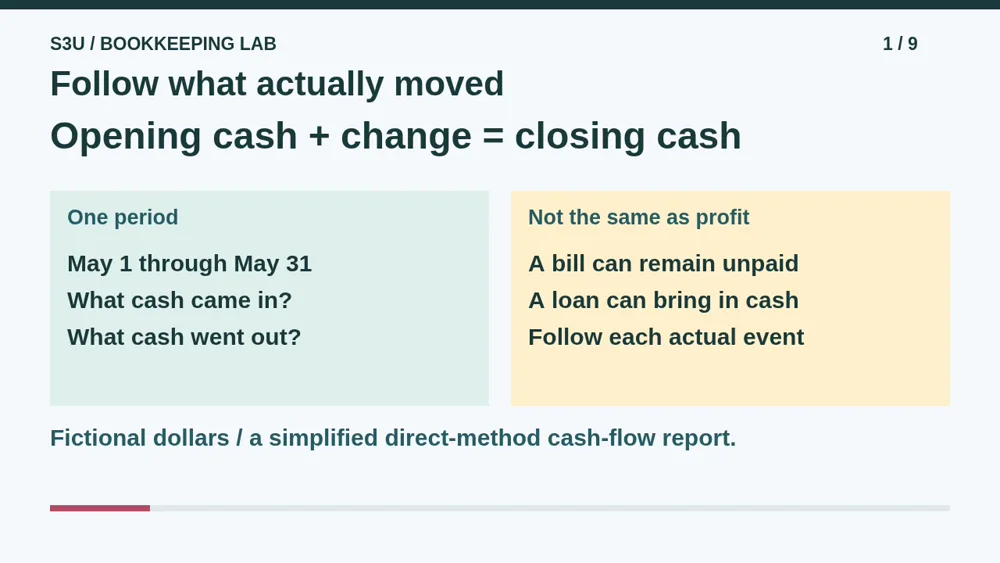
Our imaginary repair workshop has a cash box with one complaint: stop calling every dollar profit. A customer can owe money without paying yet. A loan can bring in cash without earning service revenue. Today we follow actual cash movements during May, using invented dollars and a simplified direct-method cash-flow report. We will sort receipts and payments, find the change, and connect opening cash to closing cash. No real account or financial record is needed. This model excludes interest, taxes, dividends, cash equivalents and currency changes.
2. Operating: customers and running costs
Video: 0:43
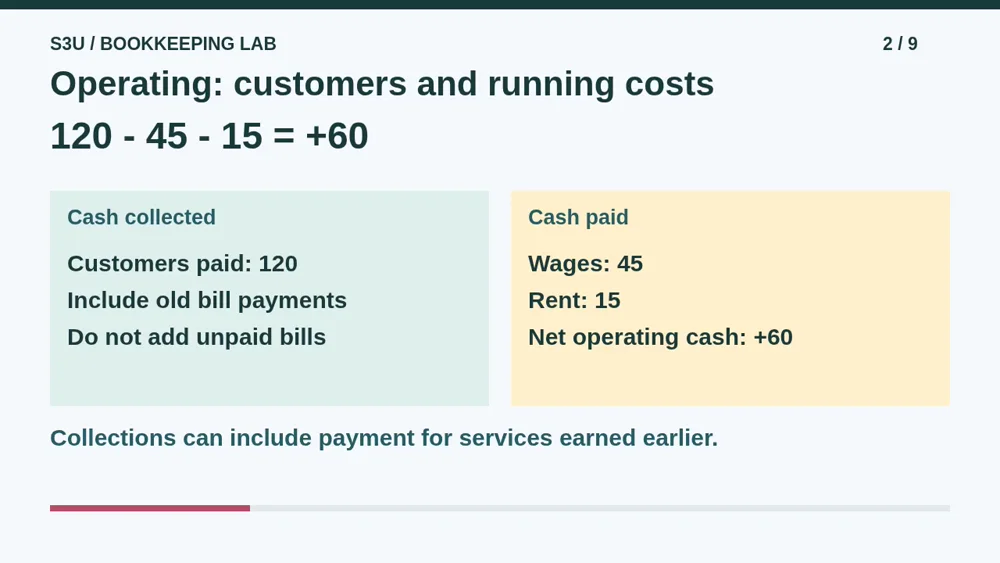
The workshop collects one hundred twenty dollars from customers. That is operating cash, including any payment of an earlier customer bill. It pays forty-five for wages and fifteen for rent. These are operating cash payments in our model. One hundred twenty minus forty-five minus fifteen leaves positive sixty. The plus sign means this group brought in more cash than it paid out. If a new customer bill is still unpaid, leave it out of cash collections. Earning revenue and collecting cash are different events, sometimes in different months.
3. Investing: equipment for use
Video: 1:23
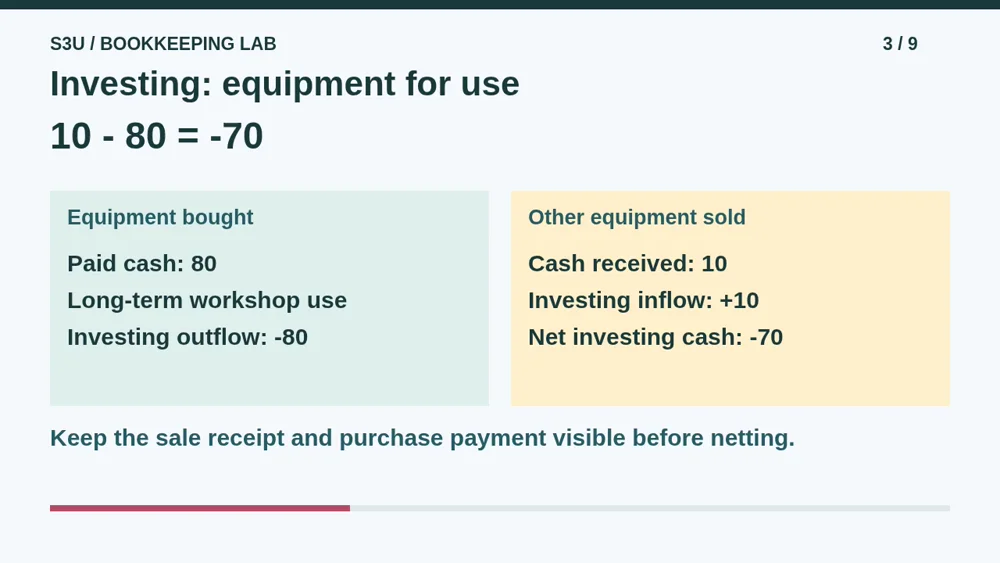
Next the workshop buys equipment for long-term use and pays eighty dollars in cash. It sells a different piece of equipment for ten dollars cash. These are investing cash movements, not customer service collections. Show the ten received and the eighty paid before finding the net. Ten minus eighty is negative seventy. The minus sign is doing useful work: this group used seventy more dollars than it provided. We are classifying equipment used by the workshop, not goods bought as stock for resale. Different facts can require a different classification.
4. Financing: owners and loan principal
Video: 2:05
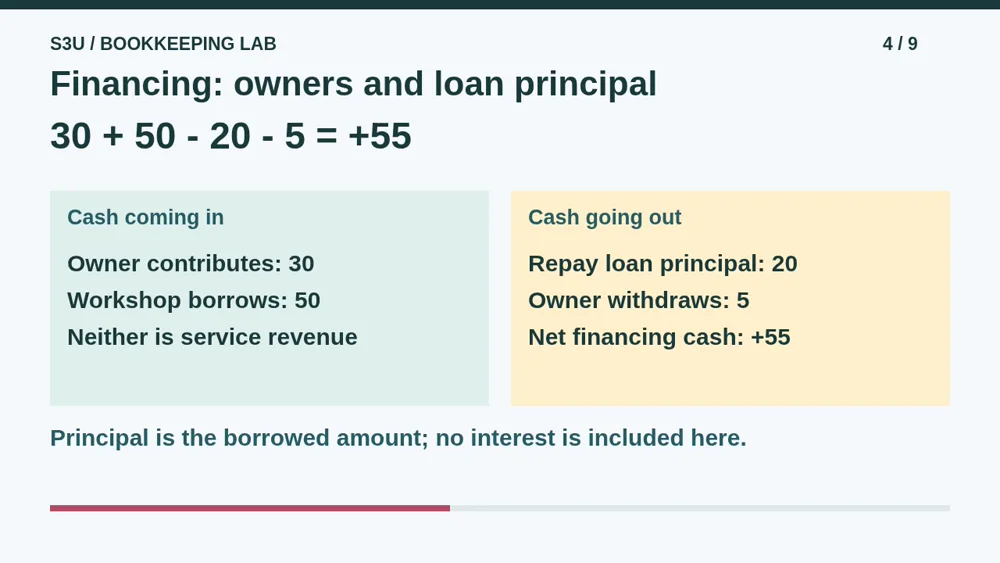
The owner puts in thirty dollars, and the workshop receives fifty from borrowing. The workshop repays twenty of loan principal and the owner withdraws five. In this model these belong to financing. Add thirty and fifty, then subtract twenty and five. Net financing cash is positive fifty-five. Principal means the borrowed amount, not interest; we have excluded interest from this example. Notice that money arriving is not enough to call it operating cash. Ask what happened. A loan and a customer payment both bring cash, but tell different stories.
5. Change is not the closing balance
Video: 2:48
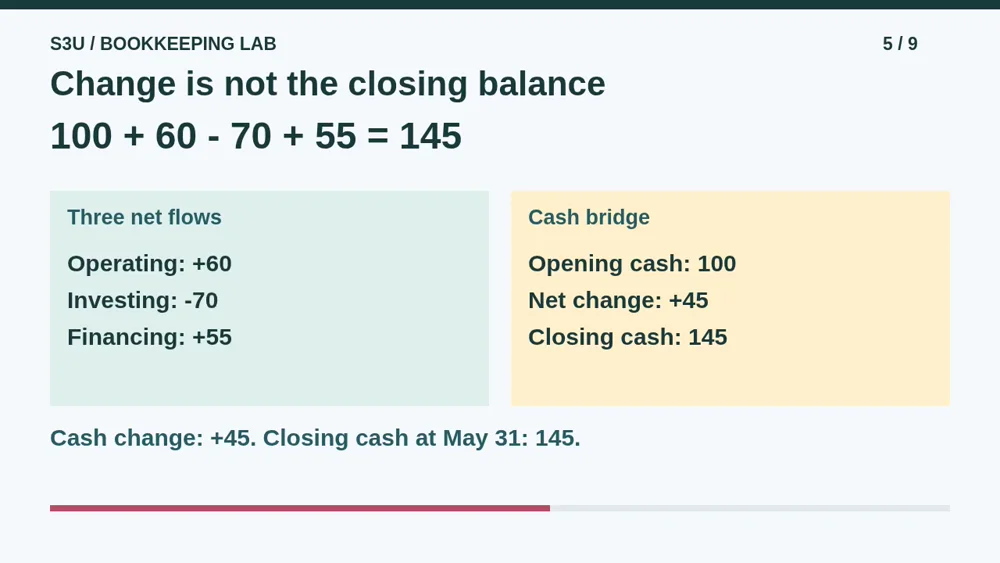
Add the three signed group totals. Positive sixty, negative seventy and positive fifty-five combine to a cash increase of forty-five. The workshop began May with one hundred dollars, so closing cash is one hundred forty-five. Do not label forty-five as closing cash. It is the change during May, not the whole amount left on May thirty-first. A report should identify the workshop, the period and the units. It should also preserve the receipts and payments that explain each subtotal, rather than showing only a mysterious final number.
6. A purchase with no cash payment
Video: 3:29
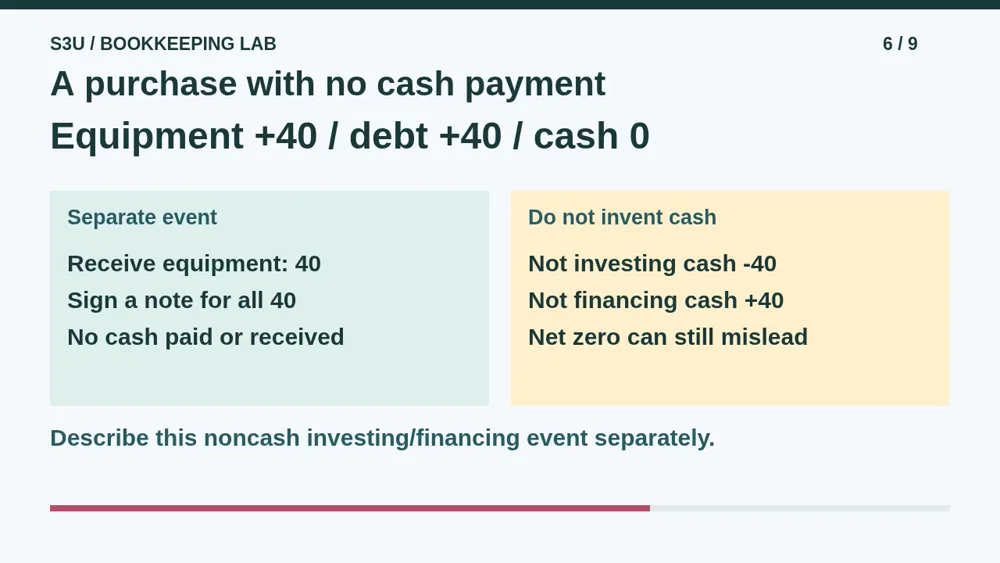
Here is a separate event: the workshop obtains equipment worth forty dollars entirely by signing a note promising to pay later. No cash changes hands now. Equipment and debt increase, but do not invent a forty-dollar cash receipt and a forty-dollar cash payment. They would cancel to zero while still telling the wrong story about actual cash movements. Describe the noncash investing and financing event separately. A later cash payment of principal would be a new financing event in its own period. The timing and the kind of exchange both matter.
7. Pause: a fresh studio month
Video: 4:10
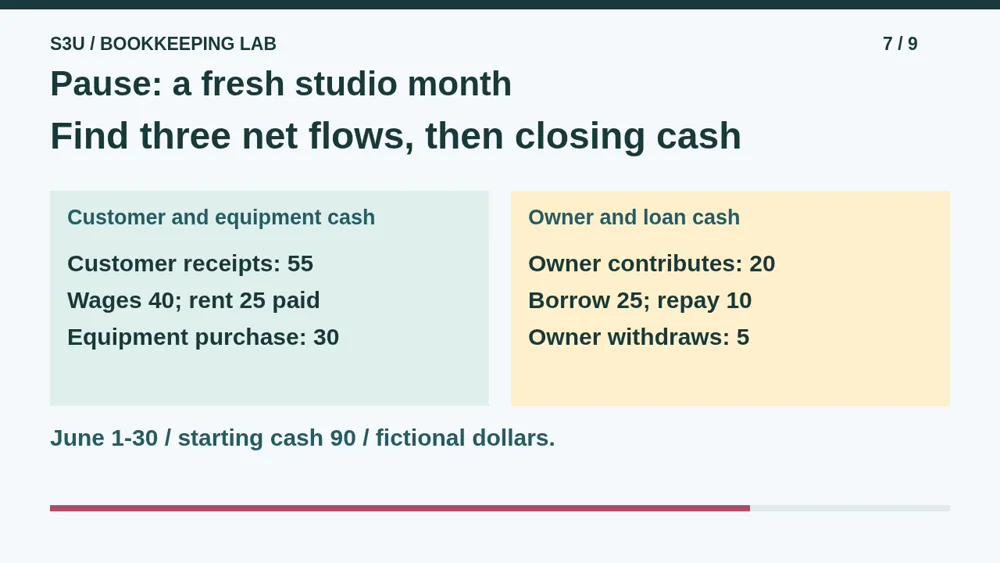
Pause and try a different studio. It starts June with ninety dollars cash. During June, customers pay fifty-five. Wages of forty and rent of twenty-five are paid. Equipment is bought for thirty cash. The owner contributes twenty, the studio borrows twenty-five, repays ten of principal, and the owner withdraws five. These are all its cash movements under the same simplified rules. Find the operating, investing and financing subtotals, keeping negative signs. Then find the cash change and closing balance. Explain your groups before continuing to the check.
8. Check: cash fell but stayed positive
Video: 4:54
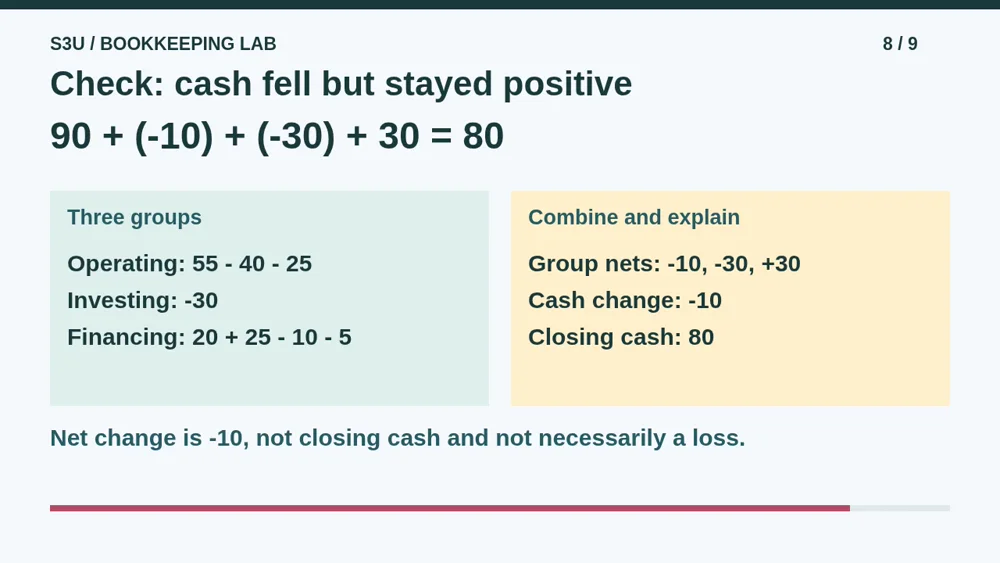
Operating cash is fifty-five minus forty minus twenty-five, or negative ten. Investing cash is negative thirty. Financing cash is twenty plus twenty-five minus ten minus five, which is positive thirty. Those group totals combine to negative ten. Starting cash ninety falls to eighty, not to negative ten. This cash-flow report alone does not tell us the studio's profit. We would need the revenue and expense records for that. A cash decrease is not automatically a loss, and a positive closing cash balance is not automatically proof of profit.
9. Continue with your own records
Video: 5:37
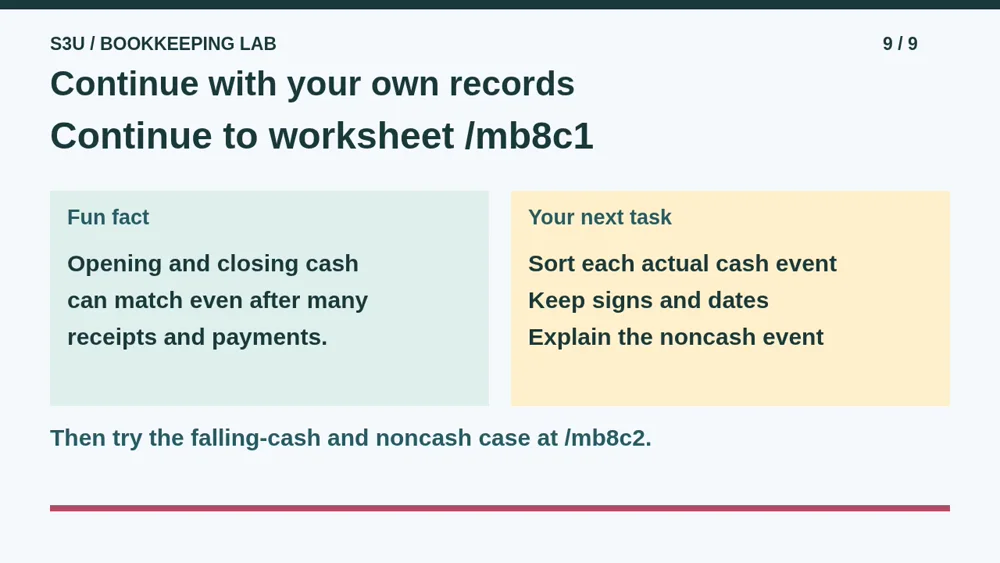
Fun fact: opening and closing cash can be equal after many receipts and payments. For example, an operating inflow of twenty and an equipment payment of twenty cancel overall, but both events still belong in the report. An unchanged balance is not a story of nothing happening. Continue to the first worksheet for fresh records, then try the falling-cash and noncash equipment case. The amounts differ from our lesson, so calculate from each worksheet. Explain the classification and signs, not only the final number. This is introductory bookkeeping practice, not financial advice.
Show your understanding
You can point, explain aloud, draw or write.
- Classify actual cash receipts and payments as operating, investing or financing, preserving their signs and calculating each subtotal.
- Connect opening cash, the net change and closing cash; explain why unpaid bills and a fully noncash equipment-for-note exchange do not enter cash totals.
Try it yourself
Pause at the June studio. Sort every receipt and payment, calculate the three signed subtotals, and explain the change from opening to closing cash.
Continue to both worksheets. Explain why a negative flow is not a negative balance and why an equipment-for-note exchange is described separately.
Next: your worksheet
Cash Flow: Follow the Cashhttps://s3u.com/mb8c1
More practice: falling cash and a noncash exchange · Practice tracing cash flows
Lesson: https://s3u.com/lessons/follow-the-cash