Science / Grades 6-8 / observation only
Fire color and temperature: follow the evidence
Learning goal: Explain glowing soot and chemical light, compare fictional temperature readings, and learn why flame color is not a universal thermometer.
Before you start: Read a table and compare and subtract whole numbers up to 1200. C in the diagrams means degrees Celsius. All records are invented; no practical fire experiment is part of this lesson.
Read or print this lesson What to practiceThe video could not load. The transcript is still available below.
Next: your worksheet
Flame Color: Clues and Readings
Checking sign-in...
Read the transcript
Saved reading place
Video transcript and practice. Reading or printing does not count as playback time or an assessed grade.
1. A color is not a thermometer
Video: 0:00
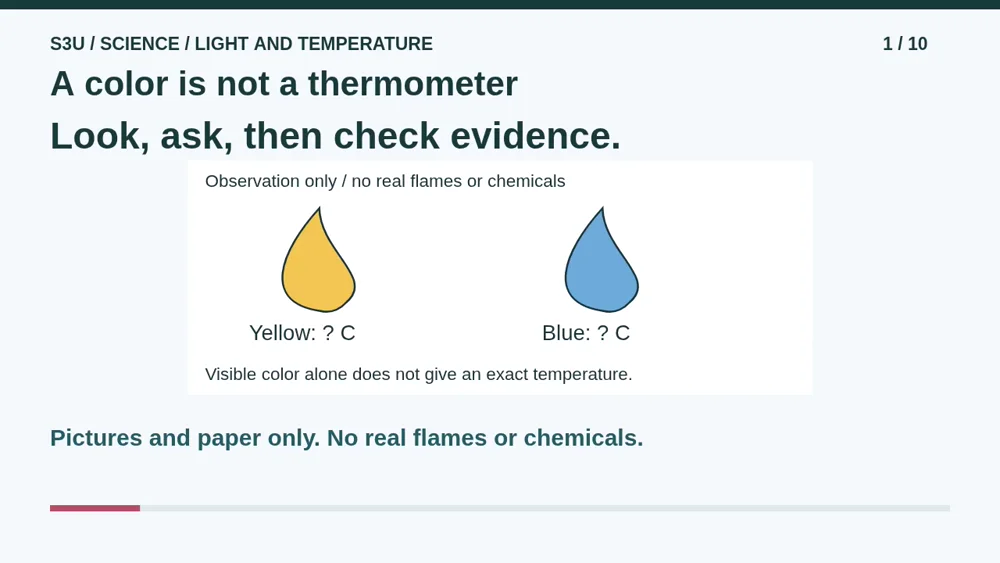
A yellow flame and a blue flame walk into a science lesson. Which is hotter? The honest answer is: we need more information. Their colors have not brought temperature labels! Today we will explain why fire has different colors, then compare supplied readings. This is picture and paper work only. Do not light a fire, touch a hot object, or add chemicals to a flame. Color never tells us that a flame is safe.
2. Two ways to make visible light
Video: 0:33
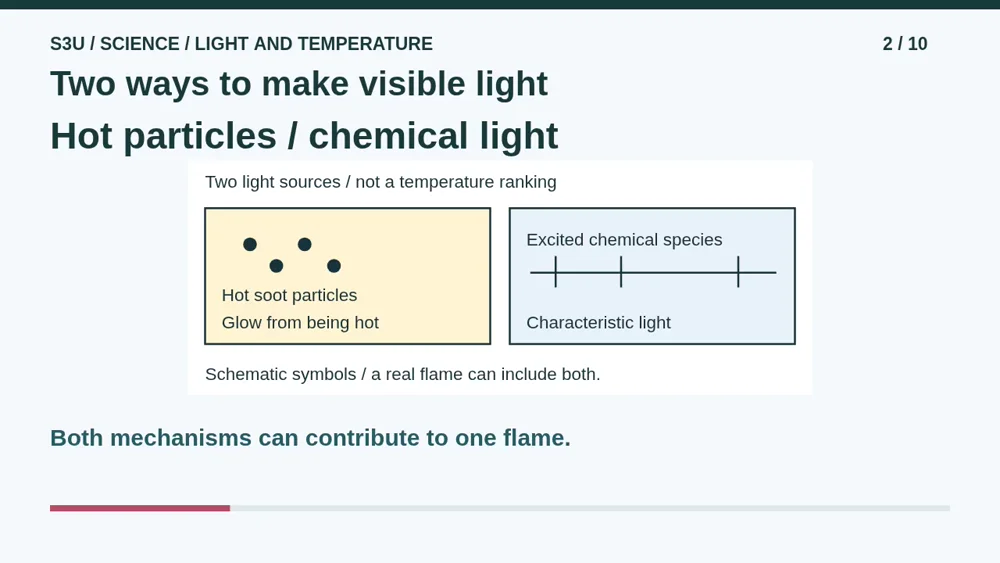
A flame can give off light in more than one way. Tiny hot particles of soot can glow, often making yellow or orange light. Chemical reactions can also leave atoms or molecules with extra energy. As they lose that extra energy, they can emit particular colors of light. Blue light in many flames comes from reacting chemical species, not simply a solid getting hotter. A real flame can contain both kinds of light. That is why a single rainbow temperature chart is not enough.
3. Where temperature can be a clue
Video: 1:10
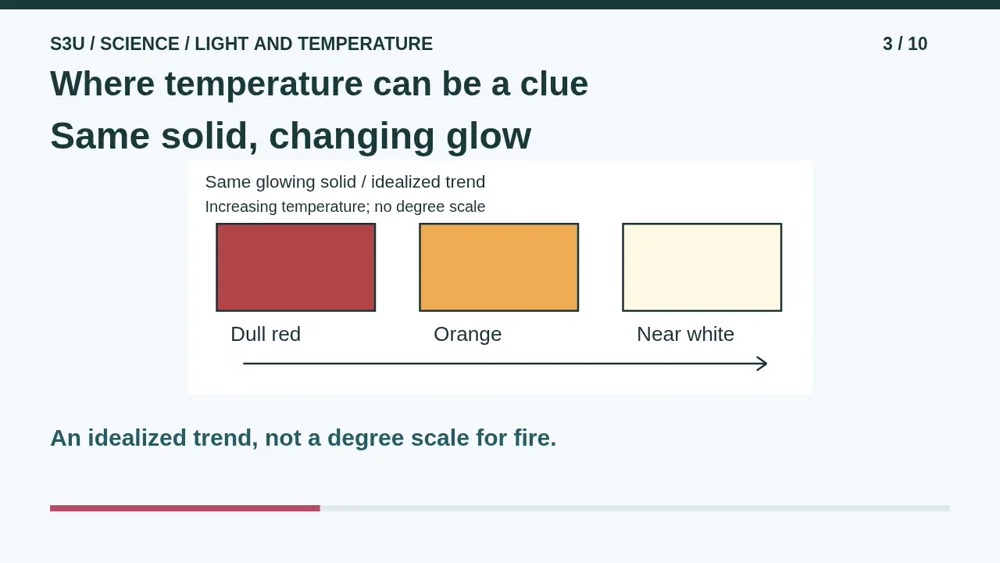
Temperature does affect the glow of a hot solid. In this simplified model, the same solid changes from a dull red glow toward orange and then near white as its temperature rises. White light includes a mixture of visible wavelengths. This is a useful trend for that kind of glow, not an exact temperature reading from a screen. Do not copy the experiment. A blue chemical flame is not automatically the next step in this solid glow diagram.
4. Chemistry changes the color too
Video: 1:44
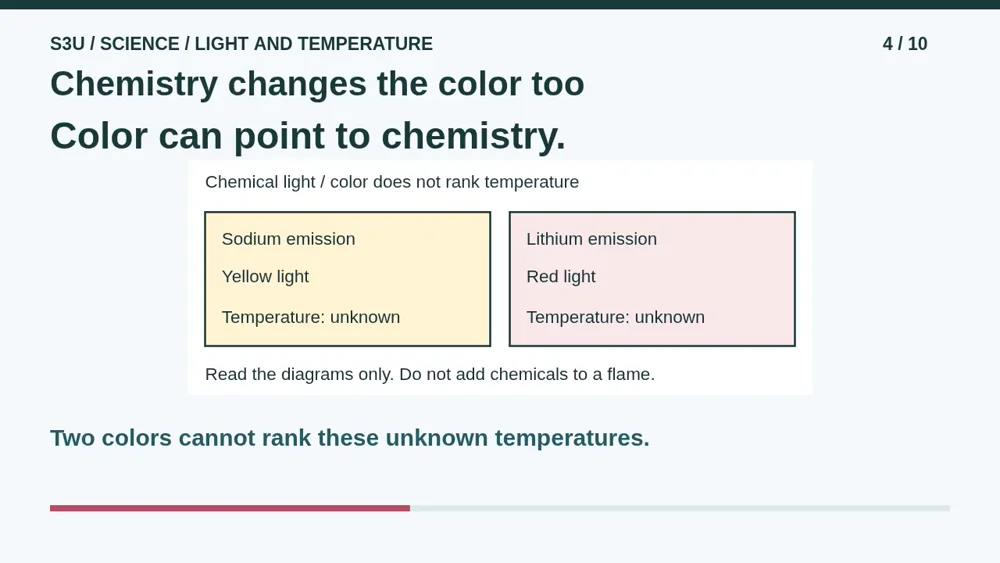
Chemical identity matters. Sodium can produce strong yellow light, while lithium can produce red light. These are examples of characteristic emission, not recipes to try. We have not been given a temperature for either example. So we cannot say the yellow one must be hotter than the red one. Here is a second trap: yellow light could come from glowing soot or from chemical emission. The same color does not guarantee the same cause.
5. Work through two readings
Video: 2:17
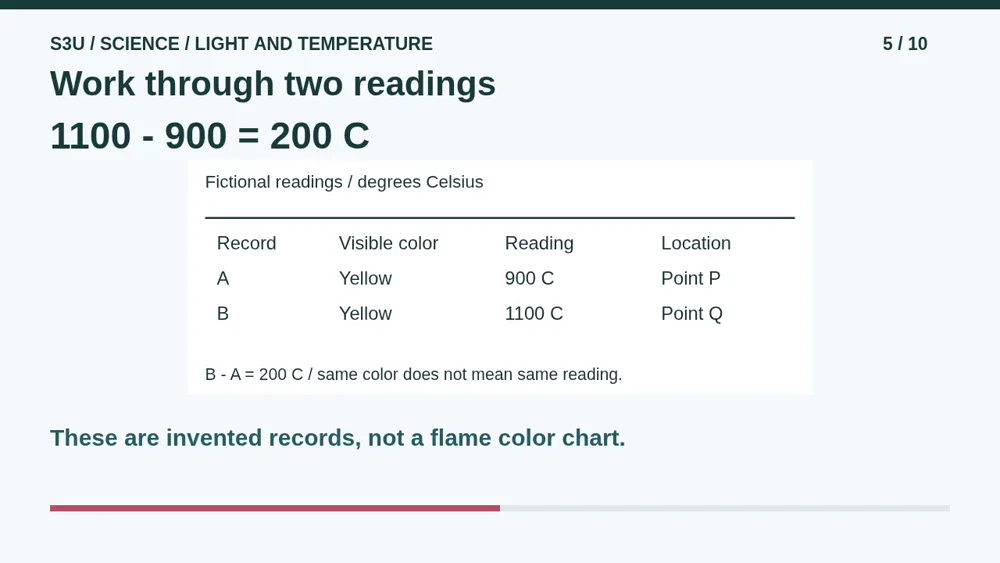
Let us use an invented record instead of guessing. At point P, record A says yellow and nine hundred degrees Celsius. At point Q, record B says yellow and eleven hundred degrees Celsius. B has the higher recorded temperature. Eleven hundred minus nine hundred is two hundred, so B is two hundred degrees Celsius higher. Both records say yellow, but their readings differ. The numbers support this comparison. They do not tell us that all yellow flames have either temperature.
6. Say where and when
Video: 2:55
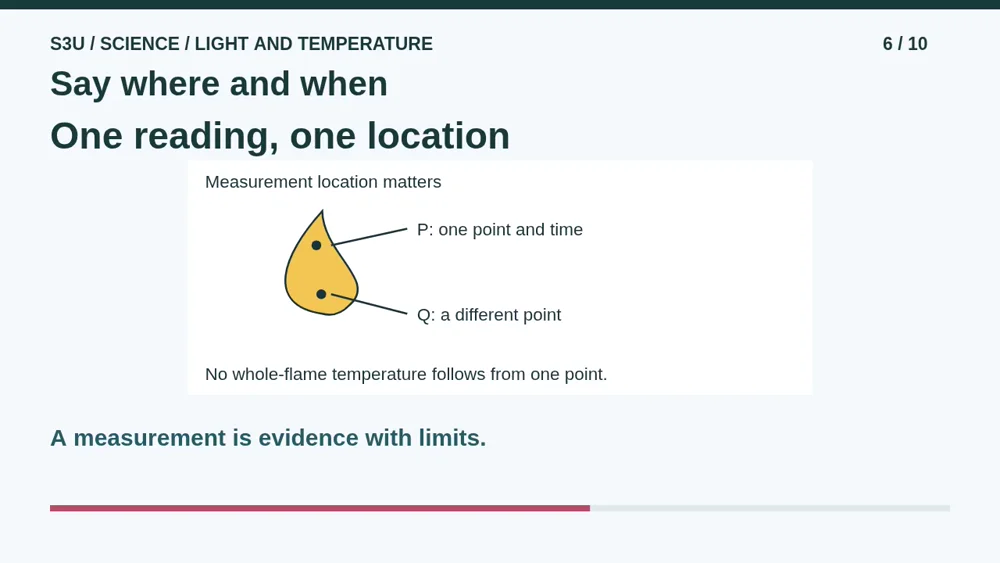
A flame does not have to be the same temperature everywhere. A reading belongs to a particular place and time. Trained researchers use suitable measuring equipment and consider its uncertainty. A single reading does not give every temperature in the flame. A photograph adds another limit: a camera or screen can change how a color looks. Keep your claim as narrow as your evidence. Our invented records practice reasoning, not how to measure a real fire.
7. Pause: use the new records
Video: 3:30
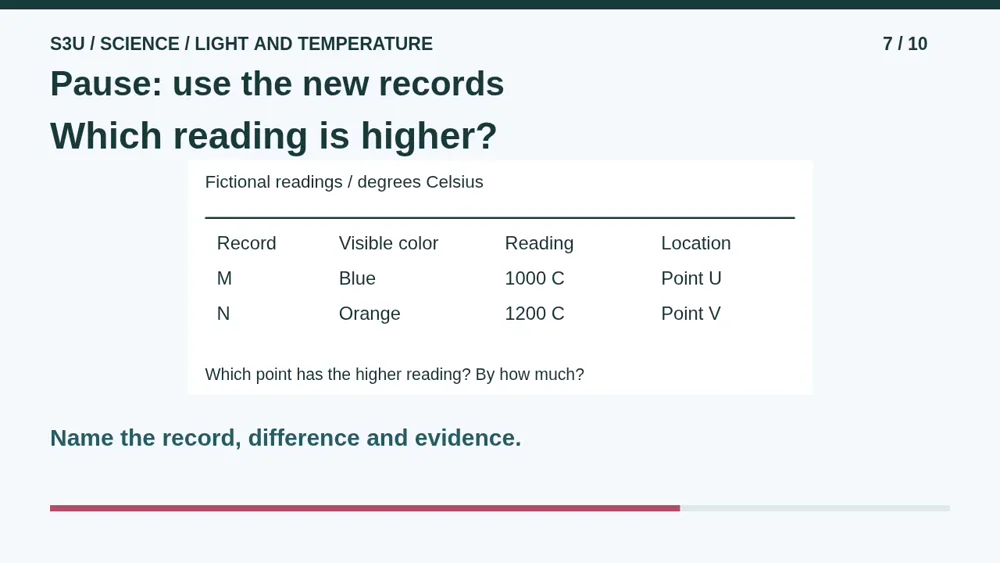
Pause here. In these new fictional records, M is blue with a reading of one thousand degrees Celsius. N is orange with a reading of twelve hundred degrees Celsius. Which point has the higher recorded temperature, and by how much? Explain whether you used the color or the reading. Then decide whether these two records prove a rule about every blue and orange flame. Write or say your explanation before continuing.
8. Check the claim, not just the sum
Video: 4:02
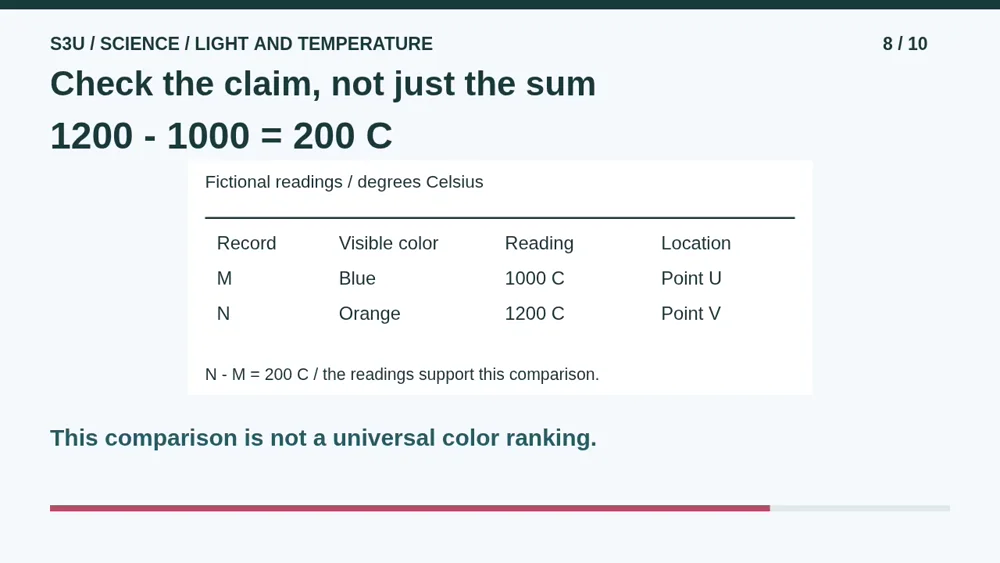
N has the higher recorded temperature. Twelve hundred minus one thousand is two hundred degrees Celsius. The evidence is the supplied reading, not the orange color. These invented records do not prove that orange always means hotter than blue. If you chose M just because it was blue, repair your answer by naming the two readings and comparing them. If we covered the numbers, we would not have enough evidence for this temperature comparison.
9. A flame can look rounder in space
Video: 4:35
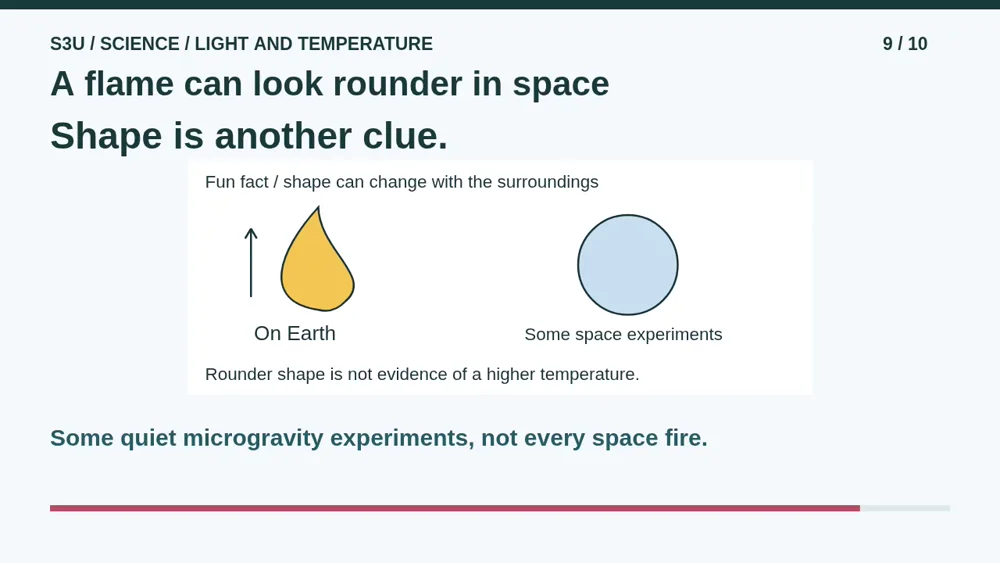
Fun fact: some flames in quiet microgravity experiments can look rounder than candle flames on Earth. On Earth, warm gases rise and help stretch a candle flame upward. With much weaker buoyant flow, that familiar teardrop shape can change. Air currents and the experimental conditions still matter. A round flame has not become a tiny planet, and rounder does not mean hotter. Scientists study these differences to understand combustion and improve safety.
10. Continue to the worksheet
Video: 5:11
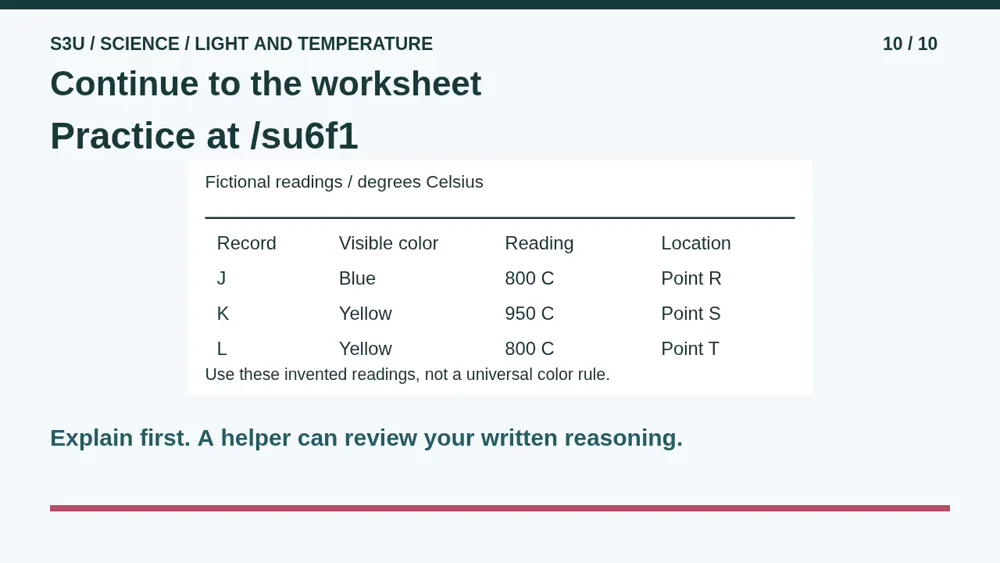
Continue to the worksheet below. Separate three questions: what light do we see, what might produce it, and what temperature evidence do we actually have? Read the invented table before comparing the records. Then use the second worksheet for a fresh check another day. Explain one claim that the information supports and one it does not. A helper can review your explanation; the checked choices do not automatically grade your written reasoning. Keep every activity on paper or on this screen.
Show your understanding
You can point, explain aloud, draw or write.
- Distinguish glowing hot particles from characteristic chemical emission and explain why color alone does not give an exact flame temperature.
- Compare supplied point readings, calculate their difference and explain limits of color, location and shape evidence. A helper reviews written reasoning separately.
Try it yourself
Pause at the invented M and N records. Compare their readings, explain the difference and name a claim the evidence cannot support.
Continue to the worksheet, then try the second sheet another day. Use only pictures and paper: no real flames, heated objects or chemical experiments.
Next: your worksheet
Flame Color: Clues and Readingshttps://s3u.com/su6f1
Lesson: https://s3u.com/lessons/flame-color-clues