Reading / Grade 3
Find the central idea
Learning goal: Connect supporting details, distinguish a topic from a main idea and reject answers that are too narrow or invented.
Before you start: Read or listen to a short paragraph and recall what its sentences say. An adult may read the text with you.
Read or print this lesson What to practiceThe video could not load. The transcript is still available below.
Next: your worksheet
Separate the Main Idea from a Detail - Practice 1
Checking sign-in...
Read the transcript
Saved reading place
Video transcript and practice. Reading or printing does not count as playback time or an assessed grade.
1. Read the whole passage
Video: 0:00
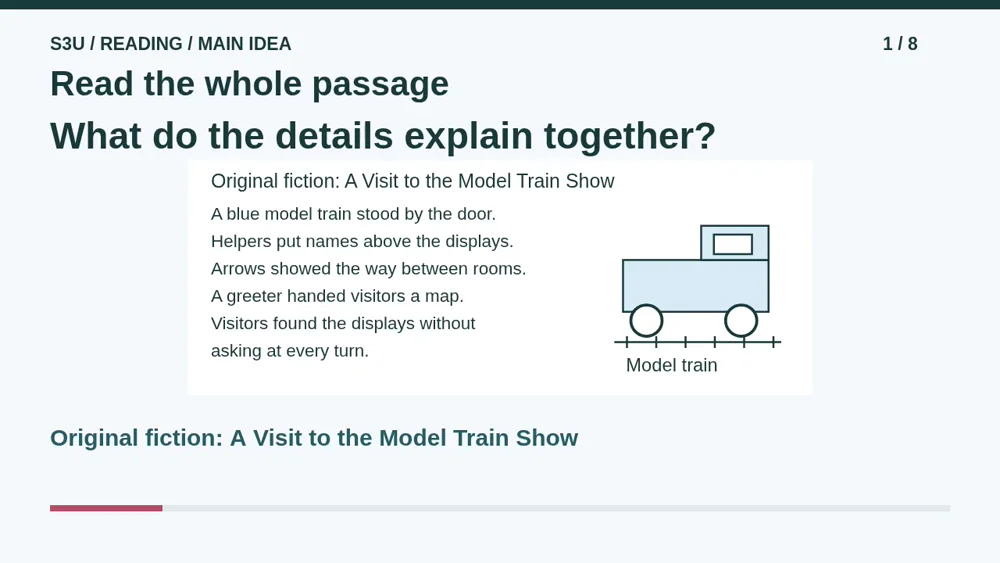
Read this short, invented passage with me. A blue model train stood by the door. Helpers put names above the displays. Arrows showed the way between rooms. A greeter handed visitors a map. Visitors found the displays without asking at every turn. What do most of these details explain together? The blue train is easy to picture, but the passage has more to tell us than its color.
2. A topic is only the beginning
Video: 0:31
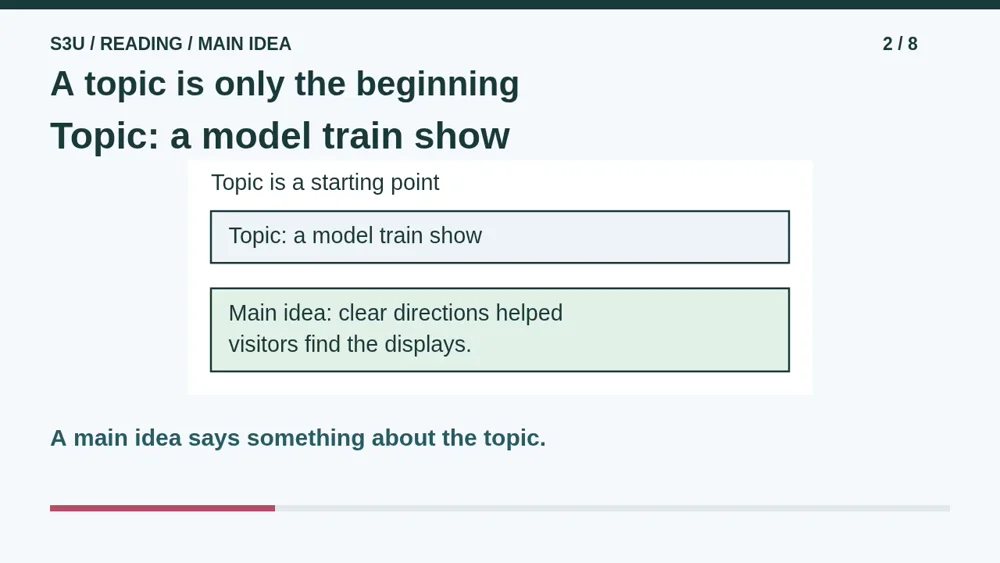
The topic is a model train show. That names what we are reading about, but it does not yet tell the main idea. Ask what the passage tells us about the show. Names, arrows, and a map all help visitors find their way. A useful main idea is: clear directions helped visitors find the displays. That sentence joins several details instead of choosing just one.
3. Connect details to the main idea
Video: 1:00
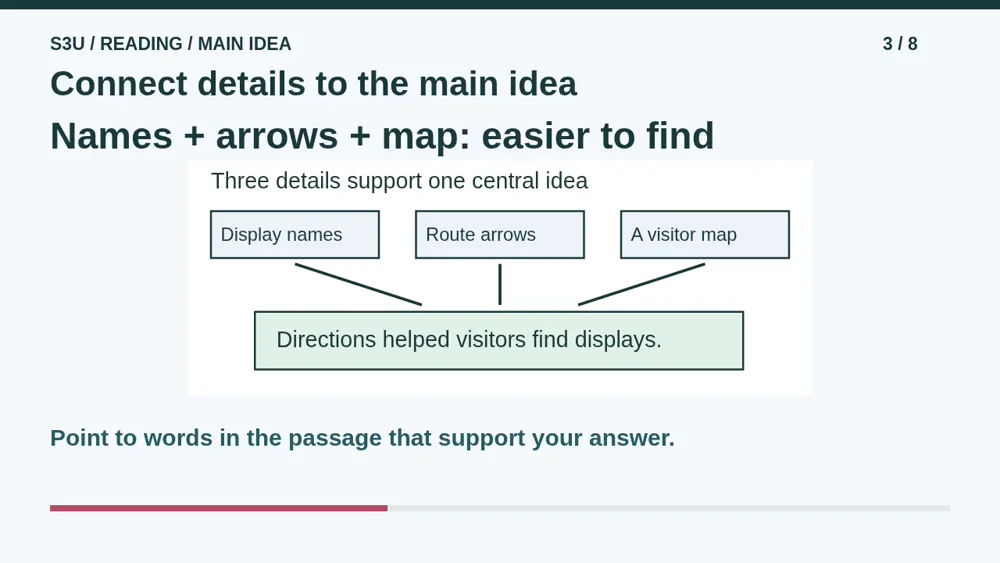
Let us check that idea. Names identify the displays. Arrows show the route. The map gives visitors another way to find places. The final sentence describes the result: fewer questions at each turn. These details fit our main idea about clearer directions. The blue train can remain in the story without being its main point. It has a very important job looking blue.
4. Test an answer against the text
Video: 1:31
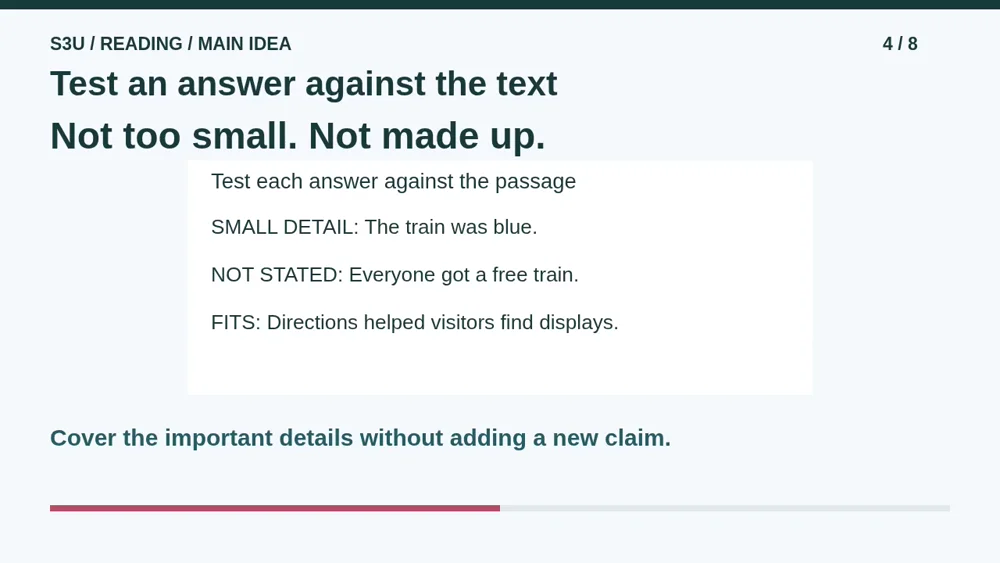
Compare three answers. The train was blue is true, but it covers only one small detail. Every visitor received a free train is not stated at all. Clear directions helped visitors find displays fits several important details. A main idea is not simply the most exciting sentence. Check that it covers what the passage explains and does not add something the passage never says.
5. Pause: prepare the picnic packs
Video: 2:01
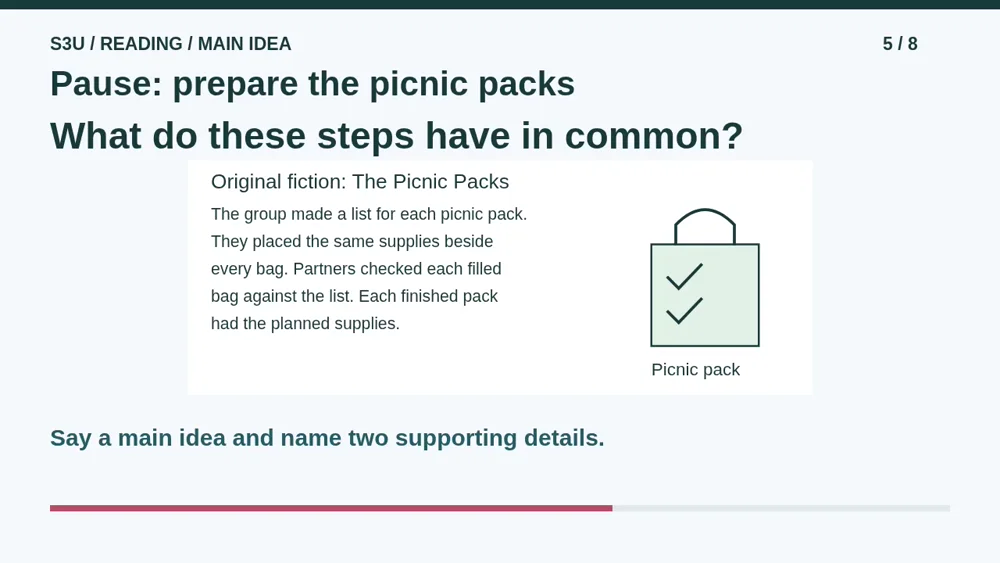
Try this new invented passage. The group made a list for each picnic pack. They placed the same supplies beside every bag. Partners checked each filled bag against the list. Each finished pack had the planned supplies. Pause the video. Say a main idea that fits those steps, then name two details that support it. You may explain aloud or write. There is more than one good way to word an answer.
6. Check the new main idea
Video: 2:33
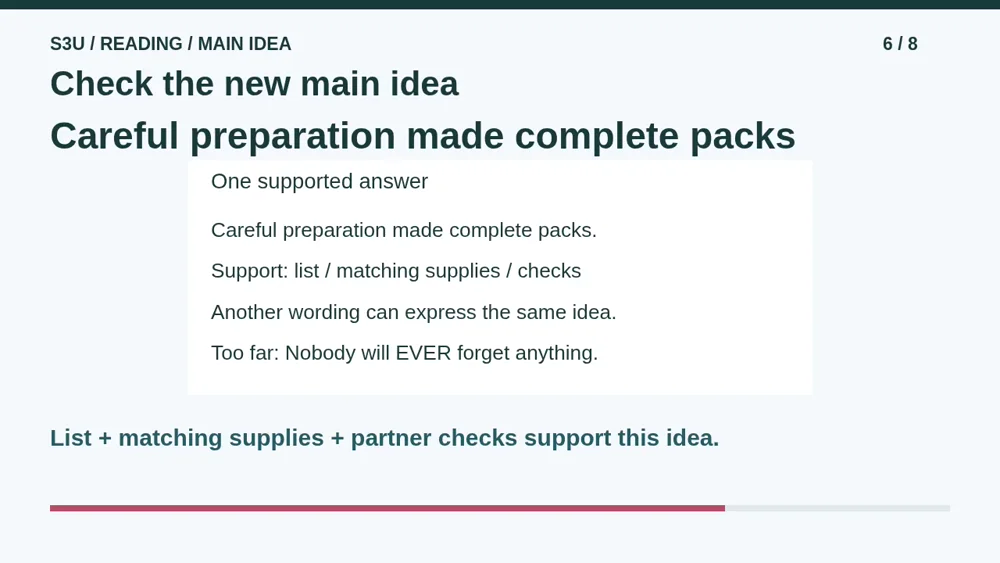
One good answer is: the group used careful preparation to make complete picnic packs. The list and partner checks support that idea. You might say they followed a system so each pack had its planned supplies. That also fits. Partners checked bags is a useful detail, but it leaves out the other steps. Nobody will ever forget anything again goes too far. This passage describes these packs, not every future picnic.
7. First does not always mean main
Video: 3:06
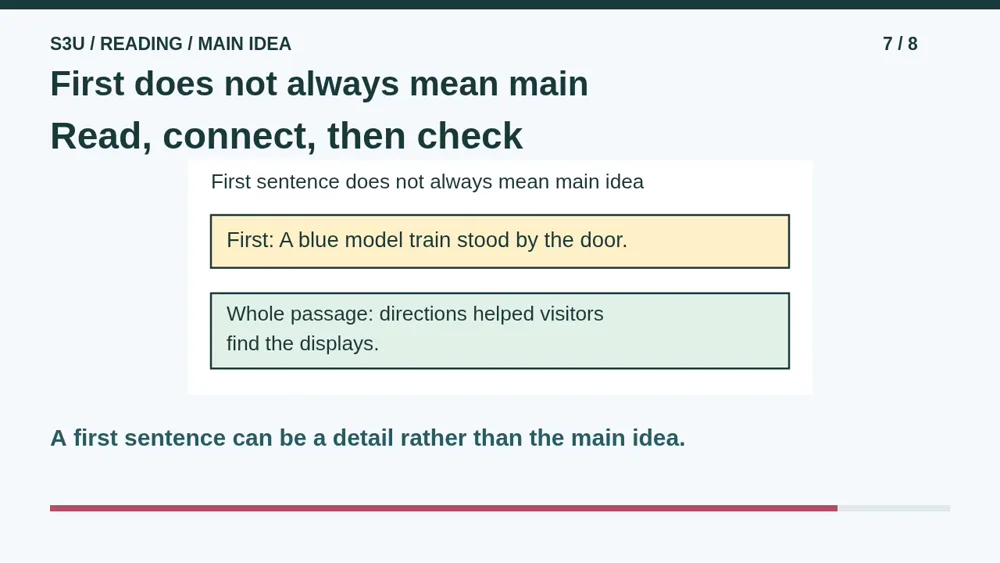
Fun fact: the first sentence does not always state the main idea. Our train passage begins with a blue train, then uses several details to explain directions for visitors. You had to connect those details. Another passage might state its main idea at the beginning or the end. Do not pick a sentence just because of its position. Test it against the whole passage.
8. Continue to the worksheet
Video: 3:34
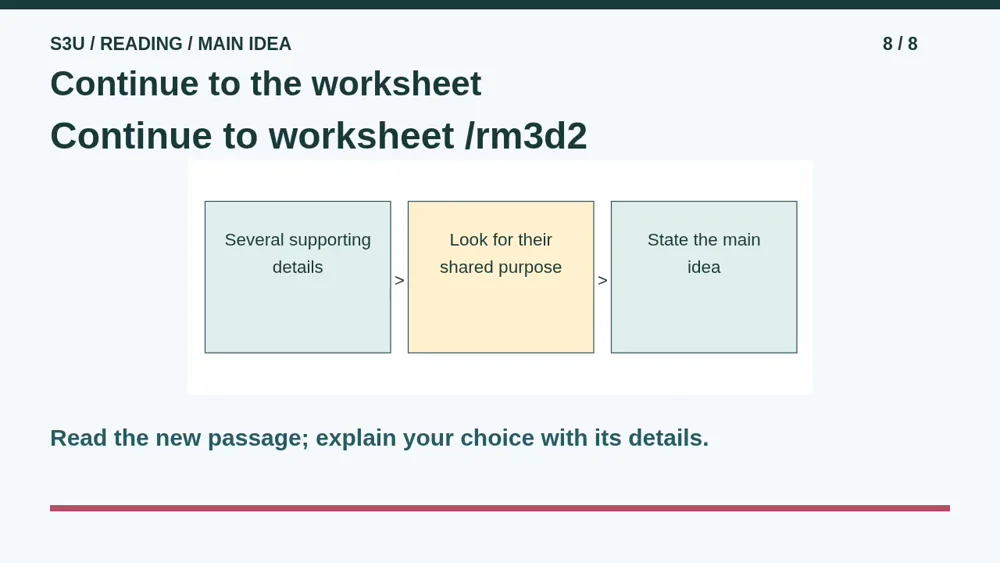
Continue to the worksheet below. It has a different passage about shared supplies. Read all of it before choosing the main idea. Point to details that support your answer, and explain why an answer might be too small or invented. Practice Two has another passage. You can read with someone, work on screen, or print the pages. Use the new text rather than copying our train or picnic answer.
Show your understanding
You can point, explain aloud, draw or write.
- State a main idea that connects important details rather than only naming a topic or one small detail.
- Use the passage to explain why a proposed answer is supported, too narrow or invented.
Try it yourself
Pause at the picnic-pack passage. Say a main idea and name two details that support it; different wording can express the same supported idea.
Continue to the worksheet and Practice Two. Read the whole new passage, check supporting details and avoid adding unstated claims.
Next: your worksheet
Separate the Main Idea from a Detail - Practice 1https://s3u.com/rm3d2
Lesson: https://s3u.com/lessons/find-the-central-idea