Math / Grade 2
Exchange a ten to subtract
Learning goal: Open a bundle of ten, keep the total unchanged, and use tens and ones to explain subtraction.
Before you start: Count tens and ones, subtract within twenty, and explain that ten ones make one ten. Review Tens and ones when needed.
Read or print this lesson What to practiceThe video could not load. The transcript is still available below.
Next: your worksheet
Exchange a Ten to Subtract - Practice 1
Checking sign-in...
Read the transcript
Saved reading place
Video transcript and practice. Reading or printing does not count as playback time or an assessed grade.
1. A bundle holds ten
Video: 0:00
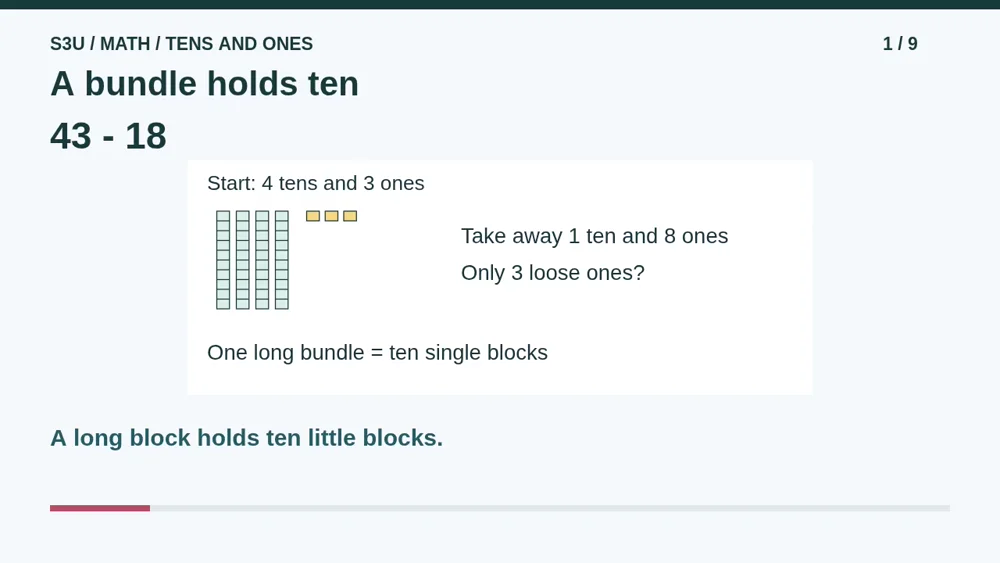
We have forty-three building blocks. Four bundles of ten, and three single blocks. We want to take away eighteen: one ten and eight ones. Point to a long bundle. Count its ten little spaces. A bundle is just ten ones held together. Our block shop has a very helpful rule: you may open a bundle. The blocks do not vanish. No magic trick required.
2. Open one ten
Video: 0:30
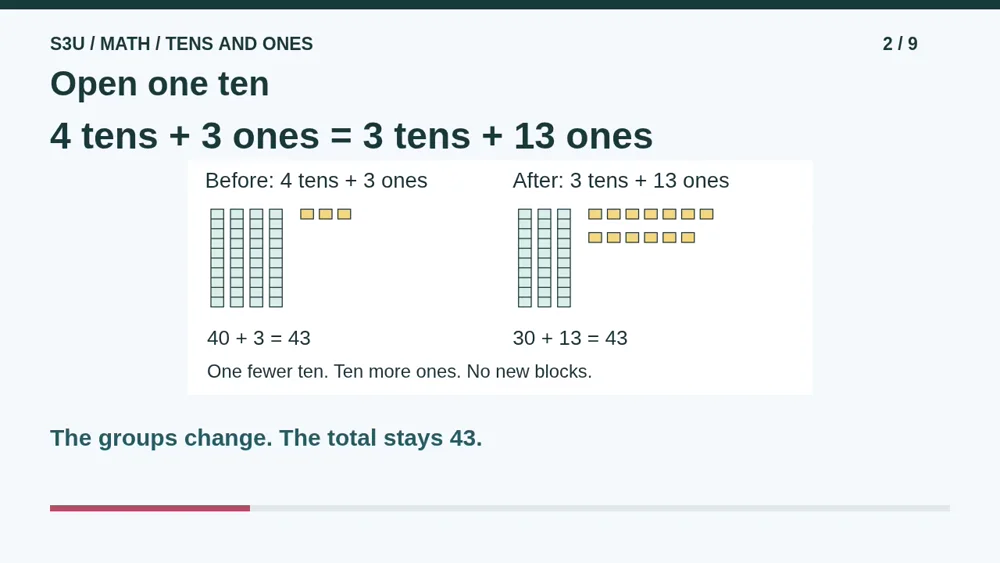
Look at the ones. We have three, but we need to remove eight. Open one of the four tens. That gives us ten more ones. Three ones plus ten ones makes thirteen ones. Now we have three tens and thirteen ones. Thirty plus thirteen is still forty-three. Opening a bundle changes how we group the blocks. It does not add blocks. Remember to change both places: one fewer ten, ten more ones.
3. Take away, then check
Video: 1:03
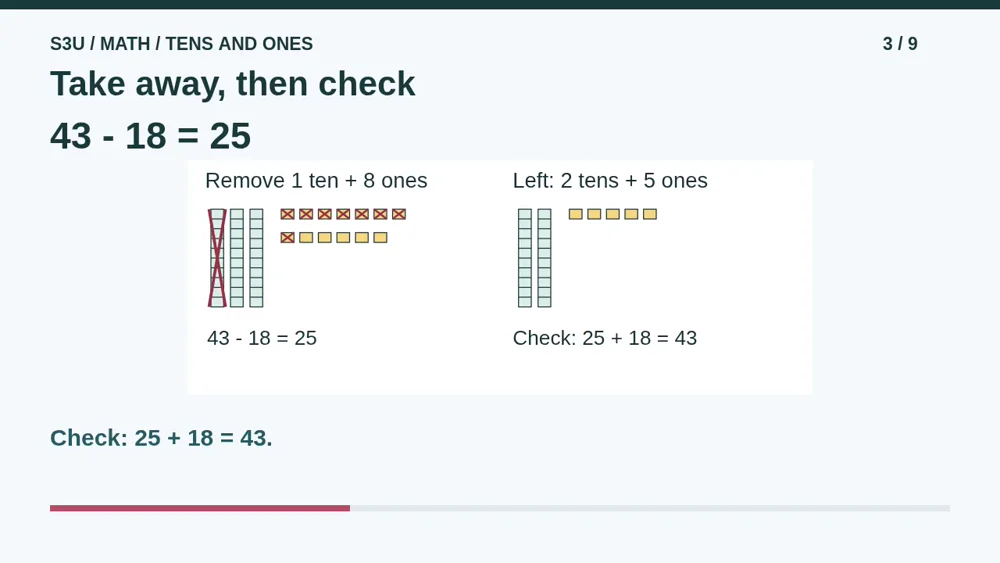
From thirteen ones, take away eight ones. Five ones remain. From three tens, take away one ten. Two tens remain. Two tens and five ones make twenty-five. The crossed blocks are the eighteen we removed. Check by putting them back: twenty-five plus eighteen equals forty-three. Do not subtract three from eight just because three is smaller. That changes our problem. Open the ten, then remove the amount we were asked to remove.
4. What if there are no ones?
Video: 1:39
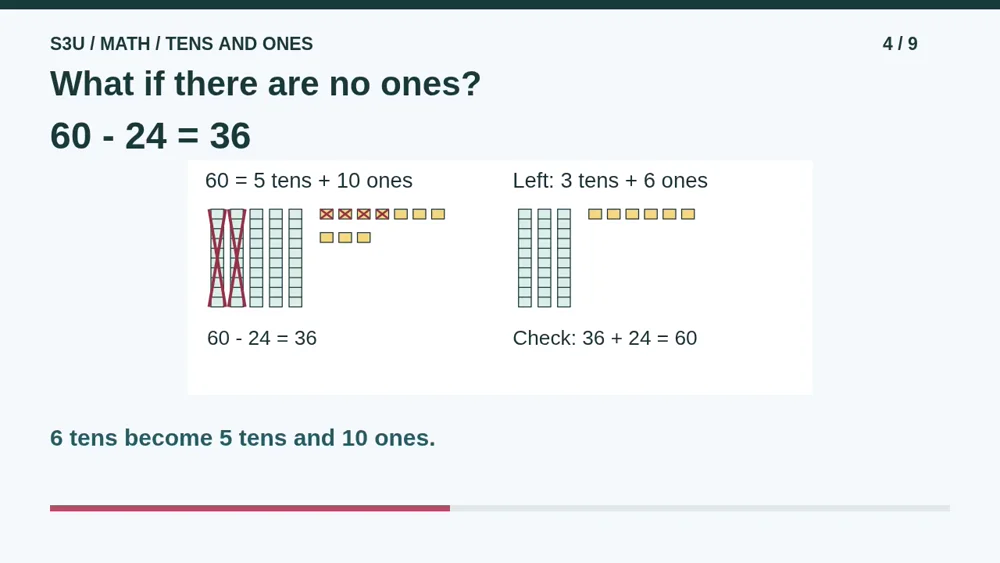
Try sixty minus twenty-four. Sixty has six tens and no loose ones. We need four ones. Open one ten. We now have five tens and ten ones. Remove four ones, leaving six ones. Remove two tens, leaving three tens. Thirty-six remain. Zero ones did not mean we were stuck. There were ones inside a ten. Check: thirty-six plus twenty-four makes sixty.
5. Pause: your block shop
Video: 2:12
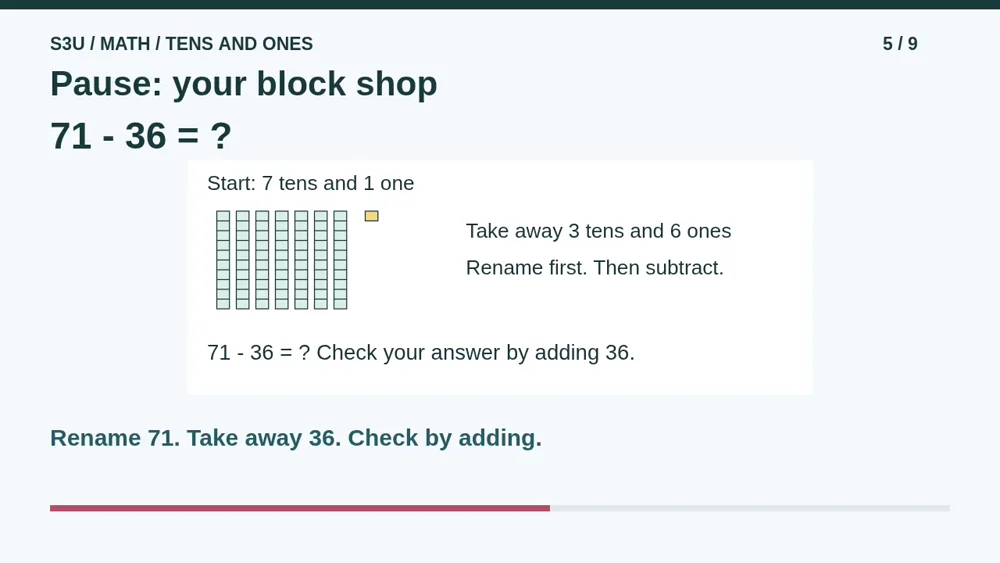
Pause for your own block-shop problem: seventy-one minus thirty-six. Draw seven tens and one single block, or use the picture. How many ones do you need to remove? Open one ten if you need it. Say the new number of tens and ones before taking anything away. Find what remains. Then add thirty-six back to check. You can pause as long as you need. Continue when your explanation is ready.
6. Check your exchange
Video: 2:45
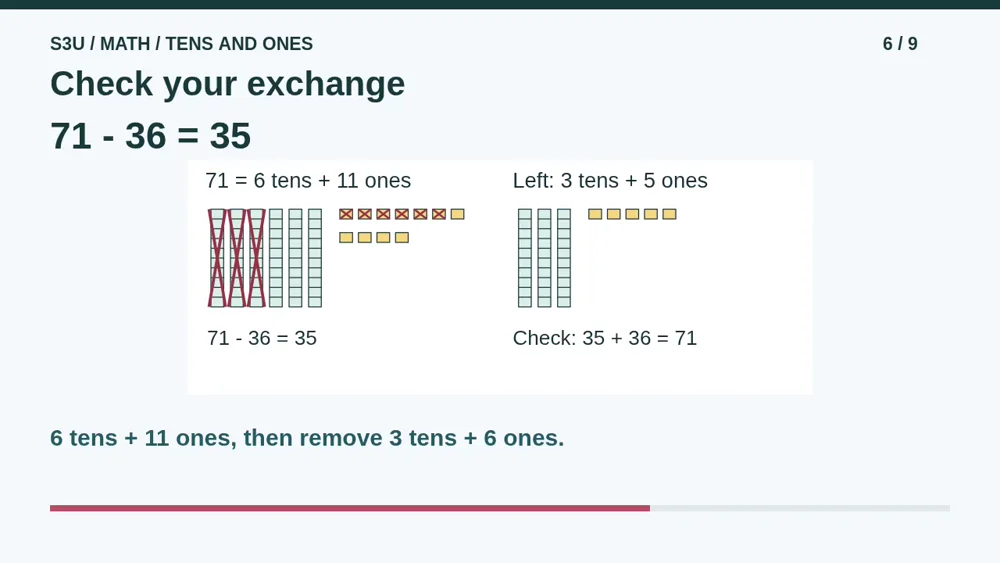
Seventy-one becomes six tens and eleven ones. Eleven ones minus six ones leaves five ones. Six tens minus three tens leaves three tens. The answer is thirty-five. Check: thirty-five plus thirty-six is seventy-one. If you got forty-five, look at the tens. Opening one ten left six tens, not seven. Keep the value the same when you rename it.
7. A hundred can be ten tens
Video: 3:14
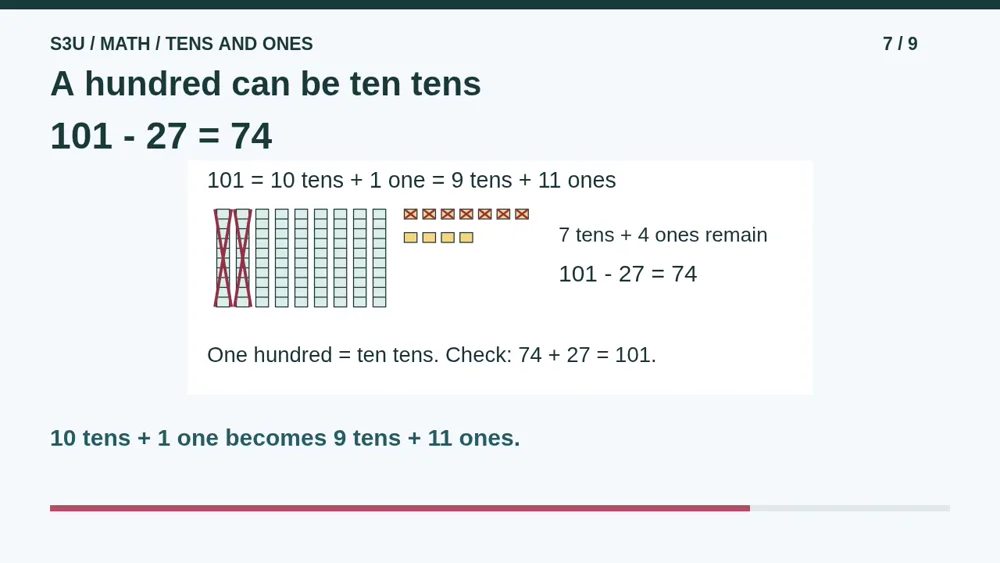
Here is a stretch problem. One hundred is ten tens. So one hundred one can be ten tens and one one. To subtract twenty-seven, open one ten. Now there are nine tens and eleven ones. Remove seven ones and two tens. Four ones and seven tens remain: seventy-four. Check: seventy-four plus twenty-seven is one hundred one. You may count groups of ten even when the number reaches a hundred.
8. Different groups, same number
Video: 3:48
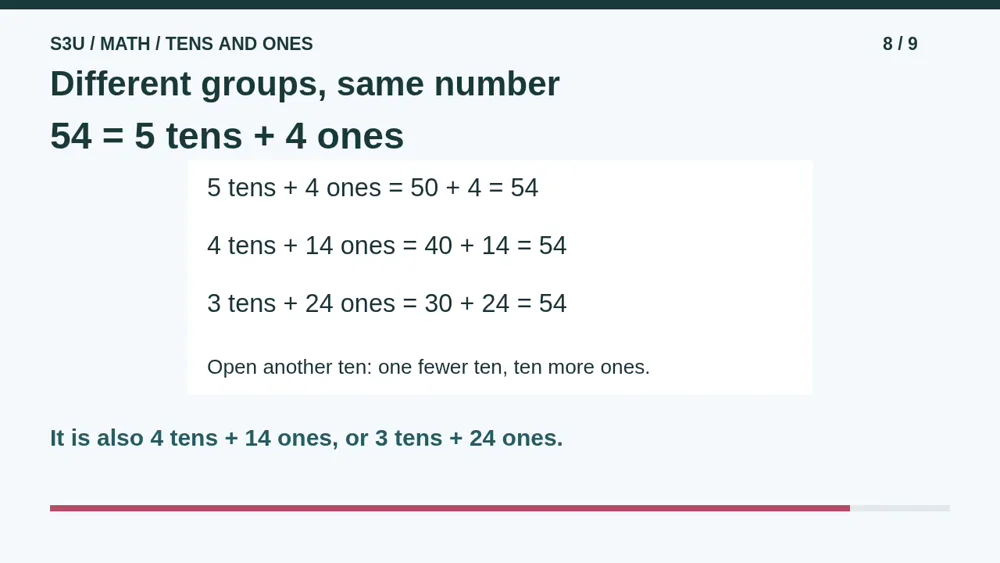
Fun fact: fifty-four has more than one tens-and-ones description. Five tens and four ones. Four tens and fourteen ones. Three tens and twenty-four ones. Each time we open a bundle, there is one fewer ten and ten more ones. Every description still totals fifty-four. The block shop did not give us a bonus. We only opened the packaging.
9. Continue to the worksheet
Video: 4:17
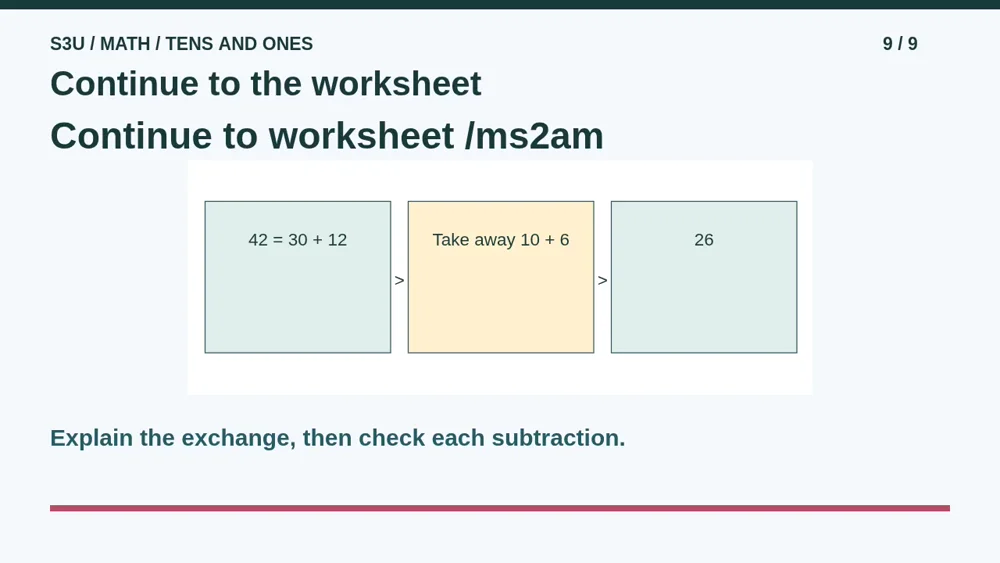
Now continue to the worksheet below. Its numbers are different from our block-shop examples. Read the worked example. For each question, say how many tens and ones you have after the exchange, then subtract. Check one answer by adding the removed amount back. The second worksheet includes numbers above one hundred. Use ten tens for one hundred when that helps. Watching explains the idea; your next step is to try the worksheet yourself.
Show your understanding
You can point, explain aloud, draw or write.
- Rename an amount with one fewer ten and ten more ones without changing its value.
- Use the renamed groups to subtract, including zero ones, and check by adding back.
Try it yourself
Pause at 71 - 36. Rename 71 as tens and ones, subtract and check by adding 36 back.
Continue to the worksheet. Explain why opening one ten changes both places without changing the total. Practice 2 includes numbers above one hundred.
Next: your worksheet
Exchange a Ten to Subtract - Practice 1https://s3u.com/ms2am
Try Practice 2: numbers above one hundred · Review tens and ones
Practise with cells in Math Missions (station 2)
Lesson: https://s3u.com/lessons/exchange-a-ten