Math / Grade 3
Equal groups: the button shop
Learning goal: Count equal groups, connect repeated addition to multiplication, and spot a group that does not match.
Before you start: Count objects and add small whole numbers.
Read or print this lesson What to practiceThe video could not load. The transcript is still available below.
Next: your worksheet
Equal Groups to Multiplication
Checking sign-in...
Read the transcript
Saved reading place
Video transcript and practice. Reading or printing does not count as playback time or an assessed grade.
1. The button shop
Video: 0:00
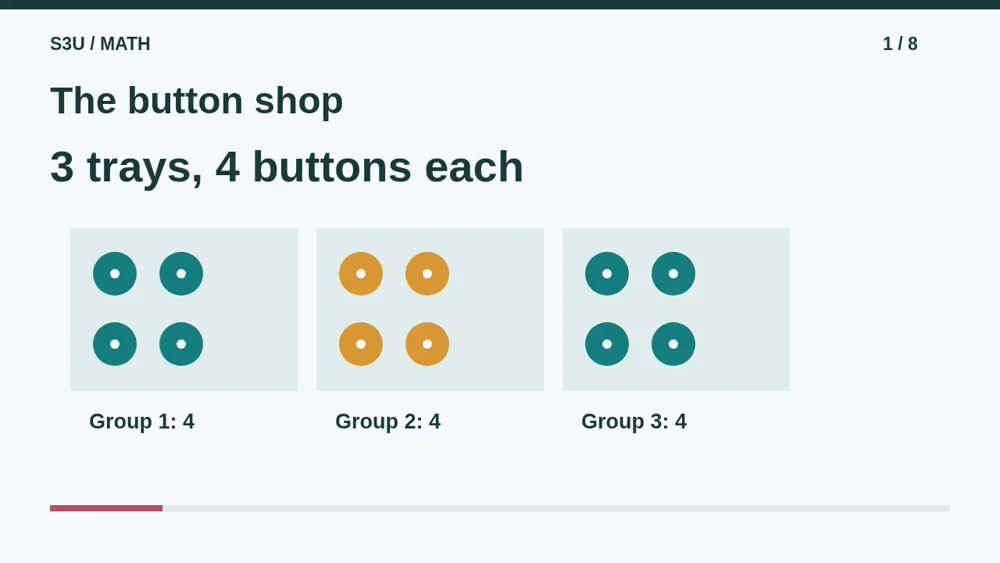
Welcome to our pretend button shop. We have three trays. Each tray holds four buttons. The buttons are not buying anything. They are helping us count! Look at one tray, then check that every other tray has the same number.
2. Check that groups are equal
Video: 0:19
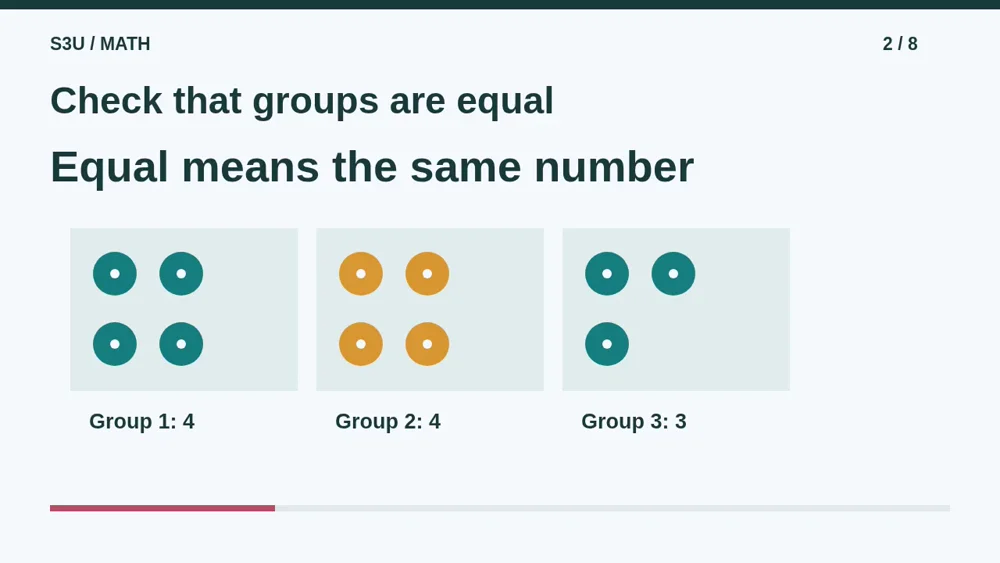
Oops! One tray now has only three buttons. These groups are not equal. We cannot call this three groups of four. We could count all the buttons one by one, but first let us put the missing button back.
3. Add one group at a time
Video: 0:36
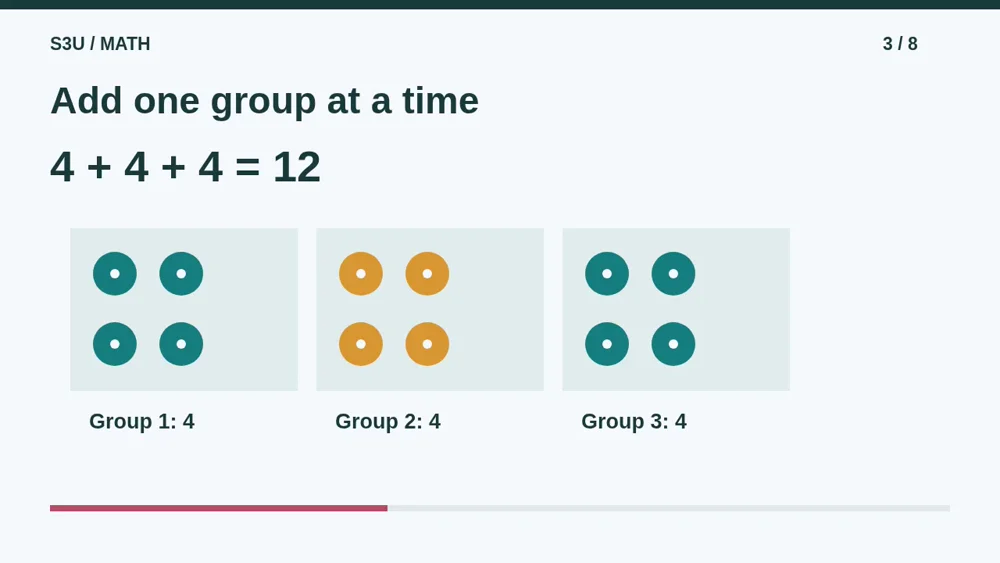
Now every tray has four buttons again. Start with four. Add four more to get eight. Add the last four to get twelve. We added four three times because there are three equal groups.
4. A shorter way to write it
Video: 0:52
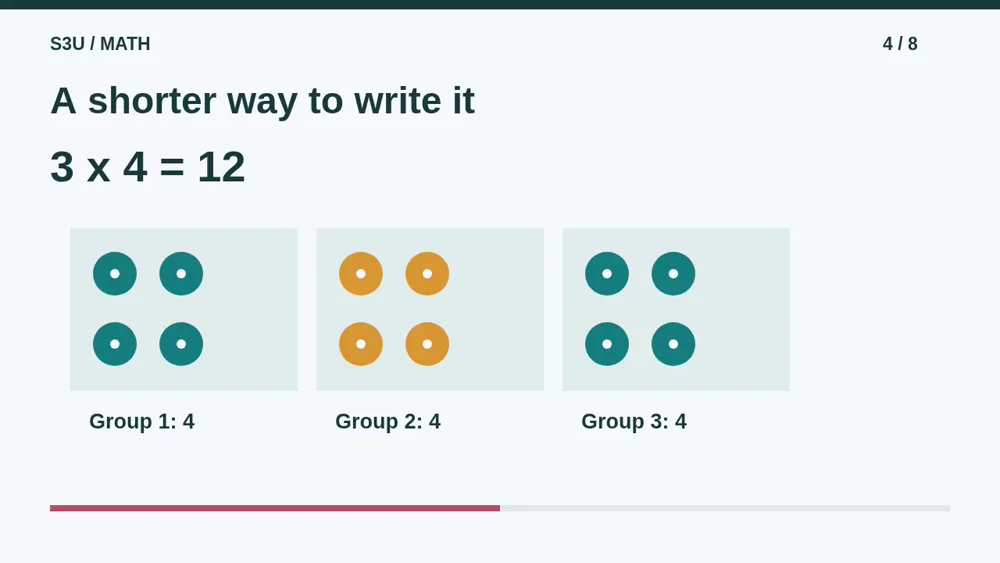
Multiplication gives us a shorter way to write those equal groups. In this lesson, three times four means three groups with four in each group. The answer is twelve. The small times sign is doing the job of the repeated addition.
5. Pause and try
Video: 1:11
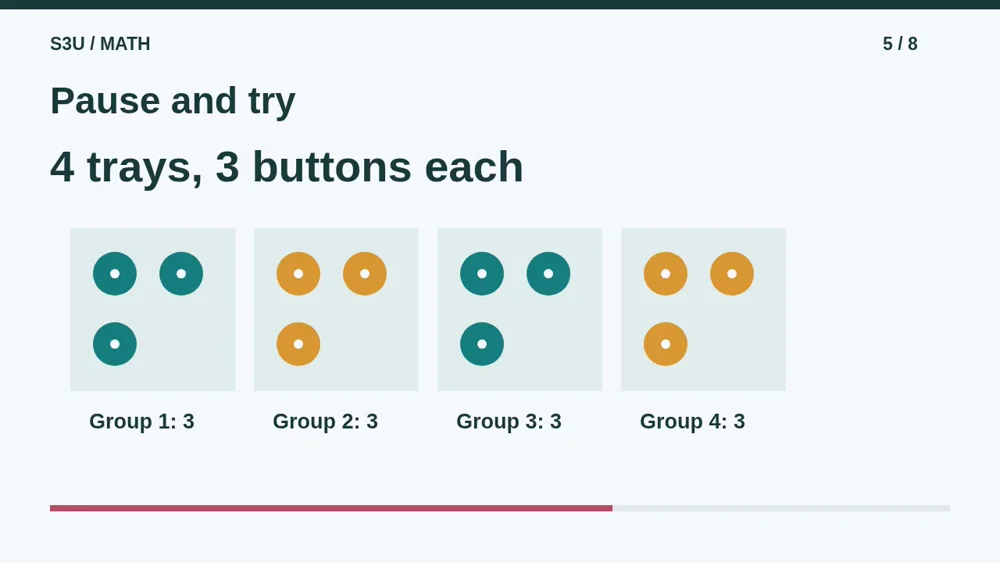
Now there are four trays, with three buttons in each tray. Pause the video. Count the trays, then count the buttons in one tray. Write the repeated addition. How many buttons are there altogether?
6. Count the new groups
Video: 1:28
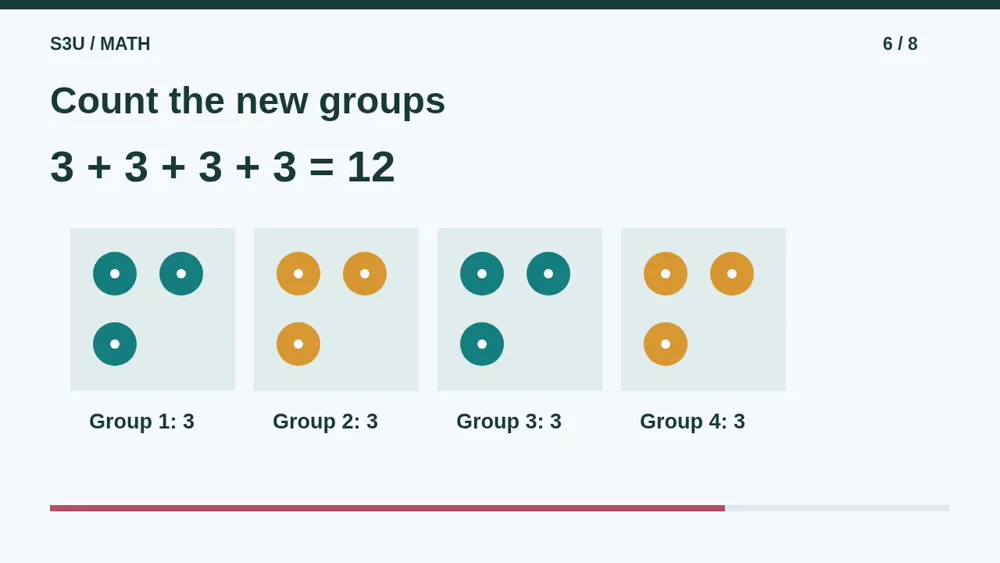
Three plus three is six. Another three makes nine. One more three makes twelve. Four groups of three give twelve buttons. You can write four times three equals twelve. We changed the grouping, not the number of buttons.
7. A turning surprise
Video: 1:47
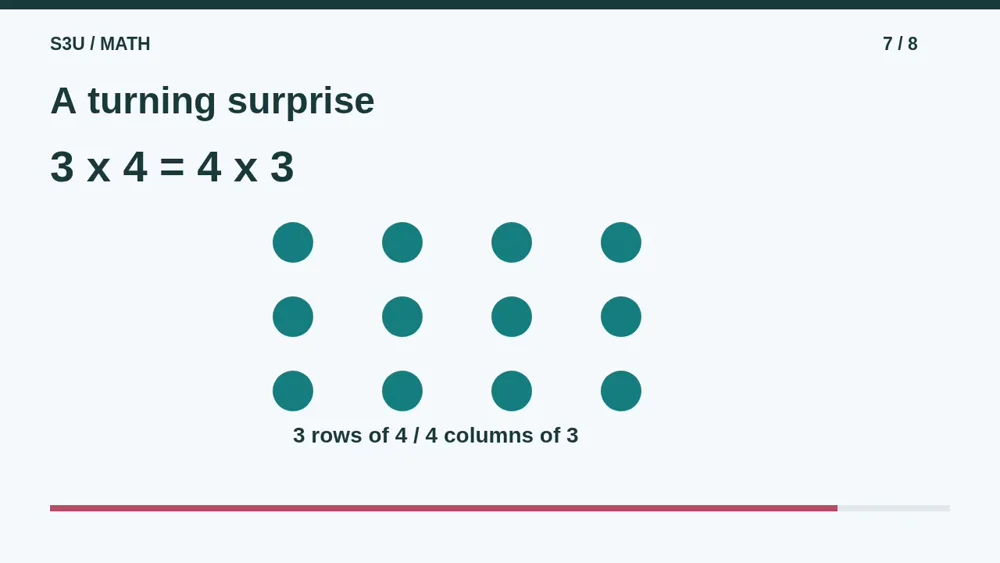
Fun fact: arrange twelve buttons in three rows of four, then turn the picture. Now you can see four rows of three. The total stays twelve. Turning the picture does not magically order more buttons for the shop!
8. Your turn to build groups
Video: 2:04
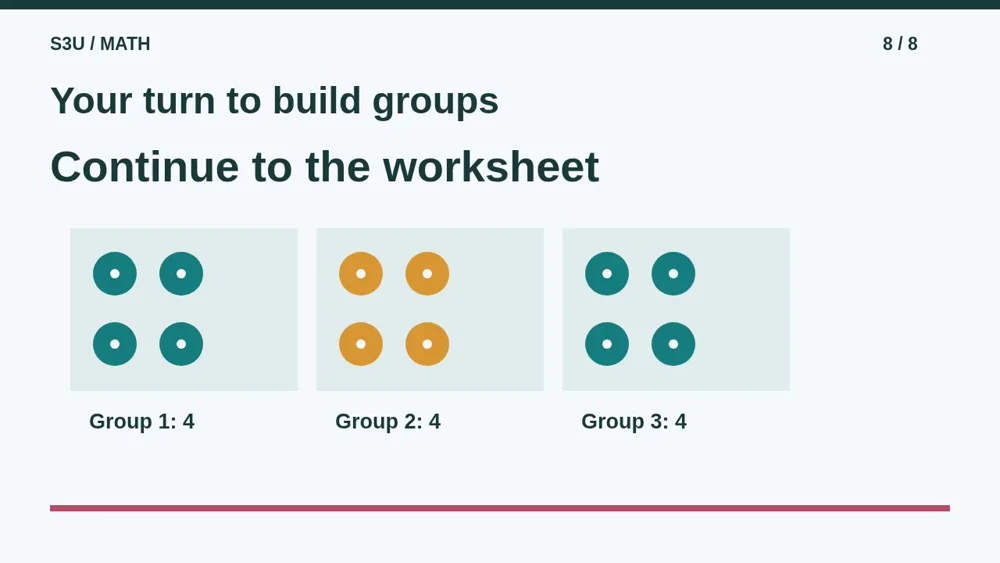
Remember the two questions. How many equal groups? How many in each group? Use those answers to write an addition or multiplication. Continue to the worksheet and help with baskets, seats, pencils, socks, and books. Check that the groups are equal.
Show your understanding
You can point, explain aloud, draw or write.
- Check that every group contains the same number of objects.
- Connect the number of equal groups and items per group to repeated addition and multiplication.
Try it yourself
Draw four groups of three dots. Write the repeated addition and multiplication.
Explain why three groups containing four, four and three dots are not three equal groups of four.
Next: your worksheet
Equal Groups to Multiplicationhttps://s3u.com/mm301
Lesson: https://s3u.com/lessons/equal-groups