Reading / Kindergarten / Grade 1 with a helper
Count word beats
Learning goal: Say familiar words with a helper, tap their syllables, and distinguish spoken beats from written letters.
Before you start: Work with a helper who models spoken syllables and gentle taps. Tap, point or listen; no recording is needed. Respect pronunciation differences.
Read or print this lesson What to practiceThe video could not load. The transcript is still available below.
Next: your worksheet
Word Beat Models - Practice 1
Checking sign-in...
Read the transcript
Saved reading place
Video transcript and practice. Reading or printing does not count as playback time or an assessed grade.
1. Listen for word beats
Video: 0:00
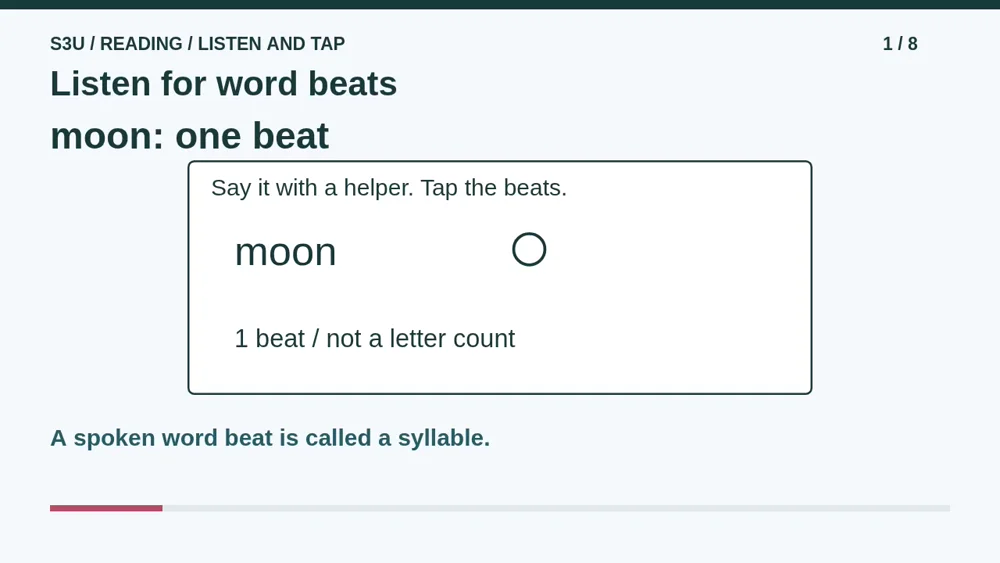
Say moon with your helper. Moon. We hear one beat. A beat in a spoken word is called a syllable. Say the word naturally, then let your helper model one gentle tap for its beat. You can tap, point, or just listen. We are listening to speech today. We are not counting the letters on the screen.
2. One word, two beats
Video: 0:26
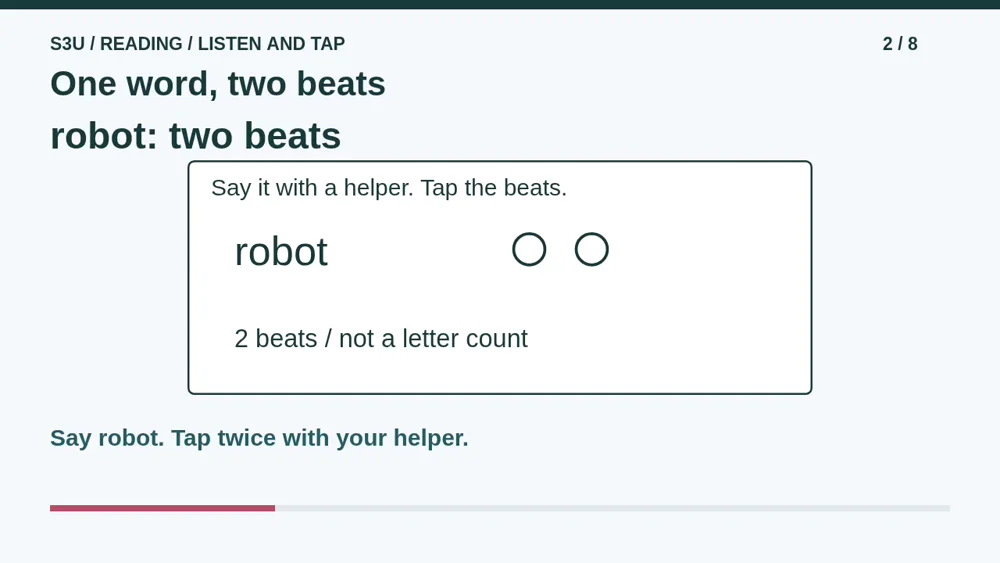
Now say robot. Your helper can say it slowly and tap its two beats, then say the whole word naturally again. Robot is one word with two beats. Try two gentle taps as you say it together. A robot does not need two hats for its two beats. The beats belong to the spoken word, not to the robot!
3. Try three beats
Video: 0:51
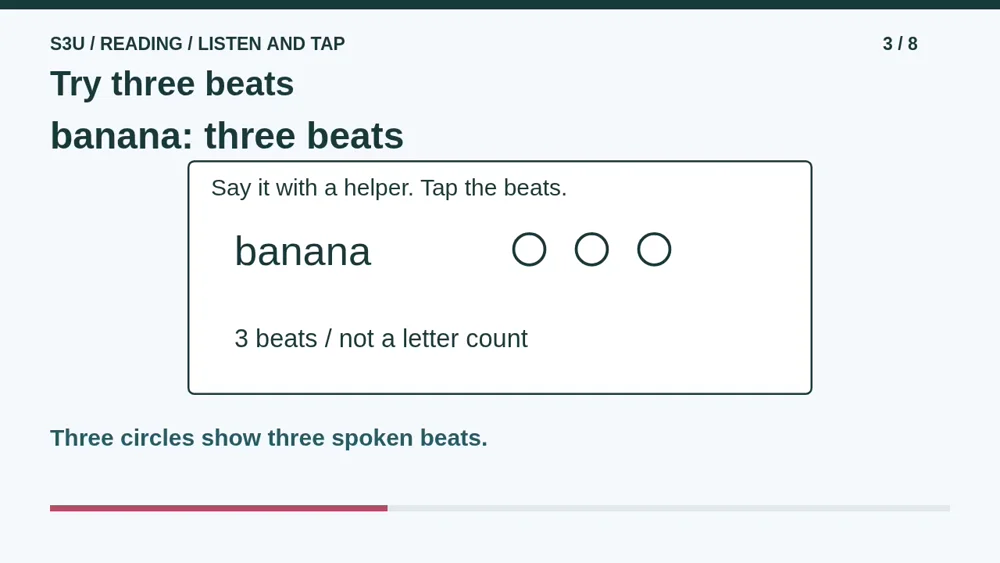
Say banana. Ask your helper to model its three beats. Point to one circle for each beat as you say it together. Then say banana naturally again. If you tapped too many times, that is fine. Listen to your helper and try again slowly. The three circles show our spoken model. They are not a count of letters.
4. Beats are not letters
Video: 1:17
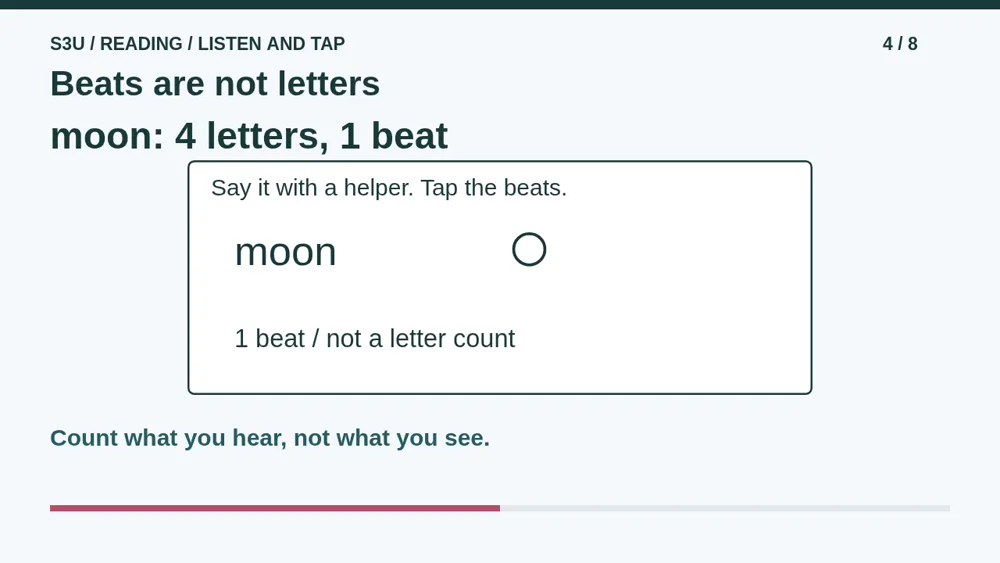
Look at moon. It has four written letters, but we say it with one beat. Robot has five letters and two beats. Letter counts do not tell us how many spoken beats a word has. Say each whole word, listen, and tap with your helper. Do not add an extra beat just because a letter is sitting there.
5. Pause for a new try
Video: 1:41
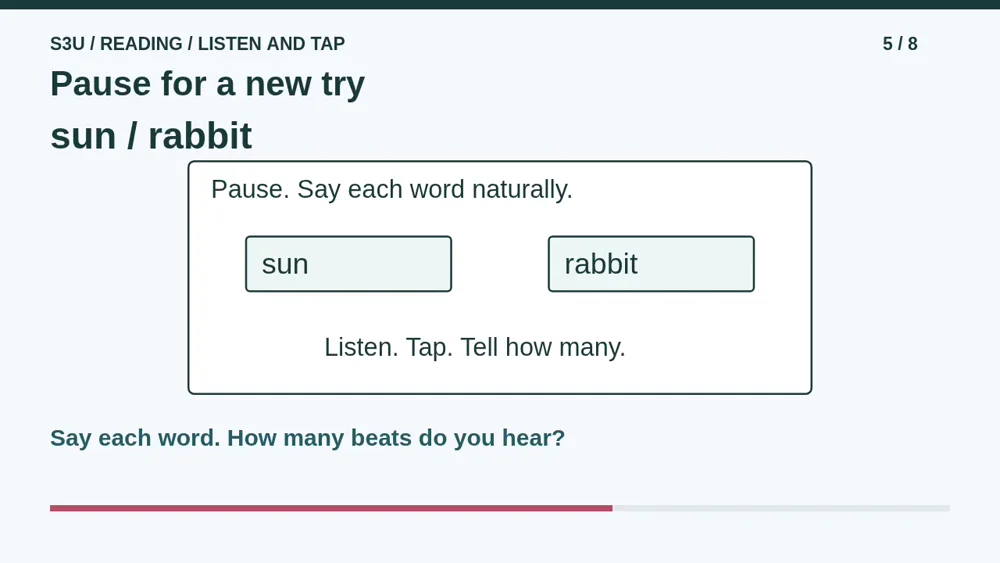
Pause here. Your new words are sun and rabbit. Ask a helper to say each word naturally. Try saying it and tapping its beats. How many taps did you use for each word? You can point or listen instead of tapping. Try before looking at the next picture. Your helper can model a word again if you need it.
6. Check your taps
Video: 2:06
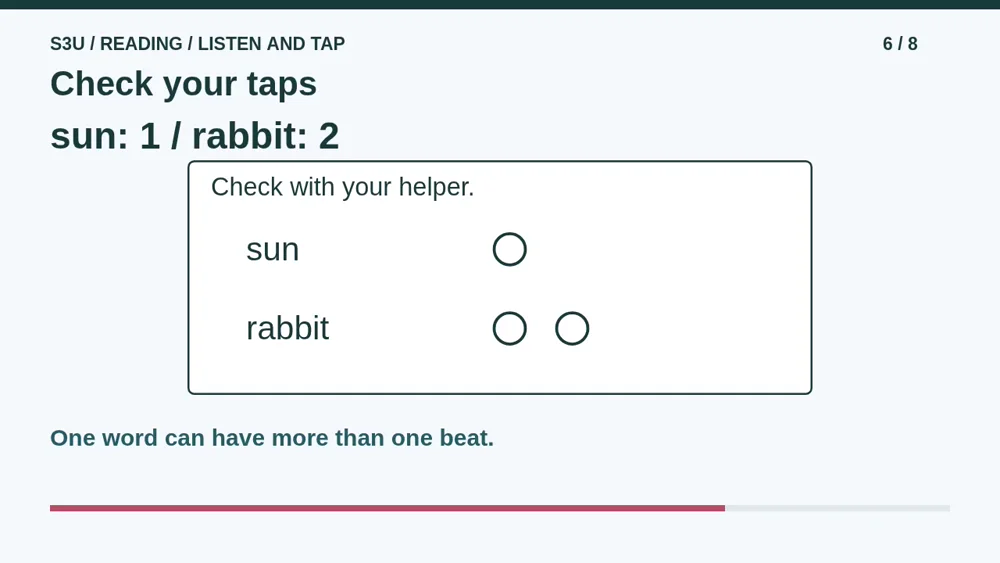
Sun has one beat in our model. Rabbit has two. Ask your helper to say each word and show the matching taps. Then say both words naturally again. If your taps did not match, listen and try with your helper. We are practising, not racing. A picture can show the model, but a helper needs to listen to your speaking.
7. Longer is not more
Video: 2:32
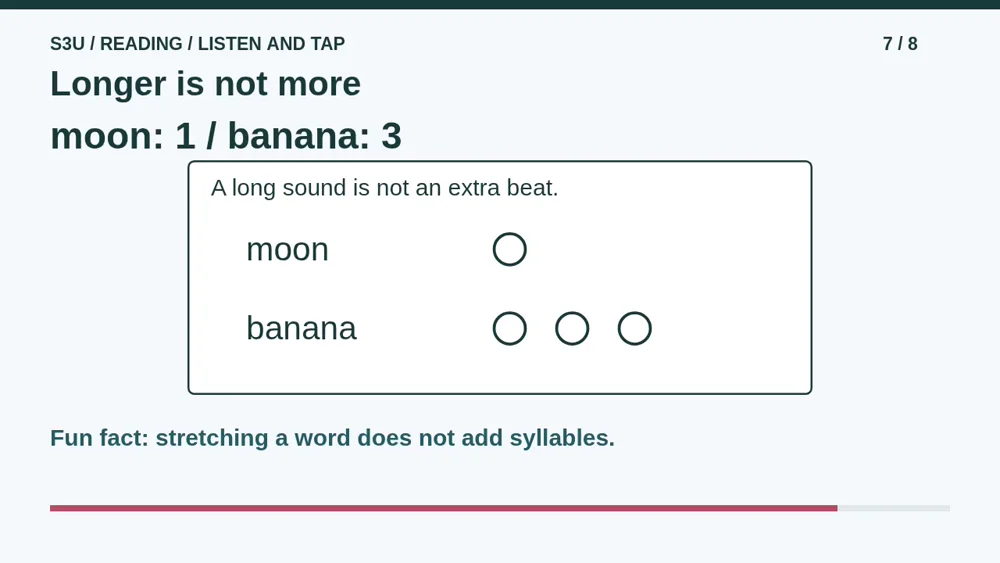
Fun fact: you can stretch the sound of moon for a long time and still have just one syllable. Ask your helper to demonstrate. A longer sound is not automatically another beat. Banana has three syllables even when you say it quickly. Count the spoken parts, not the seconds. Say the words naturally again when you finish experimenting.
8. Keep listening
Video: 2:58
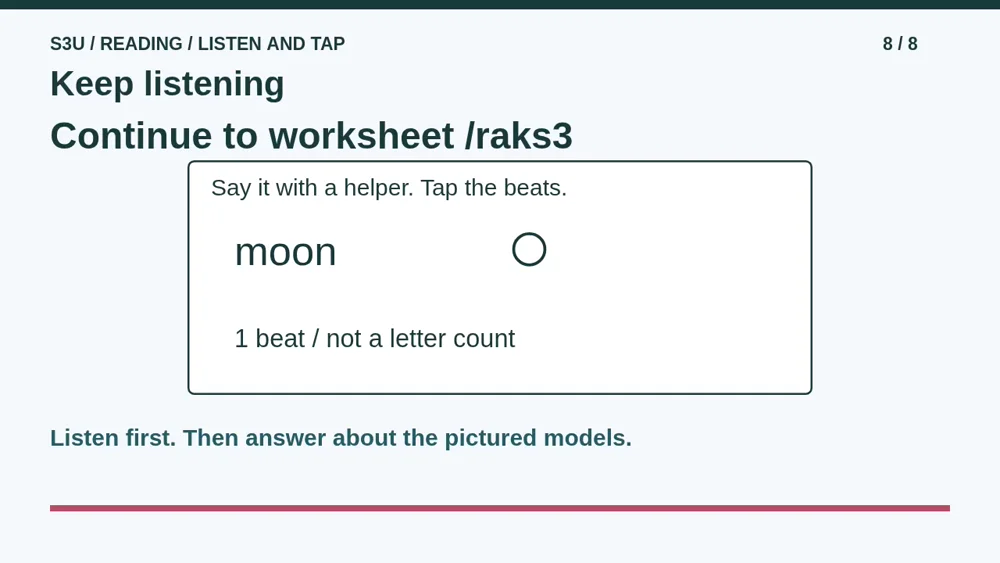
Continue to the worksheet below. First practise the spoken words with a helper. Then answer the questions about the beat models shown on the sheet. Those answers do not measure your speech or reading fluency. People can pronounce some words differently. Your helper should listen to your pronunciation, not mark your voice wrong for being different. No microphone or recording is needed.
Show your understanding
You can point, explain aloud, draw or write.
- Say familiar words with a helper and try one tap per spoken syllable, not per letter or second.
- Compare the stated beat models on the worksheet. Checked model answers do not measure how the learner pronounced the words.
Try it yourself
Pause at sun and rabbit. Listen and tap with a helper before checking the model.
Continue to the worksheet. Questions check the shown beat models, not the learner's pronunciation.
Next: your worksheet
Word Beat Models - Practice 1https://s3u.com/raks3
Lesson: https://s3u.com/lessons/count-word-beats