Science / Grade 2
Spot the changes at the rocket pad
Learning goal: Compare two visible scenes using position, count and a systematic search.
Before you start: Count small groups and use words such as above, below and beside.
Read or print this lesson What to practiceThe video could not load. The transcript is still available below.
Next: your worksheet
Spot Changes at the Rocket Pad
Checking sign-in...
Read the transcript
Saved reading place
Video transcript and practice. Reading or printing does not count as playback time or an assessed grade.
1. Two pictures, both in view
Video: 0:00
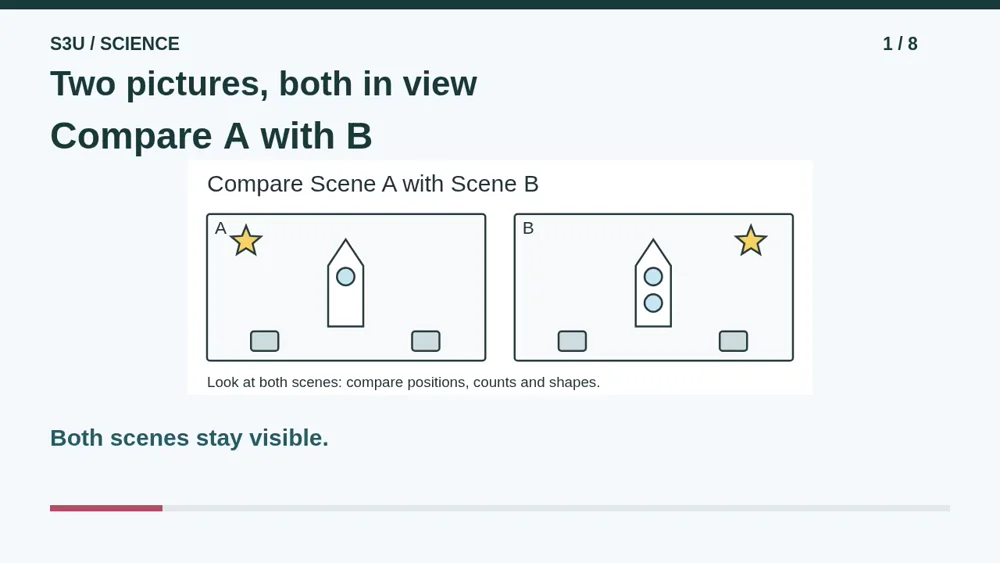
Two rocket-pad pictures are on the page. Keep both in view while you compare them. We are practicing careful observation, not trying to remember a picture after it disappears. Start at the top and move down. A plan helps your eyes know where to look.
2. Look at the star first
Video: 0:20
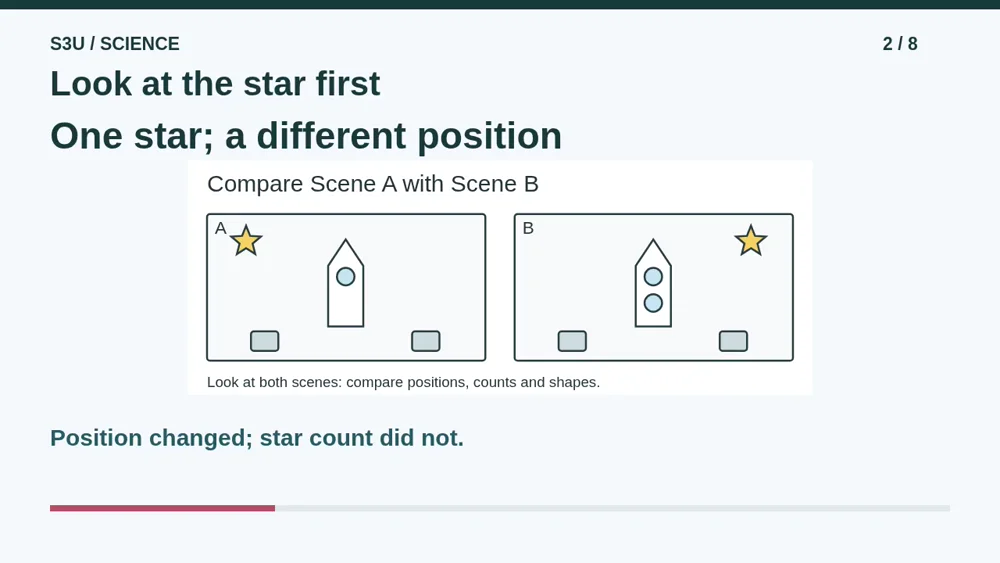
In picture A, the star is at the upper left. In picture B, it is at the upper right. That is a position change. Count the stars too: there is still one in each picture. Moving a star does not secretly make a second star.
3. Count the round windows
Video: 0:39
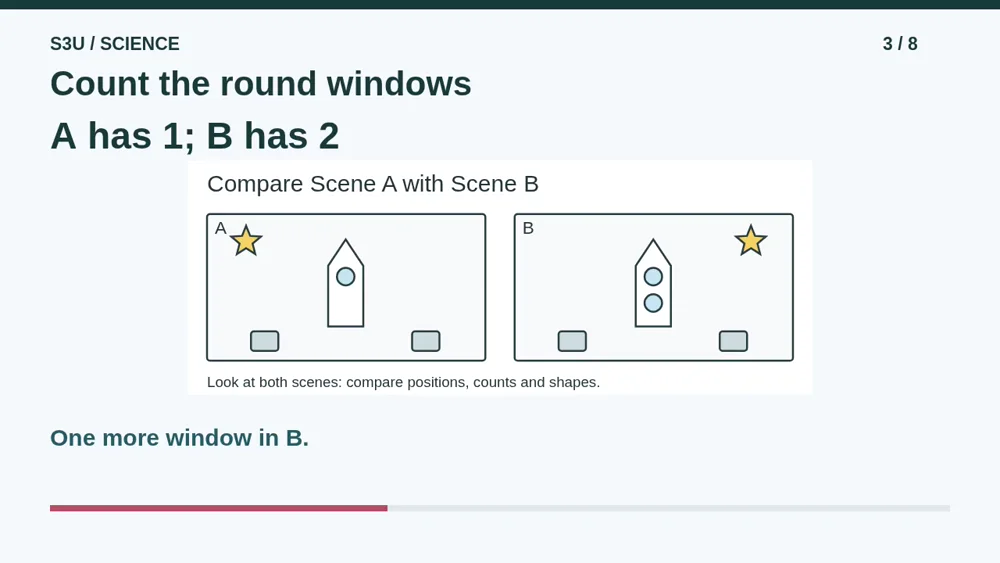
Now compare the rockets. Picture A has one round window, and picture B has two. This time the count changes. Two minus one is one extra window. Look at the matching part of each rocket instead of counting everything in the whole picture at once.
4. Find something that stayed
Video: 0:59
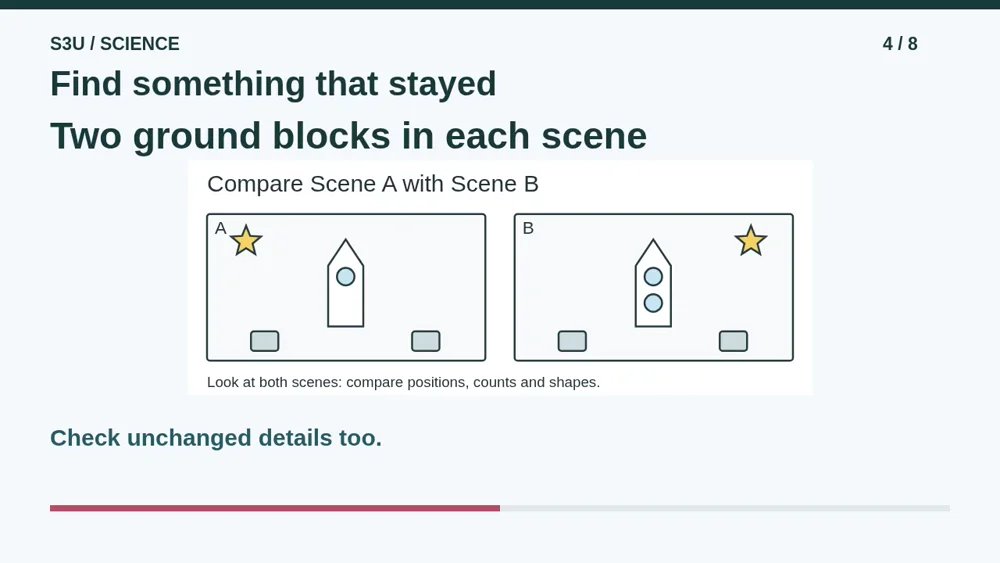
Look along the ground. There are two blocks in each picture, so their count stayed the same. A good comparison names similarities as well as differences. Otherwise we might claim everything changed when most of our little rocket pad actually stayed put.
5. Pause: a new position puzzle
Video: 1:19
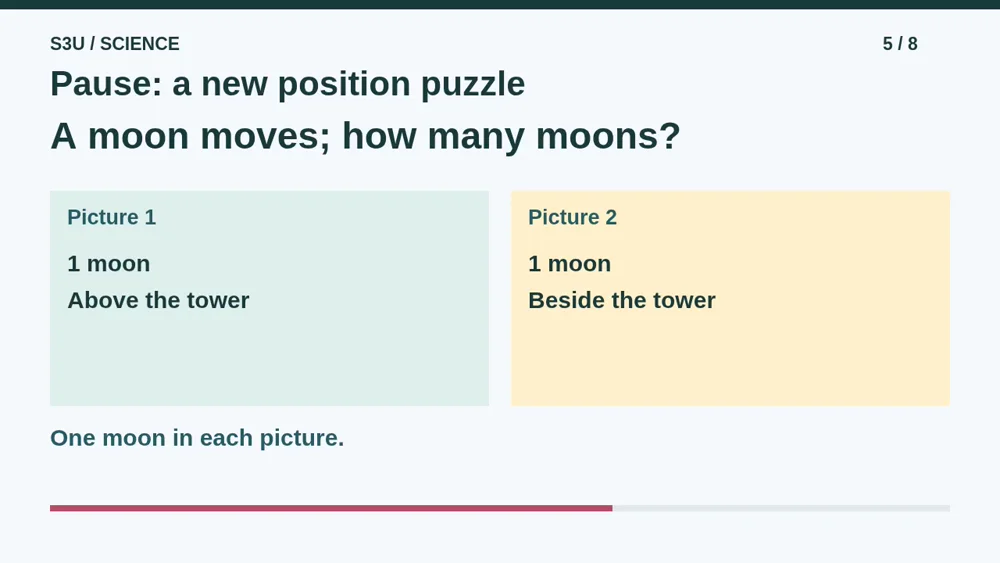
Try a new pretend example. Picture one has a single moon above a tower. Picture two has that same single moon beside the tower. Pause and say what changed. Did its position change, its count change, or both? Use the description to explain your choice.
6. A move does not add a moon
Video: 1:41
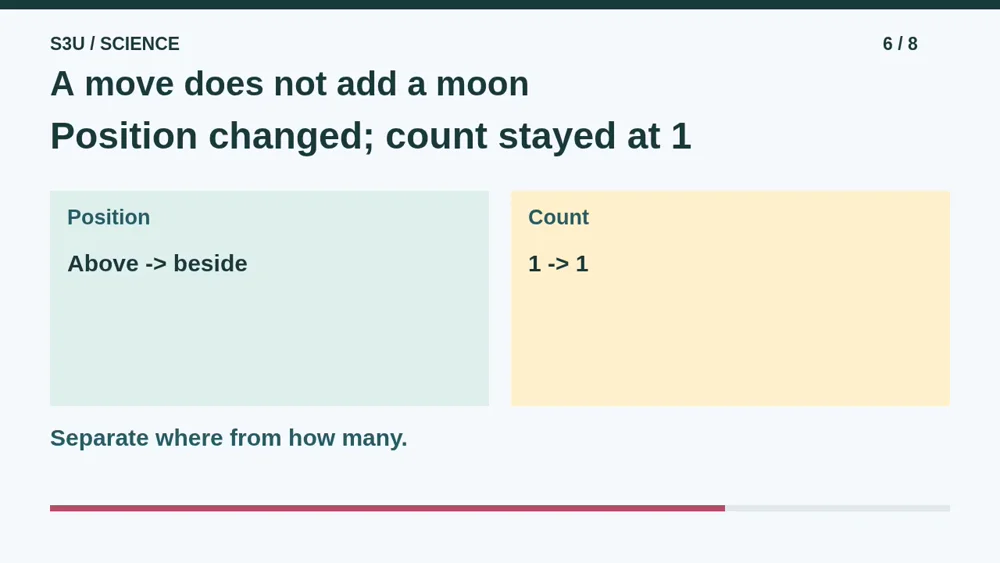
The moon changed position. Its count stayed at one because each picture still has a single moon. Compare matching features before naming a change. It would be a very surprising sky if every moving moon left a spare copy behind, but our model does not do that.
7. A useful detective sentence
Video: 2:01
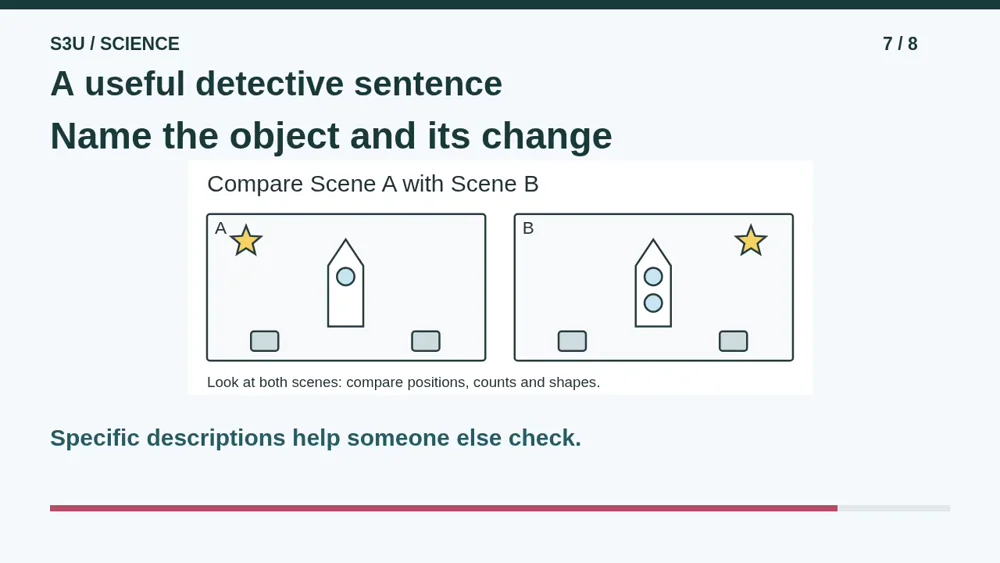
Fun fact: you can move an object in a drawing without changing how many objects there are. Where and how many are different questions. The sentence the star moved from left to right tells us much more than the sentence something looks strange.
8. Mark and explain the changes
Video: 2:19
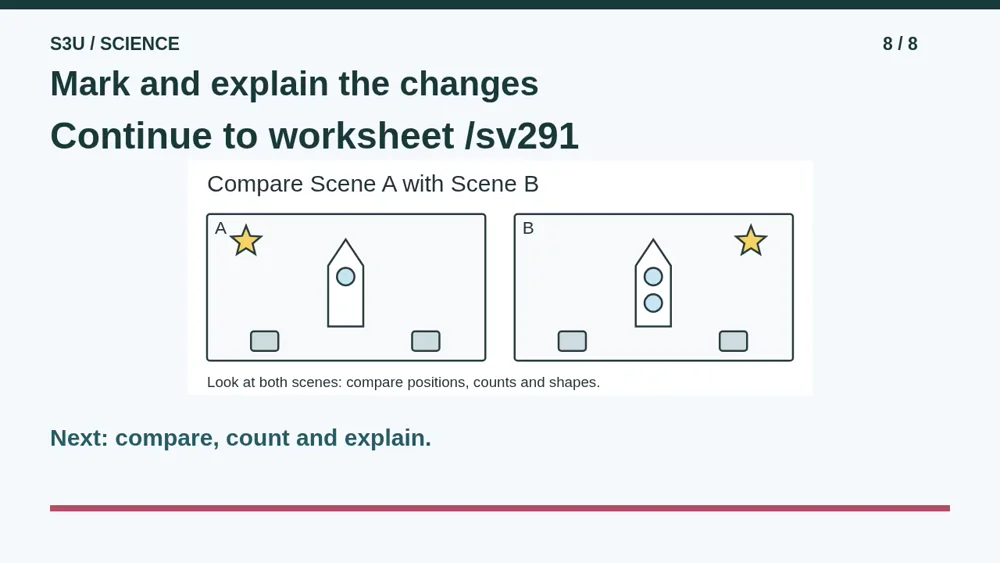
Continue to the worksheet below the video. Compare the star, the rocket windows and the ground blocks. Mark the changes on paper and explain one thing that stayed the same. You can use the written descriptions too. Careful observation matters more than racing to finish.
Show your understanding
You can point, explain aloud, draw or write.
- Compare one part of two pictures at a time to find a difference.
- Say whether the difference is in position, number or appearance.
Try it yourself
Try a new pretend example. Picture one has a single moon above a tower. Picture two has that same single moon beside the tower. Pause and say what changed. Did its position change, its count change, or both? Use the description to explain your choice.
Continue to the matching worksheet. Explain your observations before checking your answers.
Next: your worksheet
Spot Changes at the Rocket Padhttps://s3u.com/sv291
Lesson: https://s3u.com/lessons/compare-space-scenes