History / Grade 5
Clay keeps a record
Learning goal: Connect Mesopotamian record keeping with clay, cuneiform and languages, then test the limits of two invented accounts.
Before you start: Read short records or ask someone to read them. Distinguish a material from words, and subtract small whole-number counts.
Read or print this lesson What to practiceThe video could not load. The transcript is still available below.
Next: your worksheet
Mesopotamia: Writing and Record Keeping
Checking sign-in...
Read the transcript
Saved reading place
Video transcript and practice. Reading or printing does not count as playback time or an assessed grade.
1. A tablet without a battery
Video: 0:00
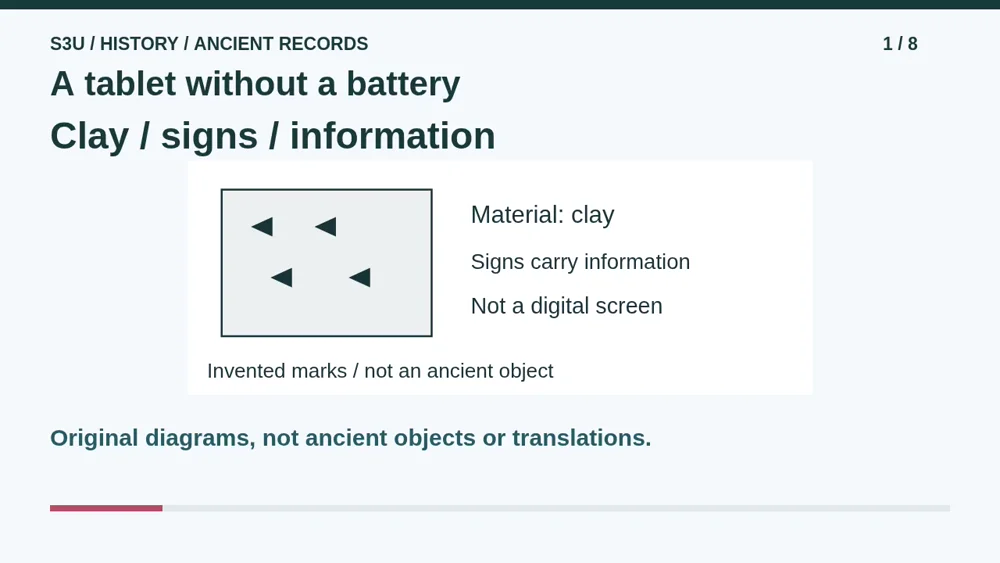
This tablet does not need charging. It is clay, not a screen! In ancient Mesopotamia, people recorded information on clay tablets. Today we will connect a writing material, a script and the activity a record describes. Those are three different questions. Our drawings and practice records are invented teaching models. They are not photographs of ancient objects, and the marks are not real signs to translate.
2. Why keep a record?
Video: 0:32
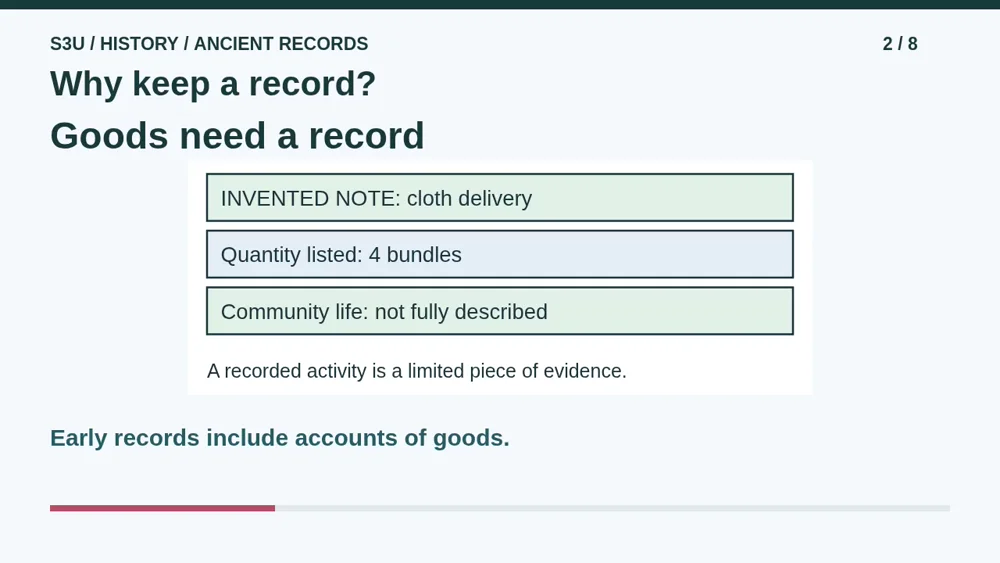
Growing communities in southern Mesopotamia needed ways to record goods and transactions. Early writing developed alongside that record keeping. Imagine trying to remember every delivery with no list. Was it four bundles or five? In our invented example, a note lists four bundles of cloth delivered. It records a quantity and an activity. The note does not, by itself, tell us every person who lived nearby or everything they did.
3. Pressing is not drawing
Video: 1:07
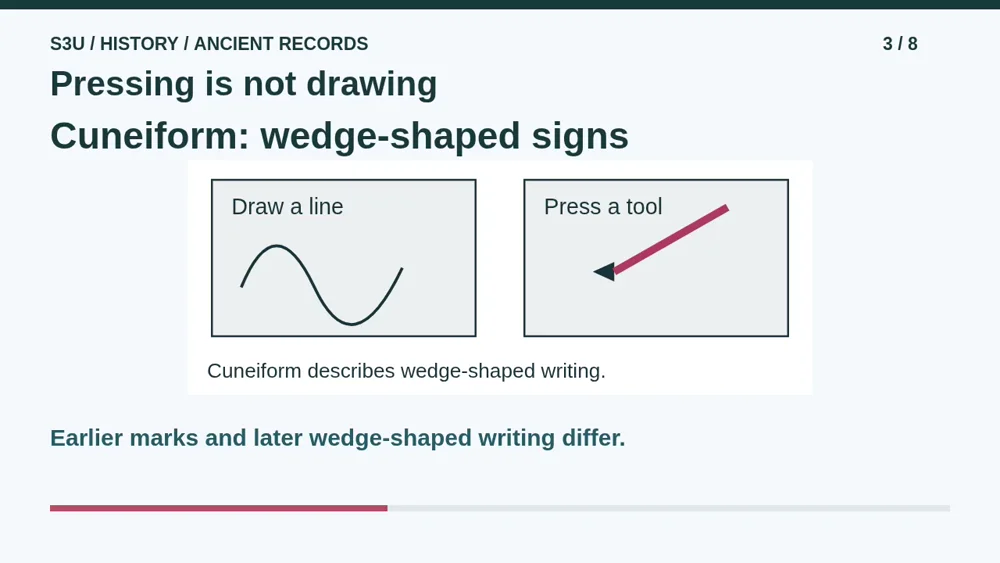
Some early signs were drawn into clay. Over time, scribes impressed wedge-shaped signs with a stylus, a writing tool. That later script is called cuneiform. Picture pressing a tool into soft clay rather than drawing with ink on paper. Our large wedge shapes show the idea of an impression, not authentic words. A wedge alone is not a secret code you can automatically read. The arrangement and the writing system matter.
4. Material, script and language
Video: 1:39
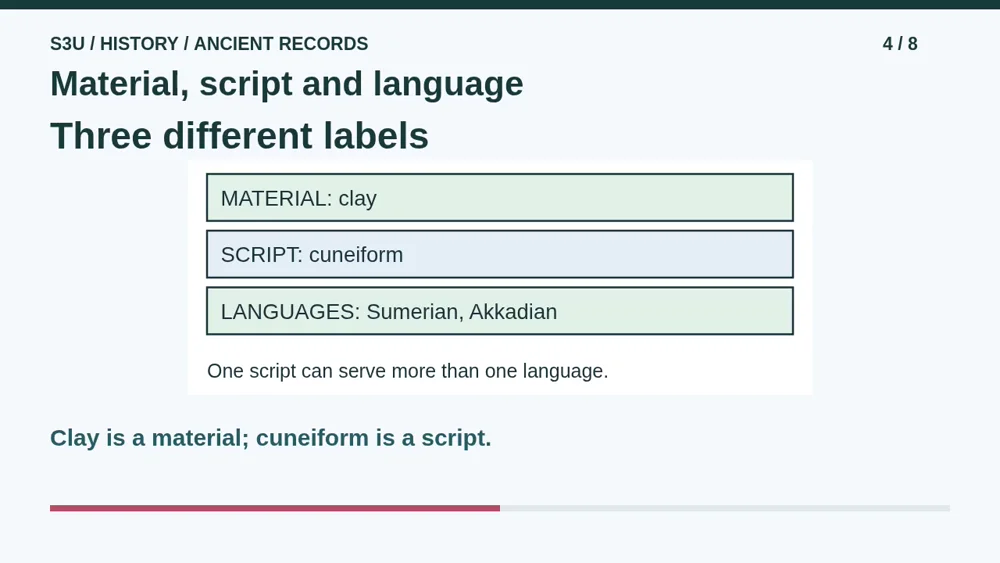
Clay names the material. Cuneiform names a writing system. Sumerian and Akkadian name different languages that could be written using that system. One script does not mean one language, just as seeing familiar letters today does not tell you every word on a page. Keep the labels separate. If someone calls clay a language, ask whether they mean what carries the writing or how the writing expresses words.
5. Pause: what do the notes show?
Video: 2:10
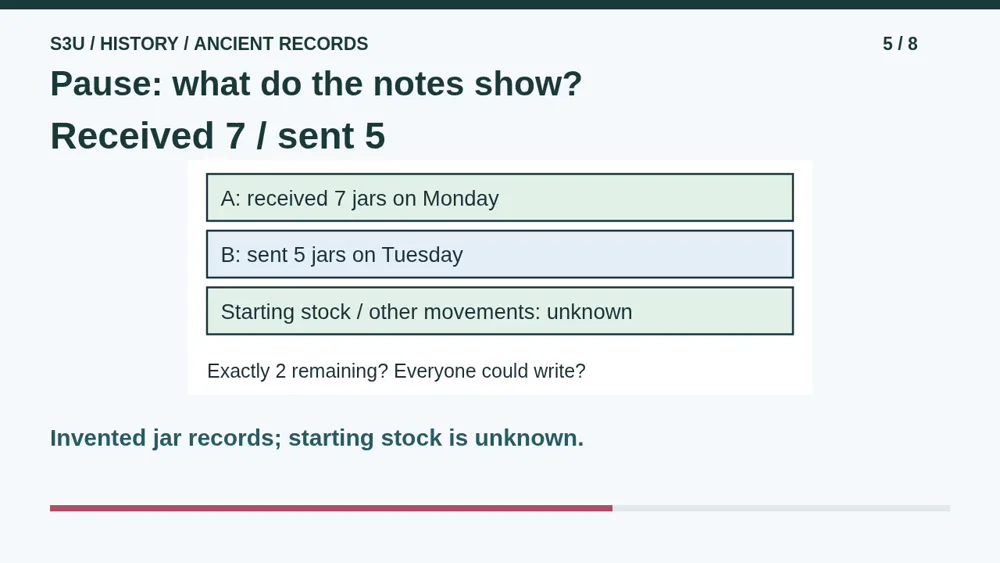
Pause for two new invented notes. Note A records seven jars received on Monday. Note B records five jars sent on Tuesday. They give no starting stock and do not say that these were all the movements. What activities do the notes record? Can we conclude that exactly two jars remained? Can we conclude that everyone in the community could write? Explain what information is missing before you continue.
6. Keep the claim small enough
Video: 2:43
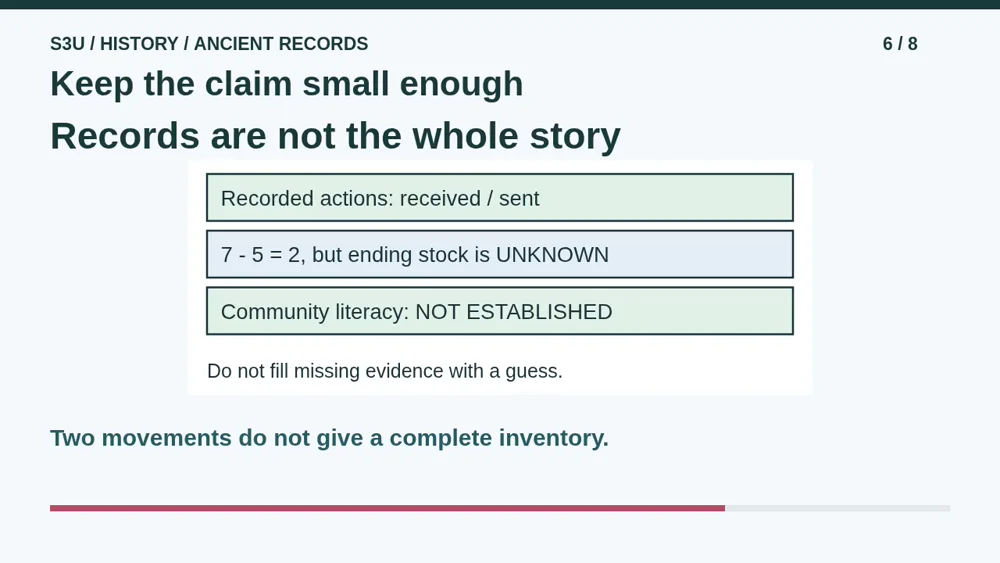
The notes record a receipt and a dispatch. Seven minus five is two, but that difference is not a complete stock count. We do not know the starting amount or other movements. Nor do two notes establish that everyone could write. We can report what the notes say and look for other evidence to check events and context. A carefully limited answer is more useful than a confident answer built from missing facts.
7. An envelope made of clay
Video: 3:14
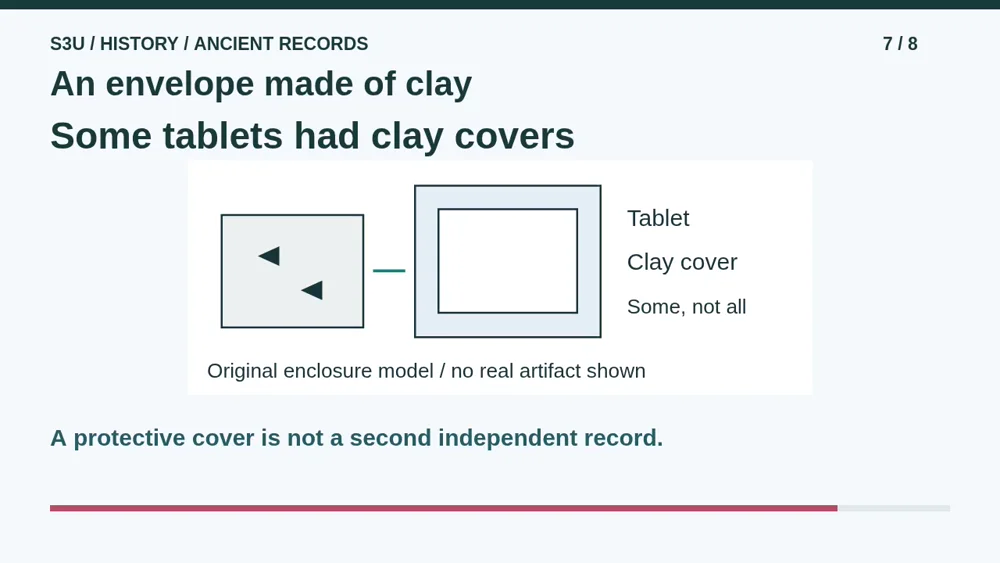
Fun fact: some tablets were enclosed in clay envelopes. A cover could help protect the writing from tampering. The mail was not especially foldable! Do not imagine that every tablet had the same cover or purpose. Accounts, letters and literary texts can answer different historical questions. Comparing several kinds of evidence helps us see more activities, but a copied statement is still not automatically a second independent witness.
8. Continue to the worksheet
Video: 3:48
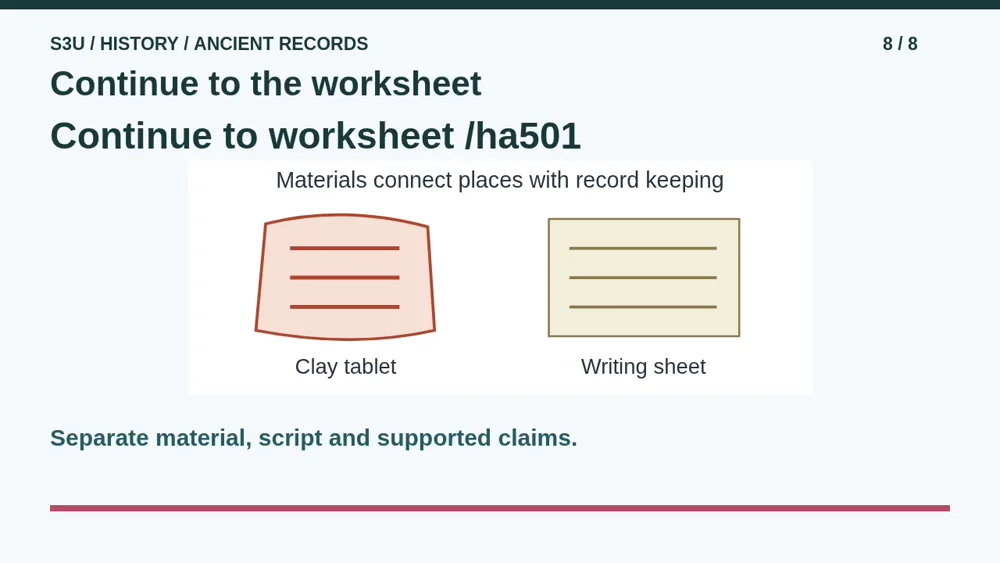
Continue to the worksheet below. Read its passage about writing and record keeping, then explain each answer using the passage. Keep material, script and language separate. When a question asks what an account supports, choose a claim that fits the evidence rather than a claim about every person. You can answer aloud, point or dictate. You do not need real clay, an ancient object, an upload or a public presentation.
Show your understanding
You can point, explain aloud, draw or write.
- Separate clay as a material, cuneiform as a script and Sumerian or Akkadian as languages.
- Identify the receipt and dispatch in two invented notes and explain why missing starting stock, other movements and literacy evidence limit the conclusions.
Try it yourself
Pause at the two jar notes. Name the recorded activities and explain why the difference is not a complete inventory.
Continue to the worksheet. Separate material, script and language, and keep every claim within the supplied evidence.
Next: your worksheet
Mesopotamia: Writing and Record Keepinghttps://s3u.com/ha501
Lesson: https://s3u.com/lessons/clay-keeps-a-record