Math / Grade 8
Check a trial balance
Learning goal: Separate earned revenue from collection, compare cash with profit, and explain why equal debit and credit totals can hide a missing transaction.
Before you start: Name debit and credit sides, follow account balances and distinguish a completed service from its collection. Use the simplified accrual model before closing entries.
Read or print this lesson What to practiceThe video could not load. The transcript is still available below.
Next: your worksheet
Trial Balance Detective - Practice 1
Checking sign-in...
Read the transcript
Saved reading place
Video transcript and practice. Reading or printing does not count as playback time or an assessed grade.
1. Earned is not the same as collected
Video: 0:00
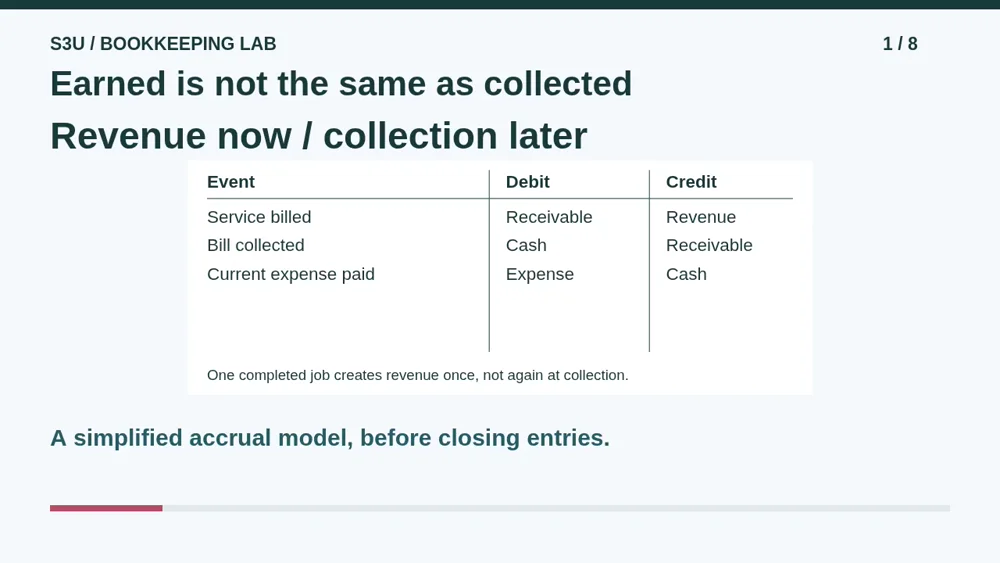
Our next fictional workshop keeps accrual records. That means a completed service creates revenue even when its customer pays later. An amount the customer owes is Accounts Receivable, an asset. Revenue increases with a credit. Expenses increase with debits and reduce profit. We start from zero and exclude taxes, fees, depreciation and other adjustments. These paper examples teach reasoning, not advice for real financial accounts.
2. Bill once, collect part of it
Video: 0:35
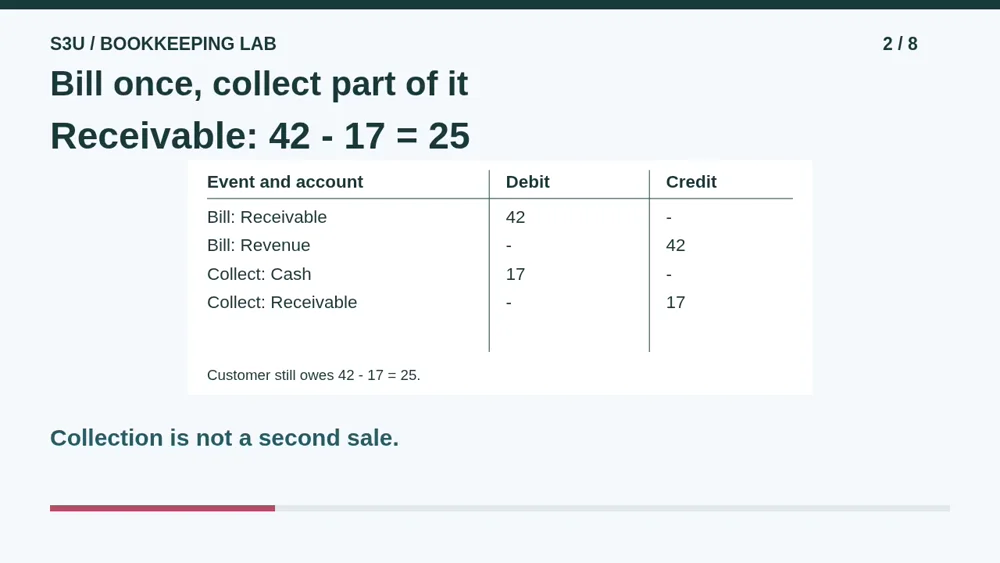
The owner contributes ninety cash. Then the workshop completes a forty-two-dollar service and bills its customer. Debit Accounts Receivable forty-two and credit Service Revenue forty-two. Later the customer pays seventeen toward that bill. Debit Cash seventeen and credit Accounts Receivable seventeen. Twenty-five is still owed. Do not credit revenue again: collecting a bill is not doing the same job twice, even if the paperwork feels like it.
3. Separate profit from cash
Video: 1:10
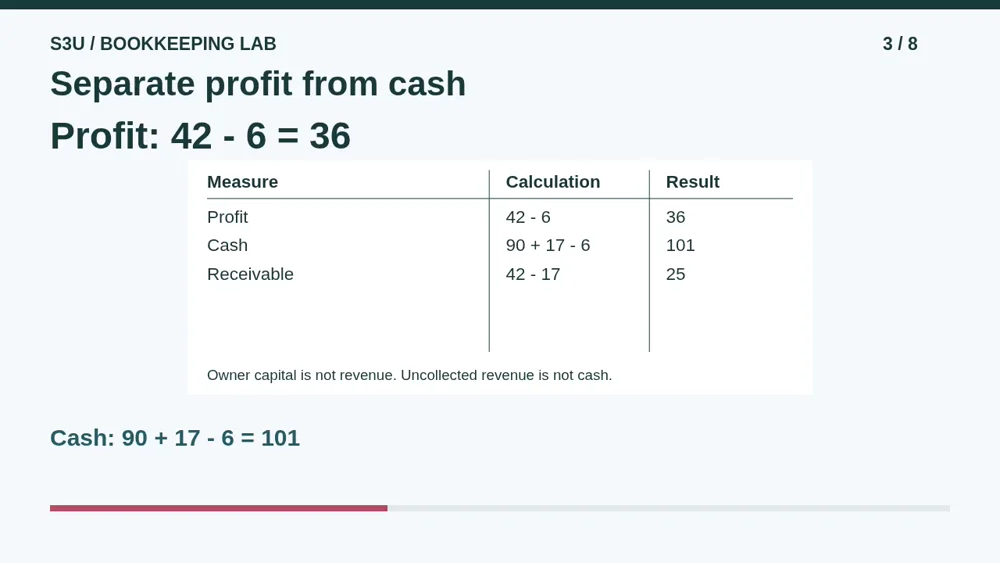
The workshop also pays six cash for electricity consumed this period. Debit Electricity Expense six and credit Cash six. Profit is earned revenue forty-two minus expense six, or thirty-six. Cash is the ninety-dollar contribution plus seventeen collected minus six paid, or one hundred one. Profit and cash answer different questions. The owner contribution is capital, not revenue, and the customer still owes twenty-five.
4. Build the trial balance
Video: 1:44
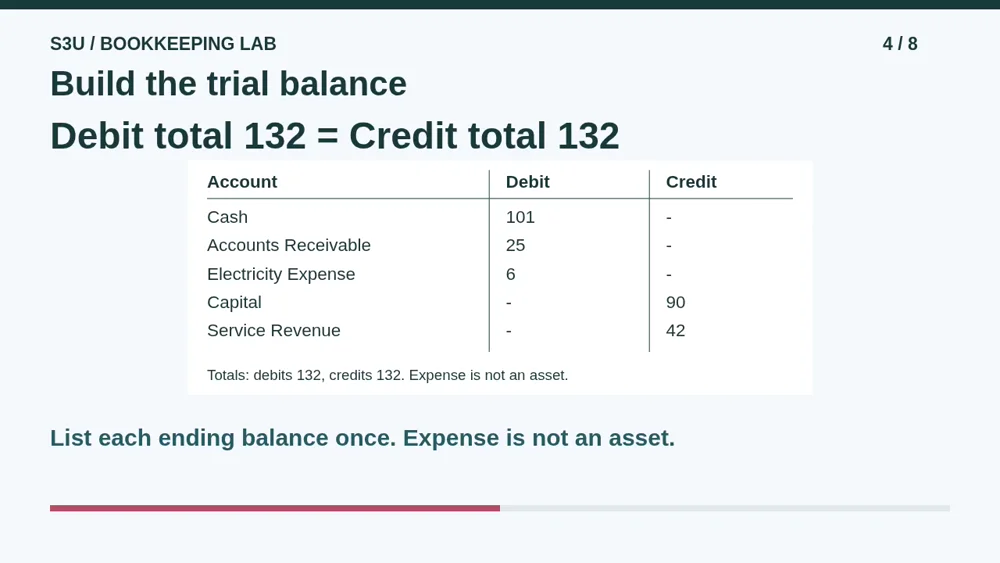
Before closing entries, list each account with its ending balance. Cash one hundred one, Accounts Receivable twenty-five, and Electricity Expense six go in the debit column. Capital ninety and Service Revenue forty-two go in the credit column. Each column totals one hundred thirty-two. This is a trial balance, not a list of assets alone and not a cash statement. It includes the expense balance without pretending that expense is an asset.
5. Pause: an expense before payment
Video: 2:18
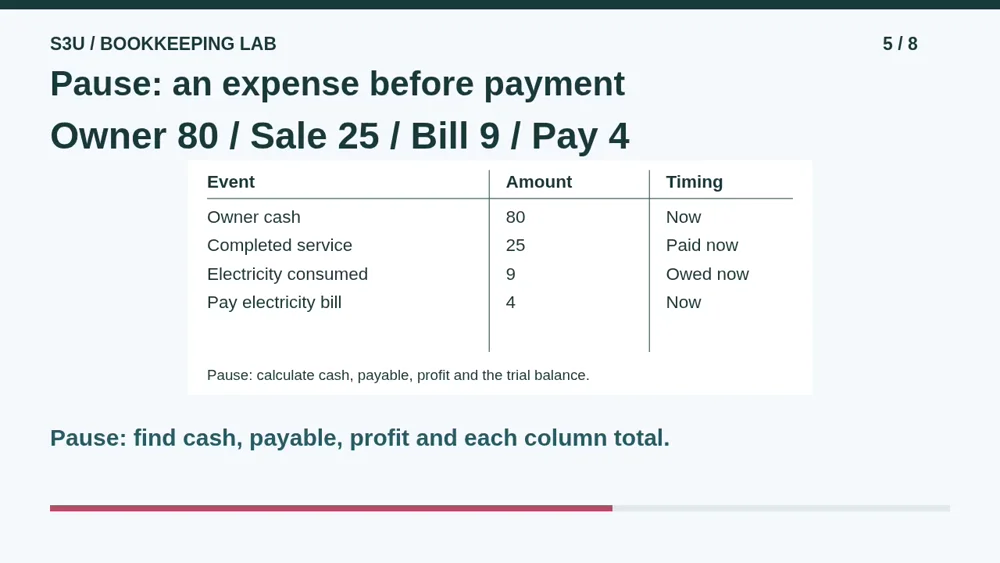
Try a different zero-balance workshop. Its owner adds eighty cash. It completes a service and immediately receives twenty-five cash. It receives a bill for nine of electricity consumed this period, then pays four toward that bill. Pause and find cash, the remaining payable, profit, and the total of each pre-closing trial balance column. Use the whole current expense, not just the portion already paid.
6. Check the whole current expense
Video: 2:50
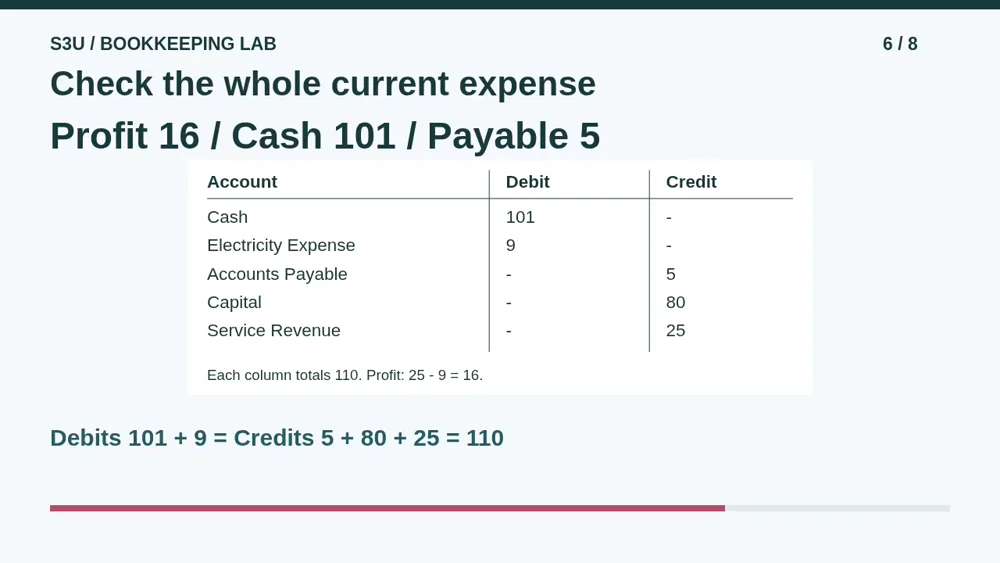
Cash is eighty plus twenty-five minus four, which is one hundred one. The bill creates an expense of nine and a payable of nine; paying four leaves five owed. Profit is twenty-five minus nine, or sixteen. Debit balances total one hundred one cash plus nine expense, or one hundred ten. Credit balances total five payable, eighty capital, and twenty-five revenue, also one hundred ten. Payment did not create a second expense.
7. Balanced can still be wrong
Video: 3:24
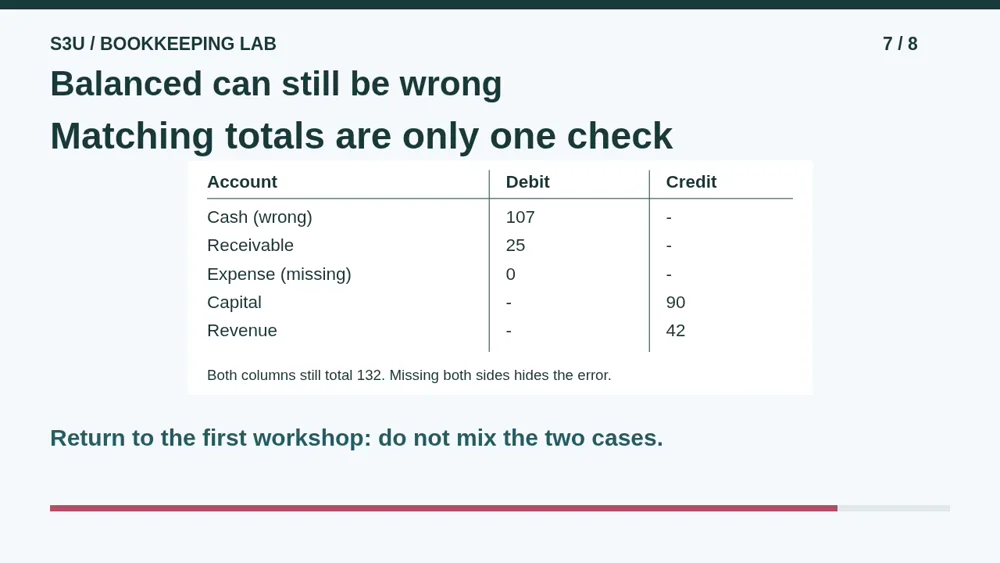
Fun fact: leaving out an entire transaction can preserve a balanced trial balance. Return to our first workshop. Omit both sides of its six-dollar electricity payment. Cash would wrongly stay at one hundred seven, and the expense would be missing. Add receivable twenty-five and the debit total is still one hundred thirty-two, matching the credits. A perfectly balanced mistake is still a mistake. Compare the entries with source evidence too.
8. Continue to the detective worksheet
Video: 3:58
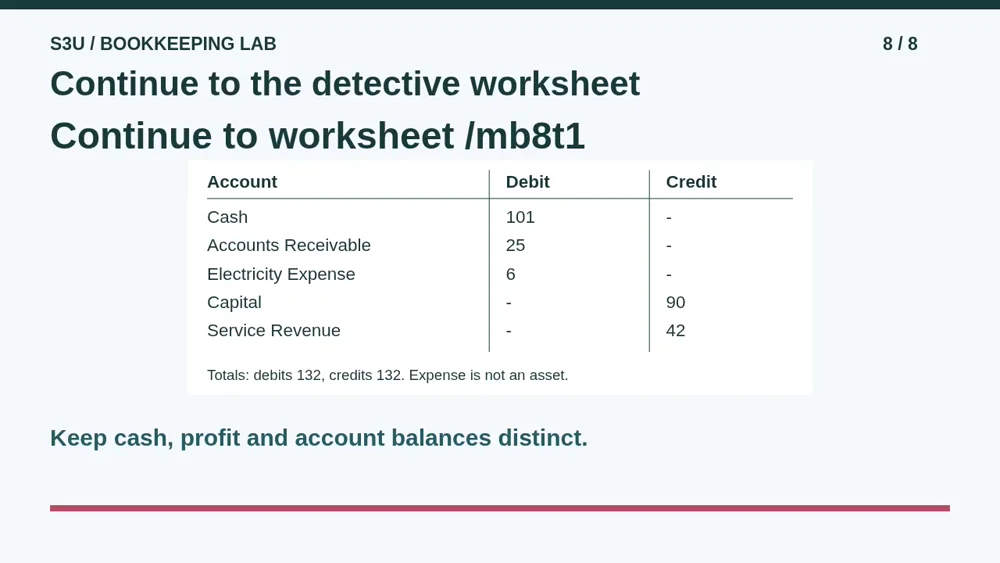
Continue to the worksheet below for a new workshop. Follow billing, collection and expense timing, then build its trial balance from ending balances. Explain why an omitted whole transaction may leave totals equal. The alternate worksheet also asks about a sale put in the wrong account. Use the stated fictional records, keep assumptions visible, and explain each correction. This is a starting model, not the complete accounting cycle.
Show your understanding
You can point, explain aloud, draw or write.
- Calculate cash, receivables, payables and profit separately, then build equal trial balance columns from ending balances.
- Explain why omitting both sides of an expense preserves equal column totals and why source records still need checking.
Try it yourself
Pause at owner cash 80, cash service 25, current electricity bill 9 and payment 4. Find cash, payable, profit and each pre-closing column total.
Continue to the detective worksheet and alternate case. Use the stated fictional records; equal totals do not prove every transaction is correct.
Next: your worksheet
Trial Balance Detective - Practice 1https://s3u.com/mb8t1
Lesson: https://s3u.com/lessons/check-a-trial-balance