Science / Grade 5
Check a prediction
Learning goal: Follow a stated paper rule, find a misleading color shortcut and distinguish a wrong prediction from an unstated case.
Before you start: Follow a stated if/then rule and compare a predicted name with a labeled picture. Color names are supplied; color vision is not required.
Read or print this lesson What to practiceThe video could not load. The transcript is still available below.
Next: your worksheet
When a Pattern Guesses Wrong
Checking sign-in...
Read the transcript
Saved reading place
Video transcript and practice. Reading or printing does not count as playback time or an assessed grade.
1. Examples are not a promise
Video: 0:00
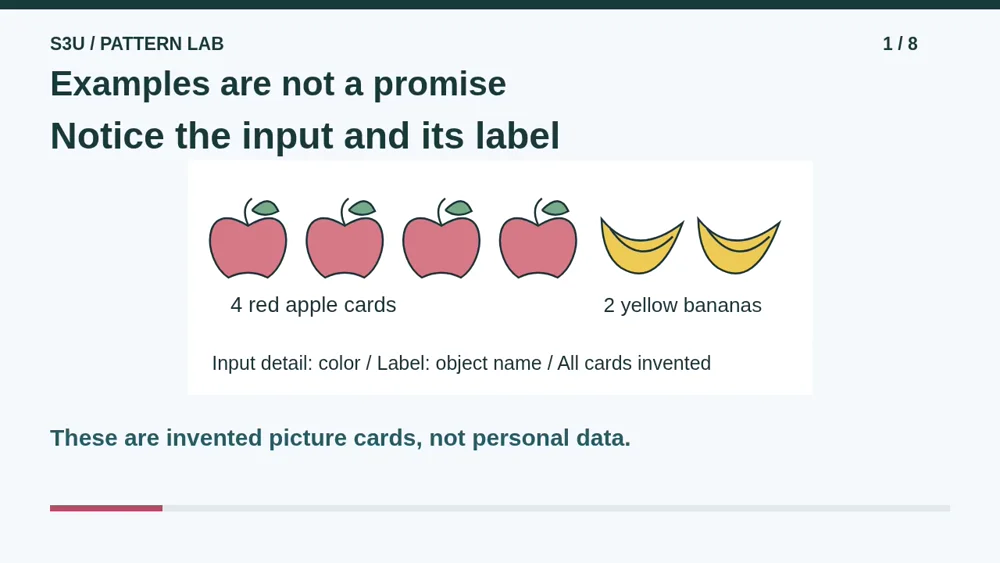
A pretend fruit sorter has seen four cards labeled apple and two labeled banana. All four apples are red, and both bananas are yellow. The color is an input detail. The attached word is the label. Some machine learning systems use labeled examples to fit patterns for predictions. We will inspect a much simpler paper rule, not run or train a real system.
2. State the rule before using it
Video: 0:29
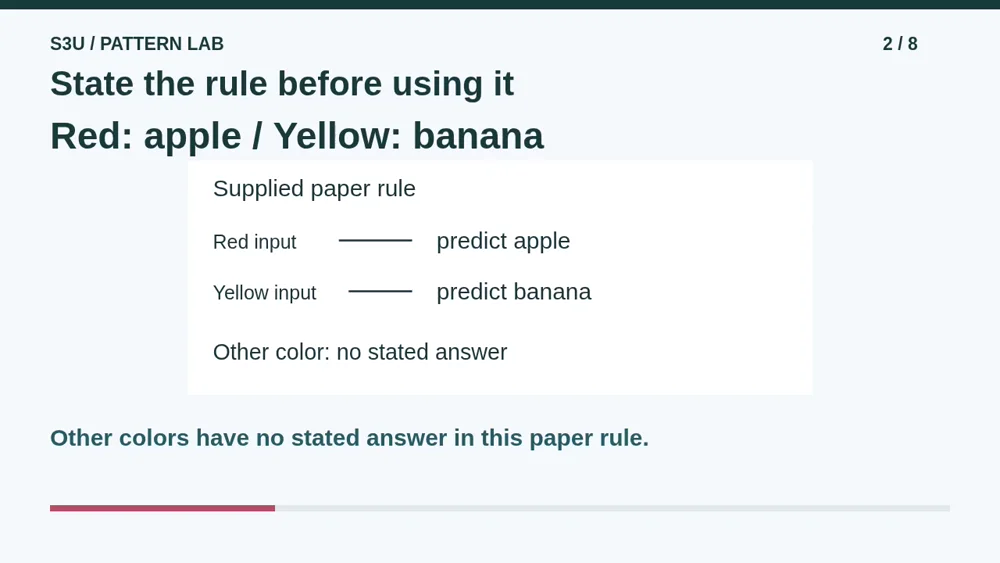
Here is the rule we supply for our paper sorter: if an item is red, predict apple. If it is yellow, predict banana. For any other color, this rule has no stated answer. The rule matches the six example cards, but matching those cards does not prove it will work on everything else. Write down the rule before trying a new card.
3. A confident mistake is still a mistake
Video: 0:55
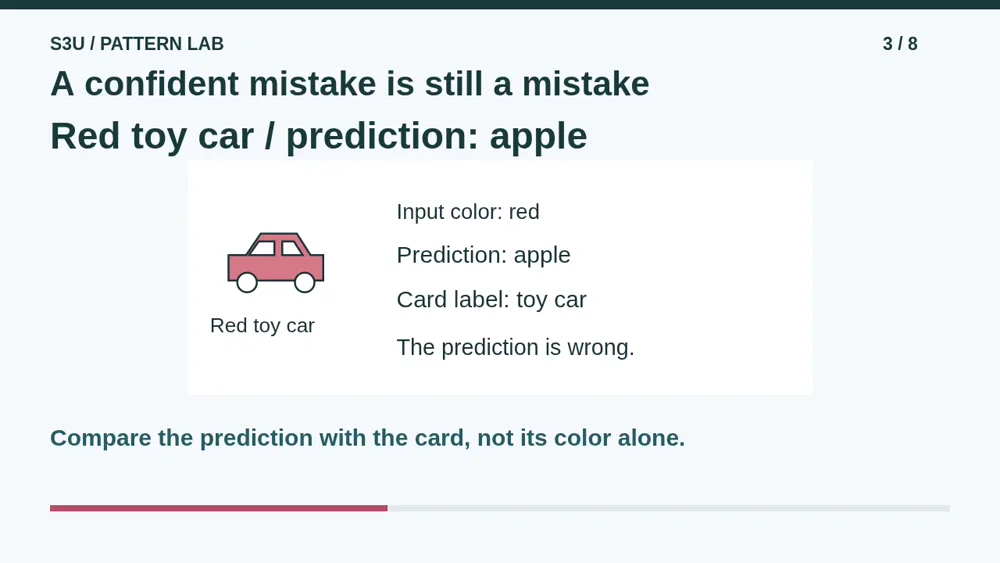
Now give the rule a red toy car card. It predicts apple because the car is red. But the card shows a toy car, not an apple. The prediction is wrong. Saying apple in a louder voice would not fix it. Color alone cannot distinguish these two objects. The card gives us evidence of a limit in this particular rule.
4. Missing an answer is different
Video: 1:20
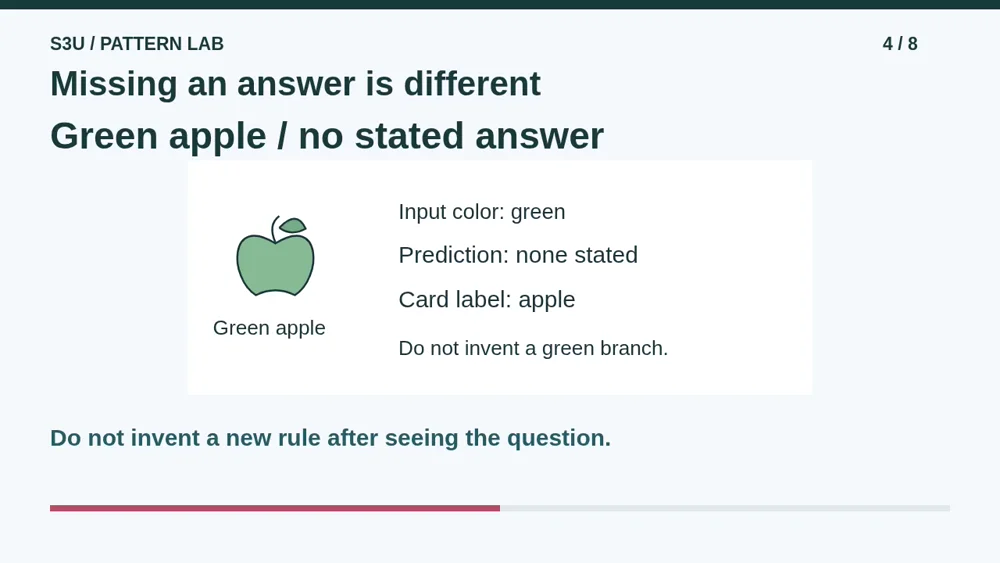
Next comes a green apple card. Our paper rule only says what to do with red or yellow. It gives no answer for green. That is different from calling the green apple a banana. Do not silently invent an extra instruction. First describe what the current rule actually does, then explain what evidence or revision might help. Real systems can handle unfamiliar inputs in different ways.
5. Pause: try two new cards
Video: 1:50
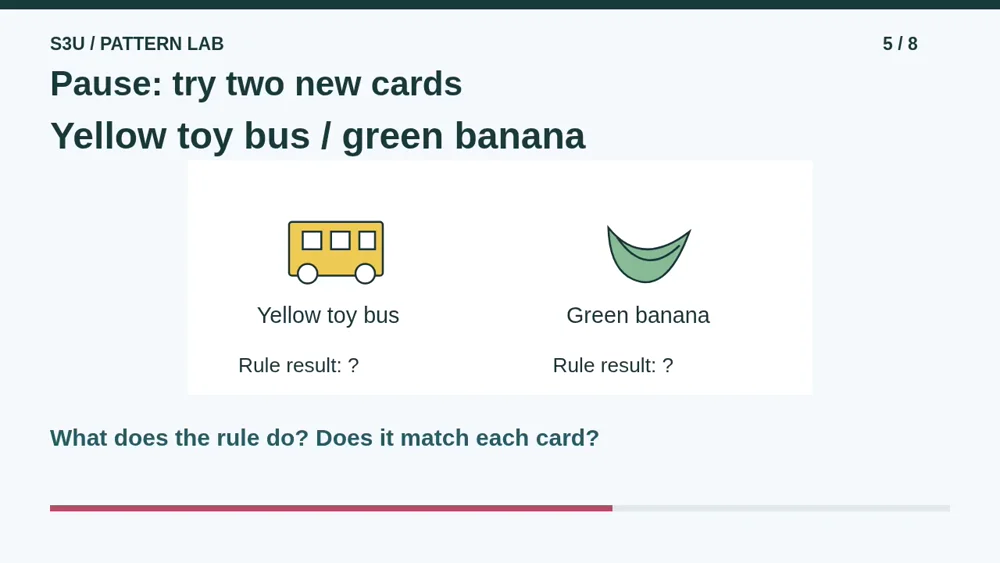
Pause for two fresh cards: a yellow toy bus and a green banana. Use the same red and yellow rule, without changing it. For each card, say what the rule predicts, or whether it has no stated answer. Then compare that result with the object named on the card. You can explain aloud or write a small table before continuing.
6. Check the prediction and the gap
Video: 2:15
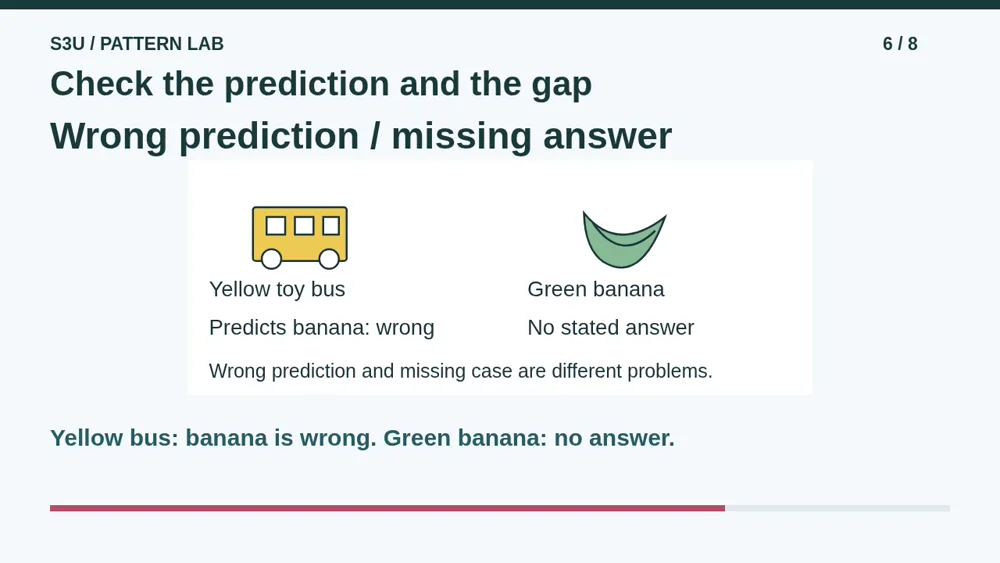
The yellow toy bus is predicted to be a banana, which is wrong. Four wheels would make a very surprising banana. The green banana gets no stated answer because the rule has no green branch. These are different problems. More varied examples could expose missing cases and misleading shortcuts, but adding examples does not by itself guarantee that every future prediction will be right.
7. More copies can repeat a blind spot
Video: 2:45
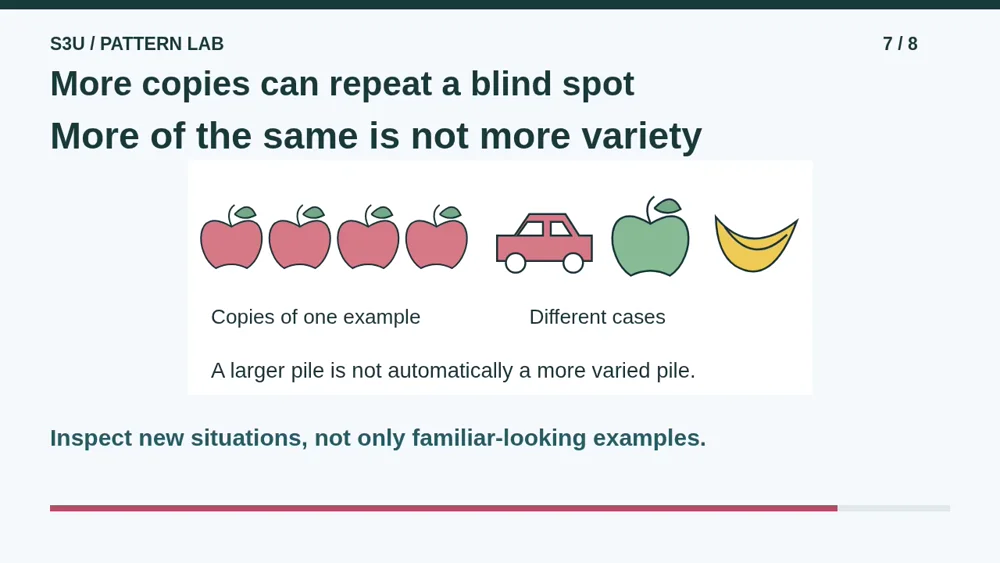
Fun fact: a hundred copies of one red apple picture still show only one kind of example. A larger pile is not automatically a more varied pile. Different shapes, colors and non-fruit objects can challenge this fruit rule in different ways. Our tiny card exercise illustrates that idea; it cannot measure how a real system will behave in every situation.
8. Try the worksheet sorter
Video: 3:13
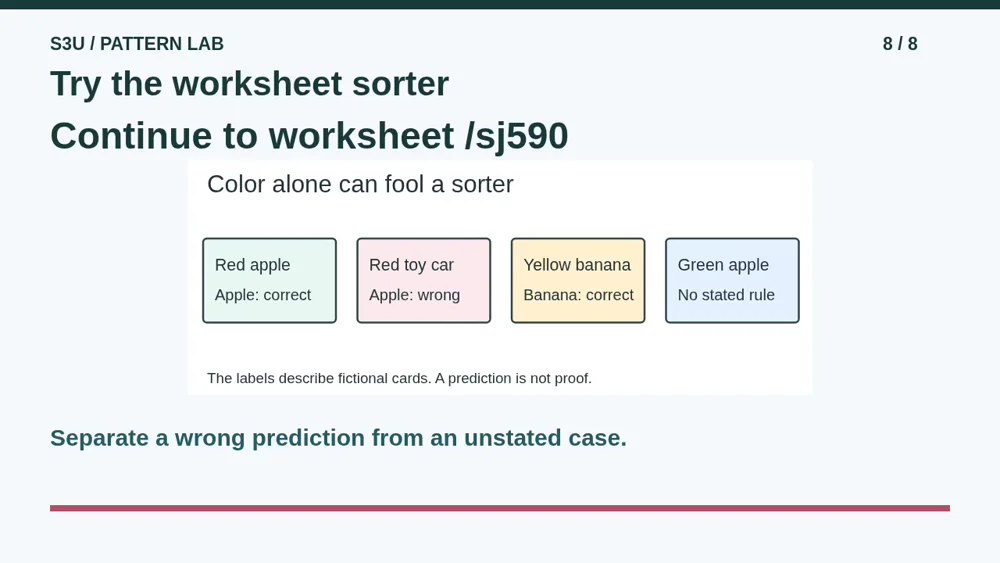
Continue to When a Pattern Guesses Wrong. The worksheet has its own invented cards and its own stated counts. Read those details rather than copying a number from this lesson. Explain why a red toy car breaks the color shortcut and why green has no stated answer. Check important predictions against reliable evidence. No photos, personal information, uploads or external accounts are needed.
Show your understanding
You can point, explain aloud, draw or write.
- Apply the red/yellow paper rule to a new card without inventing instructions for another color.
- Distinguish a wrong prediction from no stated answer and explain why repeated familiar examples do not guarantee new predictions.
Try it yourself
Pause at the yellow toy bus and green banana. State what the red/yellow rule does before comparing with each card.
Continue to the worksheet with its own invented cards. Explain why repeated familiar examples cannot guarantee every new prediction. No uploads or external accounts are needed.
Next: your worksheet
When a Pattern Guesses Wronghttps://s3u.com/sj590
Lesson: https://s3u.com/lessons/check-a-prediction