Reading / Grade 1 / supported practice
Change a short-o word
Learning goal: Read short-o words with a helper, change first and last letters, and read what Tom can do.
Before you start: Work with an adult on the short-o sound used in hop and the consonants in the chains. Respect regional pronunciation and introduce unfamiliar sounds first.
Read or print this lesson What to practiceThe video could not load. The transcript is still available below.
Next: your worksheet
Short-o Word Changes - Practice 1
Checking sign-in...
Read the transcript
Saved reading place
Video transcript and practice. Reading or printing does not count as playback time or an assessed grade.
1. Read a short-o word
Video: 0:00
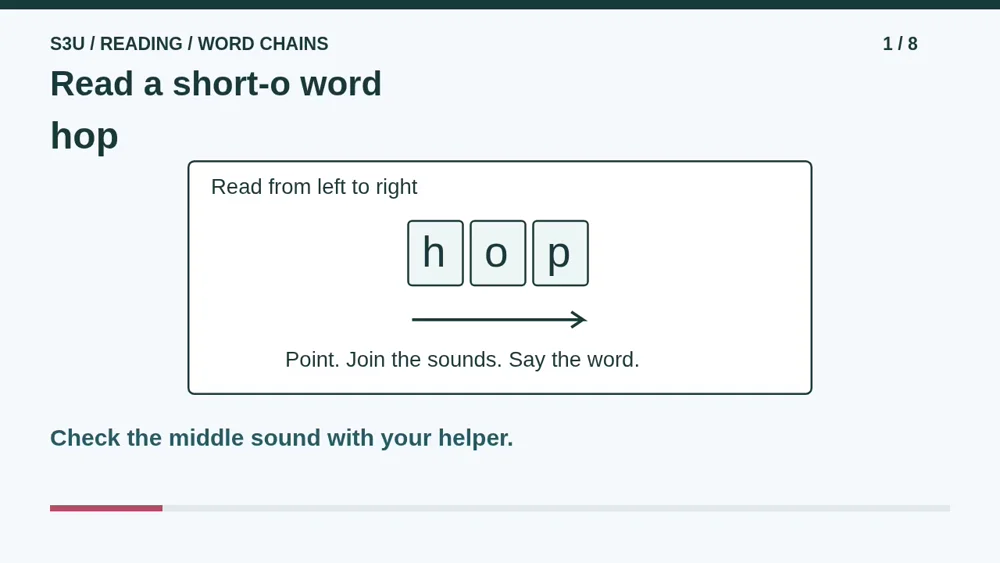
This word is hop. We will read short words with the middle sound you hear in hop. Work with someone who can model the sounds. Learn any new ones before you start. Point to every letter, join the sounds, and read the whole word. No real hopping is needed. Your finger can do the traveling.
2. A different start
Video: 0:24
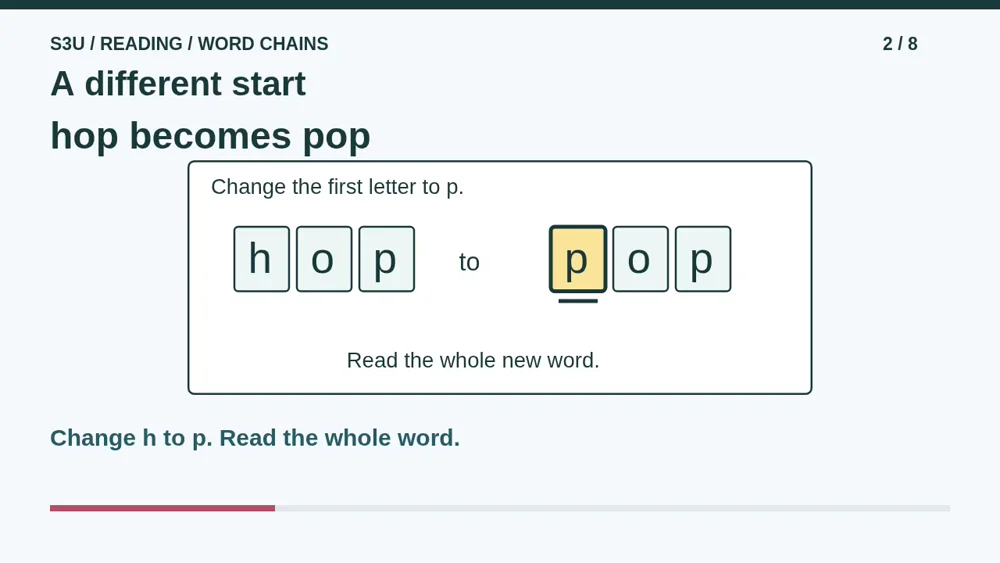
Start with hop. Change the first letter to p. Keep the middle and last letters. Read pop. Hop. Pop. The new word begins and ends with the same letter. Both places still have a job. Point to the first, middle and last letters in order, then say the whole word again.
3. A different ending
Video: 0:50
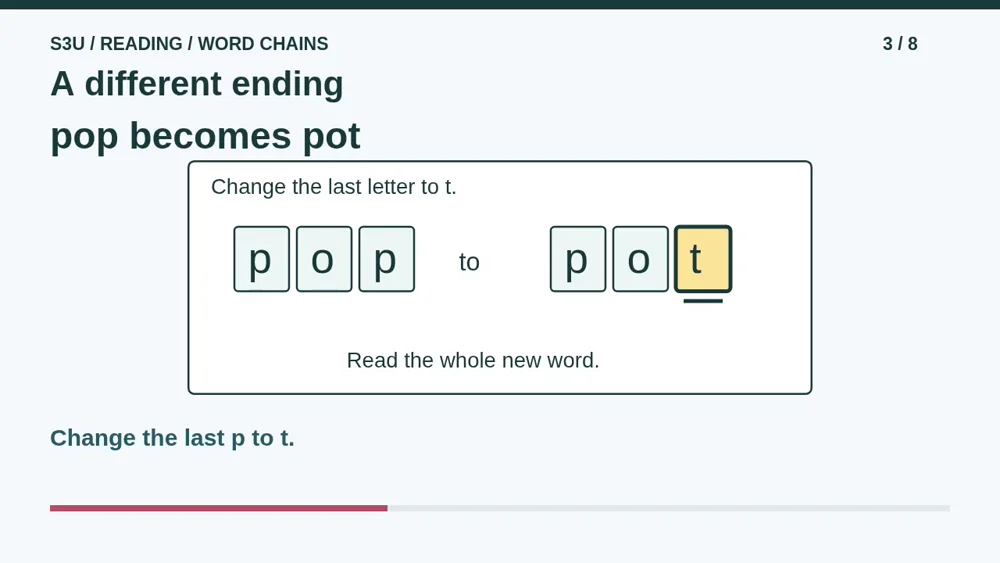
Now change the last letter of pop to t. Read pot. Pop and pot begin the same way. Their endings are different. Point all the way across the word before you say it. A pot can hold a plant. We are reading its name, not carrying a real pot around the room.
4. Read what Tom can do
Video: 1:12
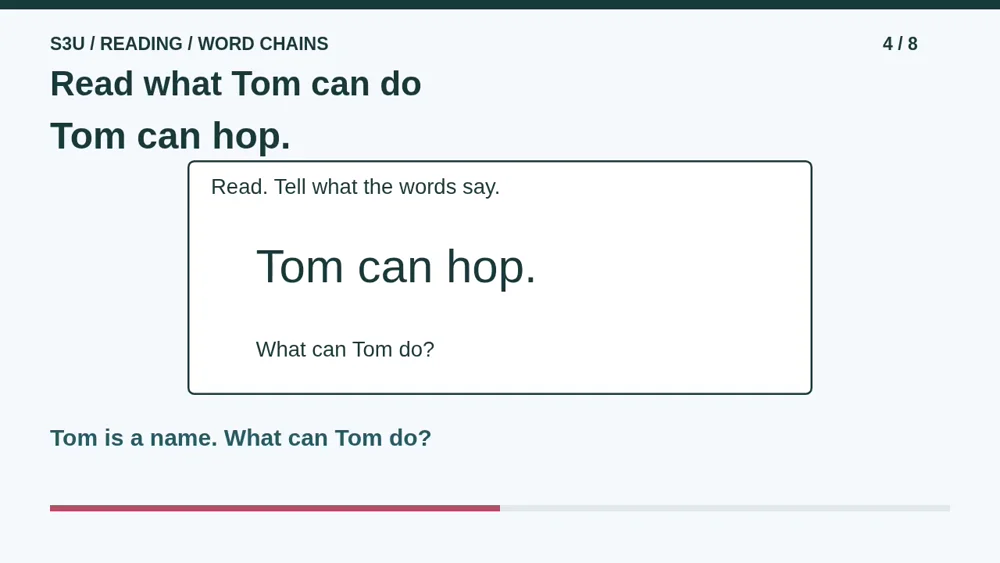
Tom is a name. Read our sentence: Tom can hop. What can Tom do? He can hop. Now reread the sentence without rushing. It tells us what Tom can do. It does not tell us how many hops or where he is. We can imagine a story later, after we read what is really here.
5. Pause for two new changes
Video: 1:36
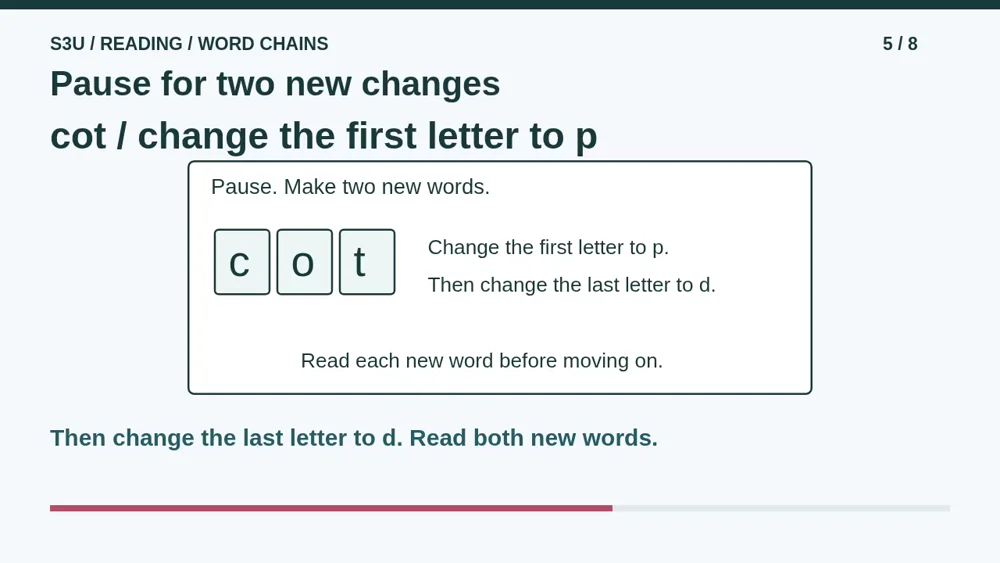
Pause here. Start with cot. Change the first letter to p. Read your new word from left to right. Then change only its last letter to d. Read that word too. Keep the middle letter in place. Your helper can model a sound, but let yourself try the whole word before hearing the answer.
6. Check the two steps
Video: 2:01
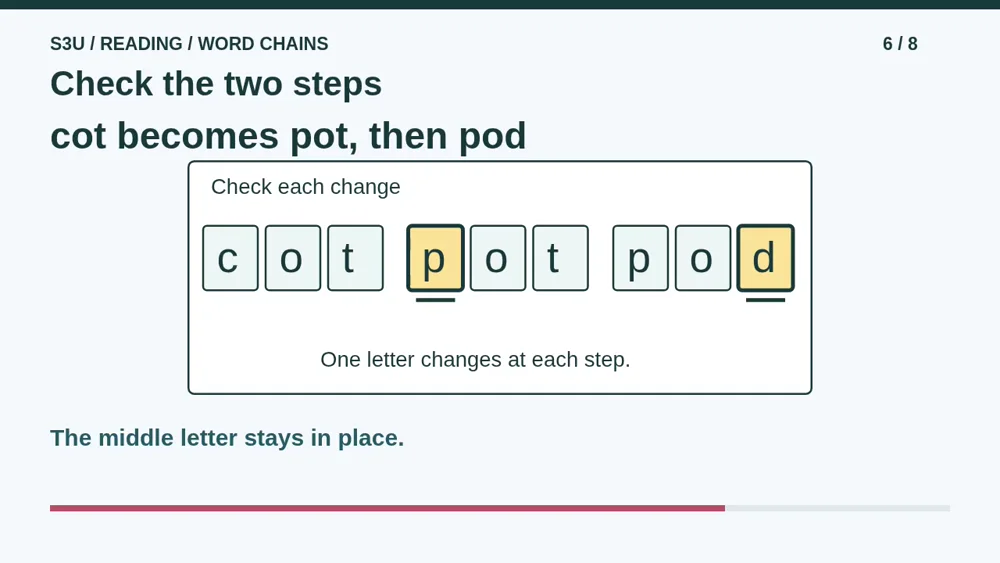
Cot becomes pot when c changes to p. Pot becomes pod when the last letter changes to d. Cot. Pot. Pod. A cot is a small bed. A pod can hold seeds, like a pea pod. Read each new word again. Changing one little letter can change what a word means.
7. Check the order again
Video: 2:27
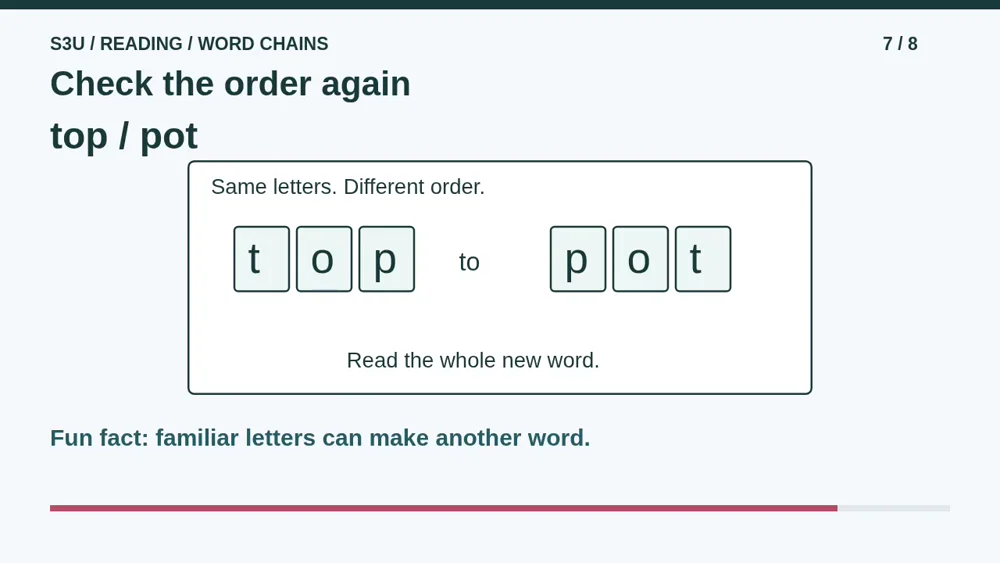
Fun fact: top and pot have the same three letters, but they are not the same word. The first and last letters are in different places. Read top, then pot. The middle letter alone cannot tell you the whole word. Check all three places, even when a word looks almost like one you just read.
8. Continue with short-o practice
Video: 2:50
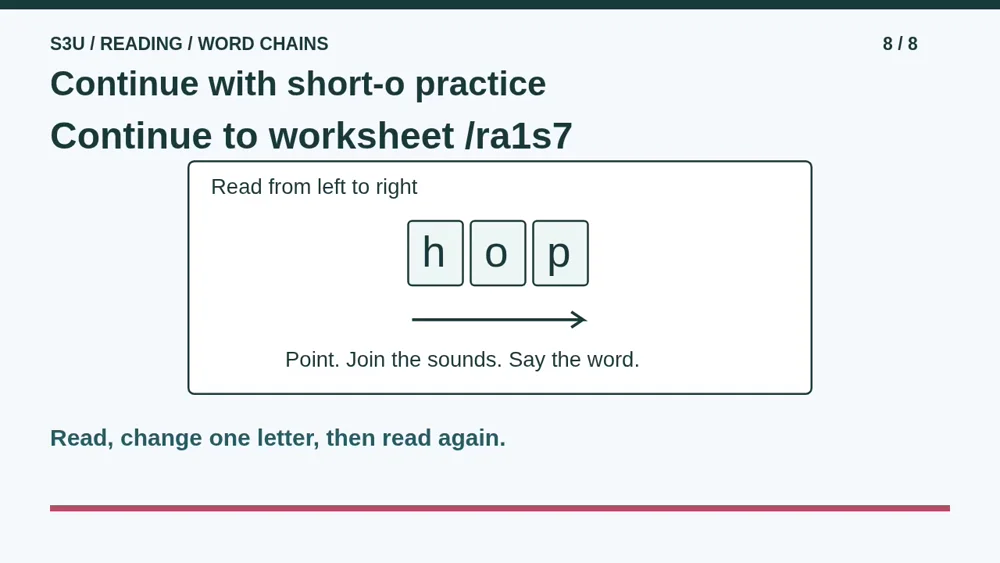
Open the worksheet below. Read its short words with your helper before answering the questions. These questions check letter changes, not spoken reading. Keep the first and last letters in view, and listen for the middle sound too. Try the second sheet on another day. Take a break whenever you need one.
Show your understanding
You can point, explain aloud, draw or write.
- Change first and last letters and check every position when reading the new word.
- With a helper, read the cot chain and Tom can hop, distinguishing its words from imagined details. Choice questions do not verify oral decoding.
Try it yourself
Pause at cot. Make each change and read every letter of each new word.
Continue to the short-o worksheet and its alternate form, with sound support when needed.
Next: your worksheet
Short-o Word Changes - Practice 1https://s3u.com/ra1s7
Lesson: https://s3u.com/lessons/change-a-short-o-word