Reading / Grade 1 / supported practice
Change a short-e word
Learning goal: Read short-e word chains with a helper, check the ending, and explain a tiny sentence about Ben.
Before you start: Work with an adult on short e and the consonant sounds in hen, pen, pet, leg and peg. Review can and introduce any new sounds before the sentence.
Read or print this lesson What to practiceThe video could not load. The transcript is still available below.
Next: your worksheet
Short-e Word Changes - Practice 1
Checking sign-in...
Read the transcript
Saved reading place
Video transcript and practice. Reading or printing does not count as playback time or an assessed grade.
1. Read a short-e word
Video: 0:00
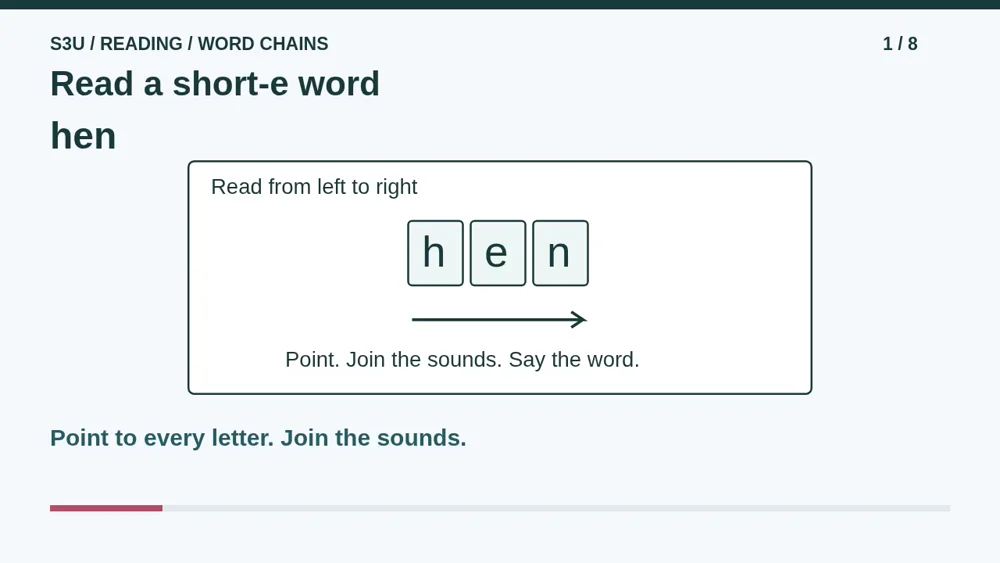
This word is hen. Listen to its middle sound with your helper: hen. Today we will read short words with that sound. Learn any new letter sounds together first. Point to each letter, from left to right. Join the sounds and say the whole word. A hen is a grown female chicken.
2. Change the first letter
Video: 0:23
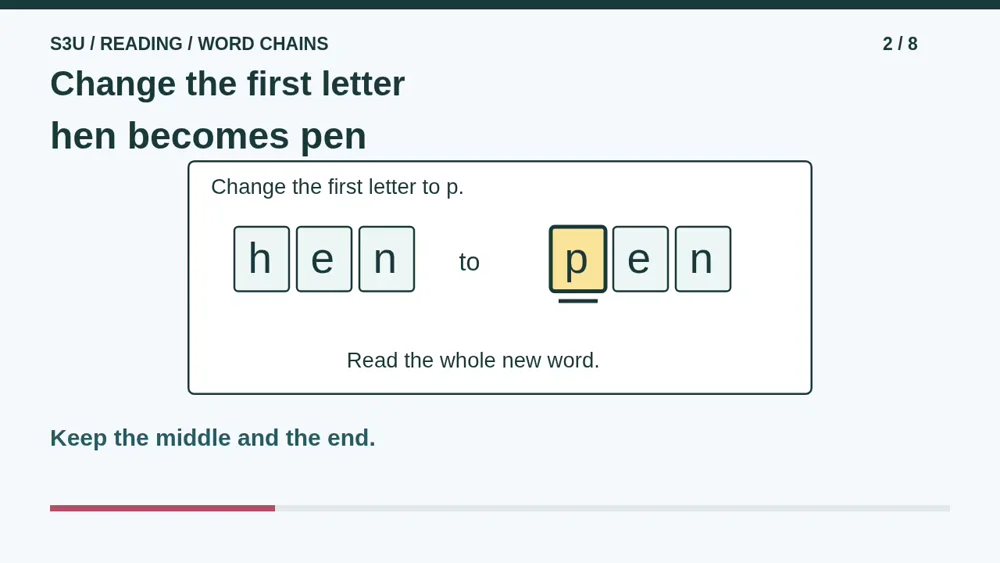
Start with hen. Change the first letter to p. Keep the other two letters. Read the new word: pen. Hen. Pen. They end the same way, but their first sounds differ. Check every letter before you say the word. A hen does not need a pen to write a shopping list. This pen is for writing.
3. Now check the last letter
Video: 0:51
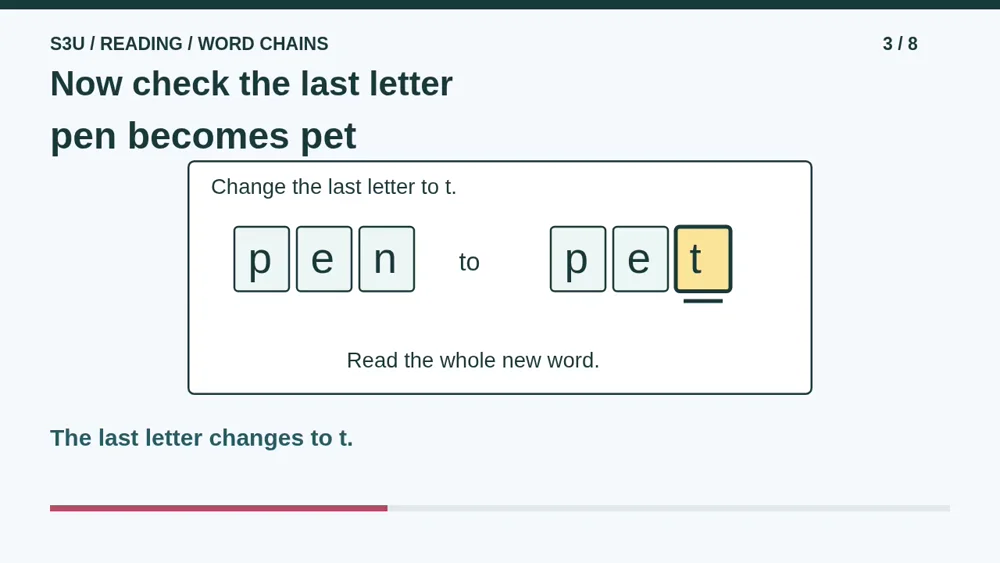
Start with pen. Change the last letter to t. Read pet. Pen. Pet. The middle letter stays, and the first letter stays. The last letter changes. Do not stop reading before you get to the end. Say the whole word, then tell your helper what a pet is.
4. Read a tiny sentence
Video: 1:16
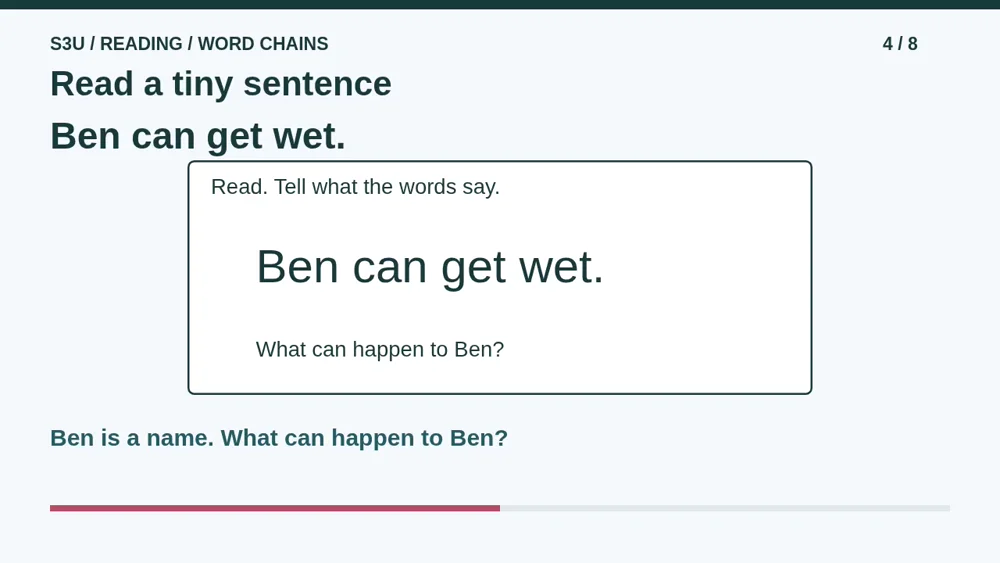
Ben is a name. Read this sentence with your helper: Ben can get wet. Point to each word as you read. What can happen to Ben? He can get wet. The sentence does not tell us how. Maybe a puddle is involved, but that is our idea, not another word on the page.
5. Pause and make a new chain
Video: 1:39
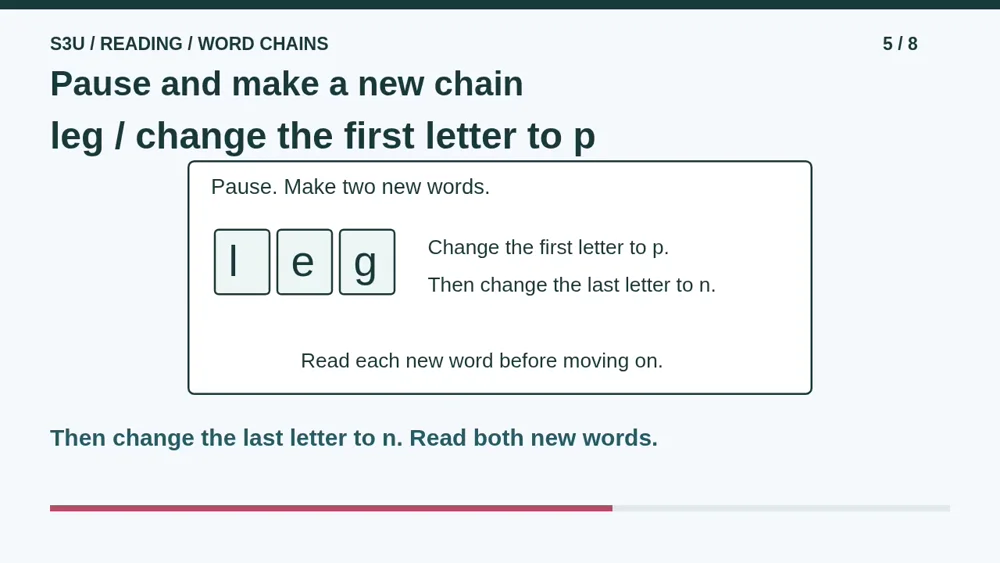
Pause here. Start with leg. Change only the first letter to p. Read every letter of your new word. Now change only the last letter to n. Read that word too. Ask your helper for a sound if you need one. Try joining the sounds before your helper says the whole word.
6. Check each new word
Video: 2:03
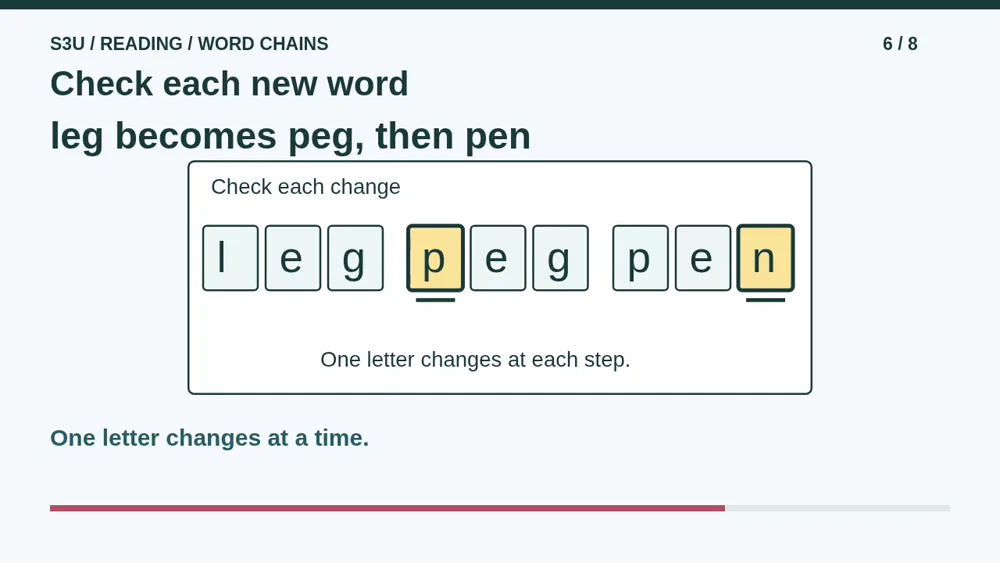
Leg becomes peg when the first letter changes to p. Peg becomes pen when the last letter changes to n. Leg. Peg. Pen. A peg can hold something in place. You only need the written words today. If a word surprised you, look at each letter and read it again with your helper.
7. Same letters, new order
Video: 2:28
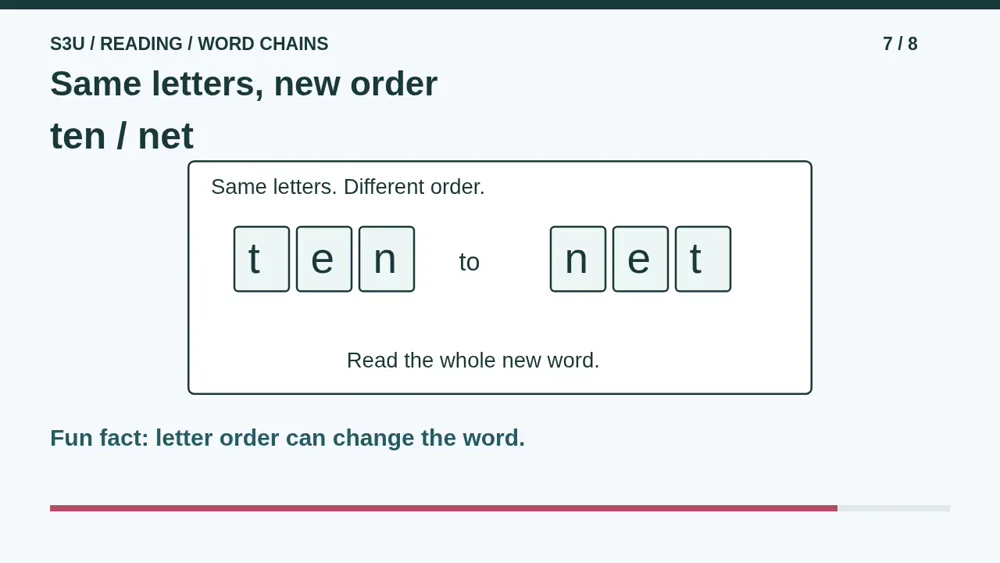
Fun fact: ten and net use the same three letters in different orders. Read ten. Now read net. The middle letter stays in the middle. The two end letters trade places. That makes a different word. Our eyes follow the letters from left to right, even when the letters look very familiar.
8. Try the next practice sheet
Video: 2:52
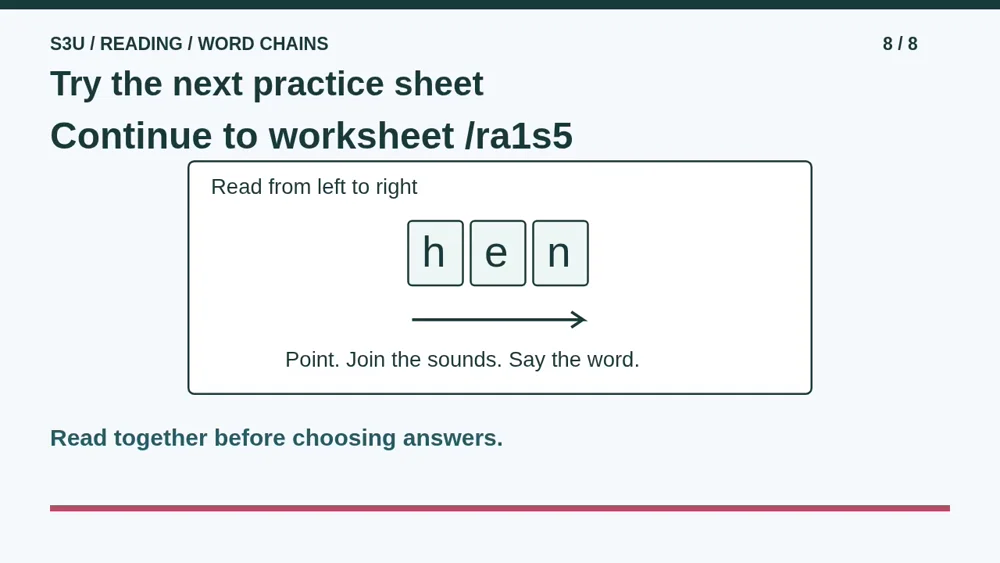
Continue to the worksheet below. Read the short chain and sentence with your helper. Then try the letter-change questions. These questions check letter changes, not spoken reading. Your helper can listen as you read. Use the second sheet another day, and keep practicing the sounds that still need a little help.
Show your understanding
You can point, explain aloud, draw or write.
- Track one first or last letter change while keeping other letters in place.
- With a helper, blend and reread whole words and explain Ben can get wet without inventing how. Choice questions do not measure spoken fluency.
Try it yourself
Pause at leg. Make each change, then read the two new whole words with your helper.
Continue to the worksheet. Read together before answering letter-change questions.
Next: your worksheet
Short-e Word Changes - Practice 1https://s3u.com/ra1s5
Lesson: https://s3u.com/lessons/change-a-short-e-word